
When Do Traders Become Profitable? | TU Research


Editorial Note: While we adhere to strict Editorial Integrity, this post may contain references to products from our partners. Here's an explanation for How We Make Money. None of the data and information on this webpage constitutes investment advice according to our Disclaimer.
There is no guaranteed timeline for becoming a profitable retail trader. TU Research figures indicate that 56% achieve their first profitable month within six months, but only 16% reach at least six consecutive profitable months. Among those achieving this milestone, 73% take between one and five years. Academic research also suggests that trading experience alone does not guarantee success, with studies documenting persistently high loss rates among active traders.
Becoming consistently profitable is one of the main goals of retail traders entering Forex, stocks, futures, and cryptocurrency markets. However, the time required to achieve this goal remains uncertain. While some traders experience positive returns shortly after opening their first account, others spend years learning, testing strategies, and recovering from losses without achieving stable results.
A profitable trading month does not necessarily indicate a reliable strategy. Short-term gains can occur during favorable market conditions, while sustained profitability requires positive results across a longer period and after trading expenses.
Research from the French Financial Markets Authority (AMF), the European Securities and Markets Authority (ESMA), and academic institutions highlights the difficulties faced by active retail traders. Their findings challenge the assumption that trading experience automatically leads to better financial performance.
The research aims to answer key questions:
Findings
The research identifies several patterns in the relationship between trading experience, profitability, and the financial costs of learning:
Early profits are more common than sustained profitability. Some 56% achieve their first profitable month within six months, but only 16% reach at least six consecutive profitable months.
Consistent profitability remains difficult to maintain. Only 9% report reaching the six-month benchmark and maintaining consistent profitability, while another 7% achieve it but subsequently return to losses.
Becoming consistently profitable often takes years. Among traders reaching the six-month benchmark, 73% take between one and five years, while 11% require more than five years.
Experience is associated with better reported results, but losses remain widespread. The proportion reporting cumulative profitability increases from 12% among traders with less than one year of experience to 32% among those with more than five years.
Learning to trade can involve substantial financial losses. Some 50% fall into the $500–4,999 cumulative-loss categories, while 25% report losing at least $5,000.
Emotional decisions and risk management are leading perceived obstacles. Emotional decision-making accounts for 29% of reported barriers, followed by poor risk management at 24%.
More experience does not guarantee positive returns. Even among traders with more than five years of experience, 56% report cumulative net losses.

Risk warning: Forex trading carries high risks, with potential losses including your entire deposit. Market fluctuations, economic instability, and geopolitical factors impact outcomes. Studies show that 70-80% of traders lose money. Consult a financial advisor before trading.
Institutional validation
Institutional and academic research indicates that sustained profitability is difficult for many retail traders and that additional trading experience does not necessarily improve financial outcomes.
The French Financial Markets Authority (AMF) examined the results of 14,799 retail investors trading Forex and CFDs over a four-year period from 2009 to 2013. According to its study of individual investor performance, more than 89% of clients lost money, with an average loss of €10,887 per investor. The regulator also examined the relationship between trading experience and financial performance, finding no reliable evidence that continued participation systematically improved results.
Research by Fernando Chague, Rodrigo De-Losso, and Bruno Giovannetti provides further evidence of the challenges associated with active trading. Their study, Day Trading for a Living?, analyzed individuals who began trading Brazilian equity futures between 2013 and 2015. Among those who continued day trading for more than 300 days, 97% lost money. Only 1.1% earned more than Brazil's minimum wage through trading. The researchers found no evidence that additional trading experience consistently improved profitability.
A separate study by Brad Barber, Yi-Tsung Lee, Yu-Jane Liu, and Terrance Odean examined day traders in Taiwan between 1992 and 2006. Published in the Journal of Financial Markets, the research found that fewer than 1% of day traders demonstrated the ability to predictably generate positive abnormal returns after trading fees. However, the researchers also identified a small group of skilled traders whose past performance helped predict subsequent results.
The European Securities and Markets Authority (ESMA) reported that between 74% and 89% of retail CFD accounts typically lost money across the European jurisdictions examined. In its 2018 product intervention announcement, ESMA also reported average client losses ranging from €1,600 to €29,000. These findings contributed to leverage restrictions, margin close-out requirements, and negative balance protection for retail CFD clients.
Trading frequency may also affect financial outcomes. In Trading Is Hazardous to Your Wealth, Brad Barber and Terrance Odean examined 66,465 US brokerage households. The most active investors earned an annual return of 11.4%, compared with a market return of 17.9% during the observation period. The findings suggest that frequent trading can reduce performance through transaction costs and behavioral mistakes.
More recent academic research also highlights the difficulty of evaluating personal trading ability. In Counting Pennies, Losing Pounds: Biased Learning About Own Trading Ability, revised in July 2026, Fernando Chague and coauthors examined how retail day traders assess their performance. The researchers found that traders' reliance on the proportion of profitable days can produce an upward-biased perception of ability, partly because of the disposition effect.
Together, these studies challenge the assumption that spending more time in financial markets necessarily leads to profitability. Although a small proportion of traders demonstrate persistent skill, many experience continued losses despite extensive trading activity.
Theoretical research
The relationship between trading experience and profitability can be understood through learning effects, overconfidence, and the distinction between short-term gains and sustainable performance.
In theory, repeated trading provides opportunities to develop skills. Traders can improve their understanding of financial instruments, identify weaknesses in their strategies, and learn to manage risk under different market conditions. However, financial markets provide uncertain feedback, making it difficult to distinguish genuine improvement from favorable short-term outcomes.
A profitable trade may result from a sound decision, but it may also reflect temporary market conditions. Similarly, a losing trade does not necessarily mean that the underlying strategy was incorrect. This uncertainty complicates the learning process and may encourage traders to draw conclusions from insufficient evidence.
Overconfidence is another important factor. Traders who attribute successful outcomes primarily to personal skill may increase position sizes or trading frequency without adequately considering risk. Research by Barber and Odean suggests that excessive trading activity can weaken investment performance rather than improve it.
The disposition effect, examined by Terrance Odean in Are Investors Reluctant to Realize Their Losses?, describes investors' tendency to realize gains more readily than losses. This behavior can distort trading decisions and make performance evaluation less reliable.
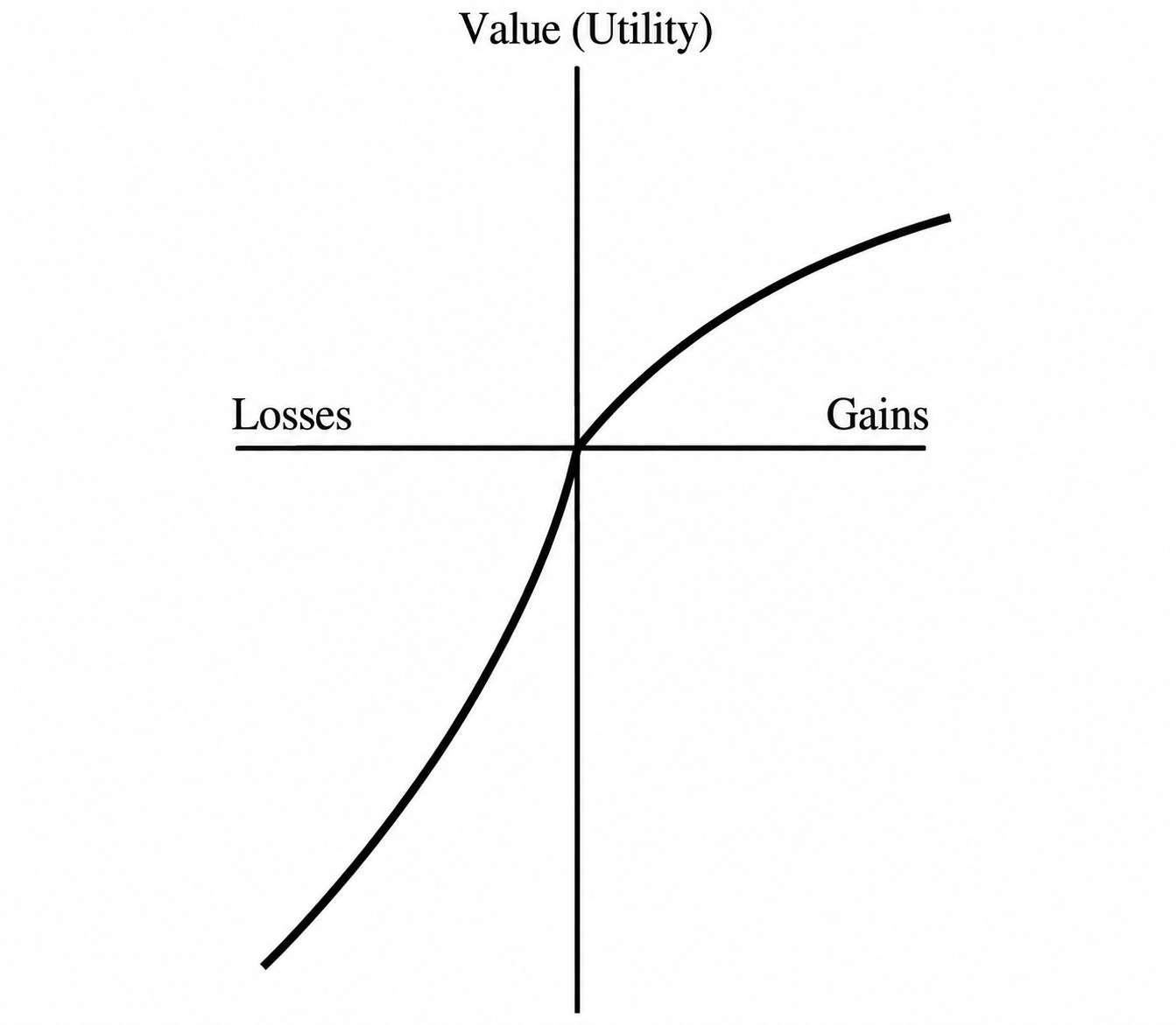
The definition of profitability also matters. A trader may achieve several profitable months while remaining unprofitable over the lifetime of an account. Likewise, positive cumulative returns do not necessarily demonstrate that a strategy can consistently generate income.
For this reason, the research distinguishes between three measures:
First profitable month: the first calendar month with positive net trading results.
Sustained profitability: at least six consecutive profitable calendar months after trading costs.
Overall profitability: positive cumulative net trading results across the trader's entire live-trading history.
These measures capture different aspects of trading success. Six consecutive profitable months provide a practical benchmark for comparing results, although this period alone does not establish a statistically reliable trading advantage.
Survey data
The research examines the relationship between trading experience, the time required to achieve profitability, financial losses, and the main obstacles encountered during the learning process.
Methodology
The study was conducted using a structured online survey based on the CAWI methodology.
Sample composition: 1,200 retail traders.
Geographical framework: North America, Europe, Asia, Latin America, Africa, and the Middle East.
Age range: 18–60 years.
Participation criteria: individuals with experience trading Forex, stocks, futures, CFDs, or cryptocurrencies using real money.
Profitability definition: positive net trading results after transaction costs.
Sustained profitability benchmark: at least six consecutive profitable calendar months.
Research team
The study was conducted by our experts:
Anastasiia Chabaniuk (Author, TU research) – research design and interpretation.
Chinmay Soni (Fact-checker) – data validation and statistical verification.
Ciaran Ryan (Editor-in-Chief) – editorial and methodological supervision.
TU research team (Andrey Mastykin, Oleg Tkachenko) – data collection and analysis.
How long have retail traders been trading?
The first question examines the duration of live trading experience across different financial markets.
| Response | Share |
|---|---|
| Less than 6 months | 13% |
| 6–12 months | 17% |
| 1–2 years | 24% |
| 2–3 years | 19% |
| 3–5 years | 16% |
| More than 5 years | 11% |
Insight: A combined 54% have no more than two years of live-trading experience, while 27% have traded for at least three years. The distribution provides a basis for comparing financial outcomes across different stages of trading development.
How long does it take traders to achieve their first profitable month?
This question measures the time between beginning live trading and recording the first calendar month with positive net trading results.
Time to first profitable trading month:
18% – Within the first month;
21% – 2–3 months;
17% – 4–6 months;
13% – 7–12 months;
12% – More than 12 months;
19% – Have never had a profitable month.

Insight: Some 56% experience their first profitable month within six months of starting live trading, while 19% have never recorded a profitable month. The difference between early positive results and long-term financial performance highlights why isolated profitable periods should not be treated as evidence of a reliable strategy.
How many retail traders achieve sustained profitability?
This question distinguishes occasional profitable periods from achieving at least six consecutive calendar months with positive net trading results.
| Response | Share |
|---|---|
| Yes, and currently remain consistently profitable | 9% |
| Yes, but later returned to losses | 7% |
| No, but have had several profitable months | 31% |
| No, have only had isolated profitable months | 29% |
| Have never recorded a profitable month | 19% |
| Not sure / do not track results | 5% |
Insight: A combined 16% have achieved at least one six-month profitable period, but only 9% report maintaining consistent profitability. Another 60% have experienced profitable months without reaching the six-month benchmark. The figures highlight the substantial difference between occasional gains and sustained performance.
How long does it take traders to become consistently profitable?
The following distribution covers traders who reach at least six consecutive profitable months and measures the time required to achieve that milestone.
Time to consistent profitability:
16% – Within the first year;
24% – 1–2 years;
27% – 2–3 years;
22% – 3–5 years;
11% – More than 5 years.

Insight: Among traders who reach the sustained-profitability benchmark, 73% require between one and five years, while 11% take more than five years. The largest group, at 27%, reaches the milestone after two to three years. These figures apply only to traders who achieved the milestone, not to the entire trading population.
Does more trading experience lead to better financial results?
The analysis compares cumulative net trading performance across five experience groups.
| Trading experience | Net profitable | Approximately break-even | Net unprofitable | Not sure |
|---|---|---|---|---|
| Less than 1 year | 12% | 11% | 67% | 10% |
| 1–2 years | 17% | 10% | 65% | 8% |
| 2–3 years | 21% | 9% | 64% | 6% |
| 3–5 years | 27% | 9% | 59% | 5% |
| More than 5 years | 32% | 8% | 56% | 4% |
Insight: The proportion reporting cumulative profitability increases from 12% among traders with less than one year of experience to 32% among those trading for more than five years. Nevertheless, the majority in every experience group report cumulative losses. The pattern suggests that experience may be associated with better financial outcomes without establishing a direct causal relationship.
How much money do traders lose before becoming profitable?
The analysis examines cumulative net trading losses during the learning period. For traders who have not achieved sustained profitability, the measure refers to cumulative losses to date.
Trading losses during learning:
8% – No cumulative losses
17% – Less than $500
27% – $500–1,999
23% – $2,000–4,999
15% – $5,000–9,999
10% – $10,000 or more
Insight: Half of the distribution falls into the 4,999 loss categories, while 25% report cumulative losses of at least $5,000. These figures illustrate the potential financial costs associated with learning to trade. The significance of individual losses also depends on account size, available capital, and trading frequency.
What prevents traders from becoming consistently profitable?
The final question examines the primary perceived obstacle to sustained trading profitability.
| Response | Share |
|---|---|
| Emotional decision-making | 29% |
| Poor risk management | 24% |
| Lack of a reliable strategy | 21% |
| Inconsistent execution | 13% |
| Insufficient market knowledge | 8% |
| Trading costs, limited capital, or other factors | 5% |
Insight: Emotional decision-making and poor risk management account for a combined 53% of responses. Another 34% identify the absence of a reliable strategy or inconsistent execution as their primary obstacle. These factors reflect perceived difficulties rather than independently established causes of trading losses.
PDF version of the TU research
Download the full PDF version of the TU research to access additional analysis, detailed survey data, and extended findings from our analytical team. The report includes complete methodology, charts, and behavioral insights referenced throughout the study.
Practical implications for retail traders
Becoming consistently profitable requires more than accumulating trading hours. Retail traders can evaluate their progress more effectively by focusing on measurable performance, risk management, and the quality of their decisions rather than relying on isolated successful trades.
Separate early profits from sustained results. One profitable month can be encouraging, but it does not demonstrate that a strategy will remain effective over time.
Measure net profitability. Include spreads, commissions, financing charges, and other expenses when calculating trading results.
Maintain a trading journal. Record entries, exits, position sizes, strategy rules, and mistakes to identify recurring patterns.
Evaluate strategies over meaningful samples. Avoid changing strategies solely because of a few losing trades. Results should be assessed across different market conditions.
Control risk during the learning process. Smaller positions and predefined loss limits can reduce the financial consequences of unsuccessful trades.
Avoid excessive trading. Higher trading frequency does not necessarily improve performance and can increase transaction costs.
Set realistic expectations. There is no guaranteed period after which a trader will become profitable. Experience and financial performance may develop at different rates.
Consider the financial cost of learning. Trading losses, education expenses, and time commitments should be evaluated when deciding whether to continue.
Recognize when to reassess. Persistent losses may justify reducing trading activity, returning to simulation, or discontinuing speculative trading rather than increasing risk to recover previous losses.
The distinction between experience and measurable profitability is particularly important for beginners. Academic research suggests that only a small minority of active traders demonstrate persistent trading skill, while many continue to lose money despite extended market participation.
Trading conditions can also affect net performance. Spreads, commissions, execution quality, financing charges, and available risk-management tools should be considered alongside trading strategies. The table below compares brokers to help retail traders evaluate account conditions before opening or maintaining a live trading account.
| Plus500 | OANDA | Trading.com USA | IG Markets | Interactive Brokers | FOREX.com | |
|---|---|---|---|---|---|---|
|
Demo |
Yes | Yes | Yes | Yes | Yes | Yes |
|
Tradable assets |
2,800 | 129 | 69 | 20,000 | 30,000 | 5,500 |
|
Currency pairs |
60 | 68 | 69 | 80 | 100 | 80 |
|
Min. deposit, $ |
100 | No | 50 | 1 | No | 100 |
|
Standard EUR/USD spread |
0.7 | 0.3 | 1.1 | 0.9 | 0.5 | 1.0 |
|
Standard GBP/USD spread |
0.8 | 0.3 | No | 1.1 | 1.0 | 1.2 |
|
TU overall score |
7.1 | 7 | 6.77 | 7.05 | 7.04 | 7.03 |
|
Open an account |
Go to broker 81% of retail CFD accounts lose money. |
Go to broker Your capital is at risk. |
Go to broker Your capital is at risk. |
Study review | Study review | Study review |
Data sources and methodology
Autorité des marchés financiers (2014). Étude des résultats des investisseurs particuliers sur le trading de CFD et de Forex en France.
European Securities and Markets Authority (2018). ESMA Agrees to Prohibit Binary Options and Restrict CFDs to Protect Retail Investors.
European Securities and Markets Authority (2018). Additional Information on the Agreed Product Intervention Measures Relating to CFDs and Binary Options.
Chague, F., De-Losso, R., and Giovannetti, B. (2020). Day Trading for a Living?.
Barber, B. M., Lee, Y.-T., Liu, Y.-J., and Odean, T. (2014). The Cross-Section of Speculator Skill: Evidence from Day Trading. Journal of Financial Markets, 18, 1–24.
Barber, B. M., and Odean, T. (2000). Trading Is Hazardous to Your Wealth: The Common Stock Investment Performance of Individual Investors. The Journal of Finance, 55(2), 773–806.
Odean, T. (1998). Are Investors Reluctant to Realize Their Losses?. The Journal of Finance, 53(5), 1775–1798.
Chague, F., Giovannetti, B., Guimaraes, B., and Maciel, B. (2026 revision). Counting Pennies, Losing Pounds: Biased Learning About Own Trading Ability.
IdSurvey. CAWI Methodology.
Previous volumes in this series
Conclusion
Becoming a consistently profitable trader is a challenging journey that most retail traders underestimate, with only 9 percent maintaining six consecutive profitable months and the majority continuing to lose money despite years of experience. The research makes it clear that early profits are common but rarely translate into sustained success, as evidenced by persistent loss rates even among seasoned traders. Emotional decision-making and poor risk management remain the biggest obstacles, outpacing the impact of mere market knowledge or strategy tweaks. In this high-stakes landscape, true trading success depends less on time spent in the market and more on disciplined risk control and honest performance evaluation.
FAQs
What are the most common mistakes that prevent retail traders from achieving consistent profitability?
How does the definition of profitability affect the assessment of trading success?
How much financial loss do traders typically incur before becoming profitable?
Does increasing trading frequency lead to better financial performance for retail traders?
Editors' Top Picks and Insights






Related Articles
Team that worked on the article
Anastasiia has 17 years of experience in finance and content marketing. She believes that the support of information and expert opinion is very important for the success of investors and new traders.
Ciaran Ryan is a veteran financial journalist based in South Africa, where he covers cryptocurrency, mining, stock markets, and governance for Moneyweb. He also hosts the weekly Moneyweb Crypto Podcast.
Chinmay Soni is a financial analyst with more than 5 years of experience in working with stocks, Forex, derivatives, and other assets. As a founder of a boutique research firm and an active researcher, he covers various industries and fields, providing insights backed by statistical data.

-
 Afghanistan
-
 Albania
-
 Algeria
-
 Angola
-
 Argentina
-
 Armenia
-
 Australia
-
 Austria
-
 Azerbaijan
-
 Bahamas
-
 Bahrain
-
 Bangladesh
-
 Belarus
-
 Belgium
-
 Bolivia
-
 Botswana
-
 Brazil
-
 Brunei
-
 Bulgaria
-
 Cambodia
-
 Cameroon
-
 Canada
-
 Chile
-
 China
-
 Colombia
-
 Congo
-
 Costa Rica
-
 Cote d'Ivoire
-
 Croatia
-
 Cuba
-
 Cyprus
-
 Czechia
-
 DR Congo
-
 Denmark
-
 Dominican Republic
-
 Ecuador
-
 Egypt
-
 El Salvador
-
 Estonia
-
 Eswatini
-
 Ethiopia
-
 Finland
-
 France
-
 Georgia
-
 Germany
-
 Ghana
-
 Greece
-
 Haiti
-
 Hong Kong
-
 Hungary
-
 India
-
 Indonesia
-
 Iran, Islamic republic
-
 Iraq
-
 Ireland
-
 Israel
-
 Italy
-
 Jamaica
-
 Japan
-
 Jordan
-
 Kazakhstan
-
 Kenya
-
 Korea
-
 Kuwait
-
 Kyrgyzstan
-
 Laos
-
 Latvia
-
 Lebanon
-
 Lesotho
-
 Libya
-
 Lithuania
-
 Luxembourg
-
 Madagascar
-
 Malaysia
-
 Malta
-
 Mauritius
-
 Mexico
-
 Moldova
-
 Mongolia
-
 Montenegro
-
 Morocco
-
 Mozambique
-
 Myanmar
-
 Namibia
-
 Nepal
-
 Netherlands
-
 New Zealand
-
 Nigeria
-
 North Macedonia
-
 Norway
-
 Oman
-
 Pakistan
-
 Palestine
-
 Panama
-
 Papua New Guinea
-
 Paraguay
-
 Peru
-
 Philippines
-
 Poland
-
 Portugal
-
 Puerto Rico
-
 Qatar
-
 Reunion
-
 Romania
-
 Rwanda
-
 Saudi Arabia
-
 Serbia
-
 Singapore
-
 Slovakia
-
 Slovenia
-
 Somalia
-
 South Africa
-
 Spain
-
 Sri Lanka
-
 Sweden
-
 Switzerland
-
 Syria
-
 Taiwan
-
 Tajikistan
-
 Tanzania
-
 Thailand
-
 Trinidad and Tobago
-
 Tunisia
-
 Turkey
-
 UAE
-
 Uganda
-
 Ukraine
-
 United Kingdom
-
United States
-
 Uruguay
-
 Uzbekistan
-
 Venezuela
-
 Vietnam
-
 Yemen
-
 Zambia
-
 Zimbabwe
- Forex
- Crypto












