
Best Currency Pairs For Beginners



Editorial Note: While we adhere to strict Editorial Integrity, this post may contain references to products from our partners. Here's an explanation for How We Make Money. None of the data and information on this webpage constitutes investment advice according to our Disclaimer.
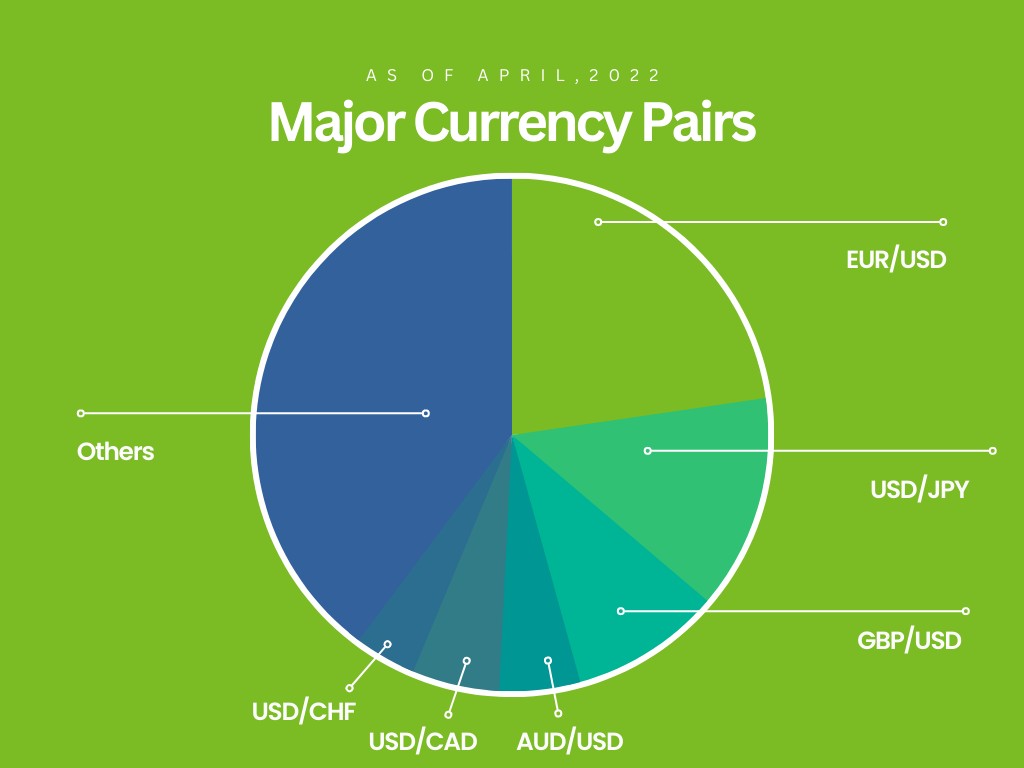
Forex pairs to trade for beginners:
EUR/USD - the most traded currency pair across the globe.
USD/JPY - driven by the influence of the yen in Asia and the dollar's prominence worldwide.
GBP/USD - represents a significant portion of daily Forex transactions.
AUD/USD - highly impacted by changes in commodity prices.
USD/CAD - strong correlation with oil prices.
USD/CHF - attracts investors owing to Switzerland’s reputation of financial stability.
Are you a beginner in the world of Forex trading? Wondering which currency pairs are the best to trade? Look no further! In this guide, we have compiled a list of the best Forex pairs to trade, specifically tailored for beginners. By understanding the key factors that make a currency pair favorable for trading, you can kickstart your Forex journey on the right track.
What are the best currency pairs to trade for beginners?
For beginner traders, certain currency pairs are often recommended as they provide favorable opportunities for learning and trading success. The top currency pairs for beginners include EUR/USD, GBP/USD, and USD/JPY. These pairs are popular among novices due to their liquidity, market stability, and availability of market information.
EUR/USD
EUR/USD, also known as "The Fiber", is a currency pair that combines the euro and the US dollar. It is considered the most traded currency pair due to the involvement of two major economies. The pair offers low spreads, high liquidity, and the ability to execute large volume trades. This makes it attractive for Forex scalping strategies, allowing traders to profit from smaller, frequent earnings. The stability of the EUR/USD throughout the year contributes to its profitability.
Minimum spread: Approximately 0.1 to 1.5 pips.
USD/JPY
USD/JPY, known as "The Gopher", combines the US dollar and the Japanese yen. It is one of the best Forex pairs to trade right now, driven by the influence of the yen in Asia and the dollar's prominence worldwide. The currency pair exhibits high liquidity, allowing traders to transact in large volumes without significant price fluctuations. Additionally, it features tight spreads, reducing trading costs for participants.
Minimum spread: Around 0.5 to 2.0 pips.
GBP/USD
GBP/USD, referred to as "Cable", involves the pound sterling and the US dollar. It represents a significant portion of daily Forex transactions. The exchange rate is influenced by the relative strength of the British and American economies. If the British economy outperforms the US economy, the pound strengthens against the dollar, and vice versa. Traders monitor economic indicators to assess the potential direction of this currency pair.
Minimum spread: Typically 1.0 to 2.5 pips.
AUD/USD
AUD/USD, known as the "Aussie", pairs the Australian dollar with the US dollar. It constitutes a notable percentage of daily Forex trades. The value of the Australian dollar is closely tied to commodity exports, particularly metals and minerals. Changes in commodity prices impact the currency pair, with a decrease in commodity values causing the Australian dollar to weaken against the US dollar. Interest rate differentials between the Reserve Bank of Australia and the US Federal Reserve also influence AUD/USD.
Average spread: Generally 0.5 to 2.0 pips.
USD/CAD
USD/CAD represents the US dollar against the Canadian dollar. It is considered a commodity pair and has a strong correlation with commodity prices, particularly oil. Economic ties between the US and Canada contribute to the pair's volatility. Traders closely monitor factors such as oil prices and economic indicators of both countries to make informed trading decisions.
Average spread: Approximately 1.0 to 2.5 pips.
USD/CHF
USD/CHF, also known as "Swissie", pairs the US dollar with the Swiss franc. It is the seventh most traded currency pair globally. The Swiss franc's value is influenced by the Swiss National Bank's actions and economic data published by the Swiss Federal Statistical Office. Switzerland's reputation for financial stability attracts investors during times of market volatility, making the CHF a popular safe-haven currency. As demand for the franc increases, the value of USD/CHF tends to decline.
Minimum spread: Around 1.0 to 2.5 pips.
What makes a Forex currency pair good to trade?
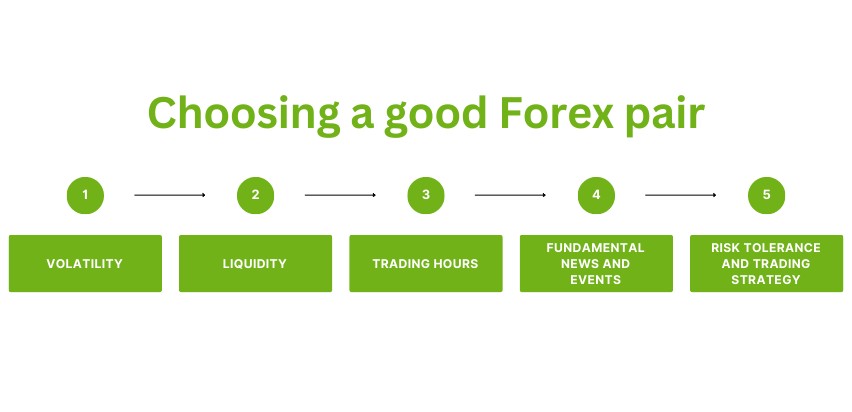
When evaluating the suitability of a Forex currency pair for trading, there are several factors to consider. Here are key points to keep in mind:
Volatility. The level of price fluctuations in a currency pair affects trading opportunities and risk. Higher volatility can offer more potential for profit but also increases the risk. Traders should assess their risk tolerance and choose currency pairs accordingly.
Liquidity. The ease of buying or selling a currency pair without significant price impact is crucial. Major currency pairs, like EUR/USD and USD/JPY, tend to have high liquidity and tight spreads. Ample liquidity ensures efficient trade execution.
Trading hours. Each currency pair has specific trading hours, and understanding the overlaps between trading sessions is important. The European and US session overlap often presents high liquidity and volatility, providing more trading chances.
Fundamental news and events. Economic data releases, central bank announcements, and geopolitical events can greatly influence currency pairs. Traders should stay informed about upcoming events and news that may impact their chosen currency pair, adjusting their trading strategies accordingly.
Risk tolerance and trading strategy. Optimal currency pairs vary based on individual risk tolerance and trading strategies. Major currency pairs are favored by many traders due to their liquidity and tight spreads. Exotic currency pairs, while riskier, may offer higher potential returns. Understanding personal risk tolerance and aligning it with the chosen currency pair is essential.
Where can I trade the best Forex pairs?
| Min. deposit, $ | Max. leverage | Min Spread EUR/USD, pips | Max Spread EUR/USD, pips | Min Spread GBP/USD, pips | MAX Spread GBP/USD, pips | Deposit fee, % | Withdrawal fee, % | Open an account | |
|---|---|---|---|---|---|---|---|---|---|
| 10 | 1:1000 | 0.1 | 0.4 | 0.2 | 0.6 | No | No | Go to broker Your capital is at risk.
|
|
| 100 | 1:300 | 0.5 | 0.9 | 0.5 | 1.0 | No | No | Go to broker 80% of retail CFD accounts lose money. |
|
| No | 1:200 | 0.1 | 0.5 | 0.1 | 0.5 | No | No | Go to broker Your capital is at risk. |
|
| 50 | 1:50 | 0.9 | No | No | No | No | No | Go to broker Your capital is at risk. |
|
| 100 | 1:50 | 0.7 | 1.2 | 0.9 | 1.4 | No | No | Study review |
What are common mistakes that beginners make when trading currency pairs?
When trading currency pairs, beginners commonly make several mistakes that can hinder their success in the market. These mistakes include:
Overtrading. Beginners often fall into the trap of overtrading, driven by excitement and the desire to profit quickly. They may take too many trades without proper analysis or a well-thought-out strategy. Overtrading can lead to impulsive decisions, increased transaction costs, and higher risk exposure.
Lack of a trading plan. Many beginners neglect to create a trading plan, which is a crucial tool for success. A trading plan outlines specific entry and exit points, risk management strategies, and overall trading goals. Without a plan in place, beginners may make decisions based on emotions or random factors, leading to inconsistent and ineffective trading.
Poor risk management. Beginners often underestimate the importance of risk management. They may risk a significant portion of their capital on a single trade, exposing themselves to substantial losses if the trade goes against them. Additionally, beginners may fail to set appropriate stop-loss orders, which are essential for limiting potential losses. Proper risk management is vital to protect capital and maintain a sustainable trading approach.
Insufficient analysis. Inadequate analysis is a common mistake among beginners. They may not spend enough time studying and understanding currency pairs before entering trades. It is crucial to perform both technical analysis, analyzing price charts and patterns, and fundamental analysis, evaluating economic and geopolitical news that can impact currency movements. Insufficient analysis can lead to poor trade decisions based on incomplete information.
Ignoring currency correlations. Beginners may overlook the importance of currency correlations when trading. Certain currency pairs have significant direct or inverse correlations, meaning they tend to move in the same or opposite direction. Ignoring these correlations can result in unintended risk exposure. Trading correlated pairs without considering their relationship can lead to amplified losses or missed opportunities.
Сhoose pairs with low spreads and high liquidity

Many beginners dive into volatile Forex pairs, thinking higher risk means bigger rewards. But for a smoother start, choose pairs with low spreads and high liquidity like EUR/USD or USD/JPY. These pairs have more stable price changes and lower trading costs. Try trading during peak market hours when spreads are narrow to help increase profit potential while keeping costs down.
Another pro tip is paying attention to the economic calendar. Plan trades around major news events for the currencies you’re trading. For example, USD/CAD often sees action during U.S. or Canadian interest rate announcements. But instead of trading right when the news breaks, wait until the market settles. This way, you can spot profitable trading patterns without risking unnecessary losses.
Conclusion
In summary, choosing the right Forex pairs is crucial for beginners aiming to build a solid trading foundation. Major pairs like EUR/USD and USD/JPY stand out due to their stability, liquidity, and accessibility, making them ideal starting points for newcomers. By focusing on pairs with lower volatility and abundant market information, new traders can more easily develop strategies and manage risks. Ultimately, mastering a few reliable pairs paves the way for confidence and consistent results in the Forex market. The key is to start simple—laying strong groundwork before exploring more complex trading opportunities.
FAQs
What factors should beginners consider when choosing a Forex pair to trade?
How do commodity prices affect certain Forex currency pairs that are suitable for beginners?
Why is liquidity an important consideration for those new to Forex trading?
What role do trading session overlaps play in choosing the best Forex pairs for beginners?
Editors' Top Picks and Insights

Crypto test drive: How automakers are exploring digital assets

Lindsey Graham death: U.S. senator’s crypto legacy

Tether under pressure: USDT in Europe, audit questions, and the fight for trust

Lean Ethereum: Why Buterin wants to rebuild the network

SK Hynix debuts on Nasdaq: Largest U.S. offering by foreign company

SpaceX falls out of orbit: Does anyone still want Musk’s stock?
Related Articles
Team that worked on the article
Parshwa is a content expert and finance professional possessing deep knowledge of stock and options trading, technical and fundamental analysis, and equity research. As a Chartered Accountant Finalist, Parshwa also has expertise in Forex, crypto trading, and personal taxation.
Chinmay Soni is a financial analyst with more than 5 years of experience in working with stocks, Forex, derivatives, and other assets. As a founder of a boutique research firm and an active researcher, he covers various industries and fields, providing insights backed by statistical data.
Mirjan Hipolito is a journalist and news editor at Traders Union. She is an expert crypto writer with five years of experience in the financial markets.
Crypto trading involves the buying and selling of cryptocurrencies, such as Bitcoin, Ethereum, or other digital assets, with the aim of making a profit from price fluctuations.
Forex leverage is a tool enabling traders to control larger positions with a relatively small amount of capital, amplifying potential profits and losses based on the chosen leverage ratio.
Scalping in trading is a strategy where traders aim to make quick, small profits by executing numerous short-term trades within seconds or minutes, capitalizing on minor price fluctuations.
Economic indicators — a tool of fundamental analysis that allows to assess the state of an economic entity or the economy as a whole, as well as to make a forecast. These include: GDP, discount rates, inflation data, unemployment statistics, industrial production data, consumer price indices, etc.
Fundamental analysis is a method or tool that investors use that seeks to determine the intrinsic value of a security by examining economic and financial factors. It considers macroeconomic factors such as the state of the economy and industry conditions.

-
 Afghanistan
-
 Albania
-
 Algeria
-
 Angola
-
 Argentina
-
 Armenia
-
 Australia
-
 Austria
-
 Azerbaijan
-
 Bahamas
-
 Bahrain
-
 Bangladesh
-
 Belarus
-
 Belgium
-
 Bolivia
-
 Botswana
-
 Brazil
-
 Brunei
-
 Bulgaria
-
 Cambodia
-
 Cameroon
-
 Canada
-
 Chile
Chile
-
 China
China
-
 Colombia
-
 Congo
Congo
-
 Costa Rica
-
 Cote d'Ivoire
-
 Croatia
-
 Cuba
Cuba
-
 Cyprus
-
 Czechia
-
 DR Congo
-
 Denmark
-
 Dominican Republic
-
 Ecuador
-
 Egypt
Egypt
-
 El Salvador
-
 Estonia
-
 Eswatini
-
 Ethiopia
-
 Finland
-
 France
-
 Georgia
-
 Germany
-
 Ghana
Ghana
-
 Greece
-
 Haiti
Haiti
-
 Hong Kong
-
 Hungary
-
 India
India
-
 Indonesia
-
 Iran, Islamic republic
-
 Iraq
Iraq
-
 Ireland
-
 Israel
-
 Italy
Italy
-
 Jamaica
-
 Japan
Japan
-
 Jordan
-
 Kazakhstan
-
 Kenya
Kenya
-
 Korea
Korea
-
 Kuwait
-
 Kyrgyzstan
-
 Laos
Laos
-
 Latvia
-
 Lebanon
-
 Lesotho
-
 Libya
Libya
-
 Lithuania
-
 Luxembourg
-
 Madagascar
-
 Malaysia
-
 Malta
Malta
-
 Mauritius
-
 Mexico
-
 Moldova
-
 Mongolia
-
 Montenegro
-
 Morocco
-
 Mozambique
-
 Myanmar
-
 Namibia
-
 Nepal
Nepal
-
 Netherlands
-
 New Zealand
-
 Nigeria
-
 North Macedonia
-
 Norway
-
 Oman
Oman
-
 Pakistan
-
 Palestine
-
 Panama
-
 Papua New Guinea
-
 Paraguay
-
 Peru
Peru
-
 Philippines
-
 Poland
-
 Portugal
-
 Puerto Rico
-
 Qatar
Qatar
-
 Reunion
-
 Romania
-
 Rwanda
-
 Saudi Arabia
-
 Serbia
-
 Singapore
-
 Slovakia
-
 Slovenia
-
 Somalia
-
 South Africa
-
 Spain
Spain
-
 Sri Lanka
-
 Sweden
-
 Switzerland
-
 Syria
Syria
-
 Taiwan
-
 Tajikistan
-
 Tanzania
-
 Thailand
-
 Trinidad and Tobago
-
 Tunisia
-
 Turkey
-
 UAE
UAE
-
 Uganda
-
 Ukraine
-
 United Kingdom
-
United States
-
 Uruguay
-
 Uzbekistan
-
 Venezuela
-
 Vietnam
-
 Yemen
Yemen
-
 Zambia
-
 Zimbabwe
- Forex
- Crypto











