What Is Tron (TRX) And Whether It’s Worth Buying?


Editorial Note: While we adhere to strict Editorial Integrity, this post may contain references to products from our partners. Here's an explanation for How We Make Money. None of the data and information on this webpage constitutes investment advice according to our Disclaimer.
Tron (TRX) is built on blockchain technology and aims to give users control over content, cutting out middlemen. Here's why it might be worth buying:
Decentralized content platform. Lets users share content directly without middlemen.
Fast transaction processing. Enables quick transactions with high scalability.
Low transaction fees. Enjoy lower fees compared to other blockchains.
Supports decentralized apps. DApps can be built and run on the Tron network.
Has a strong following. Backed by a large, active community.
Tron has gained attention from experts in the crypto market and has secured a high market cap. In this article, we take a closer look at Tron and the TRX token. We also consider how the cryptocurrency is performing, and look at whether or not it might be of interest to those looking for new investment opportunities.
What Is Tron (TRX)?
Tron (TRX) is a blockchain-based platform designed to support decentralized applications (dApps) and smart contracts, with a focus on content delivery and distribution. Known for its scalability and fast transaction speeds, Tron aims to reduce reliance on centralized platforms for online transactions and services.
Tron operates on a decentralized blockchain system that emphasizes democratized content sharing. It uses smart contracts programmed in Solidity, a language initially developed for Ethereum, ensuring cross-compatibility. This interoperability allows developers to create scalable and efficient dApps while benefiting from enhanced processing speeds compared to Ethereum.
Beyond its core functionalities, Tron enables the creation of various applications, including decentralized exchanges, lending platforms, online gaming, and media streaming services. Its commitment to permissionless protocols and advanced developer tools has positioned it as a leading choice for building decentralized ecosystems.
Developers and governance
Tron was launched in September 2017 by Justin Sun, a prominent tech entrepreneur and founder of the Tron Foundation, a non-profit supporting the platform's growth. Following its initial coin offering (ICO), Tron's mainnet was released in June 2018. Over time, Tron has secured a spot among the top 20 cryptocurrencies by market capitalization, briefly reaching the top 10 cryptocurrencies.

The platform operates on the TRON Virtual Machine (TVM), which executes smart contracts and supports the network's functionality. TRX, Tron's official governance coin, enables users to influence the platform's future through on-chain governance. Powered by a delegated proof-of-stake (DPoS) consensus mechanism, Tron ensures enhanced security and efficient operation across its decentralized ecosystem.
What problems does Tron fix?
Tron addresses issues inherent to centralized networks, such as data privacy, geo-restrictions, and censorship. By leveraging blockchain technology, Tron ensures secure data storage and removes limitations often imposed by centralized systems, creating a more accessible and equitable digital ecosystem.
One major issue Tron resolves is the risk of data breaches and manipulation in centralized networks. Its decentralized design provides users with confidence that their data remains private and secure. Additionally, Tron eliminates geo-restrictions commonly found on streaming platforms and online games, enabling unrestricted global access to dApps hosted on its blockchain. This approach reduces censorship and empowers developers and users with fewer limitations and greater freedom.
What is Tron (TRX) cryptocurrency?
Tron (TRX) is the primary token powering the Tron network, serving as the foundational cryptocurrency for its ecosystem. Alongside TRX, the network supports TRC10 and TRC20 tokens, offering developers the flexibility to create diverse dApps within the Tron blockchain.
TRX plays a key role across the Tron ecosystem, acting as the base unit for accounts and determining the value of other tokens stored in Tron wallets. The platform features a secure native wallet for managing TRX transactions and storage.
Additionally, TRX is supported by various mobile and hardware wallets, ensuring enhanced security options, particularly for users holding significant amounts of the token.
How is TRX created?
TRX tokens are created through a delegated proof-of-stake (DPoS) mechanism, a unique alternative to traditional proof-of-work or proof-of-stake methods. In this system, 27 rotating super representatives play the major role in achieving consensus and generating new TRX tokens.
Super representatives are selected every six hours and are responsible for validating transactions and creating new blocks on the Tron network. A new block is generated every three seconds, and for each block created, the responsible super representative earns 32 TRX tokens. This efficient block production process offers a faster and more sustainable alternative to mining used in cryptocurrencies like Bitcoin.
| Month | Minimum Price, $ | Average Price, $ | Maximum Price, $ |
|---|---|---|---|
| November 2026 | 0.32 | 0.33 | 0.34 |
| December 2026 | 0.28 | 0.29 | 0.29 |
How does Tron work?
Three layers make up the Tron ecosystem’s architecture. Each of these layers plays an important role in allowing the network to operate at its full capacity.
The storage layer is where data on the Tron network can be stored securely. State data related to the blockchain that sits behind the Tron ecosystem is also stored on this layer.
The application layer is where developers generally come into the picture. This layer allows for the development of applications that are all powered by Tron and the TRX token.
At the core, there is a layer that processes different types of instructions. The core layer can process instructions written only in two specific programming languages. These programming languages include Solidity and Java.
When instructions are processed on the core layer, code is sent to what is known as the Tron Virtual Machine. Once the code reaches this virtual machine, applications can be executed.
Tron vs Ethereum
There are a number of differences between Tron and Ethereum, even though the Tron network’s programming language is based on Ethereum.
Here is an overview of the primary differences:
| Tron | Ethereum | |
|---|---|---|
| Token | Tronix (TRX) | Ether (ETH) |
| Blockchain | Open source, cryptocurrency | Open source, cryptocurrency |
| Smart Contract Language | Solidity | Solidity |
| Token Standards | TRC10, TRC20 | Wide range of ERC token standards |
| Processing Speed | Fast | Slow - Medium (after upcoming updates - fast) |
| Total Supply | 86.2 billion TRX | 120.47 million ETH |
| Launch (Mainnet) | 25 June 2018 | 30 July 2015 |
How to mine Tron?
Tron (TRX) cannot be mined like traditional cryptocurrencies such as Bitcoin. Instead of using a proof-of-work system, Tron operates on a delegated proof-of-stake (DPoS) mechanism, where coins are pre-created and distributed differently.
Users can earn TRX by participating in the network as super representatives. These representatives are selected every six hours and are responsible for producing blocks. For each block created, a super representative earns 32 TRX. This process eliminates the need for conventional mining hardware or cloud mining software, making it more energy-efficient and community-driven.
Uses for Tron
There are several examples already of how Tron is used throughout the world.
Here are a few to consider:
Tron is widely used for stablecoin payments, especially in regions like Eastern Europe, South America, and Africa, thanks to its fast transactions and low fees.
Real-world asset (RWA) tokenization through stUSDT allows users to stake USDT and earn yields from government bonds, providing passive income options.
Tron's DeFi platforms, such as JustLend and JustStables, offer decentralized borrowing, lending, and stablecoin services, making financial services accessible without middlemen.
The ecosystem hosts numerous decentralized apps (DApps) for gaming, content sharing, and social networking, supported by its high-speed network and minimal transaction costs.
Integrating BitTorrent into Tron has strengthened its decentralized file-sharing and content distribution capabilities, making it more versatile.
Tron's cross-chain solution, BitTorrent Chain (BTTC), enables asset transfers across major blockchains like Ethereum and BNB Smart Chain, enhancing interoperability.
The TRC-20 token standard on Tron supports the creation of tokens for projects, loyalty programs, and decentralized apps, offering businesses a reliable blockchain solution.
Tron (TRX) performance
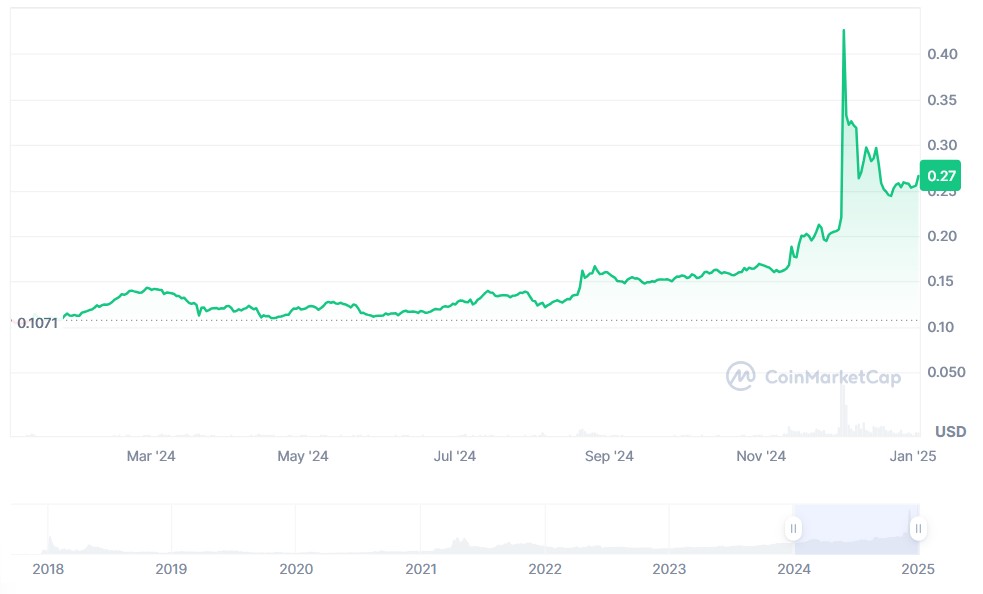
Over the past year, Tron's (TRX) price performance has been marked by a steady rise and significant milestones. At the beginning of 2024, TRX was priced at around $0.10, reflecting a relatively stable market sentiment. For most of the first half of the year, the price remained range-bound between $0.10 and $0.15, indicating moderate activity without major fluctuations.
Things took a positive turn in the latter half of the year, particularly in Q3, when TRX began an upward climb, driven by increasing investor interest and possibly key developments within the Tron ecosystem. The real highlight came in November 2024, when TRX saw a dramatic spike, surpassing $0.40 at its peak. This surge suggests a mix of market momentum, increased adoption of Tron's DeFi solutions, or strategic announcements that caught the attention of the crypto community.
Should you buy Tron (TRX)?
The answer to this isn’t black and white. Consider this:
Look at what Tron really does.Tron’s value goes beyond being a currency — it's built to power decentralized apps and content sharing. If you want to invest for the long haul, think about how Tron can disrupt industries like entertainment by solving real-world problems. Unlike some cryptos, Tron has a clear utility in its ecosystem.
Benefit from Tron’s connections.Tron’s partnerships with major companies like BitTorrent are a big deal. While other projects often lose steam, Tron is expanding its network and increasing its practical uses. Keep an eye on how these relationships evolve — they could be the key to Tron’s growth in the future.
Stay updated on developments. Tron’s team is always working on making the platform faster and cheaper to use. By staying informed about updates, you can time your investments better, possibly buying just before new features or improvements drive the price up.
Consider its price swings. Like all cryptocurrencies, Tron is volatile. If you're someone who can handle ups and downs, this can be a great opportunity, but make sure you're comfortable with the market swings. Compare its price movements with the overall market to understand how it behaves in different market conditions.
If after consideration of these points, TRON fits with your goals and portfolio, then you may decide to invest.
How to buy Tron (TRX): 3 step algorithm
There are a few simple steps that can be followed to buy Tron - whether this is for investment purposes or to buy digital assets in games or other platforms.
Market analysis
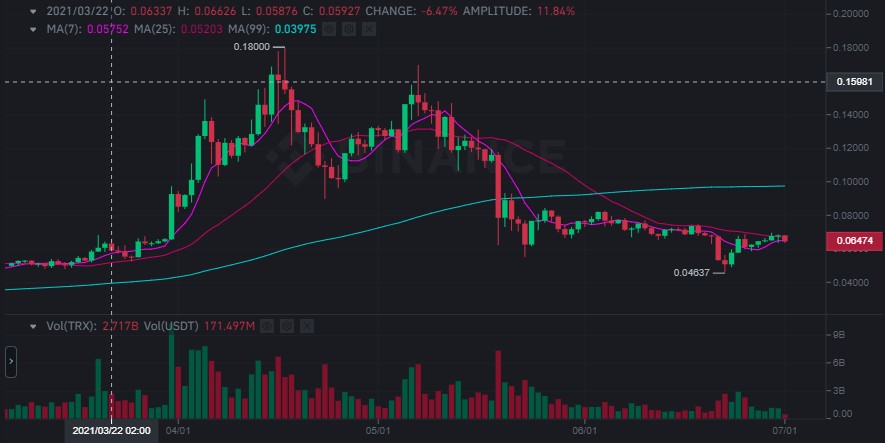
Start by taking a look at the market and decide when the best time would be to buy Tron. Initiate a purchase when Tron is at the lowest value for the day, as this maximizes the value gained.
Funding account
Register an account on any supported platform and follow the appropriate verification steps. Once verified, deposit funds into your account and you are ready to place an order.
Buying Tron (TRX)
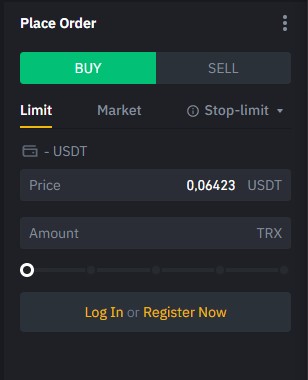
Once your account is funded, click on “Buy” at “Place Order” when you are ready to purchase Tron.
Here are some of the exchanges and brokers you can use to buy Tron (TRX).
| Coinbase | OKX | BTCC | Cryptohopper | Crypto.com | |
|---|---|---|---|---|---|
|
Tron supported |
Yes | Yes | Yes | Yes | Yes |
|
Min. Deposit, $ |
10 | 10 | 10 | No | 1 |
|
Coins supported |
400+ | 600+ | 399 | 1000 | 400+ |
|
Spot Taker fee, % |
0.5 | 0.1 | 0.3 | 0 | 0.5 |
|
Spot Maker Fee, % |
0.5 | 0.08 | 0.2 | 0 | 0.25 |
|
P2P Taker Fee, % |
0.05 - 0.60 | 0 | Not supported | No | 0,16 - 0,20 |
|
P2P Maker Fee, % |
0 - 0.40 | 0 | Not supported | No | 0,10 - 0,16 |
|
Open an account |
Go to broker Your capital is at risk. |
Go to broker Your capital is at risk. |
Go to broker Your capital is at risk.
|
Go to broker Your capital is at risk. |
Go to broker Your capital is at risk. |
Why TRX’s decentralized content model and continuous upgrades set it apart

One important thing that beginners often miss about TRX (Tron) is its aim to reshape content sharing. Tron isn’t just another cryptocurrency — it’s creating a platform where creators and their audience can interact directly, cutting out middlemen. What makes Tron different is its affordable transaction fees and fast network speeds, which could seriously disrupt industries like entertainment. This unique model has the potential to change how content is shared, and as an investor, this could be a game-changer for long-term growth.
Another reason to keep an eye on TRX is its solid development backing. While other coins might lose momentum after their launch, Tron has kept up a steady pace of regular improvements to its network, focusing on things like lower fees and faster transactions. If you stay informed about these updates, you can better understand how Tron stands out in the market and why it continues to push forward in the crypto space, offering great investment potential.
Conclusion
Tron (TRX) stands out in the blockchain space with its high throughput, low transaction fees, and focus on decentralized content sharing. Its growing user base and partnerships, such as integration with stablecoins like USDT, showcase real-world utility and network expansion. While the cryptocurrency market remains volatile, Tron’s technical strengths and unique positioning provide compelling reasons for investor interest. Ultimately, TRX’s success will hinge on continued innovation and adoption, making it a project to watch in the evolving digital economy.
FAQs
How does Tron's delegated proof-of-stake (DPoS) system differ from traditional crypto mining?
What are the primary real-world use cases for Tron (TRX) beyond simple transactions?
How does Tron support interoperability with other major blockchain networks?
In what ways does Tron address data privacy and freedom from censorship for its users?
Editors' Top Picks and Insights





Related Articles
Team that worked on the article
Andrey Mastykin is an experienced author, editor, and content strategist who has been with Traders Union since 2020. As an editor, he is meticulous about fact-checking and ensuring the accuracy of all information published on the Traders Union platform.
Dan Blystone began his trading career in 1998 as an arbitrage clerk on the floor of the Chicago Mercantile Exchange (CME). He later traded bond and Eurex futures at proprietary firms such as Altea Trading, gaining valuable experience in high-frequency trading and risk management.
Chinmay Soni is a financial analyst with more than 5 years of experience in working with stocks, Forex, derivatives, and other assets. As a founder of a boutique research firm and an active researcher, he covers various industries and fields, providing insights backed by statistical data.
CFD is a contract between an investor/trader and seller that demonstrates that the trader will need to pay the price difference between the current value of the asset and its value at the time of contract to the seller.
Yield refers to the earnings or income derived from an investment. It mirrors the returns generated by owning assets such as stocks, bonds, or other financial instruments.
Risk management is a risk management model that involves controlling potential losses while maximizing profits. The main risk management tools are stop loss, take profit, calculation of position volume taking into account leverage and pip value.
Index in trading is the measure of the performance of a group of stocks, which can include the assets and securities in it.
Ethereum is a decentralized blockchain platform and cryptocurrency that was proposed by Vitalik Buterin in late 2013 and development began in early 2014. It was designed as a versatile platform for creating decentralized applications (DApps) and smart contracts.

-
 Afghanistan
-
 Albania
-
 Algeria
-
 Angola
-
 Argentina
-
 Armenia
-
 Australia
-
 Austria
-
 Azerbaijan
-
 Bahamas
-
 Bahrain
-
 Bangladesh
-
 Belarus
-
 Belgium
-
 Bolivia
-
 Botswana
-
 Brazil
-
 Brunei
-
 Bulgaria
-
 Cambodia
-
 Cameroon
-
 Canada
-
 Chile
Chile
-
 China
China
-
 Colombia
-
 Congo
Congo
-
 Costa Rica
-
 Cote d'Ivoire
-
 Croatia
-
 Cuba
Cuba
-
 Cyprus
-
 Czechia
-
 DR Congo
-
 Denmark
-
 Dominican Republic
-
 Ecuador
-
 Egypt
Egypt
-
 El Salvador
-
 Estonia
-
 Eswatini
-
 Ethiopia
-
 Finland
-
 France
-
 Georgia
-
 Germany
-
 Ghana
Ghana
-
 Greece
-
 Haiti
Haiti
-
 Hong Kong
-
 Hungary
-
 India
India
-
 Indonesia
-
 Iran, Islamic republic
-
 Iraq
Iraq
-
 Ireland
-
 Israel
-
 Italy
Italy
-
 Jamaica
-
 Japan
Japan
-
 Jordan
-
 Kazakhstan
-
 Kenya
Kenya
-
 Korea
Korea
-
 Kuwait
-
 Kyrgyzstan
-
 Laos
Laos
-
 Latvia
-
 Lebanon
-
 Lesotho
-
 Libya
Libya
-
 Lithuania
-
 Luxembourg
-
 Madagascar
-
 Malaysia
-
 Malta
Malta
-
 Mauritius
-
 Mexico
-
 Moldova
-
 Mongolia
-
 Montenegro
-
 Morocco
-
 Mozambique
-
 Myanmar
-
 Namibia
-
 Nepal
Nepal
-
 Netherlands
-
 New Zealand
-
 Nigeria
-
 North Macedonia
-
 Norway
-
 Oman
Oman
-
 Pakistan
-
 Palestine
-
 Panama
-
 Papua New Guinea
-
 Paraguay
-
 Peru
Peru
-
 Philippines
-
 Poland
-
 Portugal
-
 Puerto Rico
-
 Qatar
Qatar
-
 Reunion
-
 Romania
-
 Rwanda
-
 Saudi Arabia
-
 Serbia
-
 Singapore
-
 Slovakia
-
 Slovenia
-
 Somalia
-
 South Africa
-
 Spain
Spain
-
 Sri Lanka
-
 Sweden
-
 Switzerland
-
 Syria
Syria
-
 Taiwan
-
 Tajikistan
-
 Tanzania
-
 Thailand
-
 Trinidad and Tobago
-
 Tunisia
-
 Turkey
-
 UAE
UAE
-
 Uganda
-
 Ukraine
-
 United Kingdom
-
United States
-
 Uruguay
-
 Uzbekistan
-
 Venezuela
-
 Vietnam
-
 Yemen
Yemen
-
 Zambia
-
 Zimbabwe
- Forex
- Crypto