
Is Oil Trading Halal Or Haram in Islam?


Editorial Note: While we adhere to strict Editorial Integrity, this post may contain references to products from our partners. Here's an explanation for How We Make Money. None of the data and information on this webpage constitutes investment advice according to our Disclaimer.
Many scholars ask if trading oil is halal, and the answer depends on how the transaction is structured. Oil trading is considered halal in Islam if it involves real or legal ownership of the physical asset, immediate settlement, and does not include interest or overly speculative practices. Spot trading that ensures clear ownership and avoids derivatives, futures, or leveraged margin positions is generally viewed as acceptable within Islamic finance.
Oil remains one of the most actively traded commodities in the world today. As Muslim investors increasingly participate in global markets, a key concern continues to be whether crude oil trading is halal or haram. This discussion requires a close look at whether trades involve proper ownership, timely settlement, and ethical contract terms. From a Shariah-compliance perspective, any transaction involving ambiguity, delay in delivery, or interest-based mechanisms would raise serious concerns. Therefore, understanding how the trade is structured becomes essential for Muslims seeking to ensure their investments are in line with Islamic finance rulings.
Islamic teachings provide clear guidance on ethical trading practices. For example:
“Whoever wishes to engage in trade must first learn the rules of religion to distinguish between halal and haram. If not, they may fall into doubtful matters.”
Imam Ja’far al-Sadiq, as cited by Ayatollah Ali al-Sistani
Risk warning: All investments carry risk, including potential capital loss. Economic fluctuations and market changes affect returns, and 40-50% of investors underperform benchmarks. Diversification helps but does not eliminate risks. Invest wisely and consult professional financial advisors.
What is oil trading?
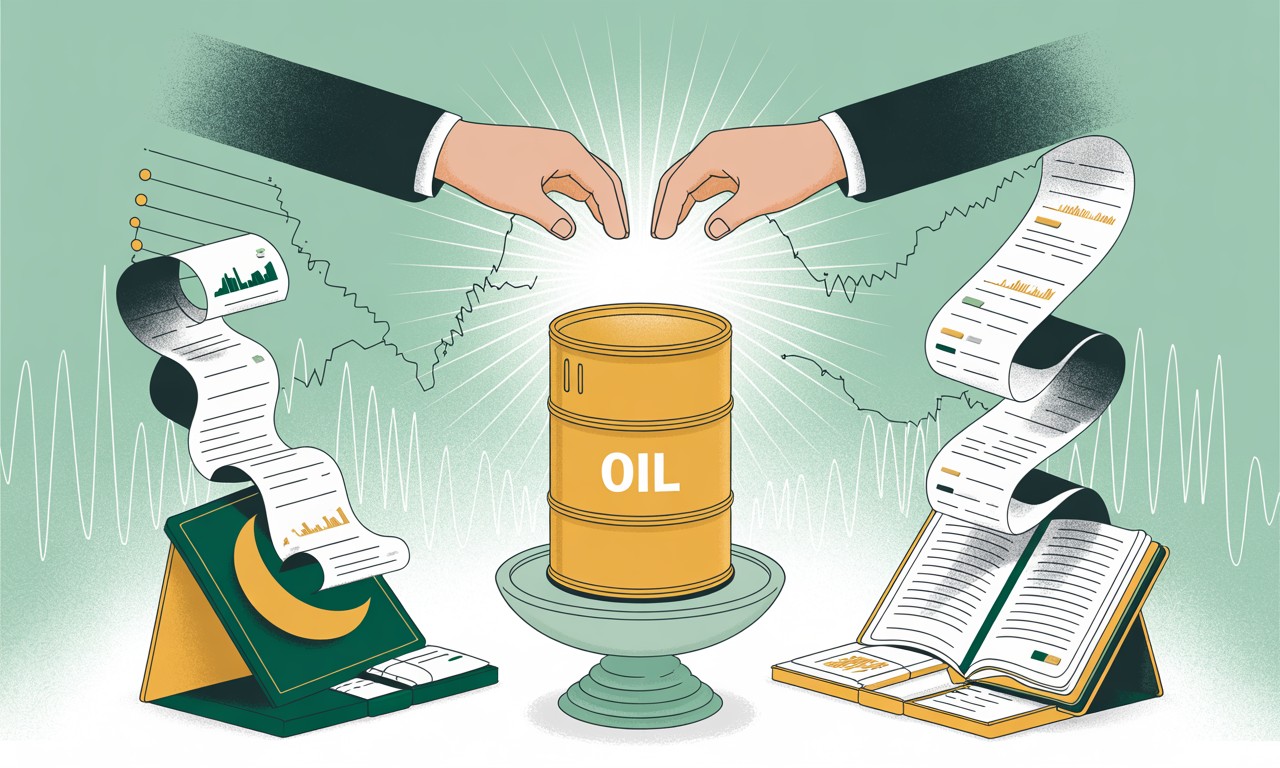
Oil trading refers to buying and selling crude oil or its refined products, such as gasoline or diesel, through brokers, trading platforms, or organized markets. It is a key part of the global energy landscape and ranks among the most actively traded commodities, with daily volumes exceeding 90 million barrels worldwide.
Traders typically operate in two main types of markets:
Spot contracts involve the quick exchange of oil, usually settled within two working days. These trades are common among businesses and individuals looking for immediate delivery or short-term price exposure.
Futures contracts, on the other hand, are formal agreements to buy or sell oil at a specific price on a future date. While often used for hedging risks or making investment bets, these contracts rarely end in actual physical delivery.
Futures markets currently drive most oil trading activity, but many of the trades are speculative. They aim to profit from market movements rather than real oil exchanges. This has led many scholars to ask whether crude oil trading is halal, particularly when trades lack physical possession (qabd), include deferred payments, or involve interest-based financial tools, all of which raise concerns under Islamic finance.
To evaluate whether such trading methods are acceptable in Islam, one must consider how Shariah law treats ownership, clarity in agreements, and risk-sharing. A common question that arises is, “is trading crude oil halal?”, and the answer often depends on whether the trade structure avoids prohibited elements and follows ethical principles defined by Islamic teachings.
Core shariah principles in trading
In Islamic finance, all trading activities are expected to follow principles that promote fairness, openness, and ethical dealing. These values are especially important when considering whether oil trading is allowed, since they apply across all kinds of assets, including commodities, equities, and Forex. Many scholars ask whether crude oil trading is halal, because it raises unique concerns when compared to other financial instruments.
Here are the four core prohibitions in Shariah-compliant trading:
Riba (interest). Any kind of fixed or guaranteed return, such as interest from a loan or margin-based trading, is strictly avoided. Oil trades that include overnight interest charges or involve interest-linked services would not align with this rule.
Gharar (excessive uncertainty). Trade agreements should be completely transparent. That means price, quantity, and delivery timing must all be clearly stated from the beginning. Some oil-based derivatives fail here, as they expose both sides to vague and unpredictable outcomes.
Maysir (gambling). Islamic law does not permit deals that resemble gambling. If traders make highly speculative bets on oil prices, especially using borrowed funds or high leverage, it often falls into this prohibited category.
Invalid ownership (selling what you don’t own). A legitimate trade requires that the seller actually has ownership or clear control of the product. In oil markets, selling barrels you don’t possess or have custodial access to would be invalid under Islamic rules.
These principles also apply to halal trading of gold, silver and other commodities, which are considered ribawi. That’s why people who trade in both spaces often ask whether trading crude oil is halal, since similar rules around possession and contract structure apply. Anyone entering these markets should understand the shared concerns. For example, rulings on gold trading in Islamic finance raise similar red flags around timing, delivery, and who holds the asset.
Is trading oil halal?
Many people ask, especially beginners in commodities, whether oil trading is halal, and the answer depends on how the trade is structured and delivered.
Speculative oil futures are not halal. If you trade oil contracts purely to profit from price changes, without the intention of receiving physical delivery, it falls under maysir (gambling) according to most scholars. The trade becomes a bet on market movement rather than a legitimate exchange of goods.
Spot trading with real delivery is halal. When oil is bought and sold with proper documentation, immediate payment, and the intention to transfer actual ownership, many scholars agree it qualifies as a halal transaction. This aligns with the basic Islamic trading rule of buying something you own and can deliver.
Most online platforms don't offer true ownership. Many brokers allow you to "trade oil" without ever owning a barrel. This raises serious Shariah concerns, as you're essentially profiting from paper-based speculation, not from a real asset.
Leverage adds a layer of riba risk. When oil trades are made using borrowed funds or margin accounts that charge interest, the transaction becomes invalid under Islamic principles. This is a hidden element many Muslim traders overlook when using Western platforms.
Storage and delivery rights must be clear. If the oil trade involves deferred delivery, scholars require clear contracts that show where the oil is stored and how it will be transferred. Ambiguity in delivery terms brings in gharar (uncertainty), which is strictly prohibited.
Shariah-compliant oil ETFs exist. Some funds track oil prices while following strict Islamic screening. These allow Muslim investors to gain oil exposure without entering into futures or margin-based trading. But even here, investors need to verify if the fund avoids interest and excessive speculation.
How to trade oil in a halal-compliant way
For Muslim traders looking to enter the oil market without compromising Islamic principles, it is essential to ensure that each trade follows the basic guidelines of Shariah-based finance. The focus must remain on clarity, genuine ownership, and avoiding both riba and excessive uncertainty.
Here are key guidelines to ensure your oil trading is halal:
Choose brokers that offer certified Islamic accounts. Work only with regulated brokers that provide swap-free Islamic accounts, meaning no overnight interest (riba) is charged. Make sure these accounts are clear about all fees and trading conditions.
Limit trading to spot contracts with immediate settlement. Shariah law places importance on qabd (ownership and possession). This requirement is met when oil is handed over or allocated to the trader once payment is made. Spot trading arrangements are best suited for this, as they involve an actual transfer of ownership.
Avoid futures, CFDs, or synthetic instruments. These types of contracts are often built around speculation and do not give traders any ownership of the actual commodity. Products that only track price changes without delivering real assets are not allowed in Islamic finance because they lack asset backing and carry too much uncertainty (gharar).
Review contract documentation and platform policies. Before making any trades, take the time to read the platform's terms to confirm that your trading activity respects Islamic finance guidelines. Make sure your oil positions involve actual rights to the asset and that the broker avoids using interest-based systems.
So trading crude oil is halal if done the right way. But if you're looking for halal investment options beyond oil, it's important to focus on where your money is going and whether it aligns with Islamic principles. One of the most effective ways to ensure Shariah compliance is by opening an Islamic account, which supports halal investing in diverse markets like stocks, crypto, and Forex. We've carefully reviewed the top platforms that offer these accounts and highlighted their key features to help you make an informed, faith-aligned decision. You can explore your options below.
| Swap Free | Crypto | Stocks | Currency pairs | Min. deposit, $ | Regulation | TU overall score | Open an account | |
|---|---|---|---|---|---|---|---|---|
| Yes | Yes | Yes | 68 | No | FSC (BVI), ASIC, IIROC, FCA, CFTC, NFA | 6.63 | Go to broker Your capital is at risk. |
|
| Yes | Yes | Yes | 80 | 100 | CIMA, FCA, FSA (Japan), NFA, IIROC, ASIC, CFTC | 6.47 | Study review | |
| Yes | No | Yes | 57 | 5 | CySEC, FSC (Belize), DFSA, FSCA, FSA (Seychelles), FSC (Mauritius), SCA (United Arab Emirates), CMA (Kenya) | 9.35 | Go to broker Your capital is at risk. |
|
| Yes | Yes | Yes | 90 | No | ASIC, FCA, DFSA, BaFin, CMA, SCB, CySec | 9.3 | Go to broker Your capital is at risk.
|
|
| Yes | Yes | Yes | 90 | 1 | ASIC, VFSC, FSA | 9.25 | Go to broker Your capital is at risk. |
Trade oil halal by avoiding leverage and choosing spot contracts with physical backing

A lot of people think oil trading goes against Islamic values, but that’s not always the case. If you stick to spot contracts that are backed by actual barrels of oil, you’re not just speculating, you’re trading something real. That’s a big deal in Islamic finance, where trading tangible goods is a core principle. It’s a more honest, grounded way to approach oil markets, and it keeps your activity closer to what Shariah allows.
There’s also something crucial that often gets missed, using leverage or borrowing to trade oil can quietly pull you into interest-based traps. Even if the trade itself is clean, using borrowed funds or accounts that charge overnight interest can make it problematic. The cleaner route is to use only your own capital, stick to basic spot trades, and avoid contracts with hidden fees or financing structures. It takes a bit more attention, but it keeps your earnings more aligned with Islamic ethics.
Conclusion
Oil trading can be halal, but only when the trading model follows Islamic finance requirements. Permissible contracts involve immediate settlement and real ownership, while most speculative instruments used on global platforms do not meet these standards. As with all financial matters in Islam, traders are encouraged to seek clarity, study the contract mechanics, and consult qualified scholars when in doubt.
FAQs
Can I hold crude oil positions overnight in a halal account?
Yes, but only if your broker offers a verified swap-free Islamic account that does not apply overnight interest charges (riba). Always confirm that no fees are structured as interest.
Is trading oil ETFs halal if they track oil prices?
Oil ETFs may not be halal if they rely on futures or derivatives. A halal ETF must be asset-backed, avoid interest, and comply with immediate settlement principles.
Can I invest in companies involved in oil production as a halal alternative?
Yes, investing in Shariah-compliant companies in the energy sector is permissible if the company’s core operations and financial structure meet Islamic guidelines.
Is it halal to trade oil during high-volatility events like OPEC announcements?
Timing trades around market events is allowed, but entering positions purely for short-term speculation without asset backing is not considered halal.
Editors' Top Picks and Insights






Related Articles
Team that worked on the article
Alamin Morshed is a contributor at Traders Union. He specializes in writing articles for businesses that want to improve their Google search rankings to compete with their competition.
Chinmay Soni is a financial analyst with more than 5 years of experience in working with stocks, Forex, derivatives, and other assets. As a founder of a boutique research firm and an active researcher, he covers various industries and fields, providing insights backed by statistical data.
Mirjan Hipolito is a journalist and news editor at Traders Union. She is an expert crypto writer with five years of experience in the financial markets.
Cryptocurrency is a type of digital or virtual currency that relies on cryptography for security. Unlike traditional currencies issued by governments (fiat currencies), cryptocurrencies operate on decentralized networks, typically based on blockchain technology.
CFD is a contract between an investor/trader and seller that demonstrates that the trader will need to pay the price difference between the current value of the asset and its value at the time of contract to the seller.
Volatility refers to the degree of variation or fluctuation in the price or value of a financial asset, such as stocks, bonds, or cryptocurrencies, over a period of time. Higher volatility indicates that an asset's price is experiencing more significant and rapid price swings, while lower volatility suggests relatively stable and gradual price movements.
Bitcoin is a decentralized digital cryptocurrency that was created in 2009 by an anonymous individual or group using the pseudonym Satoshi Nakamoto. It operates on a technology called blockchain, which is a distributed ledger that records all transactions across a network of computers.
Index in trading is the measure of the performance of a group of stocks, which can include the assets and securities in it.

-
 Afghanistan
-
 Albania
-
 Algeria
-
 Angola
-
 Argentina
-
 Armenia
-
 Australia
-
 Austria
-
 Azerbaijan
-
 Bahamas
-
 Bahrain
-
 Bangladesh
-
 Belarus
-
 Belgium
-
 Bolivia
-
 Botswana
-
 Brazil
-
 Brunei
-
 Bulgaria
-
 Cambodia
-
 Cameroon
-
 Canada
-
 Chile
Chile
-
 China
China
-
 Colombia
-
 Congo
Congo
-
 Costa Rica
-
 Cote d'Ivoire
-
 Croatia
-
 Cuba
Cuba
-
 Cyprus
-
 Czechia
-
 DR Congo
-
 Denmark
-
 Dominican Republic
-
 Ecuador
-
 Egypt
Egypt
-
 El Salvador
-
 Estonia
-
 Eswatini
-
 Ethiopia
-
 Finland
-
 France
-
 Georgia
-
 Germany
-
 Ghana
Ghana
-
 Greece
-
 Haiti
Haiti
-
 Hong Kong
-
 Hungary
-
 India
India
-
 Indonesia
-
 Iran, Islamic republic
-
 Iraq
Iraq
-
 Ireland
-
 Israel
-
 Italy
Italy
-
 Jamaica
-
 Japan
Japan
-
 Jordan
-
 Kazakhstan
-
 Kenya
Kenya
-
 Korea
Korea
-
 Kuwait
-
 Kyrgyzstan
-
 Laos
Laos
-
 Latvia
-
 Lebanon
-
 Lesotho
-
 Libya
Libya
-
 Lithuania
-
 Luxembourg
-
 Madagascar
-
 Malaysia
-
 Malta
Malta
-
 Mauritius
-
 Mexico
-
 Moldova
-
 Mongolia
-
 Montenegro
-
 Morocco
-
 Mozambique
-
 Myanmar
-
 Namibia
-
 Nepal
Nepal
-
 Netherlands
-
 New Zealand
-
 Nigeria
-
 North Macedonia
-
 Norway
-
 Oman
Oman
-
 Pakistan
-
 Palestine
-
 Panama
-
 Papua New Guinea
-
 Paraguay
-
 Peru
Peru
-
 Philippines
-
 Poland
-
 Portugal
-
 Puerto Rico
-
 Qatar
Qatar
-
 Reunion
-
 Romania
-
 Rwanda
-
 Saudi Arabia
-
 Serbia
-
 Singapore
-
 Slovakia
-
 Slovenia
-
 Somalia
-
 South Africa
-
 Spain
Spain
-
 Sri Lanka
-
 Sweden
-
 Switzerland
-
 Syria
Syria
-
 Taiwan
-
 Tajikistan
-
 Tanzania
-
 Thailand
-
 Trinidad and Tobago
-
 Tunisia
-
 Turkey
-
 UAE
UAE
-
 Uganda
-
 Ukraine
-
 United Kingdom
-
United States
-
 Uruguay
-
 Uzbekistan
-
 Venezuela
-
 Vietnam
-
 Yemen
Yemen
-
 Zambia
-
 Zimbabwe
- Forex
- Crypto












