
Recent U.S. economic signals are pointing in different directions, with consumer spending and corporate profits staying firm even as income growth cools and hiring remains weak. That mismatch suggests the expansion is drawing much of its visible strength from a concentrated artificial intelligence ecosystem rather than from broad-based momentum across the economy.
Highlights
- A small group of AI-linked companies now account for about 40 per cent of the S&P 500's market capitalisation, driving record profit share at 13.8 per cent of GDP.
- Broad U.S. equity market net income margins have recovered to approximately 9.7 per cent, but this strength rests disproportionately on AI-centric businesses, creating valuation concentration risk.
- Payroll growth in April rose just 0.43 per cent year-on-year, highlighting weak labour-market gains as revenue growth remains limited to less labour-intensive technology firms.
AI concentration shapes profits and valuations
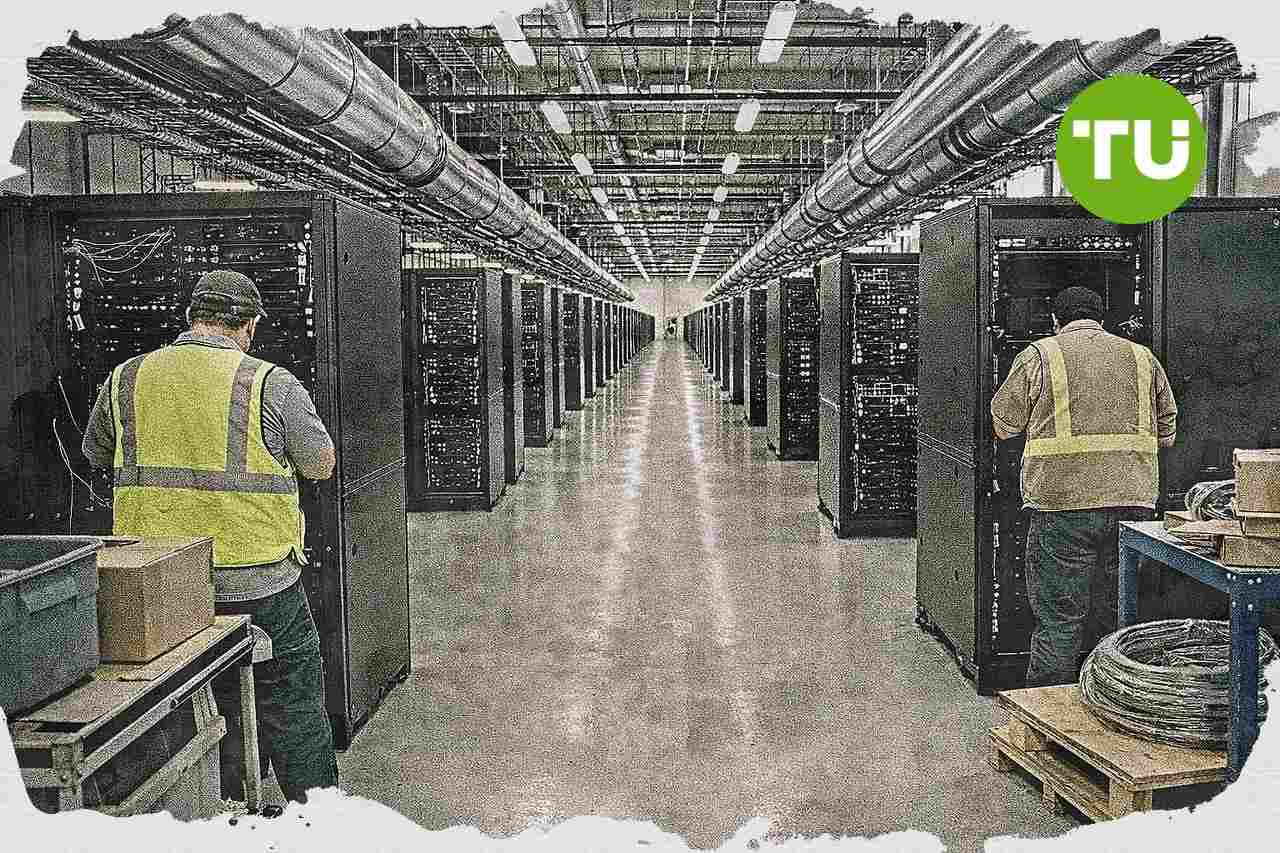
As reported by Financial Times, the clearest explanation for the current disconnect in U.S. economic data is concentration in a small group of AI-linked businesses, including chipmakers, hyperscalers, data centre operators and related infrastructure companies.While headline profit figures remain strong, much of corporate America is seeing only modest earnings growth, margin pressure or flat performance. That means equity markets are being driven by an exceptional minority, making both the economy and the market appear broader and more resilient than they are.
The article says the U.S. corporate profit share has climbed to a record 13.8 per cent of GDP, while net income margins across the broad U.S. equity market have recovered to about 9.7 per cent, close to earlier highs. At the same time, a handful of AI-linked stocks account for roughly 40 per cent of the S&P 500's market capitalisation, according to Bank of America data.
This raises the risk that investors are paying premium valuations for earnings that are not representative of the wider corporate sector. In that reading, valuation pressure is not limited to expensive technology stocks, because the broader market is also being priced on profit assumptions that may prove too narrow and less durable than aggregate data implies.
Wealth effects support demand, but dependence grows
The labour market reinforces that picture from another angle. In a typical expansion, strong profits translate into broader hiring, but many of the companies generating the biggest gains this time are also among the least labour-intensive.Payroll growth in April stands at just 0.43 per cent from a year earlier, below the roughly 1 per cent to 1.5 per cent annual pace that has typically accompanied a growing U.S. economy. Large technology groups are lifting revenue and margins without adding much headcount, weakening aggregate income growth and making the expansion more fragile.
That also helps explain why consumption is holding up better than income data alone would suggest. Spending is increasingly being supported by upper-income households whose finances are more closely tied to equities than wages, while lower-income households remain more exposed to squeezed real incomes and softer labour-market conditions.
For now, that loop can continue as long as investors remain confident that AI will generate very high long-term returns. But if expected returns from AI infrastructure and platforms come into question, the impact could extend beyond leading technology shares into weaker wealth effects, softer consumption and a broader reassessment of U.S. economic exceptionalism.
In our earlier coverage of Hewlett Packard Enterprise’s raised outlook, we explained how surging corporate spending on data centres and AI systems is accelerating demand for servers and networking gear. We noted that the AI infrastructure buildout helped lift HPE’s quarterly sales, boosted its networking and server divisions, and pushed the company to increase its revenue growth guidance—reinforcing the broader rally tied to AI-linked hardware demand.


Latest S&P 500 News







-
 Afghanistan
-
 Albania
-
 Algeria
-
 Angola
-
 Argentina
-
 Armenia
-
 Australia
-
 Austria
-
 Azerbaijan
-
 Bahamas
-
 Bahrain
-
 Bangladesh
-
 Belarus
-
 Belgium
-
 Bolivia
-
 Botswana
-
 Brazil
-
 Brunei
-
 Bulgaria
-
 Cambodia
-
 Cameroon
-
 Canada
-
 Chile
Chile
-
 China
China
-
 Colombia
-
 Congo
Congo
-
 Costa Rica
-
 Cote d'Ivoire
-
 Croatia
-
 Cuba
Cuba
-
 Cyprus
-
 Czechia
-
 DR Congo
-
 Denmark
-
 Dominican Republic
-
 Ecuador
-
 Egypt
Egypt
-
 El Salvador
-
 Estonia
-
 Eswatini
-
 Ethiopia
-
 Finland
-
 France
-
 Georgia
-
 Germany
-
 Ghana
Ghana
-
 Greece
-
 Haiti
Haiti
-
 Hong Kong
-
 Hungary
-
 India
India
-
 Indonesia
-
 Iran, Islamic republic
-
 Iraq
Iraq
-
 Ireland
-
 Israel
-
 Italy
Italy
-
 Jamaica
-
 Japan
Japan
-
 Jordan
-
 Kazakhstan
-
 Kenya
Kenya
-
 Korea
Korea
-
 Kuwait
-
 Kyrgyzstan
-
 Laos
Laos
-
 Latvia
-
 Lebanon
-
 Lesotho
-
 Libya
Libya
-
 Lithuania
-
 Luxembourg
-
 Madagascar
-
 Malaysia
-
 Malta
Malta
-
 Mauritius
-
 Mexico
-
 Moldova
-
 Mongolia
-
 Montenegro
-
 Morocco
-
 Mozambique
-
 Myanmar
-
 Namibia
-
 Nepal
Nepal
-
 Netherlands
-
 New Zealand
-
 Nigeria
-
 North Macedonia
-
 Norway
-
 Oman
Oman
-
 Pakistan
-
 Palestine
-
 Panama
-
 Papua New Guinea
-
 Paraguay
-
 Peru
Peru
-
 Philippines
-
 Poland
-
 Portugal
-
 Puerto Rico
-
 Qatar
Qatar
-
 Reunion
-
 Romania
-
 Rwanda
-
 Saudi Arabia
-
 Serbia
-
 Singapore
-
 Slovakia
-
 Slovenia
-
 Somalia
-
 South Africa
-
 Spain
Spain
-
 Sri Lanka
-
 Sweden
-
 Switzerland
-
 Syria
Syria
-
 Taiwan
-
 Tajikistan
-
 Tanzania
-
 Thailand
-
 Trinidad and Tobago
-
 Tunisia
-
 Turkey
-
 UAE
UAE
-
 Uganda
-
 Ukraine
-
 United Kingdom
-
United States
-
 Uruguay
-
 Uzbekistan
-
 Venezuela
-
 Vietnam
-
 Yemen
Yemen
-
 Zambia
-
 Zimbabwe
- Forex
- Crypto











