
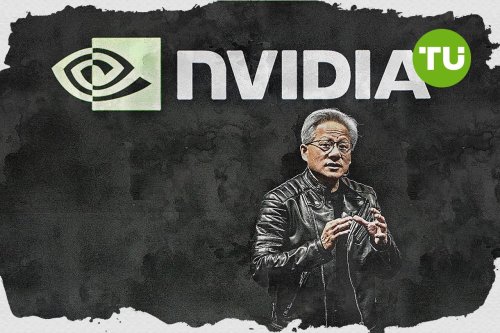
Nvidia stock rises 1.7% as analysts back long-term AI leadership

As of September 30, Nvidia stock is trading at $181.11, up 1.7% in the past 24 hours, following a sharp rebound in trading volumes and bullish sentiment across the broader tech sector. The intraday range saw the stock swing between $179.01 and $183.85.
Highlights
- Nvidia climbed 1.7% to $181.11, supported by analyst optimism and strong demand across the AI and data center sectors.
- While some firms trimmed price targets, consensus remains bullish on Nvidia's long-term positioning.
- Investors are watching for sustained momentum above $185 as a trigger for the next leg higher.
From a technical perspective, Nvidia continues to trade well above its 50-day and 200-day moving averages, affirming its position in a strong uptrend. The 50-day MA is estimated near $172, acting as immediate dynamic support. The longer-term 200-day MA, now sitting around $143, confirms a robust underlying trend that has defined Nvidia's rally since late 2022. The price has respected these averages consistently throughout the year, with each test of the 50-day MA resulting in a bounce. This trend reinforces institutional confidence in Nvidia’s longer-term bullish structure.
Key support for the stock lies between $170–$175, a zone that previously acted as a launchpad for upside moves. Should broader markets weaken, this level will be crucial to hold. On the upside, immediate resistance remains between $185–$190—a zone where Nvidia has repeatedly met selling pressure over the past three weeks. A decisive break above this range could clear the path toward $200+, a psychologically significant level closely watched by institutions.

Nvidia stock price dynamics (July 2025 - September 2025). Source: TradingView
Momentum indicators remain in overbought territory on the daily chart, suggesting the risk of short-term pullbacks. However, as long as the price action respects the rising trendline and support levels, any corrections are likely to be shallow and bought into. The Relative Strength Index (RSI) is hovering near 70, which typically signals stretched conditions, yet in strong uptrends this can persist. Volume profile data also shows heightened accumulation, suggesting that dips are being absorbed by large buyers rather than signaling distribution.
OpenAI alliance and chip roadmap power sentiment
The stock’s recent strength is fueled by several powerful catalysts—foremost among them, a reported $100 billion commitment by Nvidia to support OpenAI’s next-generation AI infrastructure. Nvidia is expected to provide massive compute power in collaboration with CoreWeave, enabling OpenAI to build up to 10 gigawatts of AI capacity. This partnership cements Nvidia’s central role in the AI hardware ecosystem and signals growing enterprise-level demand for its H100 and next-generation chips.
This came on the heels of the Rubin CPX chip architecture announcement, a major leap in Nvidia’s AI roadmap. The new chips are designed for video creation and complex inference workloads, signaling that Nvidia is looking beyond text generation and into the next phase of multimodal AI applications. Jensen Huang emphasized the ROI of these chips, stating a $100 million Rubin-based system could generate over $5 billion in economic value—a bold claim that has energized investor sentiment.
However, not all commentary is bullish. Analysts at Citi recently cut their target from $210 to $200, citing the emergence of competitive AI chip architectures—particularly Broadcom’s XPU design, which could pose a threat to Nvidia’s GPU-centric dominance. Others are watching developments from AMD, Tenstorrent, and custom ASIC providers, who may win contracts from hyperscalers aiming to diversify their supply chains.
Support holds at $170 with potential surge above $200
If the stock breaks through the $185–$190 range with strong volume confirmation, it could signal a bullish breakout with upside potential toward $200–$210. This scenario is supported by positive analyst sentiment and sustained demand from large-scale AI infrastructure players. The rollout of the Rubin CPX chip line and growing demand from OpenAI could further accelerate this move, assuming successful execution. A breakout above $190 would confirm trend continuation and likely attract additional institutional inflows.
Should Nvidia continue to trade within the $170–$185 range, it would suggest a phase of consolidation following recent gains and a reassessment of competitive threats. This type of stabilization could be healthy, allowing overbought technical indicators to reset and providing a foundation for the next upward move. Investors will likely watch for upcoming earnings reports and partnership developments to guide positioning. Lower trading volumes during this phase may also indicate a wait-and-see approach among market participants.
Evercore analyst Mark Lipacis reaffirmed his bullish view on Nvidia after discussions with the company’s CFO, highlighting its leadership in both AI hardware and software through CUDA and NVLink. He raised his price target to $225 and sees potential upside to his revised 2026 estimates if AI demand continues to accelerate.








-
 Afghanistan
-
 Albania
-
 Algeria
-
 Angola
-
 Argentina
-
 Armenia
-
 Australia
-
 Austria
-
 Azerbaijan
-
 Bahamas
-
 Bahrain
-
 Bangladesh
-
 Belarus
-
 Belgium
-
 Bolivia
-
 Botswana
-
 Brazil
-
 Brunei
-
 Bulgaria
-
 Cambodia
-
 Cameroon
-
 Canada
-
 Chile
Chile
-
 China
China
-
 Colombia
-
 Congo
Congo
-
 Costa Rica
-
 Cote d'Ivoire
-
 Croatia
-
 Cuba
Cuba
-
 Cyprus
-
 Czechia
-
 DR Congo
-
 Denmark
-
 Dominican Republic
-
 Ecuador
-
 Egypt
Egypt
-
 El Salvador
-
 Estonia
-
 Eswatini
-
 Ethiopia
-
 Finland
-
 France
-
 Georgia
-
 Germany
-
 Ghana
Ghana
-
 Greece
-
 Haiti
Haiti
-
 Hong Kong
-
 Hungary
-
 India
India
-
 Indonesia
-
 Iran, Islamic republic
-
 Iraq
Iraq
-
 Ireland
-
 Israel
-
 Italy
Italy
-
 Jamaica
-
 Japan
Japan
-
 Jordan
-
 Kazakhstan
-
 Kenya
Kenya
-
 Korea
Korea
-
 Kuwait
-
 Kyrgyzstan
-
 Laos
Laos
-
 Latvia
-
 Lebanon
-
 Lesotho
-
 Libya
Libya
-
 Lithuania
-
 Luxembourg
-
 Madagascar
-
 Malaysia
-
 Malta
Malta
-
 Mauritius
-
 Mexico
-
 Moldova
-
 Mongolia
-
 Montenegro
-
 Morocco
-
 Mozambique
-
 Myanmar
-
 Namibia
-
 Nepal
Nepal
-
 Netherlands
-
 New Zealand
-
 Nigeria
-
 North Macedonia
-
 Norway
-
 Oman
Oman
-
 Pakistan
-
 Palestine
-
 Panama
-
 Papua New Guinea
-
 Paraguay
-
 Peru
Peru
-
 Philippines
-
 Poland
-
 Portugal
-
 Puerto Rico
-
 Qatar
Qatar
-
 Reunion
-
 Romania
-
 Rwanda
-
 Saudi Arabia
-
 Serbia
-
 Singapore
-
 Slovakia
-
 Slovenia
-
 Somalia
-
 South Africa
-
 Spain
Spain
-
 Sri Lanka
-
 Sweden
-
 Switzerland
-
 Syria
Syria
-
 Taiwan
-
 Tajikistan
-
 Tanzania
-
 Thailand
-
 Trinidad and Tobago
-
 Tunisia
-
 Turkey
-
 UAE
UAE
-
 Uganda
-
 Ukraine
-
 United Kingdom
-
United States
-
 Uruguay
-
 Uzbekistan
-
 Venezuela
-
 Vietnam
-
 Yemen
Yemen
-
 Zambia
-
 Zimbabwe
- Forex
- Crypto












