

Investor scrutiny on income stability weighs on Shell stock below support

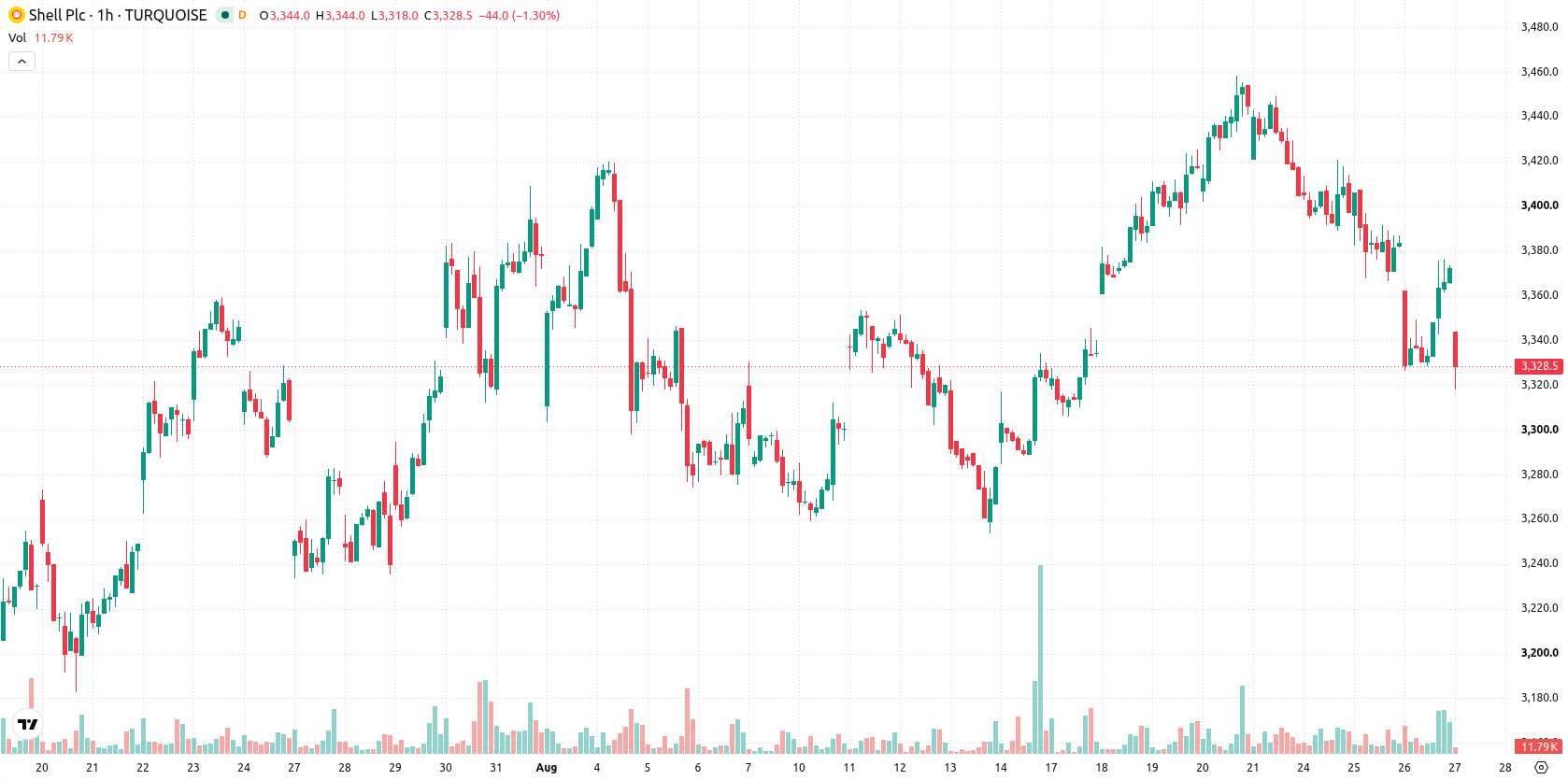
Shell (SHEL) stock is trading at GBX3,323, reflecting a decline of 1.42% for the session. The share price currently sits below its short- and medium-term moving averages, while maintaining a position above longer-term trend levels.
 4075.00
4110.00
Highlights
- Shell stock faces shareholder scrutiny on dividend policy sustainability as weak oil prices raise concerns about future income stability.
- Investors are reassessing Shell's capital allocation strategy with particular attention to its cash flow, balance sheet, and buyback potential.
- Shell shares closed at GBX3,323, down 1.42%, trading below key averages with technical momentum and oscillators indicating a strong short-term sell bias and a projected range of GBX3,267 to GBX3,378.
Dividend policy scrutiny intensifies amid falling oil and capital allocation shifts
Shell’s dividend policy is under review as investors reassess its sustainability amid declining oil prices, according to Kalkinemedia. Increased focus on cash flow, balance sheets, and buyback potential has led shareholders to scrutinize Shell's capital allocation strategy more closely. This shift in attention introduces concerns about future income stability and project expenditure, aligning with broader caution and helping explain recent pressure on the stock.
Bearish momentum confirmed as key resistance holds and signals deteriorate
On the H1 timeframe, SHEL is trading below its MA-20 and MA-50, but remains above the MA-200 on the daily chart. The Ichimoku Kijun is positioned at GBX3,374, currently acting as the nearest resistance level. Momentum indicators reinforce a bearish setup: MACD signals Strong Sell, ADX shows a Sell bias, RSI is at 36.47 (Sell), and Stochastic RSI also registers Strong Sell. Both the CCI and Bull/Bear Power are in oversold territory, pointing to clear intraday seller dominance.
Downside risk prevails as volatility band limits reversal potential
In the short term, the expected trading range for SHEL is GBX3,267 to GBX3,378, framing the typical volatility band relative to current levels. The probability of an upward move is very low, while further downside is considered highly likely, making short-term reversal scenarios less probable. Price action is forecast to stabilize within this corridor unless there is a decisive break below GBX3,267 or a move above immediate resistance at GBX3,374.
Previously it was reported that weakness in energy stocks such as Shell weighed on the London market amid lower oil prices and heightened scrutiny of capital allocation. The current analysis underscores sustained downside pressure on Shell, with close attention now warranted to potential breaks below GBX3,267 that could signal a further shift in momentum.










-
 Afghanistan
-
 Albania
-
 Algeria
-
 Angola
-
 Argentina
-
 Armenia
-
 Australia
-
 Austria
-
 Azerbaijan
-
 Bahamas
-
 Bahrain
-
 Bangladesh
-
 Belarus
-
 Belgium
-
 Bolivia
-
 Botswana
-
 Brazil
-
 Brunei
-
 Bulgaria
-
 Cambodia
-
 Cameroon
-
 Canada
-
 Chile
-
 China
-
 Colombia
-
 Congo
-
 Costa Rica
-
 Cote d'Ivoire
-
 Croatia
-
 Cuba
-
 Cyprus
-
 Czechia
-
 DR Congo
-
 Denmark
-
 Dominican Republic
-
 Ecuador
-
 Egypt
-
 El Salvador
-
 Estonia
-
 Eswatini
-
 Ethiopia
-
 Finland
-
 France
-
 Georgia
-
 Germany
-
 Ghana
-
 Greece
-
 Haiti
-
 Hong Kong
-
 Hungary
-
 India
-
 Indonesia
-
 Iran, Islamic republic
-
 Iraq
-
 Ireland
-
 Israel
-
 Italy
-
 Jamaica
-
 Japan
-
 Jordan
-
 Kazakhstan
-
 Kenya
-
 Korea
-
 Kuwait
-
 Kyrgyzstan
-
 Laos
-
 Latvia
-
 Lebanon
-
 Lesotho
-
 Libya
-
 Lithuania
-
 Luxembourg
-
 Madagascar
-
 Malaysia
-
 Malta
-
 Mauritius
-
 Mexico
-
 Moldova
-
 Mongolia
-
 Montenegro
-
 Morocco
-
 Mozambique
-
 Myanmar
-
 Namibia
-
 Nepal
-
 Netherlands
-
 New Zealand
-
 Nigeria
-
 North Macedonia
-
 Norway
-
 Oman
-
 Pakistan
-
 Palestine
-
 Panama
-
 Papua New Guinea
-
 Paraguay
-
 Peru
-
 Philippines
-
 Poland
-
 Portugal
-
 Puerto Rico
-
 Qatar
-
 Reunion
-
 Romania
-
 Rwanda
-
 Saudi Arabia
-
 Serbia
-
 Singapore
-
 Slovakia
-
 Slovenia
-
 Somalia
-
 South Africa
-
 Spain
-
 Sri Lanka
-
 Sweden
-
 Switzerland
-
 Syria
-
 Taiwan
-
 Tajikistan
-
 Tanzania
-
 Thailand
-
 Trinidad and Tobago
-
 Tunisia
-
 Turkey
-
 UAE
-
 Uganda
-
 Ukraine
-
 United Kingdom
-
United States
-
 Uruguay
-
 Uzbekistan
-
 Venezuela
-
 Vietnam
-
 Yemen
-
 Zambia
-
 Zimbabwe
- Forex
- Crypto












