
Best Ethereum Launchpads 2026 | Full Guide


Editorial Note: While we adhere to strict Editorial Integrity, this post may contain references to products from our partners. Here's an explanation for How We Make Money. None of the data and information on this webpage constitutes investment advice according to our Disclaimer.
The top Ethereum launchpads for 2026:
DAO Maker. DAO-based governance and fully audited projects.
Polkastarter. Cross-chain IDO launchpad with fast listings.
TrustSwap Launchpad. Smart-contract vesting and anti-dump protection.
MEXC ETH Launchpad. Centralized Ethereum launchpad with guaranteed listings.
NFTPad. Exclusive NFT launchpad for ERC-721 and ERC-1155 collections.
Ethereum remains the foundation of the decentralized ecosystem, powering thousands of tokens, NFT collections, and DeFi projects. As blockchain innovation expands, Ethereum launchpads have become the go-to platforms for token fundraising, NFT launches, and early-stage investments.
The ETH launchpads covered in this guide offer secure and transparent environments for project incubation, token generation events (TGEs), and staking-based participation models aligned with Ethereum’s transition to proof-of-stake (PoS) consensus.
Risk warning: Cryptocurrency markets are highly volatile, with sharp price swings and regulatory uncertainties. Research indicates that 75-90% of traders face losses. Only invest discretionary funds and consult an experienced financial advisor.
Best Ethereum launchpads for 2026
Ethereum continues to serve as the core network for token fundraising, NFT drops, and decentralized finance initiatives. As a result, Ethereum launchpads have become essential tools for connecting innovative projects with committed investors. The following platforms each offer unique participation models, staking systems, and trust mechanisms designed to balance accessibility with accountability.
DAO Maker
DAO Maker is a launchpad and incubator platform that helps early-stage crypto and Web3 projects raise capital and build communities. Its key feature is the “DAO Pad” where token holders can access token sales of carefully vetted startups. Users stake the native DAO token to earn “DAO Power” and gain access to these deals.
The platform emphasizes strong project screening, governance participation, and community-based investment. It offers staking tiers, vesting schedules, and tools to lock and distribute tokens in a structured way. This makes it a choice for investors looking for more verified opportunities via an Ethereum-native platform.

- Pros
- Cons
institutional-level vetting and KYC for all projects;
DAO governance ensures transparency and accountability;
high ROI history from past launches;
strong community and investor reputation.
high entry requirement for upper staking tiers;
limited IDO availability due to heavy demand;
complex onboarding for new investors.
Polkastarter
Polkastarter is a decentralized fundraising platform designed to let projects raise funds via IDOs across multiple blockchains, including Ethereum. It uses fixed-price swaps instead of traditional liquidity models, simplifying the token sale process.
Participants typically stake the POLS token to access pools, and projects launch in a cross-chain fashion (Ethereum, Polygon, BNB chain) to boost reach and reduce entry friction. Its appeal is in offering early access to new tokens with a streamlined interface and cross-chain support.

- Pros
- Cons
cross-chain support (Ethereum, BNB Chain, Polygon);
easy-to-use interface for beginners;
transparent project screening process;
consistent listing activity and liquidity.
requires POLS staking to participate in IDOs;
highly competitive pools often sell out in seconds;
moderate vetting standards compared to DAO Maker.
TrustSwap launchpad
TrustSwap is a full-service launchpad and DeFi toolset aimed at securing and supporting new blockchain projects. Investors stake its native SWAP token to gain guaranteed allocations in project launches. The platform’s strengths include built-in vesting mechanisms, anti-dump protections, and support for token and NFT launches across chains including Ethereum.
The emphasis is on project accountability and investor protection through smart-contract controls (for example, locking tokens, transparent distribution schedules) rather than purely speculative launches.

- Pros
- Cons
built-in vesting and anti-dump protection;
supports both tokens and NFTs;
emphasis on secure, long-term project management;
transparent token distribution process.
fewer project launches compared to larger platforms;
limited cross-chain integration;
staking requirements may restrict small investors.
MEXC ETH launchpad

MEXC is a centralized exchange that offers an “ETH Launchpad” feature tailored for Ethereum-based token sales and staking campaigns. Through this, users can subscribe to new tokens built on or tied to Ethereum, often with guaranteed listing and simplified participation via the exchange’s ecosystem.
This model merges exchange user-base convenience with launchpad mechanics: participants meet staking or trading volume conditions, subscribe via supported tokens (e.g., USDT or MX), and receive allocations. For investors new to launchpads or seeking easy onboarding, this approach is more accessible though less fully decentralized. In addition to Ethereum-based campaigns, the MEXC launchpad provides a broader subscription model that includes multi-chain token sales, proportional allocation mechanisms, and clearly defined event cycles designed to give traders structured early access before public market listing.

- Pros
- Cons
guaranteed token listings on MEXC after IDO;
high post-launch liquidity and fast trading access;
simplified participation process;
ideal for newcomers to launchpads.
centralized model reduces decentralization benefits;
regional restrictions for some users;
project selection controlled by exchange operators.
NFTPad
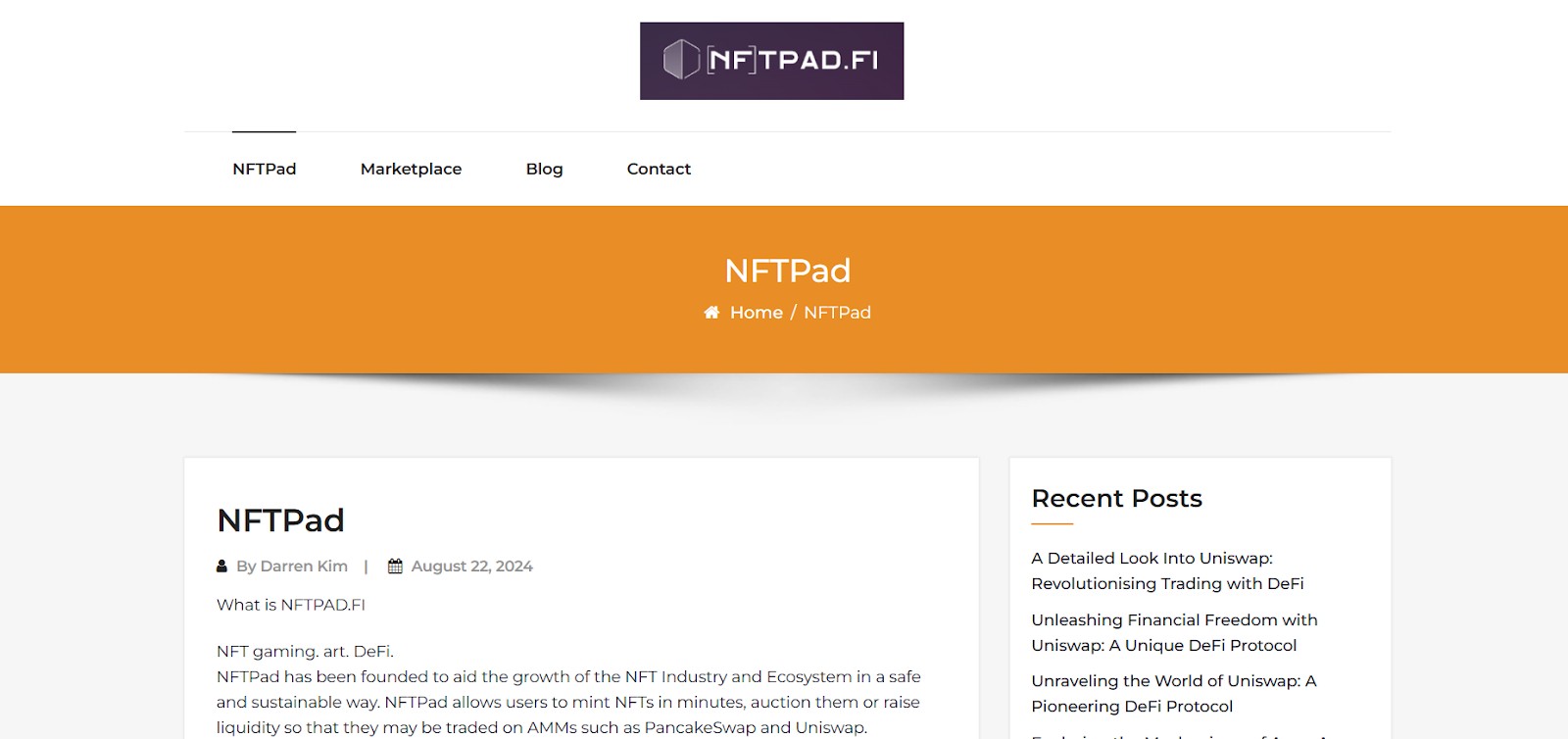
NFTPad is a launchpad focused exclusively on NFT projects rather than standard fungible token IDOs. It allows creators to mint and launch ERC-721 or ERC-1155 collections for early-stage access by collectors and supporters. The platform supports staking and curated drops to connect artists, gaming assets, and community-driven digital-art launches.
For anyone interested in the NFT side of Ethereum (and related chains) rather than pure token launches, NFTPad offers a specialized venue to participate in early NFT-project fundraising and drops.
- Pros
- Cons
exclusive focus on NFT projects;
royalties and rewards for creators;
easy participation through staking;
active NFT community with curated drops.
limited to NFTs only (no token IDOs);
smaller audience than token launchpads;
dependent on overall NFT market demand.
Each of these ETH launchpads stands out for transparency, community backing, and technical reliability. Together they form a diverse ecosystem of Ethereum launchpads, supporting both investors and developers.
What is an Ethereum launchpad
An Ethereum launchpad is a blockchain platform designed to help new crypto projects raise capital and distribute tokens. Most of these launchpads operate on the Ethereum mainnet or its Layer-2 solutions such as Arbitrum, Polygon, and Optimism.
Launchpads serve several purposes:
Facilitate IDO (Initial DEX Offering) or INO (Initial NFT Offering) campaigns.
Allow users to stake ETH or platform tokens to access early-stage sales.
Provide tools for smart-contract deployment, token minting, and liquidity support.
Act as a secure gateway for investors to join promising projects before exchange listings.
In other words, Ethereum launchpads bridge innovators and early adopters, giving users first-mover access to emerging crypto assets.
How Ethereum launchpads work
Every ETH launchpad project typically follows a structured process:
Project verification. The launchpad screens tokenomics, team background, and technical audit.
Staking and access tiering. Users stake ETH or native tokens to unlock participation rights. This system, common on Ethereum staking launchpads, rewards long-term holders.
Whitelist and allocation. Verified investors receive guaranteed or lottery-based allocations.
Token sale. An IDO launchpad on Ethereum executes the public sale via smart contract.
Distribution and liquidity. Post-sale tokens are released according to vesting schedules and paired for trading on decentralized exchanges.
Some platforms, such as the MEXC ETH Launchpad, also integrate centralized trading and staking pools, merging the benefits of CEX and DEX participation.
Key benefits of using an Ethereum launchpad
Ethereum launchpads make it easier for investors and developers to connect within a secure and transparent ecosystem. They combine automation, staking, and project verification to help users participate in early-stage crypto launches safely and efficiently. Key benefits include:
Early project access. ETH launchpads give users the chance to invest in new tokens and NFT projects before they are listed on major exchanges. This early access can offer strong growth potential for long-term investors, especially when using trusted platforms such as the Ethereum staking Launchpad official site, which provides secure and verified opportunities for early participation.
Transparent and secure launches. Smart-contract systems handle the fundraising and distribution process automatically. This ensures fairness, prevents manipulation, and improves trust between investors and project teams.
Earning through staking. Many Ethereum staking launchpads allow users to stake ETH or native tokens to qualify for IDO participation. In return, they earn staking rewards, which adds another layer of income while supporting blockchain projects.
Integration with Ethereum 2.0. The ETH 2 launchpad model links staking with network upgrades, making it easier for users to contribute to Ethereum’s growth while gaining access to exclusive project pools.
Cross-chain participation. Modern launchpads now connect Ethereum with networks like Polygon, BNB Chain, and Arbitrum. This helps reduce gas fees and gives investors more flexibility across different ecosystems.
Risks and сonsiderations
Even though Ethereum launchpads provide access to verified projects, users should still understand the risks before investing. Every Ethereum launchpad, staking platform, or NFT launchpad involves factors that can affect safety and profitability.
Smart-contract risks. Some Ethereum IDO launchpads or Ethereum token launchpads may host projects with unaudited or vulnerable contracts. Always confirm that audits are complete before joining any ETH launchpad event.
Market volatility. Token prices from Ethereum launchpads can drop quickly after launch. The crypto market moves fast, so investors should be ready for price swings even on the best launchpads.
Gas fees. During busy periods, Ethereum network fees can rise sharply. While ETH 2.0 and Layer-2 solutions help reduce costs, gas spikes may still affect transaction profitability.
Scam projects. Always verify that you are using a trusted ETH launchpad. Scammers often copy popular launchpad Ethereum pages to trick investors into connecting wallets.
Lock-up and withdrawal limits. Many launchpads use staking or vesting periods. Tokens or rewards may stay locked for months.
By understanding these points, investors can make safer choices and use Ethereum launchpads confidently while avoiding unnecessary risks.
Before joining any IDO or staking pool, it’s smart to start with a reliable platform where you can easily buy and hold ETH. You can check our picks of the best crypto exchanges for investing in Ethereum to set up your account and prepare before exploring these launchpads.
| ETH | Foundation year | Min. Deposit, $ | Coins Supported | Spot Taker fee, % | Spot Maker Fee, % | Alerts | Copy trading | Tier-1 regulation | TU overall score | Open an account | |
|---|---|---|---|---|---|---|---|---|---|---|---|
| Yes | 2012 | 10 | 400+ | 0.5 | 0.5 | Yes | No | Yes | 8.5 | Go to broker Your capital is at risk. |
|
| Yes | 2017 | 10 | 600+ | 0.1 | 0.08 | Yes | Yes | No | 8.46 | Go to broker Your capital is at risk. |
|
| Yes | 2011 | 10 | 399 | 0.3 | 0.2 | No | Yes | Yes | 8.08 | Go to broker Your capital is at risk.
|
|
| Yes | 2018 | No | 1000 | 0 | 0 | Yes | Yes | No | 7.8 | Go to broker Your capital is at risk. |
|
| Yes | 2016 | 1 | 400+ | 0.5 | 0.25 | Yes | No | Yes | 7.76 | Go to broker Your capital is at risk. |
Ethereum launchpads are where vision meets discipline

From my own experience watching projects evolve on Ethereum, I’ve learned that successful launchpads balance excitement with structure. Ethereum has always attracted innovators, but a solid launchpad filters out the noise. When I first used DAO Maker, what impressed me wasn’t just access to early projects, but the transparency behind every deal. The same goes for TrustSwap, which built investor confidence through clear vesting and fair allocations.
Going forward, I believe staking-based participation will redefine how communities support projects. Yet, I always remind traders that hype fades quickly if fundamentals are weak. A good Ethereum launchpad gives opportunity, not guarantees, and knowing the difference is what separates real investors from hopeful speculators.
Conclusion
In summary, the top Ethereum launchpads for 2026 are poised to redefine secure and transparent project launches in the crypto space. Through advanced features like ETH 2.0 integration and robust staking mechanisms, platforms such as TrustPad and DAO Maker exemplify the gold standard for both token and NFT launches. These launchpads not only foster innovation but also protect contributors with thorough vetting and verified listings. Ultimately, success in the fast-evolving Ethereum ecosystem will favor those launchpads that balance cutting-edge technology with unwavering security—cementing their role as essential gateways for the next wave of blockchain projects.
FAQs
What security measures do top ETH launchpads implement to protect investors?
How do staking-based participation models work on Ethereum launchpads?
What are the differences between centralized and decentralized ETH launchpads?
In what ways do vesting schedules impact token availability after an IDO on ETH launchpads?
Editors' Top Picks and Insights






Related Articles
Team that worked on the article
Ciaran Ryan is a veteran financial journalist based in South Africa, where he covers cryptocurrency, mining, stock markets, and governance for Moneyweb. He also hosts the weekly Moneyweb Crypto Podcast.
Dan Blystone began his trading career in 1998 as an arbitrage clerk on the floor of the Chicago Mercantile Exchange (CME). He later traded bond and Eurex futures at proprietary firms such as Altea Trading, gaining valuable experience in high-frequency trading and risk management.
Chinmay Soni is a financial analyst with more than 5 years of experience in working with stocks, Forex, derivatives, and other assets. As a founder of a boutique research firm and an active researcher, he covers various industries and fields, providing insights backed by statistical data.
Risk management is a risk management model that involves controlling potential losses while maximizing profits. The main risk management tools are stop loss, take profit, calculation of position volume taking into account leverage and pip value.
Volatility refers to the degree of variation or fluctuation in the price or value of a financial asset, such as stocks, bonds, or cryptocurrencies, over a period of time. Higher volatility indicates that an asset's price is experiencing more significant and rapid price swings, while lower volatility suggests relatively stable and gradual price movements.
Copy trading is an investing tactic where traders replicate the trading strategies of more experienced traders, automatically mirroring their trades in their own accounts to potentially achieve similar results.
An investor is an individual, who invests money in an asset with the expectation that its value would appreciate in the future. The asset can be anything, including a bond, debenture, mutual fund, equity, gold, silver, exchange-traded funds (ETFs), and real-estate property.
Ethereum is a decentralized blockchain platform and cryptocurrency that was proposed by Vitalik Buterin in late 2013 and development began in early 2014. It was designed as a versatile platform for creating decentralized applications (DApps) and smart contracts.
-
 Afghanistan
-
 Albania
-
 Algeria
-
 Angola
-
 Argentina
-
 Armenia
-
 Australia
-
 Austria
-
 Azerbaijan
-
 Bahamas
-
 Bahrain
-
 Bangladesh
-
 Belarus
-
 Belgium
-
 Bolivia
-
 Botswana
-
 Brazil
-
 Brunei
-
 Bulgaria
-
 Cambodia
-
 Cameroon
-
 Canada
-
 Chile
Chile
-
 China
China
-
 Colombia
-
 Congo
Congo
-
 Costa Rica
-
 Cote d'Ivoire
-
 Croatia
-
 Cuba
Cuba
-
 Cyprus
-
 Czechia
-
 DR Congo
-
 Denmark
-
 Dominican Republic
-
 Ecuador
-
 Egypt
Egypt
-
 El Salvador
-
 Estonia
-
 Eswatini
-
 Ethiopia
-
 Finland
-
 France
-
 Georgia
-
 Germany
-
 Ghana
Ghana
-
 Greece
-
 Haiti
Haiti
-
 Hong Kong
-
 Hungary
-
 India
India
-
 Indonesia
-
 Iran, Islamic republic
-
 Iraq
Iraq
-
 Ireland
-
 Israel
-
 Italy
Italy
-
 Jamaica
-
 Japan
Japan
-
 Jordan
-
 Kazakhstan
-
 Kenya
Kenya
-
 Korea
Korea
-
 Kuwait
-
 Kyrgyzstan
-
 Laos
Laos
-
 Latvia
-
 Lebanon
-
 Lesotho
-
 Libya
Libya
-
 Lithuania
-
 Luxembourg
-
 Madagascar
-
 Malaysia
-
 Malta
Malta
-
 Mauritius
-
 Mexico
-
 Moldova
-
 Mongolia
-
 Montenegro
-
 Morocco
-
 Mozambique
-
 Myanmar
-
 Namibia
-
 Nepal
Nepal
-
 Netherlands
-
 New Zealand
-
 Nigeria
-
 North Macedonia
-
 Norway
-
 Oman
Oman
-
 Pakistan
-
 Palestine
-
 Panama
-
 Papua New Guinea
-
 Paraguay
-
 Peru
Peru
-
 Philippines
-
 Poland
-
 Portugal
-
 Puerto Rico
-
 Qatar
Qatar
-
 Reunion
-
 Romania
-
 Rwanda
-
 Saudi Arabia
-
 Serbia
-
 Singapore
-
 Slovakia
-
 Slovenia
-
 Somalia
-
 South Africa
-
 Spain
Spain
-
 Sri Lanka
-
 Sweden
-
 Switzerland
-
 Syria
Syria
-
 Taiwan
-
 Tajikistan
-
 Tanzania
-
 Thailand
-
 Trinidad and Tobago
-
 Tunisia
-
 Turkey
-
 UAE
UAE
-
 Uganda
-
 Ukraine
-
 United Kingdom
-
United States
-
 Uruguay
-
 Uzbekistan
-
 Venezuela
-
 Vietnam
-
 Yemen
Yemen
-
 Zambia
-
 Zimbabwe
- Forex
- Crypto












