
Best Crypto Wallets To Use In India (2026)



Editorial Note: While we adhere to strict Editorial Integrity, this post may contain references to products from our partners. Here's an explanation for How We Make Money. None of the data and information on this webpage constitutes investment advice according to our Disclaimer.
Top crypto wallets in India for 2026:
Trust Wallet. Versatile hot wallet with DeFi and INR support.
Exodus. Beginner-friendly with built-in swaps.
MetaMask. Essential for Ethereum and dApps.
Ledger Nano X. Hardware wallet for maximum security.
Trezor Model T. Cold storage with advanced passphrase protection.
Choosing the best Indian crypto wallet isn’t just about having a stylish app interface. In 2026, what truly matters is robust security, affordable ownership costs, and seamless INR deposits and withdrawals. You also need a wallet that offers reliable self-custody features and transparent protection measures. This guide breaks down how crypto wallets in India safeguard your digital assets, what specific factors to check before choosing one, and which wallets work best for different types of users. It also provides a scoring model you can easily adapt to your own needs.
Risk warning: Cryptocurrency markets are highly volatile, with sharp price swings and regulatory uncertainties. Research indicates that 75-90% of traders face losses. Only invest discretionary funds and consult an experienced financial advisor.
Which is the best crypto wallet in India?
Not all wallets are equal. Some are better suited for active trading, while others prioritize maximum safety for long-term holdings. In 2026, Indian traders often combine two or more wallets to balance convenience and protection. Below is a detailed look at the top options available.
Trust Wallet
Trust Wallet is a mobile-first, self-custody wallet that puts speed and breadth front and center for everyday crypto use. On Android and iOS, it lets you hold thousands of tokens across multiple chains, connect to dApps through WalletConnect, swap inside the app, and explore DeFi and NFTs without installing a browser extension. A standout is its built-in Security Scanner: before you sign, the wallet analyzes the recipient or contract and surfaces warnings about phishing, suspicious approvals, or risky counterparties, hugely helpful for newcomers and veterans alike.
Trust Wallet also emphasizes privacy in its public materials, stating a “zero personal tracking” stance and describing minimal-data processing consistent with non-custodial design. For Indian users who want a single app to bridge centralized on-ramps and decentralized activity, the combination of broad token support, one-tap dApp connectivity, native staking views, and safety nudges makes it a pragmatic daily driver, provided you maintain good device hygiene and seed-phrase discipline like any hot wallet.
- Pros
- Cons
built-in security scanner;
legal crypto wallet in India;
broad multi-chain support;
WalletConnect dApp access;
simple staking view;
fast mobile UX.
hot-wallet exposure to device malware;
recovery depends on seed hygiene;
fewer desktop-grade portfolio tools than some competitors.

Exodus
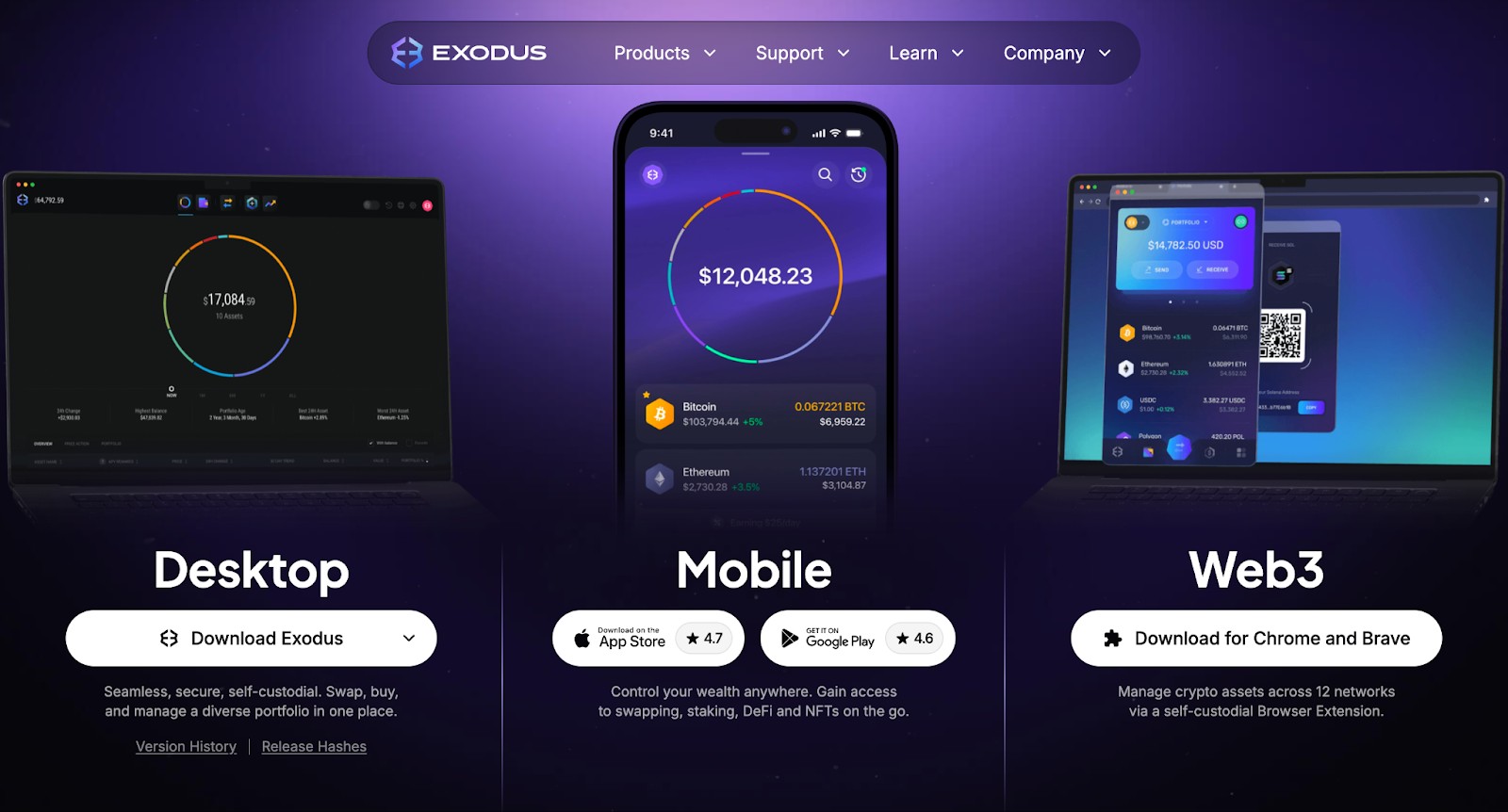
Exodus aims to be the “all-in-one” cockpit for self-custody, wrapping a polished UI around portfolio tracking, token management, in-app swaps, and staking for select networks. It supports 200+ default assets and allows you to add unlimited tokens across 16 networks, so most portfolios can be represented without manual RPC tinkering. Beginners appreciate the clean onboarding, clear balances, and integrated help content; more advanced users like that Exodus can pair with hardware signers (Ledger or Trezor) so they can keep keys offline while using Exodus as the daily interface. Staking flows are straightforward and explained in product docs, which reduces the need to jump between third-party dashboards. The trade-off is that convenience swaps can carry wider spreads than DEXs, fine for occasional rebalances, less ideal for heavy arbitrage. For Indian traders who want a gentle learning curve without surrendering self-custody, Exodus hits a sweet spot between simplicity and capability, with the option to “graduate” to a hardware-backed setup later.
- Pros
- Cons
clean portfolio UI;
200+ default tokens across 16 networks;
built-in staking support;
integrates with Ledger/Trezor hardware wallets;
friendly onboarding for new users.
swap spreads may be higher than routing via DEX aggregators;
lighter native DeFi/dApp tooling compared with MetaMask or Trust Wallet;
fewer advanced controls for gas/prioritization and approvals.
MetaMask
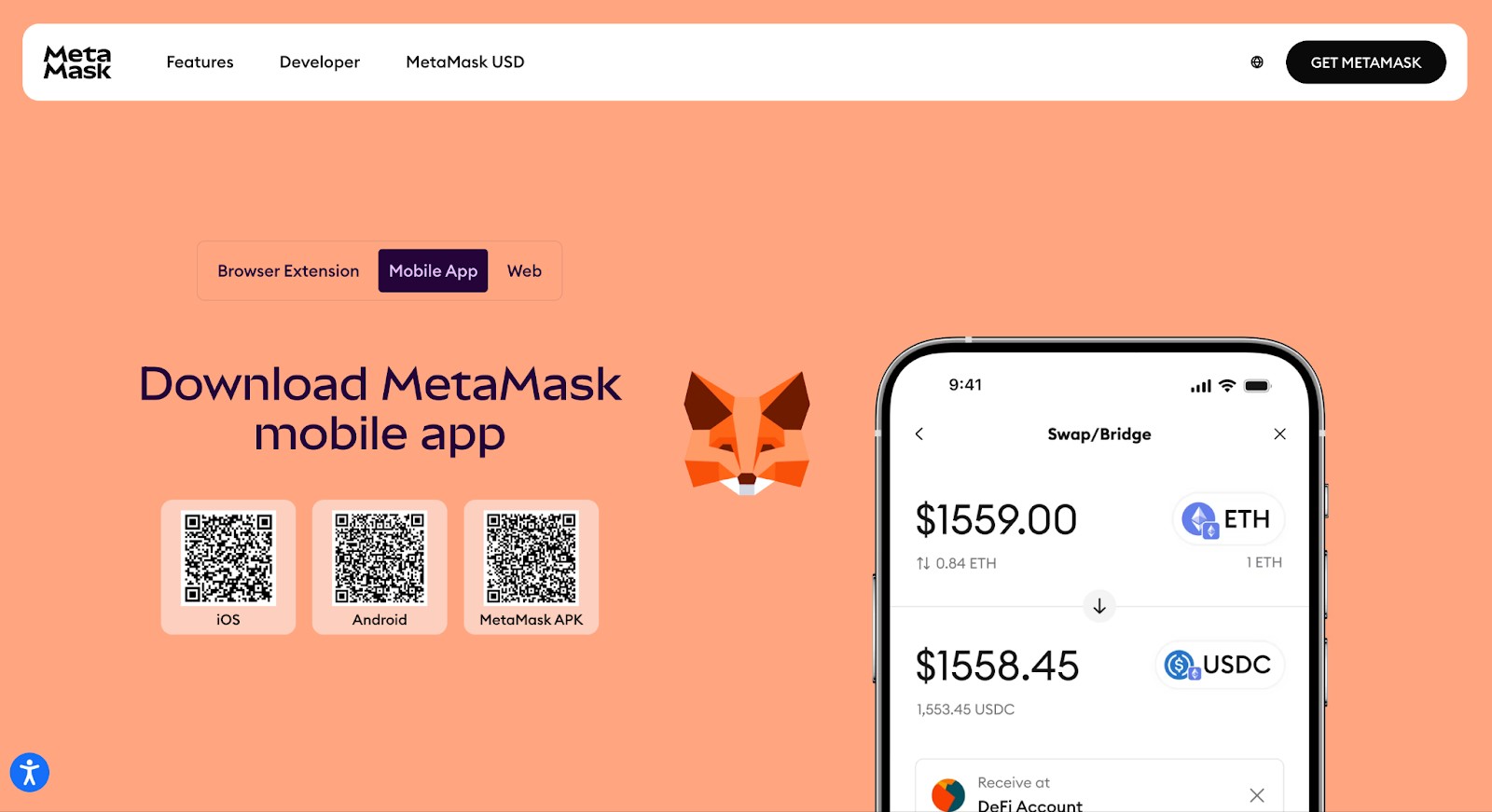
MetaMask remains the default tunnel into Web3 for EVM chains and L2s, with a mature browser extension, a capable mobile app, and a massive ecosystem of compatible dApps, DEXs, NFT markets, and tools. Its power lies in granular control of networks, gas, and allowances, ideal for DeFi power users, while still being accessible enough for serious beginners who follow best practices. Importantly, MetaMask publishes recurring Security Reports that summarize active threats (malicious extensions, wallet-drainers, spoofed sites) and highlight hardening efforts like LavaMoat and other supply-chain protections; this cadence helps users adapt their own hygiene policies. For India-based traders who rely on Uniswap-style flows, bridging to L2s, or minting on EVM networks, MetaMask’s configurability and ubiquity are hard to beat. Just remember that, like any hot wallet, it’s only as safe as your operational habits, use hardware signers for large balances, keep approvals tight, and verify domains religiously.
- Pros
- Cons
best-in-class dApp reach and connectivity;
fine-grained control over networks, gas and transaction signing;
regular public security reporting/audits for transparency;
wide ecosystem compatibility (tokens, L2s, bridges, tooling);
strong developer/advanced-user features (custom RPCs, plugins).
steeper learning curve for newcomers;
greater exposure to phishing and social-engineering risks;
gas and allowance management demand user discipline and attention;
risk of misconfiguration (custom networks/RPCs) for casual users.
Ledger Nano X
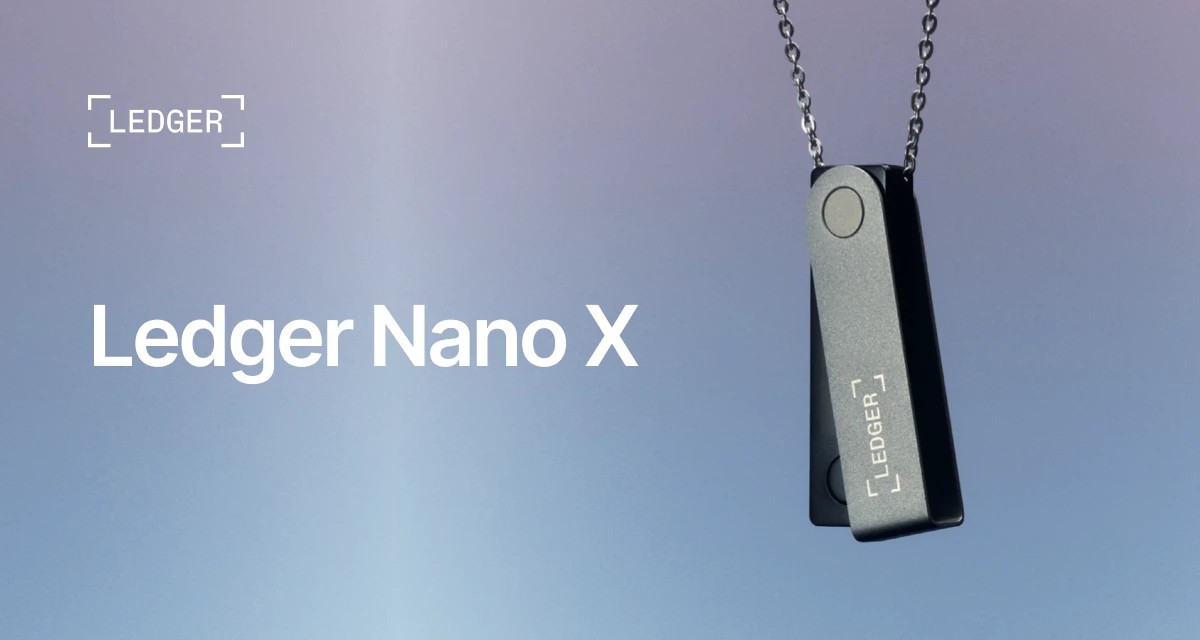
Ledger Nano X is a Bluetooth-enabled hardware wallet designed to isolate your private keys inside a certified Secure Element chip and have you sign transactions on-device, keeping secrets off connected computers and phones. Paired with the Ledger Live app, this safest crypto wallet in India supports management of 5,500+ coins and tokens, lets you install up to ~100 apps on the device, and provides buy/swap/stake integrations through vetted partners, all while the seed stays offline.
Bluetooth support is implemented without exposing your recovery phrase; the radio simply facilitates transport while approvals and key operations occur within the Nano X. For Indian traders who do frequent mobile reviews but settle large transfers less often, the Nano X strikes a balance between vault-grade protection and everyday convenience. Most users treat it as a “cold signer” for long-term holdings and major moves, while keeping a small hot-wallet float for dApps.
- Pros
- Cons
secure Element isolation – private keys stored in hardware, never exposed;
seed never leaves the device (air-gapped key security);
bluetooth connectivity with Ledger Live for convenient mobile/desktop management;
broad asset support (5,500+ tokens and coins);
strong integrations with major wallets, exchanges and DeFi partners.
up-front hardware cost;
less convenient for rapid, high-frequency swapping compared with hot wallets;
proprietary OS limits appeal for open-source purists and advanced auditors.
Trezor Model T
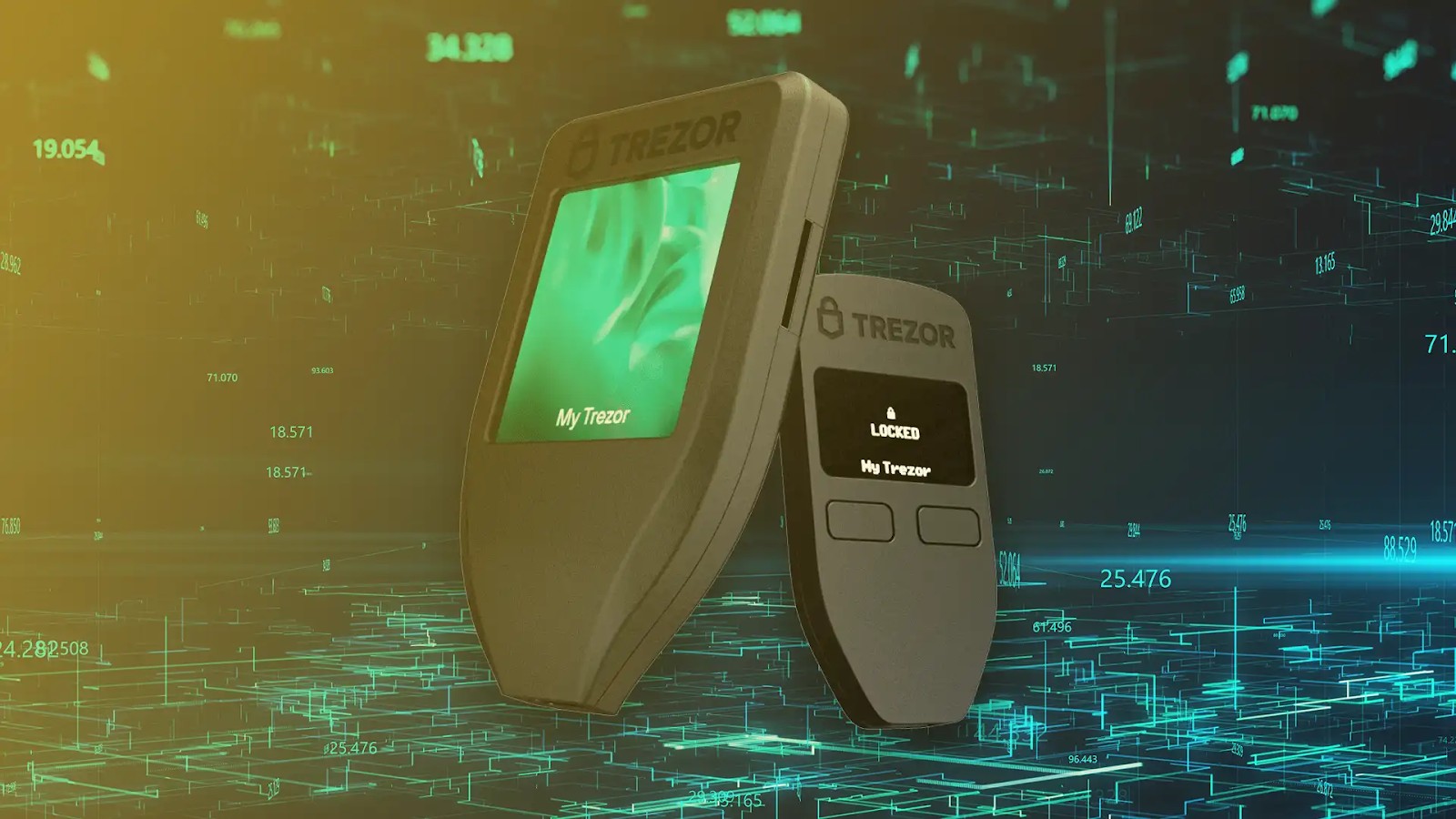
Trezor’s Model T is an open-source, touchscreen hardware wallet that prioritizes transparency and flexible recovery. Its marquee feature is Shamir Backup (SLIP-39), which splits your recovery into multiple shares with a user-defined threshold, mitigating both theft and loss by distributing secrets across locations or trusted parties. The color touchscreen makes on-device confirmations clear and reduces mis-clicks compared with tiny button UIs. With Trezor Suite on desktop, you can manage assets and sign transactions while keeping keys sealed in the device, and the open-source firmware invites independent review from the community. For Indian investors who want a hardware wallet aligned with auditable code and advanced backup schemes, the Model T is compelling, especially for family or business contingency planning. As with any cold wallet, physical handling and off-site backups matter: treat the device and your shares like critical records.
- Pros
- Cons
open-source firmware – transparent codebase for independent audits;
Shamir Backup (SLIP-39) support for split / threshold recovery;
clear touchscreen confirmations reduce accidental approvals;
mature desktop suite with advanced management and firmware tools.
higher price than entry-level models;
requires strict physical custody practices (no third-party recovery);
no Bluetooth – wired-only workflow can be less convenient for mobile use.
Key statistics & market trends
The wallet ecosystem in India is shaped by adoption, regulation, and changing user habits. These figures highlight why wallet choice matters.
India tops grassroots adoption again. Chainalysis ranks India #1 on its 2024 Global Crypto Adoption Index, led by high retail usage across both CEXs and DeFi, setting the tone for trusted crypto wallet in India.
Cbdc pilot builds wallet literacy. RBI’s e-rupee (retail) pilot, live since Dec 1, 2022, now counts ~6–7 million users and is expanding access beyond banks to payment apps, nudging mainstream users to try digital-cash wallets.
Self-custody tailwinds strengthen. Global hardware wallet demand is accelerating (projected ~18–30% CAGR this decade), as institutions and retail seek post-exchange-risk security, lifting India’s interest in Ledger/Trezor –class devices.
Upi bridges fiat on-ramps. While direct UPI on every exchange has been uneven, ramp partners like Alchemy Pay now enable INR via UPI/IMPS, improving deposit flows and making wallet top-ups simpler.
DeFi remains the power user magnet. MetaMask continues to anchor Indian DeFi/NFT activity; surveys show ~50% of Indians report owning a crypto wallet, underscoring a large addressable base for on-chain apps.
Compliance resets platform choices. FIU-IND enforcement (e.g., penalties and registration pushes) has driven offshore exchanges to register or exit, pushing users toward compliant on-ramps and better tax records within wallets.
Tax clarity shapes behavior. The 30% flat tax on gains and 1% TDS on transfers keep high-frequency trading in check; wallets with built-in P&L/TDS exports gain mindshare among Indian users.
What users want vs what they get
They expect tap-and-go INR ramps. Users want instant UPI deposits/withdrawals and bank-grade reliability; India’s fiat on-ramp landscape has improved with providers like Transak and Onramp.Money offering INR flows, but availability and compliance checks/KYC still introduce friction for many wallets.
They expect near-zero network fees. After Ethereum’s EIP-4844 (proto-danksharding), Layer-2 rollups got markedly cheaper, but L1 gas spikes and congestion still appear at peak times; “cheap” often means using L2s, not mainnet, for routine swaps and NFT transfers.
They expect one super-app wallet. People want a single wallet to buy, swap, stake, bridge, and cash-out; in practice, wallets integrate multiple third-party bridges/ramps, so UX varies by region, chain, and KYC status, and costs like spreads and slippage can differ per route.
They expect simple, seed-less security. Many users dislike seed phrases and want “just log in and recover”; MPC and social-recovery solutions are growing, but coverage is uneven across retail wallets and some features require cloud or custodial elements users don’t always expect.
They expect clean tax handling. Users want automatic capital-gains tracking and clarity; in India, the 30% gains tax and 1% TDS rules complicate trading flows and off-ramps, and wallets rarely automate end-to-end compliance out of the box.
They expect UPI everywhere. Headlines show rapid UPI innovation, but formal stances have historically been cautious around crypto purchases; availability can change by partner and product, so “works with UPI” is not guaranteed in every wallet flow.
Comparing types of wallets
Each type of wallet has trade-offs. For Indian traders, the right mix depends on whether they prioritize speed, savings, or INR access.
Trade fast, keep your keys. For frequent swaps and DeFi, go non-custodial hot wallets so you control private keys, MetaMask is explicitly self-custodial, while Trust Wallet spans 100+ blockchains for broad dApp reach.
Park long-term funds with an offline signer. Hardware wallets reduce online attack surface; Ledger Nano X adds Bluetooth convenience with a secure signer, and Trezor Model T offers open-source firmware plus Shamir Backup for resilient recovery.
Use INR ramps only when needed. Exchange wallets simplify deposits/withdrawals via NEFT/RTGS/IMPS once KYC is done, CoinDCX documents no exchange deposit fee on IMPS bank transfer, and WazirX guides NEFT/RTGS deposits and lists INR withdrawal fees/limits.
Split risk with MPC when sharing access. Multi-Party Computation wallets share key material across devices or people, useful for teams/treasuries that want non-custodial control without a single point of failure.
Build a two-tier setup. Keep a small “spending” hot wallet on mobile for gas and dApp use, and a hardware vault for core holdings, moving funds via your own addresses rather than parking on an exchange. Learn how to create a crypto wallet in India.
Prefer multi-chain stablecoin rails. A wallet that supports stablecoins across networks makes moving INR-sized value cheaper and faster when bridging between CEX and DeFi; Trust Wallet highlights multi-chain stablecoin support for this use.
Plan for policy whiplash in India. With regulators signaling caution and no comprehensive crypto law yet, minimize prolonged balances on exchanges and maintain self-custody backups.
Standardize your recovery game. Use 12/24-word seeds stored offline; where available, upgrade to Shamir Backup to tolerate partial phrase loss without compromising security.
| Wallet type | Best for | Custody | INR on/off-ramp fit | Key risks | Examples |
|---|---|---|---|---|---|
| Hot (software) | Daily trading, DeFi, NFTs | You hold keys | Needs CEX/fiat partner | Phishing, malware | MetaMask, Trust Wallet |
| Cold (hardware) | Long-term storage, large stacks | You hold keys offline | Move via CEX when needed | Seed loss, physical damage | Ledger Nano X, Trezor Model T |
| Exchange (CEX) | INR deposits/withdrawals, quick fiat access | Custodial (exchange controls keys) | Direct NEFT/RTGS/IMPS rails in India | Counterparty/regulatory risk | WazirX, CoinDCX |
| MPC (team use) | Shared treasury, ops continuity | You (sharded keys) | Pair with CEX for INR | Implementation errors, quorum loss | Coinbase/Fireblocks-style MPC |
How to choose the best crypto wallet app in India
Picking a wallet without criteria often leads to mistakes. Here’s a practical checklist tailored for Indian traders:
Prioritize on-chain recoverability. Favor wallets that enable seed-phrase or multi-sig recovery you can test today; avoid custodial “email-only” resets that can freeze INR exits in stress.
Insist on a transparent build. Prefer open-source codebases with reproducible builds and public audits; closed binaries raise supply-chain risk for Indian users who sideload APKs.
Harden your auth stack. Use FIDO2/U2F keys over SMS-OTP; enable passkeys where offered and keep an offline backup of recovery codes.
Segment hot, warm, cold. Keep trader funds in a mobile hot wallet, swing size in a desktop or browser wallet, and long-term INR P&L in a hardware wallet you’ve factory-reset and verified.
Check India-ready chains. Ensure first-class support for on-chain INR gateways you actually use (Polygon, Solana, TON) plus L2s (Base/Arbitrum) for low-fee rebalancing.
Map INR ramps before buying. Confirm the exact exchanges that support your wallet’s networks, INR UPI/IMPS methods, and withdrawal limits, don’t assume parity across apps.If wallets are the vaults that protect your crypto, exchanges are the gateways that connect them to the INR economy.
Once you’ve secured your assets with a trusted wallet, the next step is finding the right exchange that pairs well with it. The best exchanges in your region provide smooth INR deposits and withdrawals, transparent fees, and strong compliance. Below is a comparison of leading platforms that integrate reliably with wallets for everyday trading and long-term investing.
| Coinbase | OKX | Crypto.com | Kraken | Cryptohopper | |
|---|---|---|---|---|---|
|
Min. Deposit, $ |
10 | 10 | 1 | 10 | No |
|
Coins Supported |
249 | 329 | 250 | 278 | 1000 |
|
Spot Taker fee, % |
0.5 | 0.1 | 0.5 | 0.4 | 0 |
|
Spot Maker Fee, % |
0.5 | 0.08 | 0.25 | 0.25 | 0 |
|
Alerts |
Yes | Yes | Yes | Yes | Yes |
|
Copy trading |
No | Yes | No | Yes | Yes |
|
TU overall score |
8.6 | 8.48 | 8.44 | 8.32 | 7.85 |
|
Open an account |
Go to broker Your capital is at risk. |
Go to broker Your capital is at risk. |
Go to broker Your capital is at risk. |
Go to broker Your capital is at risk. |
Go to broker Your capital is at risk. |
Regulation, risks & implications
Regulation shapes how wallets are used in India. While self-custody is legal, users must understand risks and compliance rules.
Crypto is legal but not legal tender. India does not ban owning or using self-custody wallets; however, crypto isn’t recognised as legal tender and RBI has repeatedly cautioned users about risks. The 2018 banking curbs were set aside by the Supreme Court in March 2020, restoring access to banking for exchanges.
Tax is strict: 30% on gains + 1% TDS. Profits from transferring “Virtual Digital Assets” are taxed at a flat 30% under Section 115BBH; buyers must deduct 1% TDS under Section 194S (thresholds apply). No loss set-off or carry-forward is allowed. Report under “Schedule VDA” in ITR-2/3.
AML/KYC now covers crypto providers. Since 2023, VDA service providers fall under India’s Prevention of Money Laundering Act (PMLA) and must register with the FIU-IND, run KYC, keep records, and file STRs. Enforcement has escalated, with FIU issuing Section 13 notices to offshore platforms in Oct 2025.
Operational compliance touches wallets too. CERT-In directions require entities to retain logs in India for 180 days and enable time-synchronised clocks; while aimed broadly at digital services, VDA platforms operating in India are expected to comply, which influences what data your wallet or exchange may collect.
Personal-data duties apply. Under the Digital Personal Data Protection (DPDP) Act, 2023, services handling your KYC or wallet data are “Data Fiduciaries” with consent, notice, erasure, and grievance-redress obligations, useful when you want data deletion or breach redress.
Fees may attract GST. Exchange/platform service fees are generally treated as taxable services; industry and enforcement actions indicate 18% GST on such fees in India (separate from income-tax/TDS rules).
Risk landscape is evolving. Beyond phishing/fake apps/SIM swaps, watch for counterfeit or tampered hardware wallets (supply-chain attacks), QR-code/invoice scams, malware seed-stealers, and cross-chain “airdrop” drainer links. RBI continues to warn on systemic/consumer risks.
Pick a crypto wallet in India for secure custody and compliant on-ramps

If you’re new to crypto in India, think of your wallet choice like choosing a vault plus a public ledger visibility plan. For any large, long-term holding, use a hardware wallet bought directly from the manufacturer or an authorised reseller and keep your seed phrase physically split across separate, secure locations, that reduces supply-chain and single-point-of-failure risks. Don’t just stash the recovery phrase in a single notebook: treat it like high-value paperwork (fireproof safe, bank safe deposit box, or split in two places). Ledger-style hardware devices remain the baseline for cold custody and offer extra recovery services and integrations you’ll want to verify before buying.
For everyday DeFi and Web3 use, hedge hardware custody with a modern smart-contract wallet (the “Argent” / account-abstraction model) for social recovery, gas abstraction and safer dApp interactions, keep only what you need there. Use regulated Indian on-ramps for fiat moves (INR KYC exchanges) so your fiat trail is clean for tax and compliance; while self-custody protects you from exchange failures, regulators in India have been explicit about crypto risks and exchanges must follow FIU/KYC rules, so mixing compliant on-ramp records with your private-wallet strategy makes audits and tax filings far less painful. Finally, export and timestamp transaction histories regularly and keep them with your tax paperwork, it’s not sexy, but when tax notices come (they do), proof saves you far more than a single percent in fees.
Conclusion
In conclusion, choosing the right crypto wallet in India requires a careful balance between security, features, and cost. The article highlights that hardware wallets like Ledger Nano X offer top-tier security for serious investors, while mobile wallets such as Trust Wallet provide convenience for everyday users. Ultimately, the best wallet is the one that aligns with your trading habits and security expectations. Remember, safeguarding your digital assets starts with selecting a wallet you truly trust—because in the world of crypto, your wallet is your fortress.
FAQs
What are the key differences between hot and cold wallets for Indian crypto users?
How does regulation in India impact the daily use of crypto wallets?
Which recovery methods are recommended for safeguarding crypto wallets in India?
What should Indian users consider when selecting a wallet for both crypto trading and long-term holding?
Editors' Top Picks and Insights

AI without limits: How dangerous are neural networks?

Worldcoin on Wall Street: From iris scans to ETF

Mark Cuban's wealth philosophy: Why stocks matter more than salary or crypto

Dangerous but indispensable: Why the crypto market needs bridges

Markus Levin: DePIN could power the AI agent economy

Pokémon cards for $2,500: How collectibles became a new form of gambling
Related Articles
Team that worked on the article
Parshwa is a content expert and finance professional possessing deep knowledge of stock and options trading, technical and fundamental analysis, and equity research. As a Chartered Accountant Finalist, Parshwa also has expertise in Forex, crypto trading, and personal taxation.
Dan Blystone began his trading career in 1998 as an arbitrage clerk on the floor of the Chicago Mercantile Exchange (CME). He later traded bond and Eurex futures at proprietary firms such as Altea Trading, gaining valuable experience in high-frequency trading and risk management.
Chinmay Soni is a financial analyst with more than 5 years of experience in working with stocks, Forex, derivatives, and other assets. As a founder of a boutique research firm and an active researcher, he covers various industries and fields, providing insights backed by statistical data.

-
 Afghanistan
-
 Albania
-
 Algeria
-
 Angola
-
 Argentina
-
 Armenia
-
 Australia
-
 Austria
-
 Azerbaijan
-
 Bahamas
-
 Bahrain
-
 Bangladesh
-
 Belarus
-
 Belgium
-
 Bolivia
-
 Botswana
-
 Brazil
-
 Brunei
-
 Bulgaria
-
 Cambodia
-
 Cameroon
-
 Canada
-
 Chile
Chile
-
 China
China
-
 Colombia
-
 Congo
Congo
-
 Costa Rica
-
 Cote d'Ivoire
-
 Croatia
-
 Cuba
Cuba
-
 Cyprus
-
 Czechia
-
 DR Congo
-
 Denmark
-
 Dominican Republic
-
 Ecuador
-
 Egypt
Egypt
-
 El Salvador
-
 Estonia
-
 Eswatini
-
 Ethiopia
-
 Finland
-
 France
-
 Georgia
-
 Germany
-
 Ghana
Ghana
-
 Greece
-
 Haiti
Haiti
-
 Hong Kong
-
 Hungary
-
 India
India
-
 Indonesia
-
 Iran, Islamic republic
-
 Iraq
Iraq
-
 Ireland
-
 Israel
-
 Italy
Italy
-
 Jamaica
-
 Japan
Japan
-
 Jordan
-
 Kazakhstan
-
 Kenya
Kenya
-
 Korea
Korea
-
 Kuwait
-
 Kyrgyzstan
-
 Laos
Laos
-
 Latvia
-
 Lebanon
-
 Lesotho
-
 Libya
Libya
-
 Lithuania
-
 Luxembourg
-
 Madagascar
-
 Malaysia
-
 Malta
Malta
-
 Mauritius
-
 Mexico
-
 Moldova
-
 Mongolia
-
 Montenegro
-
 Morocco
-
 Mozambique
-
 Myanmar
-
 Namibia
-
 Nepal
Nepal
-
 Netherlands
-
 New Zealand
-
 Nigeria
-
 North Macedonia
-
 Norway
-
 Oman
Oman
-
 Pakistan
-
 Palestine
-
 Panama
-
 Papua New Guinea
-
 Paraguay
-
 Peru
Peru
-
 Philippines
-
 Poland
-
 Portugal
-
 Puerto Rico
-
 Qatar
Qatar
-
 Reunion
-
 Romania
-
 Rwanda
-
 Saudi Arabia
-
 Serbia
-
 Singapore
-
 Slovakia
-
 Slovenia
-
 Somalia
-
 South Africa
-
 Spain
Spain
-
 Sri Lanka
-
 Sweden
-
 Switzerland
-
 Syria
Syria
-
 Taiwan
-
 Tajikistan
-
 Tanzania
-
 Thailand
-
 Trinidad and Tobago
-
 Tunisia
-
 Turkey
-
 UAE
UAE
-
 Uganda
-
 Ukraine
-
 United Kingdom
-
United States
-
 Uruguay
-
 Uzbekistan
-
 Venezuela
-
 Vietnam
-
 Yemen
Yemen
-
 Zambia
-
 Zimbabwe
- Forex
- Crypto












