
Best Crypto Wallets Without KYC (India)


Editorial Note: While we adhere to strict Editorial Integrity, this post may contain references to products from our partners. Here's an explanation for How We Make Money. None of the data and information on this webpage constitutes investment advice according to our Disclaimer.
Top crypto wallets in India without KYC:
MetaMask. Versatile non-custodial wallet for Ethereum and EVM chains.
Trust Wallet. Multi-chain wallet with a large user base.
Exodus. User-friendly desktop and mobile wallet.
Tangem. NFC hardware card wallet with no setup KYC.
Ledger. Leading hardware wallet for cold storage.
The demand for a crypto wallet in India without KYC is rising, as more users seek privacy and control over their digital assets. While centralized exchanges typically enforce strict KYC rules, wallets work differently. Non-custodial wallets, hardware wallets, and privacy-oriented wallets give you the freedom to hold, send, and receive crypto without submitting identity documents.
Best crypto wallets in India without KYC requirement
MetaMask
MetaMask is a non-custodial crypto wallet that gives users full control over their funds. It is available as a browser extension and a mobile app. It supports Ethereum and many other EVM-compatible blockchains, making it ideal for people who use DeFi and Web3 platforms. The interface is simple once you learn the basics and works well for both beginners and advanced users.
MetaMask does not ask for any KYC to create or use a wallet. You can install it, generate a seed phrase, and start sending or receiving crypto without giving any personal information. However, if you use built-in features such as buying crypto with fiat or cashing out through MetaMask’s partners, you may have to complete KYC on those third-party services. The wallet itself remains fully non-custodial and free from registration.
MetaMask is a great option for people who want to explore decentralized apps. Use it mainly for storing and transferring crypto or connecting with DeFi protocols. Avoid using fiat on-ramp or off-ramp services if you want to stay completely outside KYC systems. Always protect your recovery phrase and do not share it with anyone.
- Pros
- Cons
broad support for EVM-based blockchains;
works on browsers and mobile phones;
free and open-source;
perfect for Web3 and DeFi users.
lacks built-in privacy tools;
requires basic technical knowledge;
third-party services may still ask for KYC.

Trust Wallet
Trust Wallet is a mobile wallet owned by Binance but fully self-custodial. It supports over one hundred blockchains including Bitcoin, Ethereum, and Toncoin. The wallet is easy to use and allows users to store, swap, and stake different coins in one app. It is popular among beginners and long-term holders who want simple access to multiple networks.
Trust Wallet does not require KYC to set up or use. You can download the app, create a wallet, and start using it instantly. Only if you buy or sell crypto through fiat gateways integrated inside the app will you face KYC from the provider handling that payment. The wallet itself never stores user information or asks for identity proof.
Trust Wallet is a strong choice for mobile users in India who want flexibility without giving personal data. Avoid the built-in “buy crypto” option if you want to stay outside KYC. Use it for holding and transferring coins or for staking where supported. Always verify the official app before installation and back up your recovery phrase securely.
- Pros
- Cons
supports more than 100 blockchains;
simple mobile interface for beginners;
allows staking and swapping directly in app;
strong community and regular updates.
interface may look crowded for users focused only on privacy;
some advanced DeFi tools are limited compared to MetaMask;
fiat integrations may trigger KYC.

Exodus
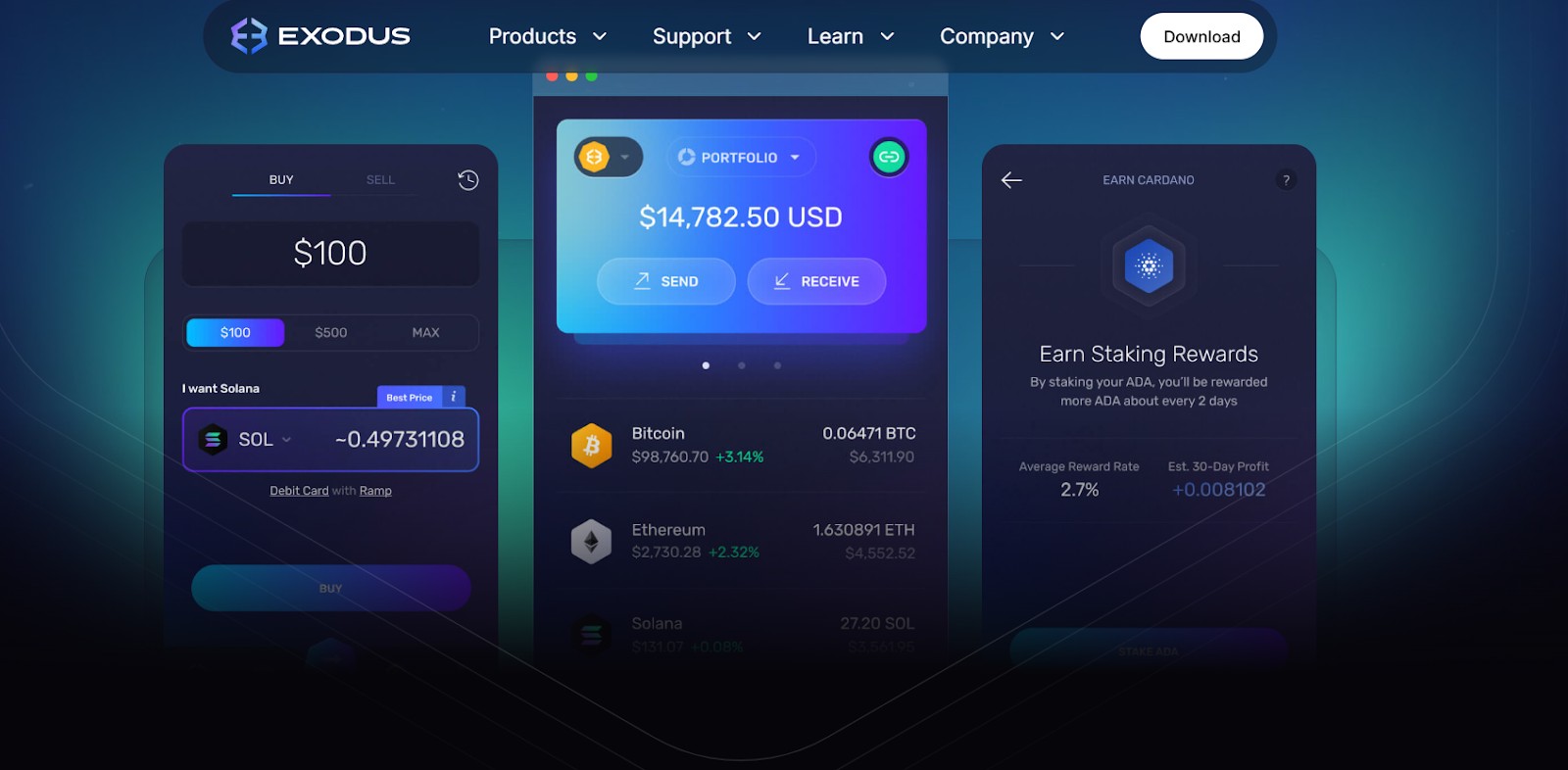
Exodus is a well-designed wallet available on both desktop and mobile devices. It allows you to hold and manage a wide range of cryptocurrencies in one place. The wallet is known for its smooth interface and strong customer support, making it one of the best options for beginners who prefer simplicity over technical depth.
Exodus does not ask for KYC to create or use a wallet. You can install it, generate your recovery phrase, and store or send crypto freely. Some services inside the app, such as buying crypto with fiat or using third-party exchanges, may request KYC depending on the partner. If you stick to regular wallet functions, no KYC is needed at all.
Exodus is good for people who want a balance between design and usability. It works well for managing long-term holdings and for transferring crypto safely. To stay fully private, avoid using the integrated exchange or fiat purchase options. Always keep your recovery phrase safe and prefer offline backups for better protection.
- Pros
- Cons
user-friendly interface for beginners;
works on desktop and mobile;
supports a wide range of coins and tokens;
built-in exchange for convenience.
not fully open-source;
no advanced privacy features;
exchange features can involve KYC.
Tangem
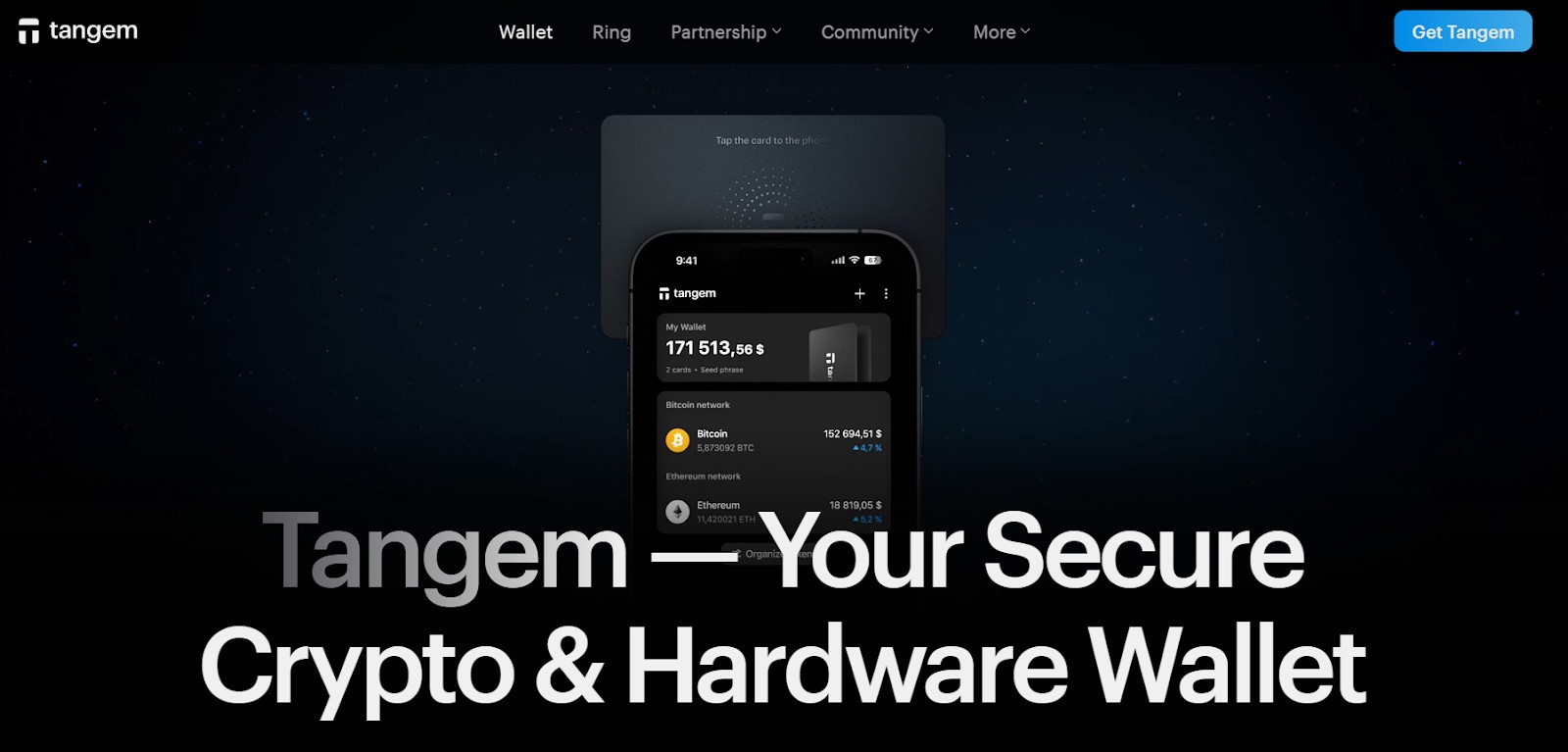
Tangem is a card-shaped hardware wallet that works through NFC technology. It stores your private keys securely inside a chip and connects with your phone through the Tangem app. The design makes it easy to carry and resistant to damage. It is ideal for users who want cold storage without using bulky devices.
Tangem does not require any registration or KYC to start using the wallet. You can activate it directly through the app without sharing personal data. The company clearly states that it does not track or store user information. Only when you use third-party services to buy or sell crypto may you be asked for KYC, depending on the provider’s rules.
Tangem is a strong choice for people who want a simple, portable, and secure way to store crypto offline. It is affordable compared to other hardware wallets. You can buy it from major online platforms that ship to India. Avoid using built-in buy or sell features if you wish to stay outside KYC. Keep your card safe and store backup information in a secure place.
- Pros
- Cons
simple setup with no account or ID;
portable card design with strong chip security;
affordable price;
good privacy protection.
limited compatibility with smaller coins;
fewer integrations with dApps and exchanges;
physical loss or damage can risk access.
Ledger
Ledger Nano X is one of the most trusted hardware wallets in the world. It keeps your private keys offline, protecting them from hacks and malware. The device connects to your computer or smartphone via Bluetooth and uses the Ledger Live app for managing coins. It supports thousands of cryptocurrencies and is designed for long-term storage.
Ledger itself does not ask for KYC to use the wallet. You can set up the device, generate a seed phrase, and start managing crypto without any personal details. When you use Ledger Live to buy crypto with fiat or access partner services, KYC may be required by those third-party platforms. For storage and transfers, there is no KYC at all.
Ledger is ideal for anyone in India who wants to hold crypto securely for the long term. It is slightly more expensive than mobile wallets but offers much higher protection. Use it mainly for storage rather than daily trading. Always buy the device from official sources and never share your recovery phrase. Pair it with software wallets like MetaMask if you want DeFi access.
- Pros
- Cons
strong security with offline key storage;
supports thousands of tokens;
works with major DeFi platforms;
trusted brand with a long track record.
costlier than other wallets;
requires setup and firmware updates;
fiat partners may still need KYC.

| Wallet | Platforms | DeFi / NFT | Staking | Open-source | Best for | Key cons |
|---|---|---|---|---|---|---|
| MetaMask | iOS, Android, Chrome/Brave/Firefox | Strong DeFi; NFTs on EVM | Via dApps | Partly (client closed-source components historically) | DeFi/Web3 users | Needs basic tech skills; limited built-in privacy |
| Trust Wallet | iOS, Android | Good; multi-chain NFTs | Many chains | Closed-source core | Mobile multi-chain holders | UI can feel crowded; some DeFi limits vs MM |
| Exodus | Desktop (Win/Mac/Linux), iOS, Android | Basic NFT support (varies) | Select assets | Partially open | Beginners; design-first UX | Not fully open-source; limited privacy tools |
| Tangem (card) | iOS, Android (via app) | Limited dApp/NFT | Limited | Closed firmware | Simple, portable cold storage | Fewer dApp integrations; risk of physical loss |
| Ledger Nano X | Desktop & Mobile via Ledger Live; connects to dApps via wallets | Via connected wallets (MM, etc.) | Many via apps | Closed firmware | Long-term secure storage | Costs more; firmware management required |
A crypto wallet safeguards your digital assets, while exchanges serve as the gateway for buying, selling, and transferring funds, making them important for everyday use. Once your wallet is set up, the smartest move is selecting a reputable exchange that can enable hassle-free trading. However, do note that almost all reputable exchanges would have KYC requirements.
| Coinbase | OKX | BTCC | Cryptohopper | Crypto.com | |
|---|---|---|---|---|---|
|
Min. Deposit, $ |
10 | 10 | 10 | No | 1 |
|
Coins Supported |
400+ | 600+ | 399 | 1000 | 400+ |
|
Spot Taker fee, % |
0.5 | 0.1 | 0.3 | 0 | 0.5 |
|
Spot Maker Fee, % |
0.5 | 0.08 | 0.2 | 0 | 0.25 |
|
Alerts |
Yes | Yes | No | Yes | Yes |
|
Copy trading |
No | Yes | Yes | Yes | No |
|
TU overall score |
8.5 | 8.46 | 8.08 | 7.8 | 7.76 |
|
Open an account |
Go to broker Your capital is at risk. |
Go to broker Your capital is at risk. |
Go to broker Your capital is at risk.
|
Go to broker Your capital is at risk. |
Go to broker Your capital is at risk. |
How to choose the best no-KYC crypto wallet in India
Selecting a no-KYC wallet depends on how you plan to store, trade, and protect your crypto assets. The right wallet should keep you in control while fitting your comfort level with technology. Before deciding, it helps to review a few key factors that affect safety and usability.
Control of keys. The most important feature of a no KYC wallet is ownership of your private keys. If you hold the keys, you control your coins. This prevents third parties from freezing or accessing your funds.
Platform type. Wallets come in different formats such as mobile apps, browser extensions, desktop programs, or hardware devices. Choose one that matches your daily habits and security needs. Hardware wallets are safer for storage, while mobile and browser wallets are easier for quick access.
Privacy tools. Some wallets include options like CoinJoin, Tor connectivity, or address masking. These tools make it harder for anyone to trace your transactions on the blockchain. If privacy is your main goal, look for wallets that include or support such features.
Exchange access. A good wallet should let you connect smoothly to decentralized exchanges or peer to peer platforms. This ensures you can trade or swap tokens without going through centralized platforms that require KYC.
Security setup. Check if the wallet supports extra layers of protection such as hardware isolation, multisignature approval, or biometric login. These add strong barriers against hacking or device theft.
Local regulation. While most wallets do not need KYC, converting crypto to Indian rupees usually does. Keep this in mind if you plan to withdraw or deposit through Indian banks or payment gateways.

Risks and best practices
Using a no KYC wallet gives you privacy and independence, but it also means full responsibility for your security. There is no company support or password recovery if you lose access. Following good practices helps protect both your assets and your identity.
Never share your recovery phrase or private keys. Anyone with this information can take control of your wallet. Write it down on paper and keep it offline in a safe location.
Store large balances in a hardware wallet. Hot wallets connected to the internet are convenient but less secure. Use hardware wallets such as Ledger or Tangem for long-term holdings.
Use a VPN for added privacy. Connecting to exchanges or dApps through a VPN helps prevent linking your crypto activity to your personal IP address.
Test with small transfers first. When sending crypto, start with a small amount to ensure you have entered the correct address and network. Once confirmed, move the full balance.
Stay updated on regulations. India’s crypto policies continue to evolve. Keep track of RBI and government guidelines to avoid issues with off-ramps, taxes, or reporting requirements.
Practical combinations
Many experienced crypto users in India combine different wallets to balance privacy, flexibility, and security. Mixing tools allows you to separate active trading from long-term storage while staying outside mandatory KYC systems.
MetaMask with a DEX. Use MetaMask to store tokens and connect directly to decentralized exchanges such as Uniswap or PancakeSwap. You can trade privately without going through centralized platforms.
Hardware wallet with a non-custodial app. Keep your main holdings offline in a Ledger or Tangem wallet, and connect it to MetaMask or Exodus for daily transactions. This setup offers both convenience and protection.
P2P with a wallet. Buy or sell crypto directly through peer to peer platforms like Binance P2P or LocalBitcoins and transfer funds straight into your self-custodial wallet. This reduces exposure to centralized exchanges and KYC tracking.
Find the right mix of wallets

I have tested multiple no-KYC wallets over the past few years. At first, I kept most of my funds in a mobile non-custodial wallet like MetaMask. It was convenient, but I realized that large balances were safer in cold storage. Today, I use Ledger for long-term holding and MetaMask for DeFi activities. My advice for Indian users is simple: combine a hot wallet for activity and a hardware wallet for reserves. This balance ensures both privacy and security.
Conclusion
Choosing a crypto wallet in India without mandatory KYC empowers users with greater privacy and control over their digital assets. Non-custodial wallets like MetaMask and hardware options such as Ledger Nano S provide secure, user-controlled alternatives while bypassing complex verification processes. These wallets are ideal for privacy-focused individuals who prioritize sovereignty over convenience. Ultimately, managing your cryptocurrencies with a non-KYC wallet helps you maintain autonomy and aligns with the foundational principles of decentralization in crypto. Remember: in the world of digital assets, controlling your keys means controlling your wealth.
FAQs
Can you convert crypto to Indian rupees using no-KYC wallets?
What are the main differences between hot wallets and hardware wallets for no-KYC users in India?
What factors should Indian users consider when choosing a no-KYC crypto wallet?
Is it possible to recover access if you lose credentials to a no-KYC wallet?
Editors' Top Picks and Insights






Related Articles
Team that worked on the article
Parshwa is a content expert and finance professional possessing deep knowledge of stock and options trading, technical and fundamental analysis, and equity research. As a Chartered Accountant Finalist, Parshwa also has expertise in Forex, crypto trading, and personal taxation.
Dan Blystone began his trading career in 1998 as an arbitrage clerk on the floor of the Chicago Mercantile Exchange (CME). He later traded bond and Eurex futures at proprietary firms such as Altea Trading, gaining valuable experience in high-frequency trading and risk management.
Chinmay Soni is a financial analyst with more than 5 years of experience in working with stocks, Forex, derivatives, and other assets. As a founder of a boutique research firm and an active researcher, he covers various industries and fields, providing insights backed by statistical data.

-
 Afghanistan
-
 Albania
-
 Algeria
-
 Angola
-
 Argentina
-
 Armenia
-
 Australia
-
 Austria
-
 Azerbaijan
-
 Bahamas
-
 Bahrain
-
 Bangladesh
-
 Belarus
-
 Belgium
-
 Bolivia
-
 Botswana
-
 Brazil
-
 Brunei
-
 Bulgaria
-
 Cambodia
-
 Cameroon
-
 Canada
-
 Chile
Chile
-
 China
China
-
 Colombia
-
 Congo
Congo
-
 Costa Rica
-
 Cote d'Ivoire
-
 Croatia
-
 Cuba
Cuba
-
 Cyprus
-
 Czechia
-
 DR Congo
-
 Denmark
-
 Dominican Republic
-
 Ecuador
-
 Egypt
Egypt
-
 El Salvador
-
 Estonia
-
 Eswatini
-
 Ethiopia
-
 Finland
-
 France
-
 Georgia
-
 Germany
-
 Ghana
Ghana
-
 Greece
-
 Haiti
Haiti
-
 Hong Kong
-
 Hungary
-
 India
India
-
 Indonesia
-
 Iran, Islamic republic
-
 Iraq
Iraq
-
 Ireland
-
 Israel
-
 Italy
Italy
-
 Jamaica
-
 Japan
Japan
-
 Jordan
-
 Kazakhstan
-
 Kenya
Kenya
-
 Korea
Korea
-
 Kuwait
-
 Kyrgyzstan
-
 Laos
Laos
-
 Latvia
-
 Lebanon
-
 Lesotho
-
 Libya
Libya
-
 Lithuania
-
 Luxembourg
-
 Madagascar
-
 Malaysia
-
 Malta
Malta
-
 Mauritius
-
 Mexico
-
 Moldova
-
 Mongolia
-
 Montenegro
-
 Morocco
-
 Mozambique
-
 Myanmar
-
 Namibia
-
 Nepal
Nepal
-
 Netherlands
-
 New Zealand
-
 Nigeria
-
 North Macedonia
-
 Norway
-
 Oman
Oman
-
 Pakistan
-
 Palestine
-
 Panama
-
 Papua New Guinea
-
 Paraguay
-
 Peru
Peru
-
 Philippines
-
 Poland
-
 Portugal
-
 Puerto Rico
-
 Qatar
Qatar
-
 Reunion
-
 Romania
-
 Rwanda
-
 Saudi Arabia
-
 Serbia
-
 Singapore
-
 Slovakia
-
 Slovenia
-
 Somalia
-
 South Africa
-
 Spain
Spain
-
 Sri Lanka
-
 Sweden
-
 Switzerland
-
 Syria
Syria
-
 Taiwan
-
 Tajikistan
-
 Tanzania
-
 Thailand
-
 Trinidad and Tobago
-
 Tunisia
-
 Turkey
-
 UAE
UAE
-
 Uganda
-
 Ukraine
-
 United Kingdom
-
United States
-
 Uruguay
-
 Uzbekistan
-
 Venezuela
-
 Vietnam
-
 Yemen
Yemen
-
 Zambia
-
 Zimbabwe
- Forex
- Crypto












