
Where To Buy Tokenized Stocks? Top Tokenized Stock Exchanges


Editorial Note: While we adhere to strict Editorial Integrity, this post may contain references to products from our partners. Here's an explanation for How We Make Money. None of the data and information on this webpage constitutes investment advice according to our Disclaimer.
The best platforms for tokenized stock trading:
Kraken xStocks – allows non-U.S. users to trade tokenized stocks fully backed by real shares directly inside the Kraken app.
Bybit xStocks – offers 24/7 trading of tokenized stocks issued under Swiss regulation and fully backed by underlying equities.
Backed Finance – a Swiss issuer that creates fully backed tokenized stocks and ETFs that can move freely across public blockchains.
Swarm Markets – a German-regulated DeFi platform providing legally compliant, fully backed tokenized stocks with on-chain trading.
INX One – a regulated digital securities marketplace where users can hold tokenized stocks in their own wallets under strict oversight.
Robinhood (Europe) – enables European users to trade tokenized stocks and ETFs nearly 24/7 through the familiar Robinhood app.
Tokenized stocks are digital assets that track the value of publicly traded companies, issued and managed on blockchain infrastructure. With these assets, traders can gain exposure to big tech names, such as Nvidia and Amazon, even with small capital. As interest grows and the barriers to traditional stock ownership begin to erode, more investors are asking where they can buy tokenized stocks. Let’s answer this.
Where can I buy tokenized stocks?
As the market grows, several platforms have begun offering safe, regulated, and fully backed tokenized shares. The list below highlights the best platforms and what each one offers.
Kraken xStocks
Kraken is a large global crypto exchange. In 2025, it launched a product called xStocks. This service allows non-U.S. users to trade tokenized versions of many well known stocks and ETFs, such as Apple, Tesla, and Nvidia.
This platform uses tokens backed one to one by real shares. These tokens exist on public blockchains, which makes them easy to transfer. Trading works almost all week and is not limited to normal stock market hours. The platform also offers a simple trading experience inside the main Kraken app. Countries like the United States, Canada, Australia, and the United Kingdom cannot use this feature.
Kraken focuses on safety and compliance, and it works with approved issuers. This platform is best for people who already use Kraken and want both crypto and stock exposure in one place.
Bybit xStocks
Bybit is known for crypto derivatives and spot trading. It joined the xStocks Alliance and now offers tokenized stocks created by a regulated issuer. These tokens track the price of companies such as Nvidia, Coinbase, Apple, and other major U.S. names.
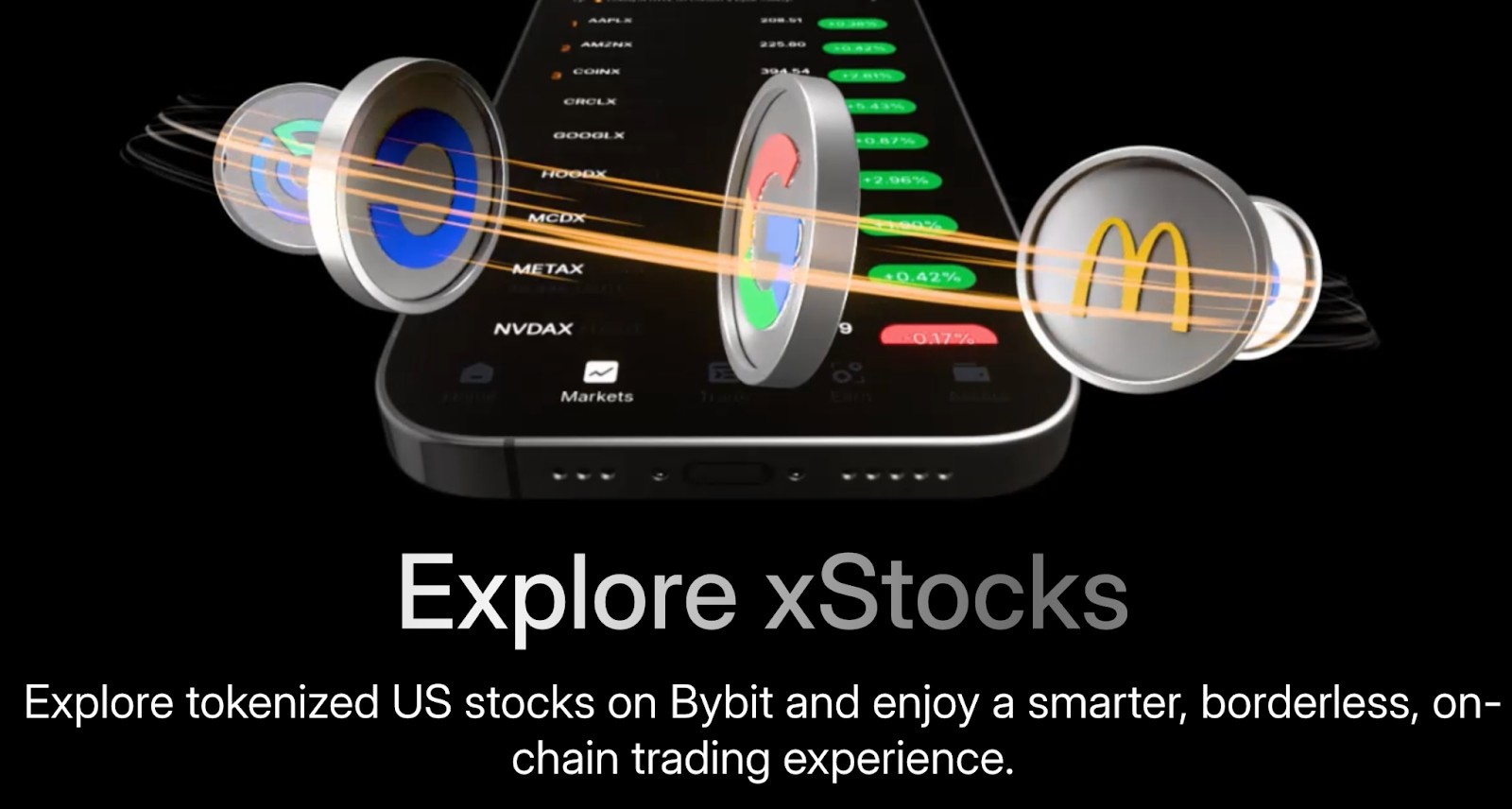
Bybit offers trading twenty four hours a day, seven days a week, using stablecoins like USDT. Users must complete identity verification to use this feature. The tokens are fully backed by real shares and are created under a Swiss legal framework. Bybit is not available in some regions, including the full European Economic Area, Japan, and Australia. The platform fits users who trade crypto often and want to add stock exposure without leaving the exchange.
Backed Finance
Backed Finance is a Swiss company that creates tokens linked to real stocks and ETFs. It is one of the main issuers behind both Kraken and Bybit xStocks. Backed does not only list assets on centralized platforms, but also allows these tokens to move freely on public blockchains.
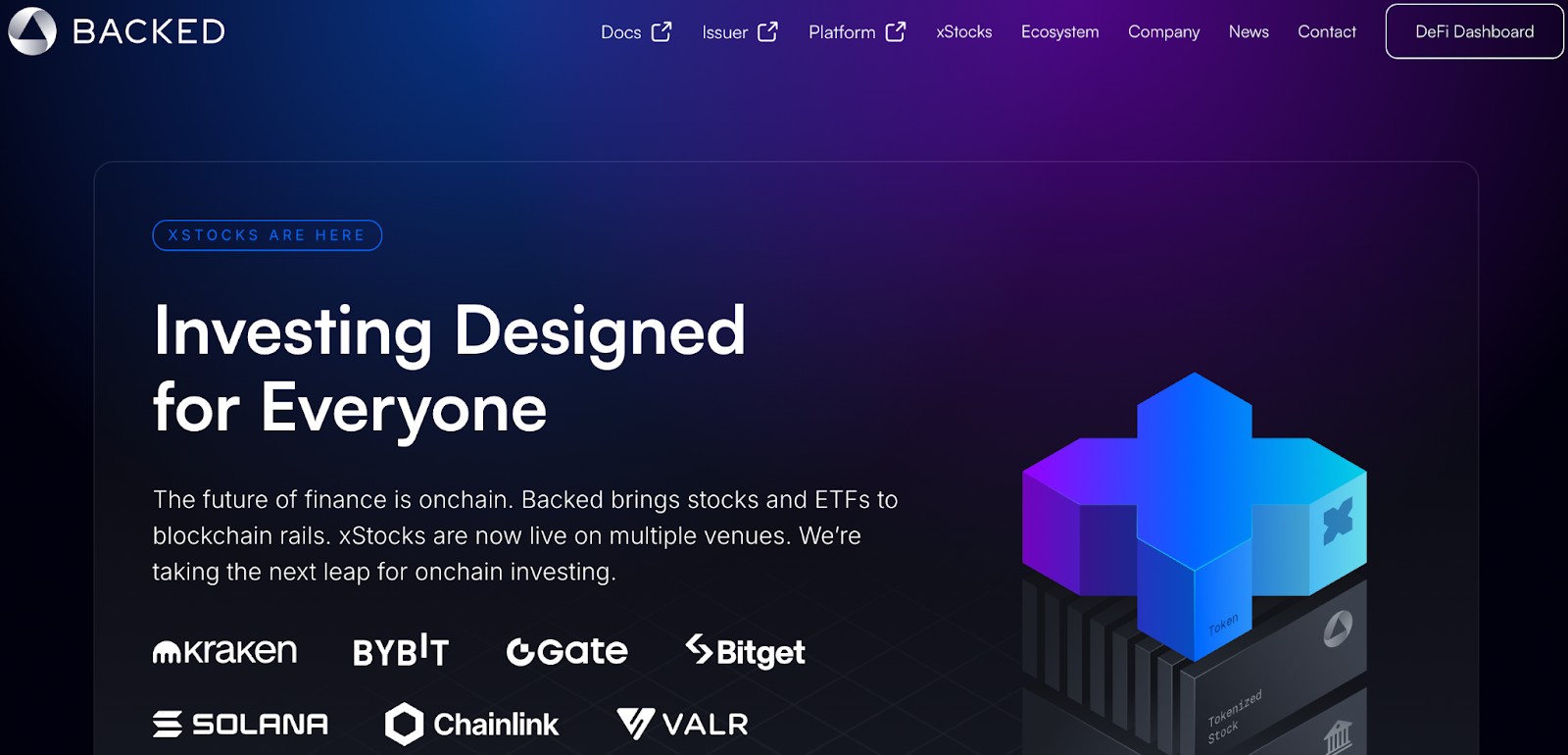
Backed also issues tokens for popular companies and major index funds. Each token is supported by the real asset held under strict rules. The company operates under Swiss digital asset regulations. Traders can use these tokens on centralized exchanges or inside decentralized finance systems. Backed also works with regulated digital security markets, which gives investors a more formal structure and real legal protections. This platform is ideal for people who want a trusted issuer or want to use tokenized stocks in DeFi.
Swarm Markets
Swarm Markets is a regulated decentralized finance platform based in Germany. It offers tokenized stocks that are created under official European rules. This gives Swarm a strong legal position compared to many other DeFi platforms.

Swarm provides tokenized versions of well known tech stocks such as Apple, Tesla, and Strategy. All tokens are backed by real holdings and are protected even if the company fails. Swarm uses on-chain trading but still requires identity checks. This allows it to combine the speed of blockchain with the safety of regulation. Swarm is aimed at both retail and institutional users who want a safe and legal DeFi environment for stock trading.
INX One
INX One is a regulated marketplace for digital securities. It offers both cryptocurrencies and security tokens. It now lists tokenized stocks through partnerships with regulated issuers.

INX allows users to hold their tokenized stocks in their own blockchain wallets. These tokens represent real ownership rights. The platform supports continuous trading and also offers access to decentralized finance tools. INX is known for strict regulatory oversight and is designed mainly for professional investors or users who want clear legal protection. This platform is a strong choice for people who want direct ownership rights and a regulated trading environment.
Robinhood tokenized stocks for Europe
In 2025, Robinhood launched tokenized stocks for users in Europe. The platform provides digital tokens linked to more than two hundred U.S. stocks and exchange traded funds. It also offers tokens that follow the value of major private companies.
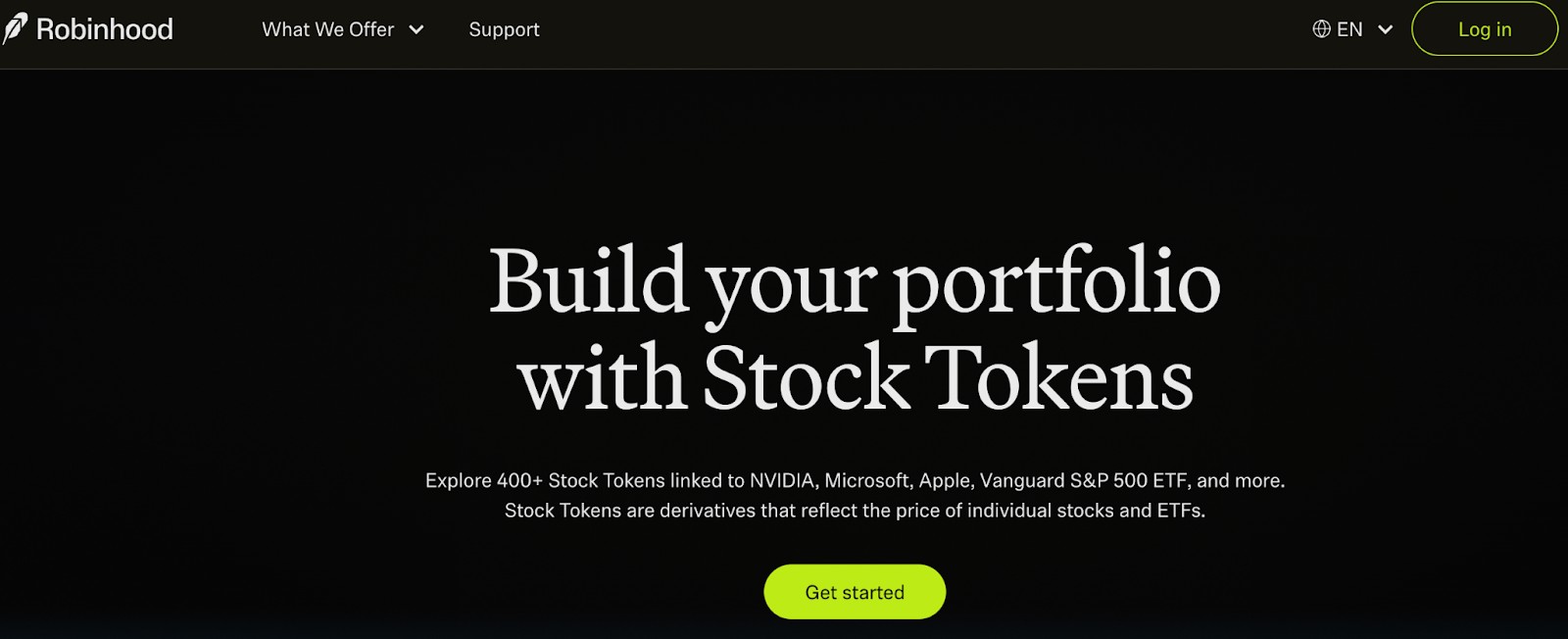
Trading happens almost around the clock and is built directly into the normal Robinhood app. Many of these tokens give price exposure but not full shareholder rights. Some companies have also warned that these tokens do not give true equity positions. Still, the platform is simple to use and offers a large list of assets. It is designed for retail European investors who want fast and convenient access to tokenized markets.
New institutional and advanced platforms
Several institutional platforms are also building strong tokenized stock systems. One example is 21X, which is an officially approved trading and settlement system in the European Union. It plans to support fully regulated tokenized stocks, bonds, and other financial assets.
Another example is the partnership between Ondo Finance and BX Digital. They aim to launch regulated tokenized stocks and ETFs for European markets. These platforms are more advanced and focus on bridging traditional finance with blockchain systems. Large market operators such as Nasdaq are also working on tokenized securities pilots. These developments show how tokenized stocks will likely merge with mainstream markets in the coming years.
How tokenized stocks work
Each token represents a share or a fraction of a share in a company, backed by real holdings kept by a licensed custodian. These tokens are traded on blockchain-based platforms using cryptocurrency pairs. People learning how to buy tokenized stocks usually register on a compliant tokenized stock exchange, add stablecoins, and choose the stock token they want. Many beginners search where to buy tokenized stocks, because this process is easier than using a traditional broker.
To start, users must:
register on a compliant tokenized stocks platform;
complete identity verification;
deposit crypto or fiat (usually via stablecoin);
select an asset from the platform’s tokenized stock exchange;
execute a buy or sell order.
Pros and cons
Tokenized shares are easy to access and trade at any time. Many investors want simple access to tokenized equities without a broker because it removes high fees and restrictive market hours. But there are still risks. Some tokenized stocks platforms do not share enough information, and the rules for these assets differ from one country to another.
- Pros
- Cons
24/7 trading across global markets;
fractional ownership that lowers the cost to start;
fast settlement through blockchain automation;
no need for traditional brokerage accounts;
easy access to global tokenized stocks with crypto or stablecoins.
limited regulatory oversight in some jurisdictions;
custodianship transparency varies across platforms;
lower liquidity compared to traditional exchanges;
token availability depends on the provider;
dividend rights are not always included.
While these benefits can help beginners, users should still check how safe each platform is and what legal protections they provide. Not every tokenized stocks platform offers the same level of security or clarity, so basic research is important.
As you explore where to buy tokenized stocks, it also helps to remember that these assets are just one way to access global markets. Many traders still prefer using brokers that offer a wide range of assets so they can combine tokenized stocks with crypto. If you want a simple alternative or a broader setup, the list of best crypto exchanges with a wide range of assets can help you compare options while you continue learning about tokenized stock platforms.
| Coinbase | OKX | BTCC | Cryptohopper | Crypto.com | |
|---|---|---|---|---|---|
|
Min. Deposit, $ |
10 | 10 | 10 | No | 1 |
|
Coins Supported |
400+ | 600+ | 399 | 1000 | 400+ |
|
Spot Taker fee, % |
0.5 | 0.1 | 0.3 | 0 | 0.5 |
|
Spot Maker Fee, % |
0.5 | 0.08 | 0.2 | 0 | 0.25 |
|
Alerts |
Yes | Yes | No | Yes | Yes |
|
Copy trading |
No | Yes | Yes | Yes | No |
|
TU overall score |
8.5 | 8.46 | 8.08 | 7.8 | 7.76 |
|
Open an account |
Go to broker Your capital is at risk. |
Go to broker Your capital is at risk. |
Go to broker Your capital is at risk.
|
Go to broker Your capital is at risk. |
Go to broker Your capital is at risk. |
Security and regulation
Tokenization can make trading more transparent, but choosing the right platform is still important. Reliable tokenized stock trading platforms share proof of reserves, list their custodians, and allow independent audits. These steps help users see that every token is backed by real shares.
European regulators are now actively integrating crypto-linked securities into existing financial frameworks under MiFID II and MiCA. This regulatory alignment aims to provide the same investor protections for tokenized assets as traditional stocks.
Platforms that work as a tokenized stock exchange must follow licensing rules, use anti money laundering checks, and show clear details about where assets are held. These steps help build long term trust and support the growth of tokenized finance.
Onboarding and trading process
The first step to investing is understanding the process. On most tokenized stocks platforms, users must verify identity, deposit assets, and go to the stocks section.
Building a strategy
Tokenized assets let traders enter the market with small amounts of money. Retail users can buy tokenized stocks for low amounts and change their positions quickly. A long term investor learning how to invest in tokenization stocks may choose to spread money across different industries and use fractional tokens to start slowly.
Focus on custody workflows and disclosures

From my experience watching tokenized stock platforms grow, I have seen that the biggest risks usually come from unclear custody. Many traders focus on the list of available assets, but that tells you very little about how safe the platform is. What I always check first is who holds the real shares and whether the platform shows simple proof that the tokens match a real asset. When this information is hidden or hard to verify, it can cause doubt that beginners often miss.
I also look closely at how platforms explain their rules. The more reliable platforms tend to keep things simple and show clear steps for how they store assets, settle trades, and protect user funds. Tokenized stocks make it possible to trade quickly and start with small amounts, but these benefits only matter when the platform is honest about how it operates. Traders who take a bit of time to review custody and structure usually stay clear of common issues and build a steady plan in this growing market.
Conclusion
Tokenized stock trading platforms are rapidly transforming how investors access global equities, offering 24/7 trading and fractional ownership without the need for traditional brokers. With fully backed tokens on regulated platforms like Kraken xStocks and Swarm Markets, traders can securely buy and sell shares of leading companies using crypto or stablecoins. The key to success in this space is choosing platforms that provide transparent custody and clear regulatory compliance, ensuring that each digital token is truly backed by real shares. In this evolving market, focusing on the quality of platform oversight and asset safeguards is the smart investor’s edge.
FAQs
How do regulatory requirements differ between platforms for tokenized stock trading?
Can investors trade tokenized stocks around the clock, and what are the advantages of this feature?
What is the process for purchasing and holding tokenized stocks on these platforms?
How does the choice of platform impact access to different tokenized stocks or ETFs?
Editors' Top Picks and Insights





Related Articles
Team that worked on the article
Aleksandra Chaikina has been a contributor to Traders Union since 2021. With over 15 years of experience in copywriting and more than 5 years focused on financial content, she specializes in producing detailed guides, analytics, and comparative reviews across various sectors, including cryptocurrencies, Forex, investment strategies, and financial technologies.
Dan Blystone began his trading career in 1998 as an arbitrage clerk on the floor of the Chicago Mercantile Exchange (CME). He later traded bond and Eurex futures at proprietary firms such as Altea Trading, gaining valuable experience in high-frequency trading and risk management.
Chinmay Soni is a financial analyst with more than 5 years of experience in working with stocks, Forex, derivatives, and other assets. As a founder of a boutique research firm and an active researcher, he covers various industries and fields, providing insights backed by statistical data.
Risk management is a risk management model that involves controlling potential losses while maximizing profits. The main risk management tools are stop loss, take profit, calculation of position volume taking into account leverage and pip value.
Ethereum is a decentralized blockchain platform and cryptocurrency that was proposed by Vitalik Buterin in late 2013 and development began in early 2014. It was designed as a versatile platform for creating decentralized applications (DApps) and smart contracts.
Bitcoin is a decentralized digital cryptocurrency that was created in 2009 by an anonymous individual or group using the pseudonym Satoshi Nakamoto. It operates on a technology called blockchain, which is a distributed ledger that records all transactions across a network of computers.
An investor is an individual, who invests money in an asset with the expectation that its value would appreciate in the future. The asset can be anything, including a bond, debenture, mutual fund, equity, gold, silver, exchange-traded funds (ETFs), and real-estate property.
A Security Token is one of the latest exchange instruments. It is a digital analog of physical securities (stocks, bonds), running on blockchain and representing a smart contract (as a non-fungible token).

-
 Afghanistan
-
 Albania
-
 Algeria
-
 Angola
-
 Argentina
-
 Armenia
-
 Australia
-
 Austria
-
 Azerbaijan
-
 Bahamas
-
 Bahrain
-
 Bangladesh
-
 Belarus
-
 Belgium
-
 Bolivia
-
 Botswana
-
 Brazil
-
 Brunei
-
 Bulgaria
-
 Cambodia
-
 Cameroon
-
 Canada
-
 Chile
Chile
-
 China
China
-
 Colombia
-
 Congo
Congo
-
 Costa Rica
-
 Cote d'Ivoire
-
 Croatia
-
 Cuba
Cuba
-
 Cyprus
-
 Czechia
-
 DR Congo
-
 Denmark
-
 Dominican Republic
-
 Ecuador
-
 Egypt
Egypt
-
 El Salvador
-
 Estonia
-
 Eswatini
-
 Ethiopia
-
 Finland
-
 France
-
 Georgia
-
 Germany
-
 Ghana
Ghana
-
 Greece
-
 Haiti
Haiti
-
 Hong Kong
-
 Hungary
-
 India
India
-
 Indonesia
-
 Iran, Islamic republic
-
 Iraq
Iraq
-
 Ireland
-
 Israel
-
 Italy
Italy
-
 Jamaica
-
 Japan
Japan
-
 Jordan
-
 Kazakhstan
-
 Kenya
Kenya
-
 Korea
Korea
-
 Kuwait
-
 Kyrgyzstan
-
 Laos
Laos
-
 Latvia
-
 Lebanon
-
 Lesotho
-
 Libya
Libya
-
 Lithuania
-
 Luxembourg
-
 Madagascar
-
 Malaysia
-
 Malta
Malta
-
 Mauritius
-
 Mexico
-
 Moldova
-
 Mongolia
-
 Montenegro
-
 Morocco
-
 Mozambique
-
 Myanmar
-
 Namibia
-
 Nepal
Nepal
-
 Netherlands
-
 New Zealand
-
 Nigeria
-
 North Macedonia
-
 Norway
-
 Oman
Oman
-
 Pakistan
-
 Palestine
-
 Panama
-
 Papua New Guinea
-
 Paraguay
-
 Peru
Peru
-
 Philippines
-
 Poland
-
 Portugal
-
 Puerto Rico
-
 Qatar
Qatar
-
 Reunion
-
 Romania
-
 Rwanda
-
 Saudi Arabia
-
 Serbia
-
 Singapore
-
 Slovakia
-
 Slovenia
-
 Somalia
-
 South Africa
-
 Spain
Spain
-
 Sri Lanka
-
 Sweden
-
 Switzerland
-
 Syria
Syria
-
 Taiwan
-
 Tajikistan
-
 Tanzania
-
 Thailand
-
 Trinidad and Tobago
-
 Tunisia
-
 Turkey
-
 UAE
UAE
-
 Uganda
-
 Ukraine
-
 United Kingdom
-
United States
-
 Uruguay
-
 Uzbekistan
-
 Venezuela
-
 Vietnam
-
 Yemen
Yemen
-
 Zambia
-
 Zimbabwe
- Forex
- Crypto












