
How High Can XRP Go: $10, $100, $1000 in 2-10 Years?



Editorial Note: While we adhere to strict Editorial Integrity, this post may contain references to products from our partners. Here's an explanation for How We Make Money. None of the data and information on this webpage constitutes investment advice according to our Disclaimer.
What XRP could be worth in 2-10 years:
Amid the volatility, XRP's loyal supporters have remained resilient, showing confidence in the token despite the uncertainty. Recent legal victories suggest the regulatory storm may be easing, and Ripple's efforts to boost XRP’s relevance through partnerships, such as with Santander Bank, are sparking renewed interest from keen investors.
In this analysis, we’ll dive into the technological strengths and practical applications of XRP, key factors driving its price, and potential future price targets. Discover with us if Ripple's XRP is set to recover and reach new peaks.
What's the highest XRP can go in 10 years
Analysts remain optimistic about the token’s future, although they project a more gradual growth trajectory compared to past cryptocurrency market surges.
XRP price predictions 2026-2040
| Year | Price in the middle of the year | Price at the end of the year |
|---|---|---|
| 2026 | $1.1 | $1 |
| 2027 | $1.2 | $1 |
| 2028 | $1.7 | $1.9 |
| 2029 | $3.3 | $2.4 |
| 2030 | $2.4 | $2.6 |
| 2031 | $2.6 | $2.7 |
| 2032 | $4.7 | $4.3 |
| 2033 | $4.5 | $4 |
| 2034 | $3.4 | $2.9 |
| 2035 | $2.6 | $2.2 |
| 2036 | $2.1 | $2.2 |
| 2037 | $2.1 | $1.8 |
| 2038 | $3 | $2.7 |
| 2039 | $3.2 | $2.6 |
| 2040 | $4.5 | $5.1 |
How realistic are these predictions? It’s difficult to determine, as no one can predict a currency’s future price with full certainty due to the many factors at play. For this reason, such forecasts should be seen as a way to understand potential growth trends rather than financial advice.
XRP price forecast for 2026
Traders Union analysts forecast that in 2026, XRP, the cryptocurrency associated with Ripple, could reach significant highs, with possible periods of value decline.
XRP price predictions 2026
| Month | Minimum Price, $ | Average Price, $ | Maximum Price, $ |
|---|---|---|---|
| July 2026 | 0.79 | 0.81 | 0.82 |
| August 2026 | 0.79 | 0.8 | 0.82 |
| September 2026 | 1.5 | 1.6 | 1.6 |
| October 2026 | 1.4 | 1.5 | 1.5 |
| November 2026 | 1.7 | 1.8 | 1.8 |
| December 2026 | 1.5 | 1.5 | 1.5 |
Can Ripple (XRP) reach $100 or $1000?
Ouк аnalysts suggest that it is highly improbable for Ripple (XRP) to reach $100, let alone $1,000. For XRP to hit $1,000, its market capitalization would need to exceed $100 trillion, a number that is nearly impossible given the current state of the global financial market. Even achieving a price of $100 would require a substantial shift in adoption, regulatory landscape, and overall market sentiment.
While XRP's utility as a bridge currency for cross-border transactions and its strategic partnerships are positive indicators, such extreme price projections remain speculative and unlikely. The market dynamics, competition with other cryptocurrencies, and macroeconomic conditions further highlights the challenges XRP would face in reaching these ambitious targets.
Can Ripple (XRP) reach $10?
Reaching $10 is seen as a more achievable goal for Ripple (XRP) compared to ambitious figures like $100 or $1,000. While some experts think XRP could eventually reach this level, current forecasts, including those from Traders Union (TU), lean towards a more cautious outlook.
Where to purchase XRP?
Top exchanges for buying XRP provide both spot and futures trading options, low transaction fees, and the ability to stake this cryptocurrency.
| Spots | Futures | Staking | Spot Taker fee, % | Spot Maker Fee, % | Open an account | |
|---|---|---|---|---|---|---|
| Yes | Yes | Yes | 0.4 | 0.25 | Go to broker Your capital is at risk. |
|
| Yes | Yes | Yes | 0.5 | 0.5 | Go to broker Your capital is at risk. |
|
| Yes | Yes | Yes | 0.1 | 0.08 | Go to broker Your capital is at risk. |
|
| Yes | No | Yes | Not available | Not available | Go to broker Your capital is at risk.
|
|
| Yes | Yes | Yes | 0.5 | 0.25 | Go to broker Your capital is at risk. |
What affects ripple (XRP) price?
Like any other asset, the price of XRP is influenced by a variety of market factors. However, cryptocurrencies like XRP are particularly volatile due to their relatively young market and speculative nature. Investors frequently buy and sell XRP based on predictions of price movements, which can lead to sharp fluctuations. Let’s explore some of the key factors that affect XRP’s price:
Emerging market. The cryptocurrency market, including XRP, is still in its early stages, which means that even small events or changes in investor sentiment can have a significant impact on its price. Despite growing popularity, crypto remains a niche market compared to traditional currencies.
Speculation. Speculation plays a central role in the crypto market. Traders buy XRP with the hope of profiting from its price movements, either by anticipating upward trends or short-selling before a downturn. This speculation creates additional price volatility.
Regulatory pressure. The regulatory landscape significantly affects XRP’s price. In December 2020, the U.S. Securities and Exchange Commission (SEC) filed a lawsuit against Ripple, accusing the company of selling XRP as an unregistered security. In July 2023, a court ruling partially favored Ripple, determining that XRP is not a security. The full resolution of the case could serve as a major catalyst for XRP’s price growth.
Purely digital asset. XRP, like most cryptocurrencies, is a digital asset with no tangible backing, meaning its value is driven purely by supply and demand. Factors like security concerns, regulatory uncertainty, or blockchain outages can impact investor confidence, causing price fluctuations.
Scarcity. XRP has a fixed supply of 100 billion tokens, and no new XRP will be created in the future. Additionally, a small amount of XRP is "burned" with each transaction, gradually reducing the total supply over time. As demand for XRP grows, this scarcity could drive up its price.
FED monetary policy. The U.S. Federal Reserve’s decisions on interest rates can have an indirect impact on XRP’s price. Higher interest rates tend to increase market volatility, including within the cryptocurrency space. As interest rates rise, XRP’s price may experience sharp fluctuations.
Regulatory issues. As with any cryptocurrency, government regulations can significantly influence XRP’s price. Regulatory actions, such as the SEC’s lawsuit, have caused drops in XRP’s price. Negative regulatory developments could lead to a loss of investor trust, which could reduce demand and depress XRP’s price.
Should you invest in XRP right now?
Investing in XRP, like any cryptocurrency, requires weighing potential rewards against significant risks. One of the most critical factors to consider is the regulatory landscape. The U.S. Securities and Exchange Commission (SEC) has been entangled in a prolonged legal battle with Ripple Labs, casting a shadow over XRP’s market potential. In October 2024, the SEC appealed a court ruling that previously determined XRP was not a security when sold to retail investors. This ongoing litigation introduces significant uncertainty that can influence XRP’s price and investor confidence.
XRP’s market performance has been marked by notable volatility. For instance, the announcement of the SEC's appeal in October 2024 triggered a price drop of up to 11%. Such sharp fluctuations are characteristic of the broader cryptocurrency market and should be factored into any investment decision. On the technological front, Ripple’s blockchain aims to streamline cross-border payments, and greater adoption by financial institutions could enhance XRP’s utility and potentially support its value. However, investor sentiment, heavily influenced by news, legal developments, and economic conditions, remains a key driver of price movements. Positive outcomes, like wider adoption or favorable legal resolutions, could bolster confidence, while setbacks may dampen it.
Expert opinions on XRP’s future vary widely. Some analysts believe that hitting a $10 milestone within the next decade is conceivable, while others project more moderate growth. Therefore, prospective investors must consider XRP’s unique combination of potential, legal hurdles, and market dynamics. It’s essential to conduct thorough research and, ideally, consult with financial advisors to determine whether XRP aligns with your investment goals and risk tolerance.
XRP’s real potential depends on how much major banks and payment networks actually use it

Thinking about XRP reaching $10, $100, or even $1,000 in the next decade isn’t just about analyzing charts or market hype. A deeper understanding lies in Ripple's role in the global banking scene. XRP’s real potential depends on how much major banks and payment networks actually use it to solve cross-border payment issues. Watching partnerships with top banks and financial services is more revealing than following standard market trends.
A key point that’s often missed is the impact of regulations.Ripple’s fight with the SEC isn’t just a court case; it’s a marker for future rules around crypto. If Ripple ends up winning or finding common ground, it could open doors for more serious investments from big firms. Keeping tabs on these legal updates and how Ripple stacks up against its competition can tell you more than a simple price chart ever could. So, instead of only watching predictions, focus on these developments and real-world applications.
Conclusion
After evaluating expert analyses and market trends, it's clear that while XRP has promising potential, a price target of $10 is far more realistic than the lofty ambitions of $100 or $1,000 by 2026. The token's future growth largely depends on broader crypto adoption, ongoing legal outcomes, and Ripple's continued partnerships with financial institutions. For instance, past price rallies have shown that regulatory clarity and utility can significantly impact XRP's value. Ultimately, investors should focus on XRP's real-world use cases and gradual adoption rather than speculative moonshot prices—steady progress is often more sustainable than fleeting hype.
FAQs
What are the primary risks associated with investing in XRP over the next several years?
How does XRP’s fixed token supply affect its long-term price outlook?
What is the significance of XRP’s role in cross-border payments for its future price potential?
How do regulatory developments specifically impact the growth prospects of XRP?
Editors' Top Picks and Insights
Aliens, Satoshi, and Bitcoin: How the extraterrestrial theory emerged

Blockchain nation in crisis: How a power struggle split Liberland

Shifting priorities: Governments back mining as businesses turn to AI
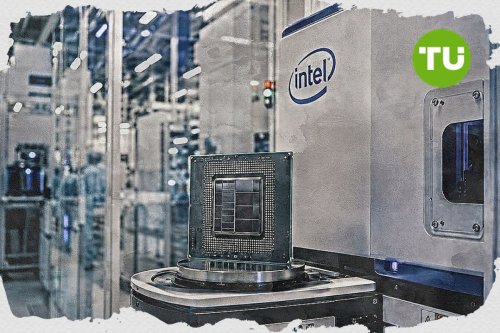
Intel's comeback: Apple, Trump and the AI bet
Bitcoin price prediction based on RSI: Is BTC poised for a new rally?

Toncoin becomes Gram: Why Durov restored token's original name
Related Articles
Team that worked on the article
Rinat Gismatullin is an entrepreneur and a business expert with 9 years of experience in trading. He focuses on long-term investing, but also uses intraday trading.
Dan Blystone began his trading career in 1998 as an arbitrage clerk on the floor of the Chicago Mercantile Exchange (CME). He later traded bond and Eurex futures at proprietary firms such as Altea Trading, gaining valuable experience in high-frequency trading and risk management.
Chinmay Soni is a financial analyst with more than 5 years of experience in working with stocks, Forex, derivatives, and other assets. As a founder of a boutique research firm and an active researcher, he covers various industries and fields, providing insights backed by statistical data.
Xetra is a German Stock Exchange trading system that the Frankfurt Stock Exchange operates. Deutsche Börse is the parent company of the Frankfurt Stock Exchange.
Risk management is a risk management model that involves controlling potential losses while maximizing profits. The main risk management tools are stop loss, take profit, calculation of position volume taking into account leverage and pip value.
Cryptocurrency is a type of digital or virtual currency that relies on cryptography for security. Unlike traditional currencies issued by governments (fiat currencies), cryptocurrencies operate on decentralized networks, typically based on blockchain technology.
An investor is an individual, who invests money in an asset with the expectation that its value would appreciate in the future. The asset can be anything, including a bond, debenture, mutual fund, equity, gold, silver, exchange-traded funds (ETFs), and real-estate property.
Uptrend is a market condition in which prices are generally rising. Uptrends can be identified by using moving averages, trendlines, and support and resistance levels.

-
 Afghanistan
-
 Albania
-
 Algeria
-
 Angola
-
 Argentina
-
 Armenia
-
 Australia
-
 Austria
-
 Azerbaijan
-
 Bahamas
-
 Bahrain
-
 Bangladesh
-
 Belarus
-
 Belgium
-
 Bolivia
-
 Botswana
-
 Brazil
-
 Brunei
-
 Bulgaria
-
 Cambodia
-
 Cameroon
-
 Canada
-
 Chile
Chile
-
 China
China
-
 Colombia
-
 Congo
Congo
-
 Costa Rica
-
 Cote d'Ivoire
-
 Croatia
-
 Cuba
Cuba
-
 Cyprus
-
 Czechia
-
 DR Congo
-
 Denmark
-
 Dominican Republic
-
 Ecuador
-
 Egypt
Egypt
-
 El Salvador
-
 Estonia
-
 Eswatini
-
 Ethiopia
-
 Finland
-
 France
-
 Georgia
-
 Germany
-
 Ghana
Ghana
-
 Greece
-
 Haiti
Haiti
-
 Hong Kong
-
 Hungary
-
 India
India
-
 Indonesia
-
 Iran, Islamic republic
-
 Iraq
Iraq
-
 Ireland
-
 Israel
-
 Italy
Italy
-
 Jamaica
-
 Japan
Japan
-
 Jordan
-
 Kazakhstan
-
 Kenya
Kenya
-
 Korea
Korea
-
 Kuwait
-
 Kyrgyzstan
-
 Laos
Laos
-
 Latvia
-
 Lebanon
-
 Lesotho
-
 Libya
Libya
-
 Lithuania
-
 Luxembourg
-
 Madagascar
-
 Malaysia
-
 Malta
Malta
-
 Mauritius
-
 Mexico
-
 Moldova
-
 Mongolia
-
 Montenegro
-
 Morocco
-
 Mozambique
-
 Myanmar
-
 Namibia
-
 Nepal
Nepal
-
 Netherlands
-
 New Zealand
-
 Nigeria
-
 North Macedonia
-
 Norway
-
 Oman
Oman
-
 Pakistan
-
 Palestine
-
 Panama
-
 Papua New Guinea
-
 Paraguay
-
 Peru
Peru
-
 Philippines
-
 Poland
-
 Portugal
-
 Puerto Rico
-
 Qatar
Qatar
-
 Reunion
-
 Romania
-
 Rwanda
-
 Saudi Arabia
-
 Serbia
-
 Singapore
-
 Slovakia
-
 Slovenia
-
 Somalia
-
 South Africa
-
 Spain
Spain
-
 Sri Lanka
-
 Sweden
-
 Switzerland
-
 Syria
Syria
-
 Taiwan
-
 Tajikistan
-
 Tanzania
-
 Thailand
-
 Trinidad and Tobago
-
 Tunisia
-
 Turkey
-
 UAE
UAE
-
 Uganda
-
 Ukraine
-
 United Kingdom
-
United States
-
 Uruguay
-
 Uzbekistan
-
 Venezuela
-
 Vietnam
-
 Yemen
Yemen
-
 Zambia
-
 Zimbabwe
- Forex
- Crypto












