The tweet was deleted by the author.
But we saved everything 🙂.
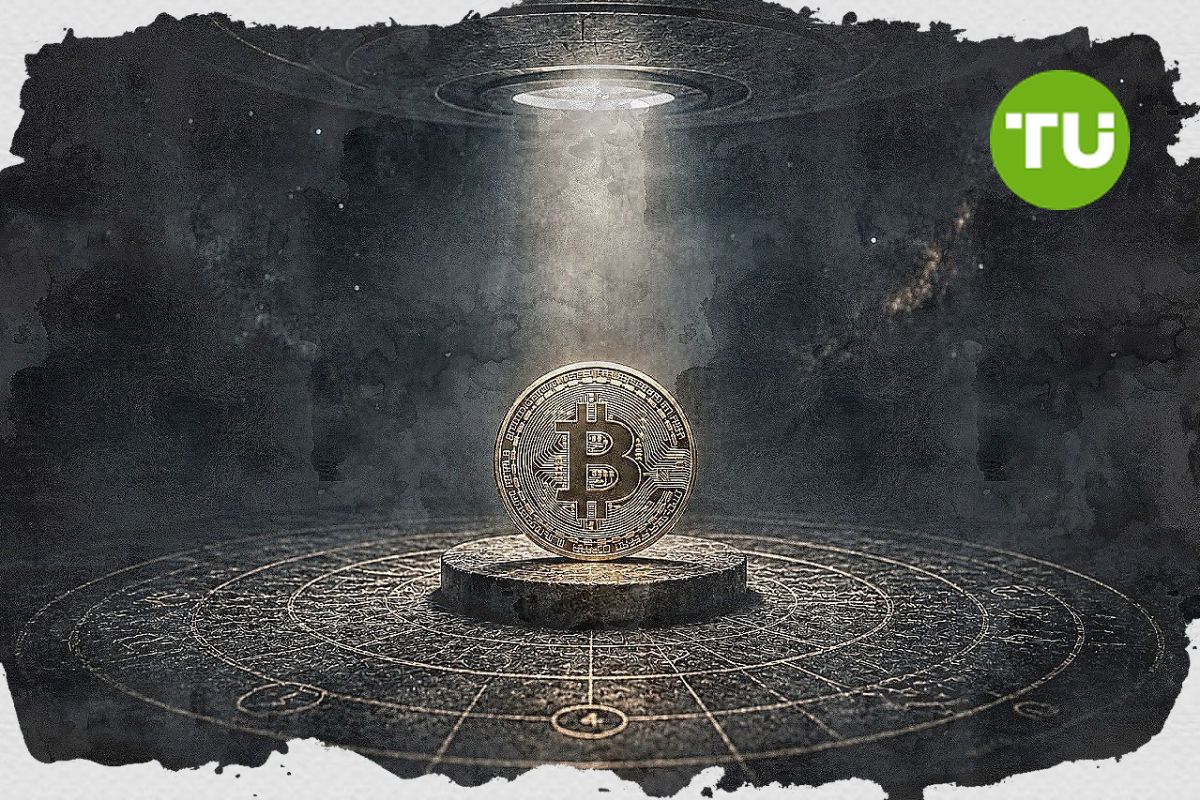
As Polymarket users place bets on the disclosure of extraterrestrial life, the crypto community occasionally revisits one of its most unusual legends: that Bitcoin was given to humanity by aliens. As far-fetched as it sounds, the theory has circulated for years. Its longevity has less to do with belief in UFOs than with the enduring mystery surrounding Satoshi Nakamoto's identity.
Over the years, Bitcoin has inspired countless unconventional theories, ranging from artificial intelligence and time travelers to secret intelligence agencies. Yet the alien hypothesis remains one of the most persistent and continues to resurface from time to time.
Several years ago, CoinDesk even published a tongue-in-cheek column titled Aliens Exist. And They Use Cryptocurrency. Rather than arguing that extraterrestrials are real, the author suggested that if an interplanetary economy ever emerged, digital currencies would make far more sense than traditional money.
In 2008, an unknown author using that pseudonym published the Bitcoin white paper, helped launch the network, and then disappeared from public view a few years later. Since then, numerous attempts have been made to uncover Nakamoto's identity, but none has produced convincing evidence.
That information vacuum created fertile ground for increasingly unconventional theories. Some proposed Satoshi was an intelligence operative; others believed the name represented a group of researchers, while figures such as Craig Wright even claimed to be Nakamoto themselves.
The most extraordinary theory, however, argues that Nakamoto was never human at all. According to its supporters, the name concealed a representative of an extraterrestrial civilization, and Bitcoin was a technology introduced to humanity from beyond Earth.
The primary one is Nakamoto's identity. To this day, no one knows who created Bitcoin, while wallets believed to belong to Satoshi—holding an estimated one million BTC—have remained almost completely inactive for more than 15 years.
Supporters of the alien theory consider this highly unusual. If someone created an entirely new financial system and became one of the wealthiest individuals in history, why would they disappear without a trace and never touch their fortune?
Another frequently cited argument concerns Bitcoin's architecture. Advocates believe the system appeared remarkably sophisticated for its time.
They point to the absence of a central authority, a monetary issuance schedule mapped out more than a century into the future, and the network's ability to function without any administrator. In their view, this combination of features makes the technology seem as though it arrived ahead of its era.
A similar observation appeared in an article published on Medium. Its author reflected on Bitcoin's architecture, arguing that the network's design is genuinely extraordinary and expressing surprise that such a system could have originated from a human mind.
First, Bitcoin did not emerge in isolation. Long before the white paper was published, projects such as Hashcash, b-money, Bit Gold, and several other cryptographic digital cash proposals had already laid much of the conceptual groundwork.
Rather than inventing everything from scratch, Satoshi combined existing ideas with original engineering solutions into a functioning system. In other words, Bitcoin was the product of decades of cryptographic research, not the sudden appearance of an unknown technology.
Second, an innovative architecture is not evidence of extraterrestrial origins. Many engineering breakthroughs have been well ahead of their time, reflecting exceptional expertise rather than visitors from another civilization.
Finally, Satoshi's disappearance proves nothing by itself. It remains one of the most fascinating mysteries in modern technology, but it does not validate any of the countless theories surrounding Nakamoto's identity, whether they involve aliens, intelligence agencies, or anything else.
According to this hypothesis, Satoshi Nakamoto never existed. Instead, the pseudonym allegedly belonged to a self-improving AI that deliberately released Bitcoin's source code so humanity would build a vast global computing infrastructure on its behalf.
As the network expanded, the theory suggests, the AI would gain access to increasingly powerful computational resources.
This idea is no less speculative than the alien theory. Yet both narratives illustrate the same underlying pattern: as long as Satoshi Nakamoto's identity remains unknown, speculation will continue to fill the gaps left by the absence of facts.
And the longer that mystery endures, the more extraordinary the theories surrounding Bitcoin's origin are likely to become.

 Afghanistan
 Albania
 Algeria
 Angola
 Argentina
 Armenia
 Australia
 Austria
 Azerbaijan
 Bahamas
 Bahrain
 Bangladesh
 Belarus
 Belgium
 Bolivia
 Botswana
 Brazil
 Brunei
 Bulgaria
 Cambodia
 Cameroon
 Canada
 Chile
Chile
 China
China
 Colombia
 Congo
Congo
 Costa Rica
 Cote d'Ivoire
 Croatia
 Cuba
Cuba
 Cyprus
 Czechia
 DR Congo
 Denmark
 Dominican Republic
 Ecuador
 Egypt
Egypt
 El Salvador
 Estonia
 Eswatini
 Ethiopia
 Finland
 France
 Georgia
 Germany
 Ghana
Ghana
 Greece
 Haiti
Haiti
 Hong Kong
 Hungary
 India
India
 Indonesia
 Iran, Islamic republic
 Iraq
Iraq
 Ireland
 Israel
 Italy
Italy
 Jamaica
 Japan
Japan
 Jordan
 Kazakhstan
 Kenya
Kenya
 Korea
Korea
 Kuwait
 Kyrgyzstan
 Laos
Laos
 Latvia
 Lebanon
 Lesotho
 Libya
Libya
 Lithuania
 Luxembourg
 Madagascar
 Malaysia
 Malta
Malta
 Mauritius
 Mexico
 Moldova
 Mongolia
 Montenegro
 Morocco
 Mozambique
 Myanmar
 Namibia
 Nepal
Nepal
 Netherlands
 New Zealand
 Nigeria
 North Macedonia
 Norway
 Oman
Oman
 Pakistan
 Palestine
 Panama
 Papua New Guinea
 Paraguay
 Peru
Peru
 Philippines
 Poland
 Portugal
 Puerto Rico
 Qatar
Qatar
 Reunion
 Romania
 Rwanda
 Saudi Arabia
 Serbia
 Singapore
 Slovakia
 Slovenia
 Somalia
 South Africa
 Spain
Spain
 Sri Lanka
 Sweden
 Switzerland
 Syria
Syria
 Taiwan
 Tajikistan
 Tanzania
 Thailand
 Trinidad and Tobago
 Tunisia
 Turkey
 UAE
UAE
 Uganda
 Ukraine
 United Kingdom
United States
United Kingdom
United States
 Uruguay
 Uzbekistan
 Venezuela
 Vietnam
 Yemen
Yemen
 Zambia
 Zimbabwe