
The tweet was deleted by the author.
But we saved everything 🙂.

Liberland was created as an experiment in moving governance onto the blockchain. Ten years after its founding, however, the project has been shaken by an internal power struggle. Rival factions are now fighting over authority and control of critical infrastructure, leading to the first high-profile dismissal within its leadership.
Founded in 2015 by Czech politician Vít Jedlička, Liberland claims a roughly 7 km² territory between Croatia and Serbia and presents itself as a sovereign state with its own political and economic system, according to its official website.
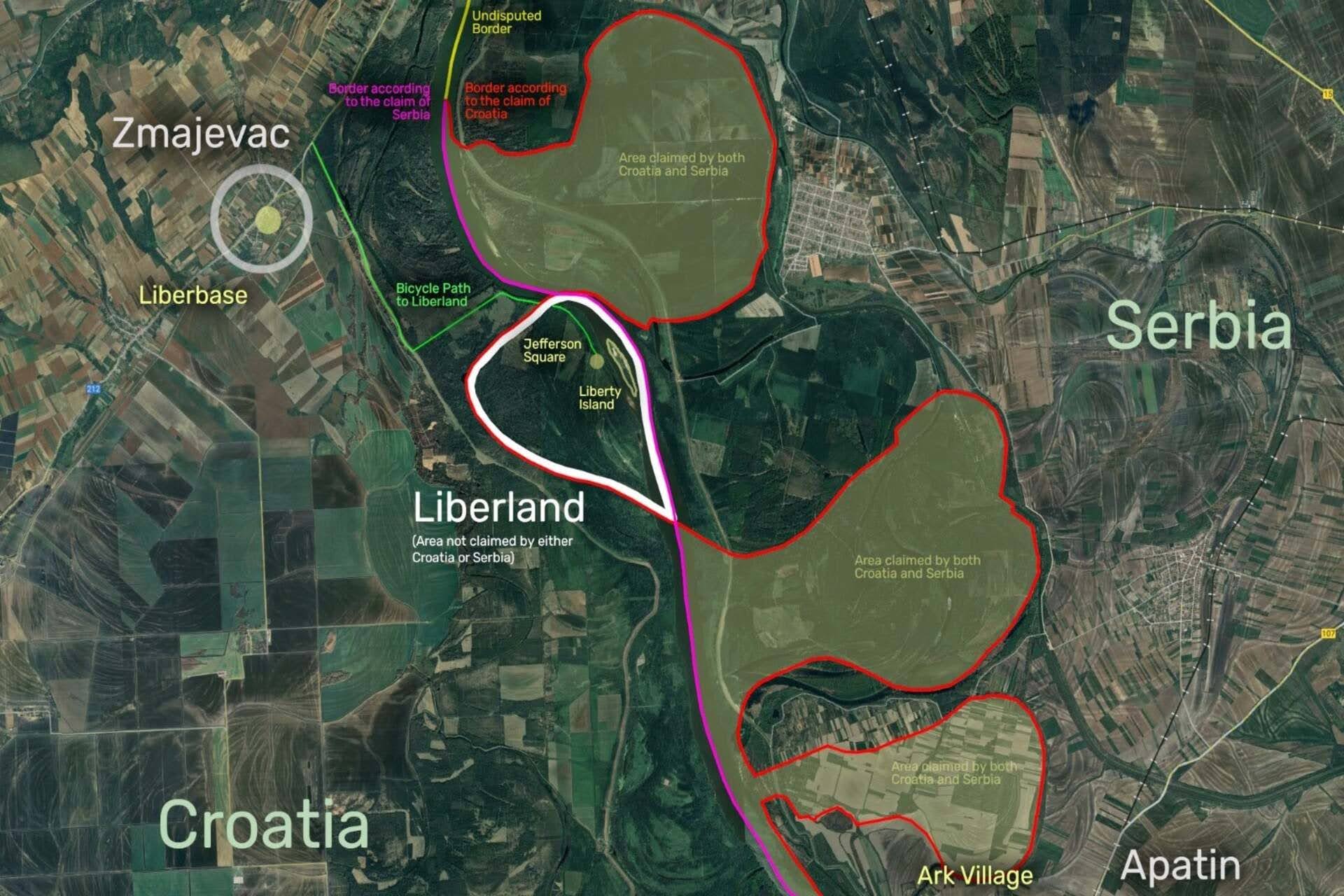
Territory claimed by Liberland. Source: liberland.org.
One of the project's defining features is its attempt to digitize virtually every aspect of governance. Decision-making relies on its blockchain, an on-chain voting system, a congress, a senate, and the Liberland Merit (LLM) token, which determines each participant's political influence.
Although Liberland has never received international recognition, it has repeatedly attracted controversy. The latest dispute centers on the dismissal of former Technology Minister Dorian Stern Vukotić, whom officials accuse of attempting to seize control of the state's digital infrastructure.
The document alleges that in November 2024 he disabled the multi-party control mechanism governing the Sudo account, which grants administrative privileges across Liberland's infrastructure. Congress claims that this effectively gave him unilateral control over key elements of the system.
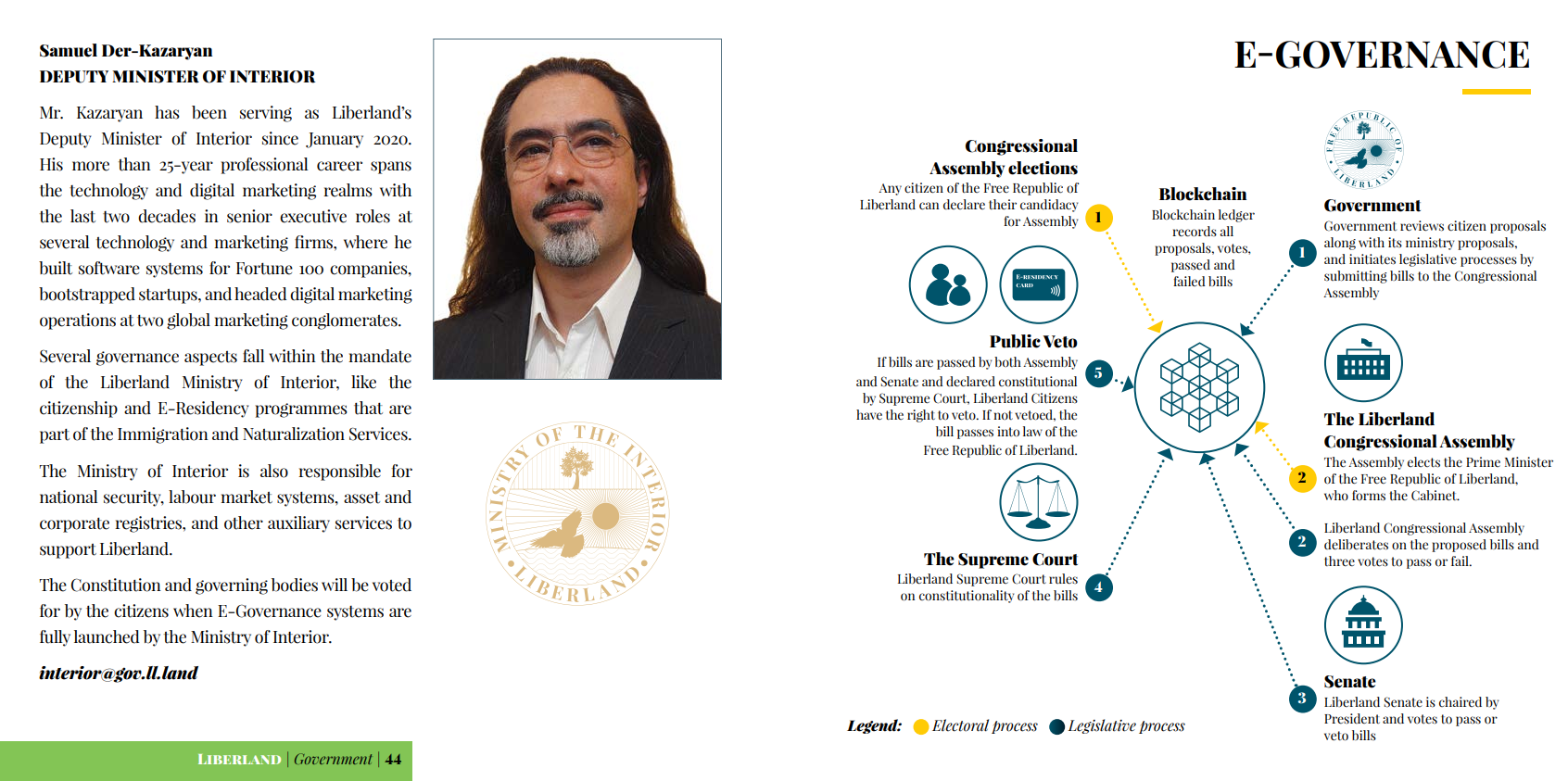
Liberland's governance model and the role of blockchain in decision-making. Source: liberland.org.
Another major accusation concerns the governance process itself. Vukotić allegedly changed the voting parameters, extending the review period for proposals from four days to 75 days while also blocking President Vít Jedlička's voting rights.
If those allegations prove accurate, the dispute extends far beyond technical administration. It becomes a struggle over who controls the project's decision-making process.
Congress claims Vukotić received BNB and LLM tokens from the Ministry of Finance to establish a trading pair between the two assets. According to Liberland's leadership, the funds were never used for their intended purpose and were not returned.
The resolution further demands that liquidity pools be transferred back under state control. It warns that refusal could result in additional sanctions and public condemnation.
The accusations do not end there. Another document alleges that in October 2025, Vukotić attempted to seize control of the official Liberland.org domain. After failing to do so, he allegedly promoted the alternative website Liberland.io.
He has also previously been linked to the launch of an unauthorized token using the Liberland name.
For his part, Vukotić has repeatedly criticized the project's leadership. During his congressional campaign, he argued that Liberland suffered from disorganization, a lack of strategic direction, and insufficient transparency in the use of public funds.
As a result, the current crisis has evolved into a confrontation between two competing camps, each accusing the other of mismanaging the project.
In October 2024, Sun was elected prime minister of Liberland through the project's blockchain-based voting system. The appointment marked his second diplomatic role after serving as Grenada's representative to the World Trade Organization.
At the time of his election, Liberland's authorities said the country had around 1,000 citizens, maintained its reserves, and continued to expand its digital infrastructure. Sun stated that he intended to promote minimal government intervention and decentralized self-governance.
Although he has played little visible role in the current conflict, the crisis is unfolding within the very governance system of which he is formally a part. That makes the situation particularly noteworthy.
A project designed to demonstrate the advantages of algorithmic governance now faces problems familiar to traditional politics: power struggles, institutional conflicts, and disputes over legitimacy.
In response, Congress has already announced a governance overhaul.
The proposal would restore the four-day voting period, reinstate the president's voting rights, transfer control of the administrative account to the Senate, and ultimately eliminate the Sudo system altogether. It also introduces a new multi-party control mechanism involving three independent participants.
One of Liberland's founding ideas was that software could replace much of traditional bureaucracy and make governance more objective. The current crisis suggests otherwise. Technology does not eliminate political conflict—it merely shifts it into a different domain.
Instead of battles over ministries and government offices, the conflict revolves around administrative keys, voting parameters, governance tokens, and digital authority.
At the same time, it would be premature to declare Liberland a failed project. Over the past decade, it has survived without international recognition, faced restrictions from neighboring countries, weathered repeated disputes over legitimacy, and endured persistent skepticism from outside observers.
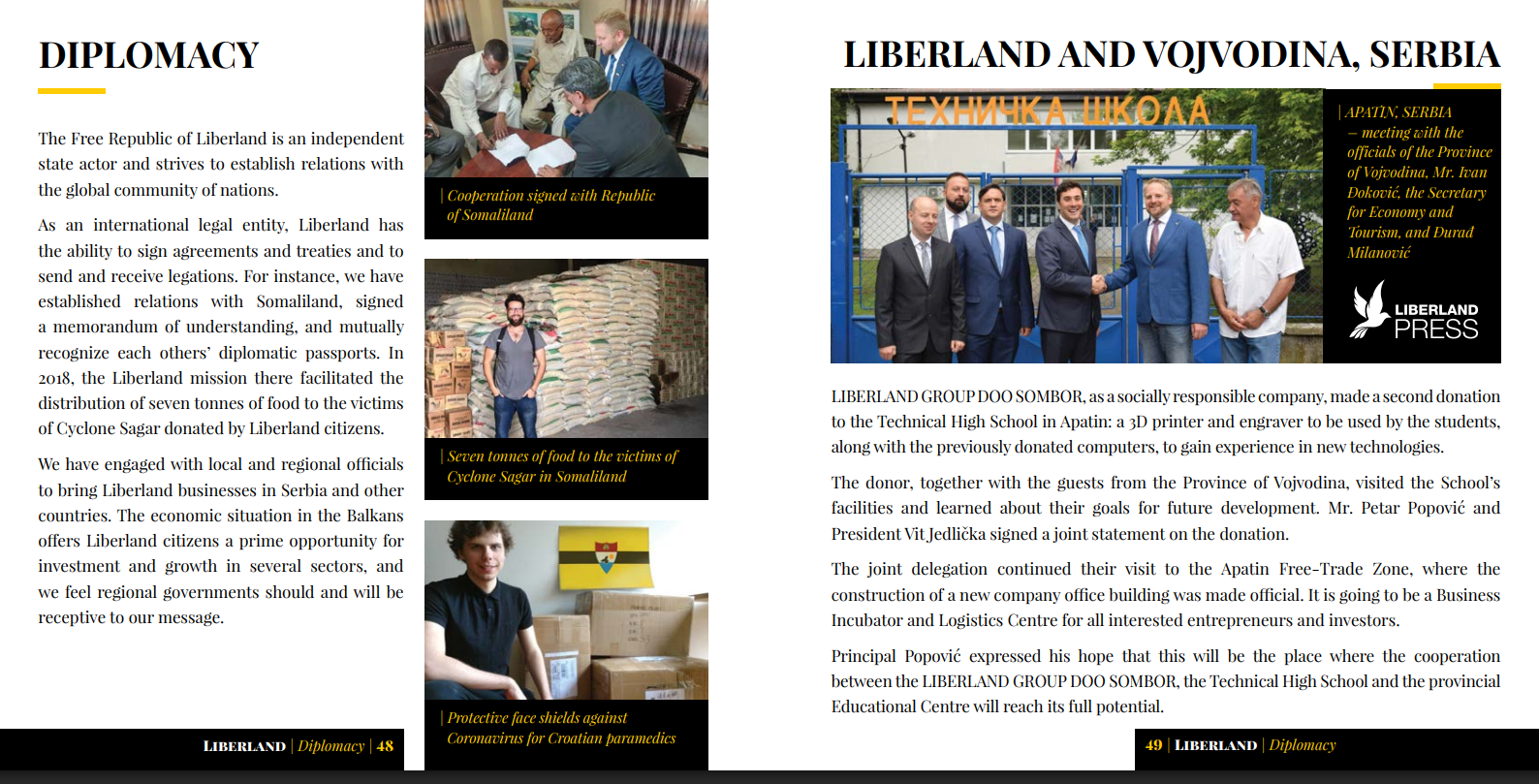
Liberland's diplomatic initiatives in Serbia and Somaliland. Source: liberland.org.
Despite those challenges, the government continues to hold elections, maintain its infrastructure, and attract new supporters. It also remains engaged in diplomatic outreach in pursuit of broader international recognition.
Nevertheless, the Vukotić affair strikes at the project's most sensitive component—its governance system. If Liberland's leadership fails to restore confidence in its decision-making process, the experiment could face a deeper crisis of political legitimacy.In that case, neither a prime minister, a president, nor a congress may be able to preserve the vision of a blockchain-based nation.

 Afghanistan
 Albania
 Algeria
 Angola
 Argentina
 Armenia
 Australia
 Austria
 Azerbaijan
 Bahamas
 Bahrain
 Bangladesh
 Belarus
 Belgium
 Bolivia
 Botswana
 Brazil
 Brunei
 Bulgaria
 Cambodia
 Cameroon
 Canada
 Chile
Chile
 China
China
 Colombia
 Congo
Congo
 Costa Rica
 Cote d'Ivoire
 Croatia
 Cuba
Cuba
 Cyprus
 Czechia
 DR Congo
 Denmark
 Dominican Republic
 Ecuador
 Egypt
Egypt
 El Salvador
 Estonia
 Eswatini
 Ethiopia
 Finland
 France
 Georgia
 Germany
 Ghana
Ghana
 Greece
 Haiti
Haiti
 Hong Kong
 Hungary
 India
India
 Indonesia
 Iran, Islamic republic
 Iraq
Iraq
 Ireland
 Israel
 Italy
Italy
 Jamaica
 Japan
Japan
 Jordan
 Kazakhstan
 Kenya
Kenya
 Korea
Korea
 Kuwait
 Kyrgyzstan
 Laos
Laos
 Latvia
 Lebanon
 Lesotho
 Libya
Libya
 Lithuania
 Luxembourg
 Madagascar
 Malaysia
 Malta
Malta
 Mauritius
 Mexico
 Moldova
 Mongolia
 Montenegro
 Morocco
 Mozambique
 Myanmar
 Namibia
 Nepal
Nepal
 Netherlands
 New Zealand
 Nigeria
 North Macedonia
 Norway
 Oman
Oman
 Pakistan
 Palestine
 Panama
 Papua New Guinea
 Paraguay
 Peru
Peru
 Philippines
 Poland
 Portugal
 Puerto Rico
 Qatar
Qatar
 Reunion
 Romania
 Rwanda
 Saudi Arabia
 Serbia
 Singapore
 Slovakia
 Slovenia
 Somalia
 South Africa
 Spain
Spain
 Sri Lanka
 Sweden
 Switzerland
 Syria
Syria
 Taiwan
 Tajikistan
 Tanzania
 Thailand
 Trinidad and Tobago
 Tunisia
 Turkey
 UAE
UAE
 Uganda
 Ukraine
 United Kingdom
United States
United Kingdom
United States
 Uruguay
 Uzbekistan
 Venezuela
 Vietnam
 Yemen
Yemen
 Zambia
 Zimbabwe