The tweet was deleted by the author.
But we saved everything 🙂.
Intel has found itself in the spotlight after Donald Trump said the company would work with Apple on chip production in the U.S. For Intel, this is a chance to restore market confidence and strengthen its manufacturing business. Investors have already reacted positively to the story, seeing Intel as one of the key U.S. bets on AI.
Donald Trump did not specify which processors were involved or when production could begin. However, the Apple-Intel link itself matters for the market: Apple has relied on TSMC for years, so shifting even part of its orders to Intel would be a notable change in the supply chain, Reuters writes.
For Intel, such a contract would be especially important because the company is trying to develop chip production for external customers. If Apple does actually hand over part of its orders, Intel would get not only more factory utilization but also a strong reputational signal: one of the world’s largest electronics players would once again trust its manufacturing.
The context here is not only market-related, but also political. Last year, the U.S. government received a 10% stake in Intel and announced plans to invest about $10 billion in building and expanding the company’s factories in the U.S. Washington is trying to reduce its dependence on Asian chipmakers, and Intel is taking on the role of one of the key national manufacturers in that strategy.
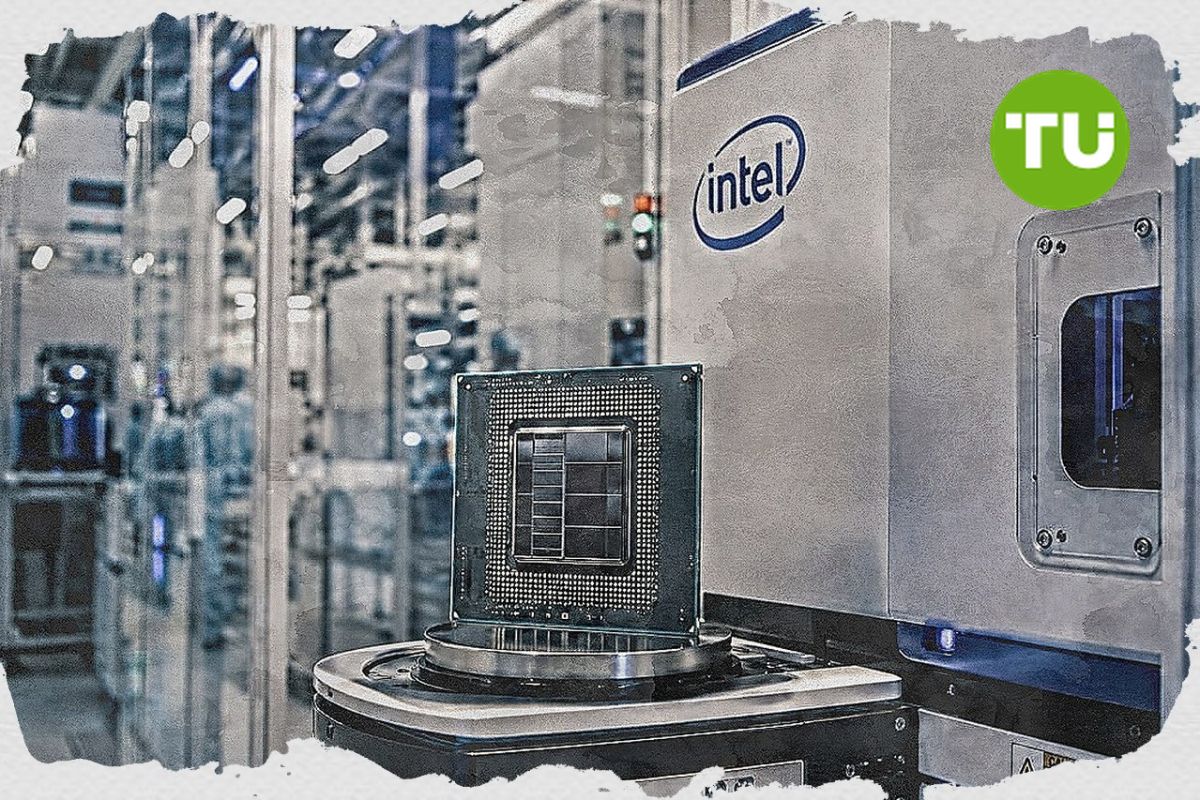
At the same time, Intel is trying to show that it has not only political support, but also the technological base needed for large orders. On June 16, the company announced that its new 18A-P manufacturing process had entered trial production. At this stage, Intel produces the first batches of wafers and checks whether the technology is ready to meet future customer requirements.
18A-P is important because it may become a more suitable option for external customers, including Apple. According to Intel, the new process delivers up to 9% higher performance at the same power consumption or up to 18% lower power consumption at the same operating speed compared with 18A. The company also points to improved thermal characteristics and compatibility between 18A-P and existing developments based on 18A.
Still, Intel has yet to prove that it can produce such chips reliably at large scale. After several years of delays and manufacturing quality issues, the market will be watching not only the specifications of 18A-P, but also the successful production rate. Counterpoint Research analyst Neil Shah said that if Intel can quickly reach a level above 90%, it will be easier for the company to attract new customers.
The market is already pricing in a turnaround scenario for Intel. After Trump’s statement, the company’s shares rose 5.7%, while year-to-date gains have exceeded 200%. Investor interest has been supported by several factors, including Nvidia’s $5 billion investment and demand for processors used in AI infrastructure.
Recent financial results have also supported this interest. In the last quarter, Intel’s revenue rose 7% to $13.6 billion, beating Wall Street expectations by roughly 9%. The Data Center and AI segment posted a 22% increase in sales to $5.05 billion. At the same time, the operating loss of Intel’s manufacturing business narrowed to $2.4 billion, improving by $72 million compared with the previous quarter.
Against this backdrop, CNBC’s Jim Cramer said Intel could still rise despite the strong rally in its shares. According to him, demand for AI services could sharply increase the need for central processors, while overloaded TSMC capacity gives Intel a chance to attract customers that need production in the U.S.
For Intel, the key question now is whether the company can confirm market expectations with real orders. Trump’s statement, Apple’s interest, Nvidia’s investment and government support have already helped bring attention back to the company, but that is not enough. Intel needs to show that 18A-P is ready not only for test batches, but also for stable high-volume production.
If Intel secures a major external customer and improves its manufacturing performance, its role in the market could change noticeably. The company would be able to earn not only from its own processors, but also from making chips for other players. In that case, Intel would become not just a participant in the AI boom, but one of the key manufacturers the U.S. is betting on in the fight for control over the semiconductor supply chain.

 Afghanistan
 Albania
 Algeria
 Angola
 Argentina
 Armenia
 Australia
 Austria
 Azerbaijan
 Bahamas
 Bahrain
 Bangladesh
 Belarus
 Belgium
 Bolivia
 Botswana
 Brazil
 Brunei
 Bulgaria
 Cambodia
 Cameroon
 Canada
 Chile
Chile
 China
China
 Colombia
 Congo
Congo
 Costa Rica
 Cote d'Ivoire
 Croatia
 Cuba
Cuba
 Cyprus
 Czechia
 DR Congo
 Denmark
 Dominican Republic
 Ecuador
 Egypt
Egypt
 El Salvador
 Estonia
 Eswatini
 Ethiopia
 Finland
 France
 Georgia
 Germany
 Ghana
Ghana
 Greece
 Haiti
Haiti
 Hong Kong
 Hungary
 India
India
 Indonesia
 Iran, Islamic republic
 Iraq
Iraq
 Ireland
 Israel
 Italy
Italy
 Jamaica
 Japan
Japan
 Jordan
 Kazakhstan
 Kenya
Kenya
 Korea
Korea
 Kuwait
 Kyrgyzstan
 Laos
Laos
 Latvia
 Lebanon
 Lesotho
 Libya
Libya
 Lithuania
 Luxembourg
 Madagascar
 Malaysia
 Malta
Malta
 Mauritius
 Mexico
 Moldova
 Mongolia
 Montenegro
 Morocco
 Mozambique
 Myanmar
 Namibia
 Nepal
Nepal
 Netherlands
 New Zealand
 Nigeria
 North Macedonia
 Norway
 Oman
Oman
 Pakistan
 Palestine
 Panama
 Papua New Guinea
 Paraguay
 Peru
Peru
 Philippines
 Poland
 Portugal
 Puerto Rico
 Qatar
Qatar
 Reunion
 Romania
 Rwanda
 Saudi Arabia
 Serbia
 Singapore
 Slovakia
 Slovenia
 Somalia
 South Africa
 Spain
Spain
 Sri Lanka
 Sweden
 Switzerland
 Syria
Syria
 Taiwan
 Tajikistan
 Tanzania
 Thailand
 Trinidad and Tobago
 Tunisia
 Turkey
 UAE
UAE
 Uganda
 Ukraine
 United Kingdom
United States
United Kingdom
United States
 Uruguay
 Uzbekistan
 Venezuela
 Vietnam
 Yemen
Yemen
 Zambia
 Zimbabwe