

IBM shares tumble after weak preliminary Q2 results

IBM is experiencing its biggest single-day decline in years after unexpectedly weak preliminary second-quarter results. The sharp selloff could serve as a warning sign for the broader technology sector as earnings season gains momentum.
The primary catalyst behind IBM's collapse was the company's unexpected preliminary update for the second quarter. IBM now expects revenue of approximately $17.2 billion, well below the $17.86 billion consensus estimate, while adjusted earnings per share are projected at $2.93, versus expectations of $3.02. In pre-market trading, the stock is down more than 24%.
According to CEO Arvind Krishna, the disappointing results were mainly driven by the infrastructure segment, where several large contracts were not finalized as expected. At the same time, supply chain changes further weighed on quarterly performance.
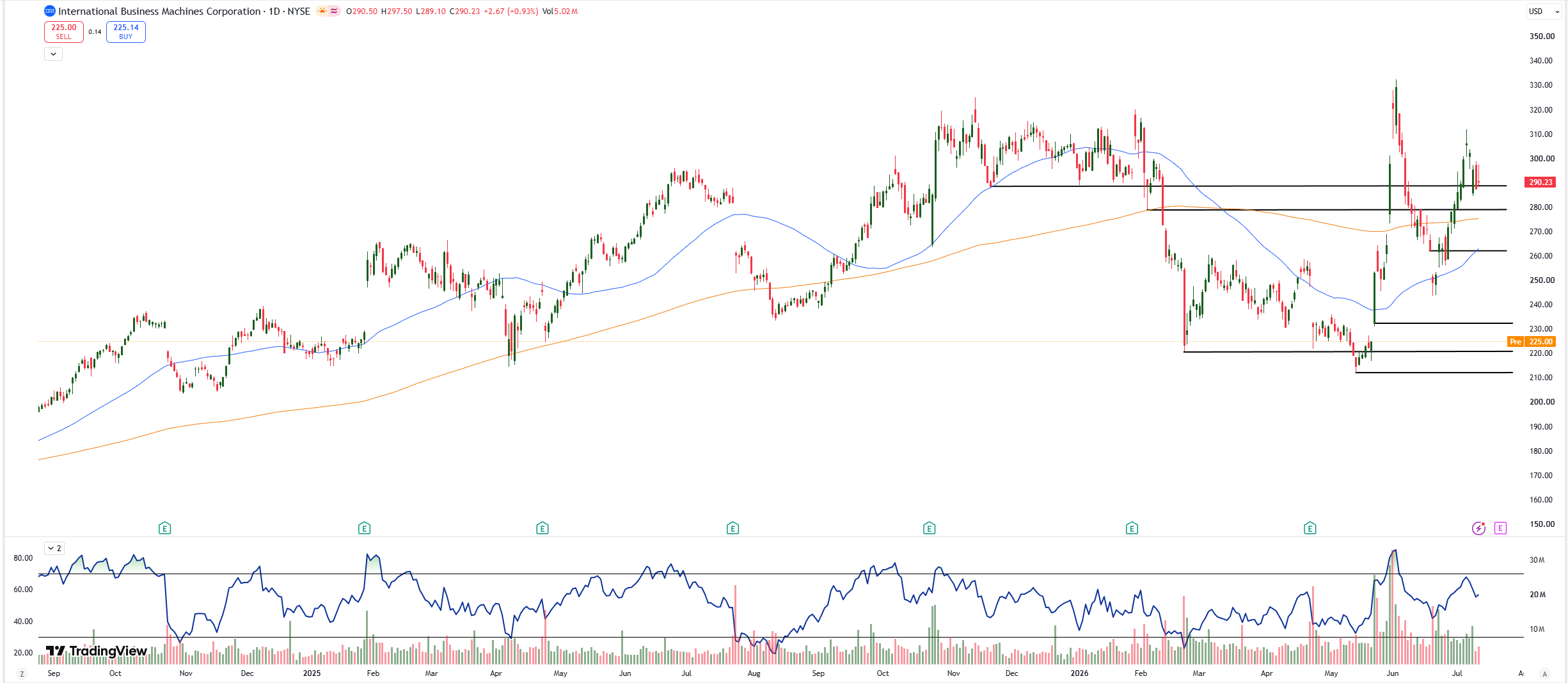
IBM enters a high-volatility trading session
Such a sharp decline is typically driven only by major fundamental developments. As previously discussed, the base-case scenario for IBM pointed to a decline toward $279.
The next key support level is located around $220. A decisive break below this level would increase the probability of a move toward $212.
However, the more likely short-term scenario is an attempt by buyers to absorb the selloff during the regular trading session. The nearest resistance is located around $232, corresponding to the May 20 gap-up level.
Regardless of the outcome, investors should remain extremely cautious. IBM shares are expected to experience exceptionally high volatility throughout today's session, making disciplined risk management especially important.
IBM's selloff highlights earnings season risks
We have repeatedly noted that the current earnings season carries elevated risks for the technology sector. IBM's collapse demonstrates just how quickly the market is willing to reprice companies at the first signs of weakening fundamentals.
This reaction is likely to serve as a warning for investors across the broader market. Over the coming weeks, heightened volatility should be expected, as even strong earnings may no longer guarantee higher share prices, while disappointing results could trigger double-digit moves in a single trading session.











-
 Afghanistan
-
 Albania
-
 Algeria
-
 Angola
-
 Argentina
-
 Armenia
-
 Australia
-
 Austria
-
 Azerbaijan
-
 Bahamas
-
 Bahrain
-
 Bangladesh
-
 Belarus
-
 Belgium
-
 Bolivia
-
 Botswana
-
 Brazil
-
 Brunei
-
 Bulgaria
-
 Cambodia
-
 Cameroon
-
 Canada
-
 Chile
-
 China
-
 Colombia
-
 Congo
-
 Costa Rica
-
 Cote d'Ivoire
-
 Croatia
-
 Cuba
-
 Cyprus
-
 Czechia
-
 DR Congo
-
 Denmark
-
 Dominican Republic
-
 Ecuador
-
 Egypt
-
 El Salvador
-
 Estonia
-
 Eswatini
-
 Ethiopia
-
 Finland
-
 France
-
 Georgia
-
 Germany
-
 Ghana
-
 Greece
-
 Haiti
-
 Hong Kong
-
 Hungary
-
 India
-
 Indonesia
-
 Iran, Islamic republic
-
 Iraq
-
 Ireland
-
 Israel
-
 Italy
-
 Jamaica
-
 Japan
-
 Jordan
-
 Kazakhstan
-
 Kenya
-
 Korea
-
 Kuwait
-
 Kyrgyzstan
-
 Laos
-
 Latvia
-
 Lebanon
-
 Lesotho
-
 Libya
-
 Lithuania
-
 Luxembourg
-
 Madagascar
-
 Malaysia
-
 Malta
-
 Mauritius
-
 Mexico
-
 Moldova
-
 Mongolia
-
 Montenegro
-
 Morocco
-
 Mozambique
-
 Myanmar
-
 Namibia
-
 Nepal
-
 Netherlands
-
 New Zealand
-
 Nigeria
-
 North Macedonia
-
 Norway
-
 Oman
-
 Pakistan
-
 Palestine
-
 Panama
-
 Papua New Guinea
-
 Paraguay
-
 Peru
-
 Philippines
-
 Poland
-
 Portugal
-
 Puerto Rico
-
 Qatar
-
 Reunion
-
 Romania
-
 Rwanda
-
 Saudi Arabia
-
 Serbia
-
 Singapore
-
 Slovakia
-
 Slovenia
-
 Somalia
-
 South Africa
-
 Spain
-
 Sri Lanka
-
 Sweden
-
 Switzerland
-
 Syria
-
 Taiwan
-
 Tajikistan
-
 Tanzania
-
 Thailand
-
 Trinidad and Tobago
-
 Tunisia
-
 Turkey
-
 UAE
-
 Uganda
-
 Ukraine
-
 United Kingdom
-
United States
-
 Uruguay
-
 Uzbekistan
-
 Venezuela
-
 Vietnam
-
 Yemen
-
 Zambia
-
 Zimbabwe
- Forex
- Crypto












