
The tweet was deleted by the author.
But we saved everything 🙂.
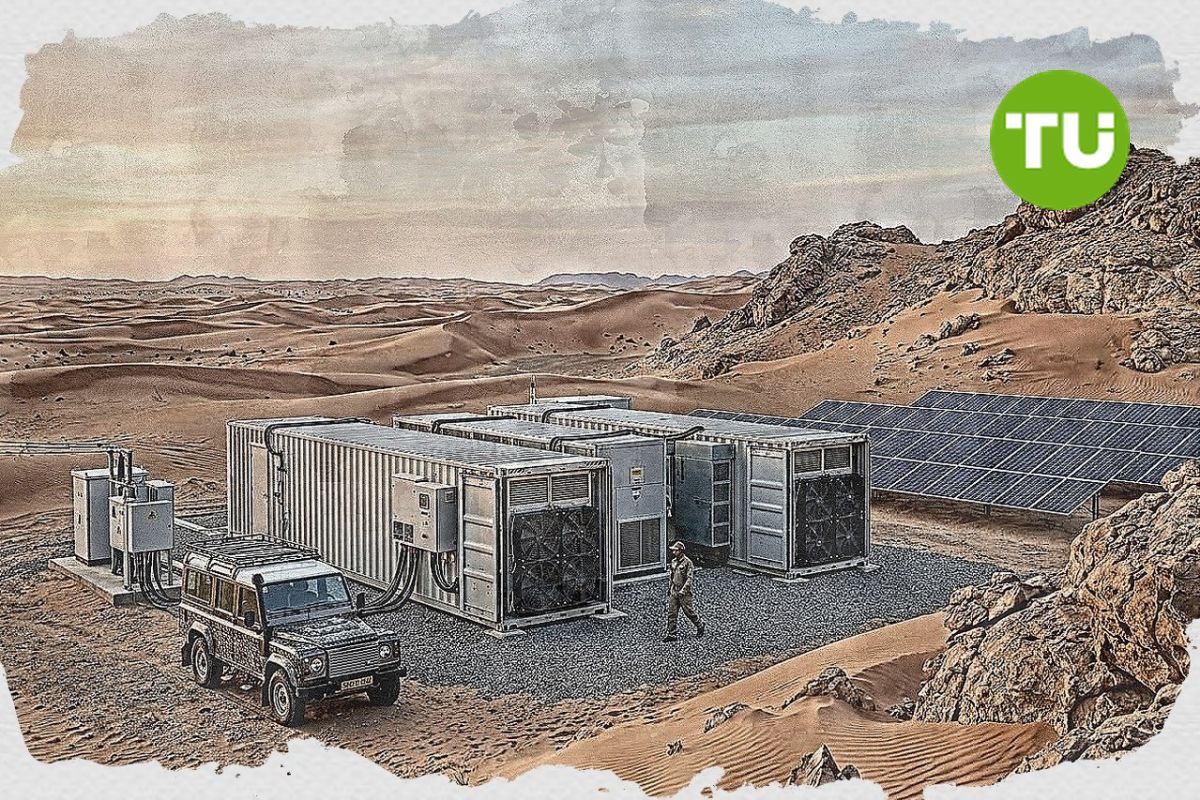
As major mining companies repurpose their capacity for artificial intelligence, governments are taking the opposite approach. For businesses, Bitcoin mining is becoming a less predictable model amid rising costs. For countries, however, mining is turning into a tool of energy policy, industrial development, and participation in the Bitcoin economy.
One of the latest examples of government interest in mining is Oman. Enegix Global recently said it had been selected to support Omanhash.om, the Sultanate’s national mining pool. The project will be developed together with Oman-based Frontier Technologies, which operates in the blockchain and Web3 sector.
Omanhash.om is positioned as the official and mandatory pool for licensed mining companies in the country. Enegix Global is expected to provide the project’s technology and liquidity infrastructure, while the model itself will operate within an approved regulatory framework.
Normally, companies can choose a pool based on fees, payout stability, technical terms, and other parameters. In Oman’s case, licensed participants effectively receive a single point of access to mining tied to state regulation. This structure gives the authorities more control over local hash rate and operator activity.
Oman is not the only country trying to integrate mining into its economic policy. In Uzbekistan, President Shavkat Mirziyoyev signed a decree establishing the Besqala Mining Valley special zone in Karakalpakstan. Residents of the zone will be able to mine cryptoassets using energy from renewable sources and will be exempt from taxes and fees until January 1, 2035.
Instead of the standard tax burden, companies will transfer 1% of their revenue each month through a special body. The mined cryptoassets may be sold or exchanged on both national and foreign platforms, but the proceeds must be held in accounts at Uzbek banks. Miners will also be allowed to build greenhouses near their facilities to use excess heat generated by the equipment.
In the U.S., interest in mining is taking the form of industrial policy. Senators Bill Cassidy and Cynthia Lummis introduced the Mined in America Act, which is aimed at developing domestic production of Bitcoin mining equipment. The bill proposes voluntary certification for miners and pools, while participants in the program would gradually phase out devices produced by companies linked to “foreign adversaries.”
For the U.S., the issue is not only mining itself, but also control over the supply chain. According to supporters of the initiative, about 97% of ASIC devices are produced by China’s Bitmain and MicroBT. At the same time, the U.S. accounts for 37.5% of the global Bitcoin hash rate. The bill is also linked to the idea of a strategic Bitcoin reserve and the creation of a closed cycle: from equipment production to mining and BTC accumulation.
Another example is Bhutan. The country mines Bitcoin through the state investment arm Druk Holding & Investments, using access to cheap hydropower. This approach allows it to avoid buying BTC directly on the market and instead build reserves through its own energy infrastructure. According to Bitcoin Treasuries, Bhutan currently holds 4,973 BTC.
Against the backdrop of government interest in mining, some major companies are moving in the opposite direction. After the 2024 halving, rising network difficulty, and higher operating costs, Bitcoin mining became a less predictable business model for public miners. As a result, they are increasingly using their sites, access to electricity, and engineering infrastructure for AI and high-performance computing.
One of the most notable examples is Bitfarms. The company reported a net loss of $284.5 million for 2025, even though its revenue rose 72% to $229 million. After the report was published, Bitfarms shares rose 6.6%, as investors responded positively to its pivot toward AI infrastructure and plans to build a data center with up to 2.2 GW of capacity in North America.
MARA Holdings is also expanding its AI direction through energy infrastructure. In its report for the first quarter of 2026, the company disclosed the sale of about 20,880 BTC for roughly $1.5 billion, with part of the proceeds directed toward repurchasing debt obligations, reducing a credit line, and financing the acquisition of Long Ridge Energy & Power.
Other miners, including Iris Energy, Cipher Mining, and Riot Platforms, are following a similar logic. Companies are not necessarily exiting Bitcoin mining entirely, but they increasingly view mining as one possible use of power capacity rather than as their only business model.
As a result, mining is increasingly developing along two different paths. For private companies, it is becoming one of several ways to monetize infrastructure, alongside AI and data centers. For governments, Bitcoin mining remains a way to use energy resources, develop local industry, control hash rate, and gain access to BTC without direct purchases on the market.
This does not mean that businesses will abandon mining completely or that governments will take their place. Rather, the industry is splitting into two logics: companies are choosing the most profitable use of their capacity, while countries are using mining as a tool of long-term policy. In the coming years, competition in the sector will therefore not be limited to cheap electricity. Regulation, equipment production, infrastructure access, and control over hash rate flows will become increasingly important.

 Afghanistan
 Albania
 Algeria
 Angola
 Argentina
 Armenia
 Australia
 Austria
 Azerbaijan
 Bahamas
 Bahrain
 Bangladesh
 Belarus
 Belgium
 Bolivia
 Botswana
 Brazil
 Brunei
 Bulgaria
 Cambodia
 Cameroon
 Canada
 Chile
Chile
 China
China
 Colombia
 Congo
Congo
 Costa Rica
 Cote d'Ivoire
 Croatia
 Cuba
Cuba
 Cyprus
 Czechia
 DR Congo
 Denmark
 Dominican Republic
 Ecuador
 Egypt
Egypt
 El Salvador
 Estonia
 Eswatini
 Ethiopia
 Finland
 France
 Georgia
 Germany
 Ghana
Ghana
 Greece
 Haiti
Haiti
 Hong Kong
 Hungary
 India
India
 Indonesia
 Iran, Islamic republic
 Iraq
Iraq
 Ireland
 Israel
 Italy
Italy
 Jamaica
 Japan
Japan
 Jordan
 Kazakhstan
 Kenya
Kenya
 Korea
Korea
 Kuwait
 Kyrgyzstan
 Laos
Laos
 Latvia
 Lebanon
 Lesotho
 Libya
Libya
 Lithuania
 Luxembourg
 Madagascar
 Malaysia
 Malta
Malta
 Mauritius
 Mexico
 Moldova
 Mongolia
 Montenegro
 Morocco
 Mozambique
 Myanmar
 Namibia
 Nepal
Nepal
 Netherlands
 New Zealand
 Nigeria
 North Macedonia
 Norway
 Oman
Oman
 Pakistan
 Palestine
 Panama
 Papua New Guinea
 Paraguay
 Peru
Peru
 Philippines
 Poland
 Portugal
 Puerto Rico
 Qatar
Qatar
 Reunion
 Romania
 Rwanda
 Saudi Arabia
 Serbia
 Singapore
 Slovakia
 Slovenia
 Somalia
 South Africa
 Spain
Spain
 Sri Lanka
 Sweden
 Switzerland
 Syria
Syria
 Taiwan
 Tajikistan
 Tanzania
 Thailand
 Trinidad and Tobago
 Tunisia
 Turkey
 UAE
UAE
 Uganda
 Ukraine
 United Kingdom
United States
United Kingdom
United States
 Uruguay
 Uzbekistan
 Venezuela
 Vietnam
 Yemen
Yemen
 Zambia
 Zimbabwe



















