
AI Is Not The Solution


Editorial Note: While we adhere to strict Editorial Integrity, this post may contain references to products from our partners. Here's an explanation for How We Make Money. None of the data and information on this webpage constitutes investment advice according to our Disclaimer.
AI is not a magic bullet for trading success. While it can speed up testing, automate tasks, and surface insights, it cannot provide the one thing traders need most – an edge. Markets are largely random, with only fragile pockets of predictability. Without deep understanding, discipline, and risk management, AI-generated strategies amount to luck rather than skill. The bottom line: AI is a tool, not the solution.
Every five to ten years something hot and new sweeps through the trading world, promising to be the key to consistent profits.
Over the last 25 years as a professional trader, I’ve seen plenty of these waves. And I’ve come to realize: none of them are magic. None of them remove the hard reality that most people lose money trading. This is a controversial claim, but let me take you on a short journey through recent history, before zooming in on the current AI craze.
A brief history of trading “breakthroughs”
For centuries, trades happened face-to-face on an exchange floor – buyer and seller agreeing on price and size. The process is the same today, but most transactions are now handled by computers at extraordinary speed.
As computing power advanced, trading platforms like MetaStock, TradeStation, NinjaTrader, MetaTrader, AmiBroker, and Wealth-Lab flooded the market, each promoting automation, technical indicators, and “essential” new features as the edge every trader was chasing.
Today, algorithms dominate the exchanges. Trading has shifted from human discretion to machine execution – but despite these advances, the number of profitable traders has not exploded.

The current AI mania
Now we are in the middle of another revolution: AI.
Large language models (LLMs) can analyze text, write code, and boost productivity in ways that feel miraculous. The pace of progress is breathtaking, and AI will surely become an integral part of our lives, including trading.
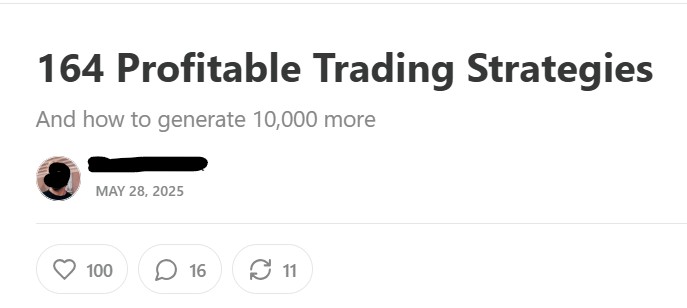
But here’s the problem: every new technological wave attracts vendors, influencers, and “experts” claiming they have the secret formula. AI is no exception. Even highly quantitative, scientific-minded traders are being swept up in the belief that AI can shortcut the path to profitable strategies. It was this headline from a quant that I followed that forced me to write today’s article.
It reminds me of the retail boom around genetic algorithm software like StrategyQuant. Traders would let it run for days, auto-generating and backtesting hundreds of thousands of strategies, believing the survivors were the holy grail. The logic was seductive: let the machine do the hard work, test every permutation, and discover hidden riches.
Today, genetic optimization comes with free trading software. Pushing the idea that all you need to do is sit back and let the machine work for you.
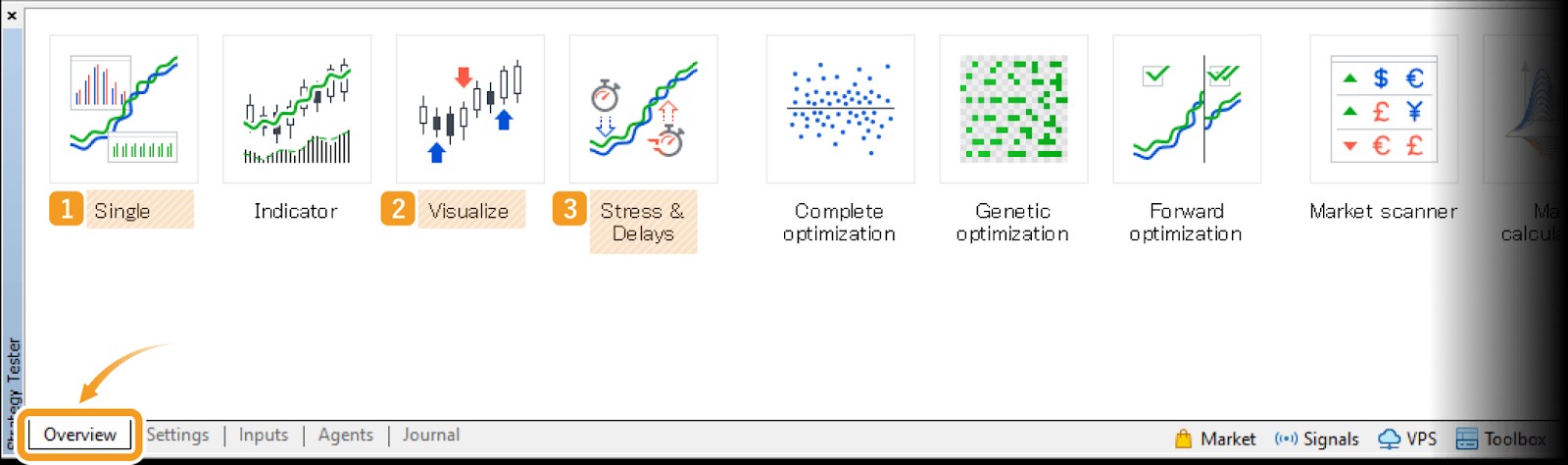
The reality? Most of those “discoveries” were and are random luck dressed up as edge.
The nature of markets
Trading requires decisions under uncertainty. That uncertainty is uncomfortable – it exposes our vulnerabilities, the risk of being wrong, losing money, or missing opportunities. That’s why trading is so alluring: it dangles the promise of compressing decades of slow wealth accumulation into a few brilliant trades.
But markets are not orderly systems waiting to be cracked. They are human systems, where rational and irrational actors collide to set prices. Value is whatever the next buyer and seller agree on. From this process emerges what looks – most of the time – like randomness.
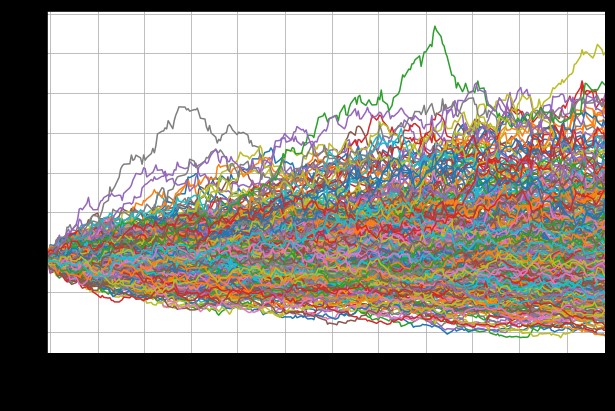
I don’t go as far as calling markets fully random. Some patterns persist – momentum being one of the best known – and traders can build durable strategies around them. But these are exceptions, not rules.
To make money trading, you need one thing: an edge.
Why AI isn’t the edge
No amount of AI horsepower will change the basic truth. Running millions of strategy variations means nothing unless you understand why a model is working. If you don’t, you’re mistaking random luck for skill – and luck doesn’t compound.
Markets are largely random systems with small, fragile pockets of predictability. AI, on the other hand, thrives on identifying stable, repeatable patterns in data – patterns rooted in consistent human behavior. That makes it powerful in many areas of life, but a poor substitute for the trader’s job: designing, testing, and monitoring strategies that exploit real inefficiencies.
AI is not the solution. You are the solution. AI is just a tool – an incredibly powerful one – but it cannot replace the discipline, judgment, and edge that separate the rare winning trader from the many who lose.

AI cannot give you an edge

As someone who has lived through multiple waves of hype – genetic algorithms, high-frequency trading, black-box systems – I can tell you that every generation of “the next big thing” has the same pattern. First, excitement. Then, disappointment. Finally, the technology finds its rightful place: not as a replacement for human judgment, but as a tool to support it.
AI is immensely powerful. It can help you test ideas faster, generate insights more efficiently, and even automate aspects of execution. But it cannot give you an edge. Only deep market understanding, sound risk management, and relentless discipline can do that. My advice: treat AI as an assistant, not a savior. The real work is still yours.
Conclusion
AI is transforming many industries, and it will certainly leave its mark on trading. But believing it will hand you the key to easy profits is a mistake. Trading success still comes down to finding and protecting your edge – and no machine can do that for you.
FAQs
Is AI good for trading?
AI can help analyze data and automate tasks, but it is not a guaranteed path to profits. You still need an edge.
Will AI replace human traders?
Unlikely. AI will change workflows, but markets require judgment, creativity, and adaptability that AI cannot replicate.
Can AI find profitable trading strategies?
AI can surface patterns, but most will be random or short-lived. Without understanding why they work, you risk false confidence.
Is algorithmic trading the same as AI trading?
No. Algorithmic trading automates predefined rules. AI attempts to adapt and learn, but both still require human oversight.
What’s the best way to use AI in trading?
As a tool for research, testing, and efficiency. Use it to speed up your work, not to outsource your thinking.
Editors' Top Picks and Insights






Related Articles
Team that worked on the article
Michael has decades of experience as a professional trader, hedge fund manager and incubator of emerging traders. He has built a number of trading analytic platforms with 3 successful exits and has served as the CEO of a regulated CFD broker and as a director of a public company in his late 20’s.
Andreas Kristo Saragih is a seasoned equity research analyst with over a decade of experience across both buy-side and sell-side roles, focused on the Indonesian capital market. He has extensive sector coverage, including banking, consumer goods, retail, real estate, healthcare, transportation, poultry, cement, pharmaceuticals, construction, and infrastructure.
Chinmay Soni is a financial analyst with more than 5 years of experience in working with stocks, Forex, derivatives, and other assets. As a founder of a boutique research firm and an active researcher, he covers various industries and fields, providing insights backed by statistical data.
Risk management is a risk management model that involves controlling potential losses while maximizing profits. The main risk management tools are stop loss, take profit, calculation of position volume taking into account leverage and pip value.
Backtesting is the process of testing a trading strategy on historical data. It allows you to evaluate the strategy's performance in the past and identify its potential risks and benefits.
Xetra is a German Stock Exchange trading system that the Frankfurt Stock Exchange operates. Deutsche Börse is the parent company of the Frankfurt Stock Exchange.
An investor is an individual, who invests money in an asset with the expectation that its value would appreciate in the future. The asset can be anything, including a bond, debenture, mutual fund, equity, gold, silver, exchange-traded funds (ETFs), and real-estate property.
Bitcoin is a decentralized digital cryptocurrency that was created in 2009 by an anonymous individual or group using the pseudonym Satoshi Nakamoto. It operates on a technology called blockchain, which is a distributed ledger that records all transactions across a network of computers.

-
 Afghanistan
-
 Albania
-
 Algeria
-
 Angola
-
 Argentina
-
 Armenia
-
 Australia
-
 Austria
-
 Azerbaijan
-
 Bahamas
-
 Bahrain
-
 Bangladesh
-
 Belarus
-
 Belgium
-
 Bolivia
-
 Botswana
-
 Brazil
-
 Brunei
-
 Bulgaria
-
 Cambodia
-
 Cameroon
-
 Canada
-
 Chile
Chile
-
 China
China
-
 Colombia
-
 Congo
Congo
-
 Costa Rica
-
 Cote d'Ivoire
-
 Croatia
-
 Cuba
Cuba
-
 Cyprus
-
 Czechia
-
 DR Congo
-
 Denmark
-
 Dominican Republic
-
 Ecuador
-
 Egypt
Egypt
-
 El Salvador
-
 Estonia
-
 Eswatini
-
 Ethiopia
-
 Finland
-
 France
-
 Georgia
-
 Germany
-
 Ghana
Ghana
-
 Greece
-
 Haiti
Haiti
-
 Hong Kong
-
 Hungary
-
 India
India
-
 Indonesia
-
 Iran, Islamic republic
-
 Iraq
Iraq
-
 Ireland
-
 Israel
-
 Italy
Italy
-
 Jamaica
-
 Japan
Japan
-
 Jordan
-
 Kazakhstan
-
 Kenya
Kenya
-
 Korea
Korea
-
 Kuwait
-
 Kyrgyzstan
-
 Laos
Laos
-
 Latvia
-
 Lebanon
-
 Lesotho
-
 Libya
Libya
-
 Lithuania
-
 Luxembourg
-
 Madagascar
-
 Malaysia
-
 Malta
Malta
-
 Mauritius
-
 Mexico
-
 Moldova
-
 Mongolia
-
 Montenegro
-
 Morocco
-
 Mozambique
-
 Myanmar
-
 Namibia
-
 Nepal
Nepal
-
 Netherlands
-
 New Zealand
-
 Nigeria
-
 North Macedonia
-
 Norway
-
 Oman
Oman
-
 Pakistan
-
 Palestine
-
 Panama
-
 Papua New Guinea
-
 Paraguay
-
 Peru
Peru
-
 Philippines
-
 Poland
-
 Portugal
-
 Puerto Rico
-
 Qatar
Qatar
-
 Reunion
-
 Romania
-
 Rwanda
-
 Saudi Arabia
-
 Serbia
-
 Singapore
-
 Slovakia
-
 Slovenia
-
 Somalia
-
 South Africa
-
 Spain
Spain
-
 Sri Lanka
-
 Sweden
-
 Switzerland
-
 Syria
Syria
-
 Taiwan
-
 Tajikistan
-
 Tanzania
-
 Thailand
-
 Trinidad and Tobago
-
 Tunisia
-
 Turkey
-
 UAE
UAE
-
 Uganda
-
 Ukraine
-
 United Kingdom
-
United States
-
 Uruguay
-
 Uzbekistan
-
 Venezuela
-
 Vietnam
-
 Yemen
Yemen
-
 Zambia
-
 Zimbabwe
- Forex
- Crypto












