
SpaceX Review In 2026


Editorial Note: While we adhere to strict Editorial Integrity, this post may contain references to products from our partners. Here's an explanation for How We Make Money. None of the data and information on this webpage constitutes investment advice according to our Disclaimer.
SpaceX, officially Space Exploration Technologies Corp., is an American aerospace and space infrastructure company founded by Elon Musk in 2002. The company develops reusable rockets, spacecraft, satellite internet systems, and advanced space technologies. After its IPO, SpaceX stock became available to public investors under the ticker SPCX, giving retail traders direct exposure to one of the world’s most influential space companies.
This SpaceX review explains what SpaceX is and how SpaceX makes money following its IPO. We also examine the company’s ownership structure, Starlink business, NASA partnerships, valuation, and the key opportunities and risks for investors.
Risk warning: All investments carry risk, including potential capital loss. Economic fluctuations and market changes affect returns, and 40-50% of investors underperform benchmarks. Diversification helps but does not eliminate risks. Invest wisely and consult professional financial advisors.
SpaceX overview
SpaceX is one of the most important companies in the global space industry. It designs, manufactures, and launches rockets and spacecraft, while also building satellite-based communications infrastructure through Starlink.
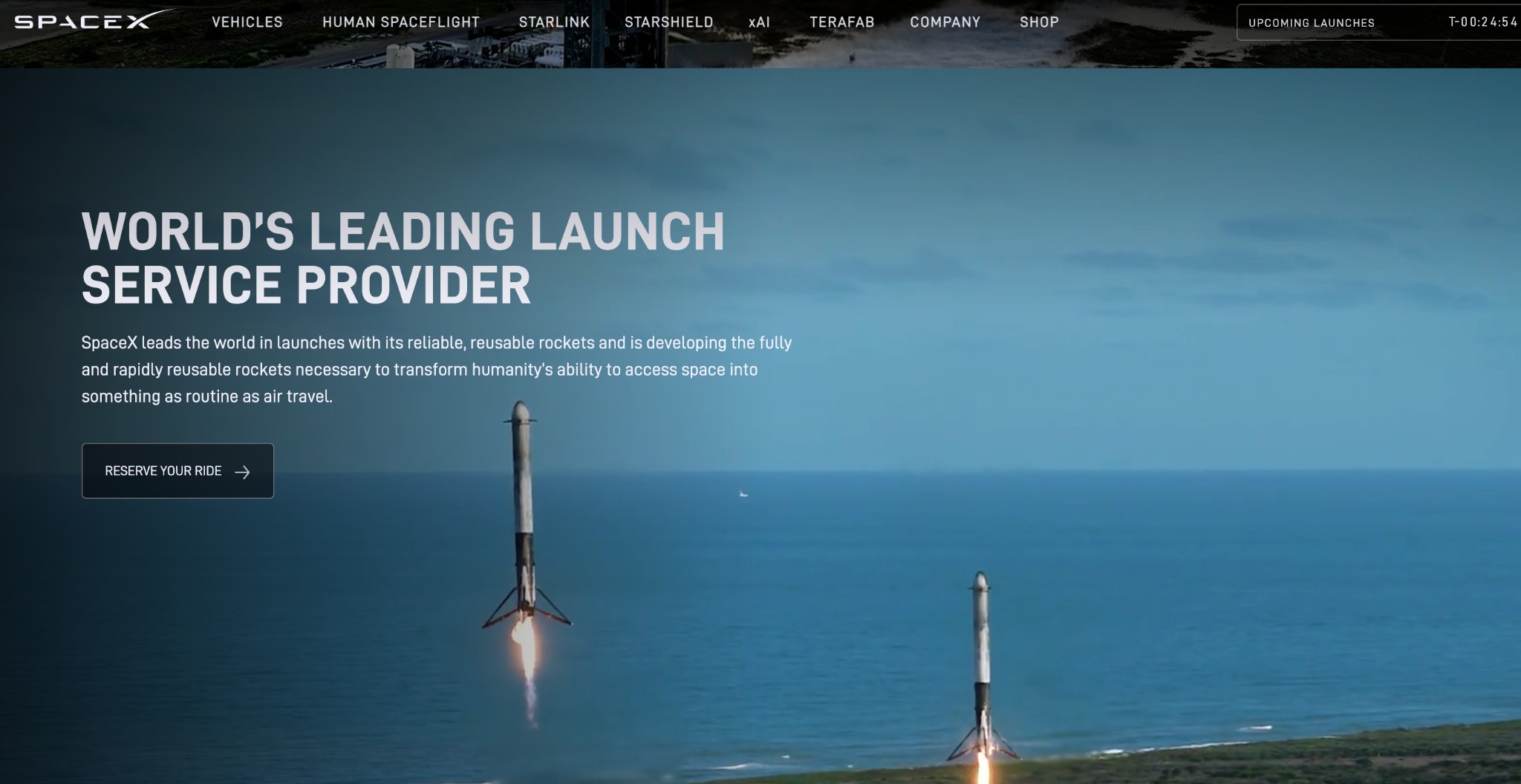
The company is best known for:
Falcon 9 and Falcon Heavy launch vehicles;
Dragon spacecraft for cargo and crew missions;
Starship, a next-generation fully reusable launch system;
Starlink satellite internet;
government and commercial launch services;
long-term Mars exploration ambitions.
For investors searching “what is SpaceX” or “what is SpaceX for,” the simple answer is this: SpaceX was created to reduce the cost of space transportation and expand access to space. Over time, it has grown from a rocket startup into a large aerospace, satellite communications, and infrastructure business.
When was SpaceX founded?
SpaceX was founded in 2002. The company started with the goal of lowering launch costs and making space more accessible. Over the following decades, it became one of the leading private space companies in the world.
Is SpaceX government funded?
SpaceX is not simply a government-funded company, but government contracts are an important part of its business. NASA, U.S. defense agencies, and other public-sector customers have played a significant role in SpaceX’s growth.
This does not mean SpaceX relies only on government money. The company also generates revenue from private commercial launches and Starlink services.
Where is SpaceX located?
SpaceX has several important locations in the United States.
Its major facilities include:
Starbase near Brownsville, Texas, where Starship development and launch activity are centered;
Hawthorne, California, where SpaceX has long maintained major engineering and operational facilities;
McGregor, Texas, used for rocket engine and system testing;
Florida launch sites, including operations connected with Cape Canaveral and Kennedy Space Center;
Redmond, Washington, associated with Starlink satellite development.
For users asking “where is SpaceX headquarters,” the answer depends on the specific facility. SpaceX is not a single-site company; it operates across multiple strategic aerospace locations.
What does SpaceX do?
SpaceX operates across several major business areas. Its core activity is launching satellites, cargo, and crew into orbit. It also supports NASA missions, works with government agencies, provides commercial launch services, and develops reusable rocket systems.
Starlink is another major part of SpaceX. It is the company’s satellite internet business, designed to provide broadband connectivity using a large constellation of low-Earth-orbit satellites. For users asking “is Starlink part of SpaceX,” or “does SpaceX own Starlink” the answer is yes: Starlink is a SpaceX business.
SpaceX also works with NASA. The company has carried cargo and astronauts to the International Space Station and remains an important partner for U.S. space programs.
Who owns SpaceX?
SpaceX was founded by Elon Musk, who remains closely associated with the company’s strategy, engineering direction, and public image.

After the IPO, SpaceX ownership includes public shareholders, institutional investors, employees, and early backers. Elon Musk remains the most recognizable figure connected with the company and is widely viewed as its key strategic leader.
The exact answer to “what percentage of SpaceX does Elon Musk own” may change after public offerings, employee stock programs, and future share issuance. Investors should verify the latest ownership data in SpaceX’s official public filings.
Key facts about Elon Musk:
Founder and CEO of SpaceX.
Founder or co-founder of several major technology companies, including Tesla, Neuralink, The Boring Company, and xAI.
Became the world's first individual whose net worth exceeded $1 trillion.
Played a central role in the development of reusable rocket technology, which transformed the commercial space industry.
One of the largest individual shareholders of SpaceX and one of the most influential figures in the global technology sector.
Has positioned SpaceX as a leader in satellite communications through Starlink and in next-generation space exploration through the Starship program.
Who runs SpaceX?
SpaceX is led by Elon Musk, who has long served as the company’s chief executive and key technical leader. Gwynne Shotwell, president and chief operating officer, has played a major role in day-to-day operations, commercial contracts, and long-term execution.
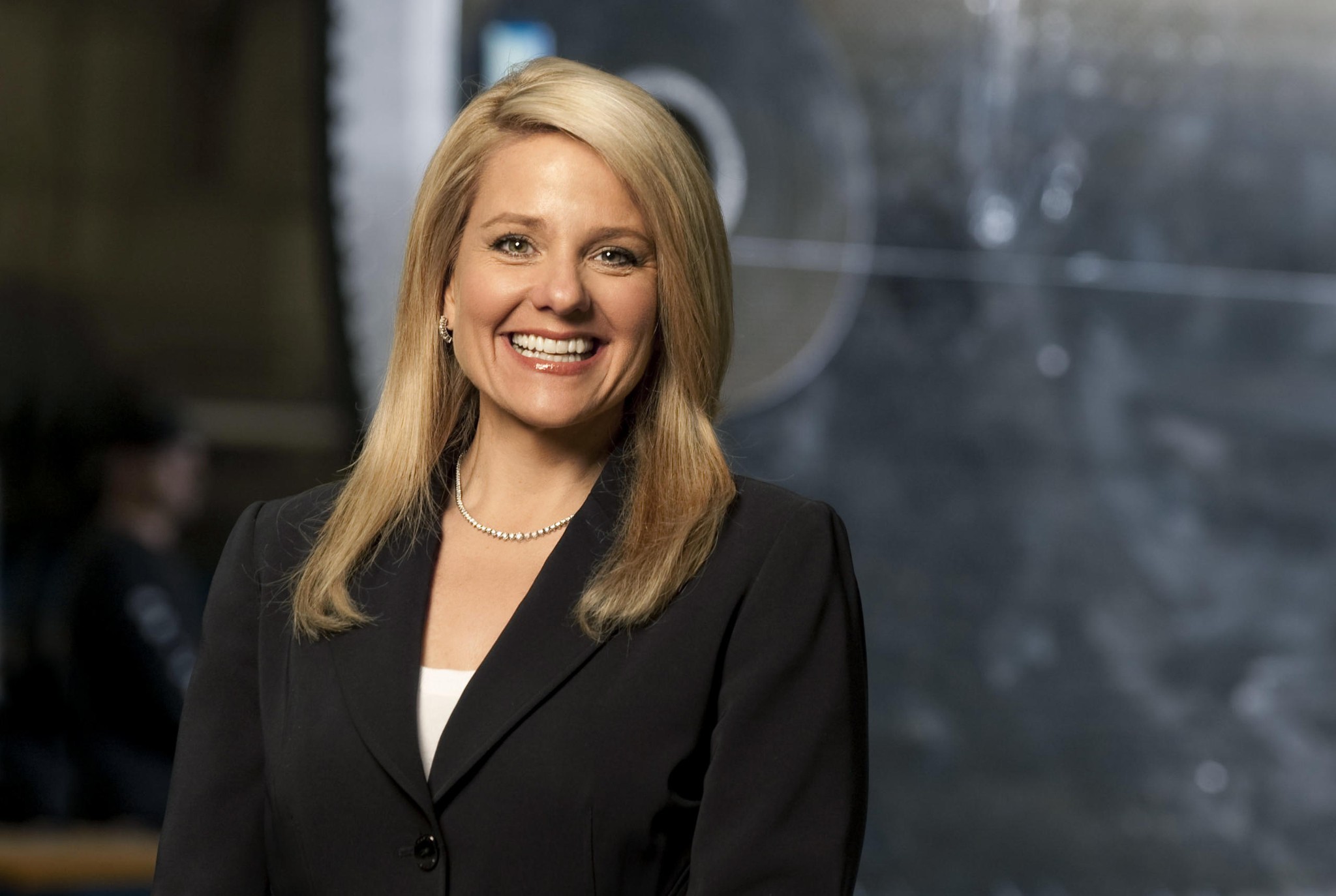
This leadership structure is important for investors asking “who runs SpaceX” because the company is not only associated with Musk’s vision but also with an experienced operating team that has managed launches, contracts, manufacturing, and customer relationships for many years.
How does SpaceX make money?
SpaceX makes money from several business lines:
Starlink satellite internet. Starlink is SpaceX’s largest recurring revenue business. The service provides satellite broadband to residential users, businesses, maritime and aviation clients, and government customers. By early 2026, Starlink had more than 10 million customers worldwide.
Commercial launch services. SpaceX earns money by launching satellites and payloads for private companies, telecom operators, space firms, and international customers using Falcon 9 and Falcon Heavy rockets.
NASA and government contracts. SpaceX works with NASA on crew and cargo missions and also serves U.S. government and defense customers. These contracts remain an important part of the company’s revenue base.
Crew and cargo missions. Dragon spacecraft missions to the International Space Station and related transport services bring additional income from government and institutional clients.
Defense and secure communications. SpaceX also develops government-focused satellite services, including secure communications and defense-related space infrastructure through projects linked to Starshield.
Future space infrastructure. Longer-term revenue may come from Starship, space logistics, lunar missions, and other infrastructure projects, although these areas remain more capital-intensive and less predictable.
According to IPO-related disclosures cited in financial media, SpaceX generated about $18.7 billion in revenue in 2025 but remained unprofitable, with operating losses reported in the billions. Starlink accounted for the majority of revenue, making it the key business investors should watch when assessing SpaceX’s financial performance.
Is SpaceX publicly traded?
Yes. SpaceX became a publicly traded company following its landmark IPO in 2026. The shares began trading on the Nasdaq under the ticker SPCX, marking one of the largest public offerings in stock market history.
The IPO was priced at $135 per share, valuing SpaceX at approximately $1.77 trillion. Including employee stock options and restricted shares, the company's fully diluted valuation approached $1.8 trillion. Investor demand significantly exceeded supply, with reported orders exceeding the number of available shares by more than four times.
Before the IPO, retail investors had very limited access to SpaceX. Exposure was generally restricted to private equity funds, secondary-market transactions, or publicly traded companies with indirect investments in the business. The public listing changed that situation by allowing individual investors to purchase SpaceX shares directly through brokers that provide access to U.S. stock exchanges.
The successful IPO also had a broader impact on the market. SpaceX immediately became one of the world's most valuable publicly traded companies and attracted strong interest from both institutional and retail investors. The listing further increased investor attention on key growth drivers such as Starlink, reusable launch services, government contracts, and the long-term development of the Starship program.
As with many large IPOs, investors should be aware that SpaceX shares may experience elevated volatility during the first months of public trading as the market evaluates the company's financial performance, growth prospects, and valuation.
How to invest in SpaceX
Investors who want to buy SpaceX stock after its IPO first need a brokerage account with access to U.S. exchanges. While SpaceX shares trade under the ticker SPCX, product availability may vary by country, broker, and regulatory restrictions. Before opening an account, investors should verify whether the broker offers access to Nasdaq-listed stocks and supports trading in newly listed companies.
| eToro USA | SpeedTrader | Plus500 | TradeZero International | eOption | Revolut | |
|---|---|---|---|---|---|---|
|
Account min. |
50 | 2,500 | 500 | 500 | No | No |
|
Demo |
Yes | Yes | Yes | Yes | Yes | No |
|
Min. stock/ETF fee |
No | $0 | Not specified | $0.99 | $0 | £1.00/€1.00 |
|
Basic stock/ETF fee |
No | $0.0025/$0,0009 | $0.006 | $0,005 | $0 | 0.12%-0.25% |
|
Basic futures fee |
Not specified | Not specified | Not specified | Not specified | Not specified | No |
|
Min. futures fee |
Not specified | Not specified | Not specified | Not specified | Not specified | No |
|
Fractional Shares |
Yes | No | No | No | No | Yes |
|
TU overall score |
9.3 | 9.2 | 7.7 | 7.51 | 7.5 | 9.61 |
|
Open an account |
Go to broker Your capital is at risk. |
Go to broker |
Go to broker 81% of retail CFD accounts lose money. |
Go to broker Your capital is at risk. |
Study review | Study review |
Once a suitable broker has been selected, investors can follow these steps:
Open and verify an investment account.
Fund the account.
Search for SpaceX by ticker symbol SPCX.
Place a market or limit order.
Monitor the position and company updates.
Before buying, investors should consider valuation, volatility, business risks, and portfolio diversification.
Do not buy SpaceX only because of the brand

I would treat SpaceX as a long-term growth stock, not as a simple hype trade after a major IPO. The company has a powerful story, but investors still need to look at valuation, revenue growth, margins, capital spending, and the pace at which Starlink and launch services can scale.
My recommendation is to decide first how much exposure to a single high-growth technology company is appropriate for your portfolio. SpaceX operates in several promising industries, but that does not remove the risks of volatility, execution delays, regulation, and high market expectations.
For most investors, a gradual approach may be more reasonable than buying a large position immediately after the IPO. Watching the first earnings reports as a public company can help investors understand whether the business performance supports the valuation.
Conclusion
SpaceX has redefined the possibilities of space exploration and commercial satellite services, evolving from a bold startup into a global industry leader. The company's growth is exemplified by its innovations in reusable rockets and the rapid global adoption of its Starlink satellite internet service. Investors are now able to participate directly in this historic journey through SpaceX's public listing, but should remain mindful of the company's high growth ambitions and the risks that come with substantial investment in emerging technologies. Ultimately, SpaceX is not just a stock but a bet on humanity's future beyond Earth, offering visionary rewards for those willing to chart new frontiers.
FAQs
What impact did SpaceX's IPO have on the broader space industry?
How is SpaceX’s business diversified across different revenue streams?
What are some of SpaceX’s long-term strategic goals beyond satellite launches?
What should prospective investors consider when evaluating SpaceX shares?
Editors' Top Picks and Insights






Related Articles
Team that worked on the article
Aleksandra Chaikina has been a contributor to Traders Union since 2021. With over 15 years of experience in copywriting and more than 5 years focused on financial content, she specializes in producing detailed guides, analytics, and comparative reviews across various sectors, including cryptocurrencies, Forex, investment strategies, and financial technologies.
Dan Blystone began his trading career in 1998 as an arbitrage clerk on the floor of the Chicago Mercantile Exchange (CME). He later traded bond and Eurex futures at proprietary firms such as Altea Trading, gaining valuable experience in high-frequency trading and risk management.
Chinmay Soni is a financial analyst with more than 5 years of experience in working with stocks, Forex, derivatives, and other assets. As a founder of a boutique research firm and an active researcher, he covers various industries and fields, providing insights backed by statistical data.
A limit order is a type of order used in trading where an investor specifies a particular price at which they want to buy or sell a financial asset. The order will only be executed if the market price reaches or exceeds the specified limit price, ensuring that the trader gets the desired price or better when the trade is executed.
Volatility refers to the degree of variation or fluctuation in the price or value of a financial asset, such as stocks, bonds, or cryptocurrencies, over a period of time. Higher volatility indicates that an asset's price is experiencing more significant and rapid price swings, while lower volatility suggests relatively stable and gradual price movements.
Risk management is a risk management model that involves controlling potential losses while maximizing profits. The main risk management tools are stop loss, take profit, calculation of position volume taking into account leverage and pip value.
A bear market is a period of time in which an investment asset, such as stocks, bonds, or commodities, experiences a decline in price for an extended period of time.
Diversification is an investment strategy that involves spreading investments across different asset classes, industries, and geographic regions to reduce overall risk.

-
 Afghanistan
-
 Albania
-
 Algeria
-
 Angola
-
 Argentina
-
 Armenia
-
 Australia
-
 Austria
-
 Azerbaijan
-
 Bahamas
-
 Bahrain
-
 Bangladesh
-
 Belarus
-
 Belgium
-
 Bolivia
-
 Botswana
-
 Brazil
-
 Brunei
-
 Bulgaria
-
 Cambodia
-
 Cameroon
-
 Canada
-
 Chile
Chile
-
 China
China
-
 Colombia
-
 Congo
Congo
-
 Costa Rica
-
 Cote d'Ivoire
-
 Croatia
-
 Cuba
Cuba
-
 Cyprus
-
 Czechia
-
 DR Congo
-
 Denmark
-
 Dominican Republic
-
 Ecuador
-
 Egypt
Egypt
-
 El Salvador
-
 Estonia
-
 Eswatini
-
 Ethiopia
-
 Finland
-
 France
-
 Georgia
-
 Germany
-
 Ghana
Ghana
-
 Greece
-
 Haiti
Haiti
-
 Hong Kong
-
 Hungary
-
 India
India
-
 Indonesia
-
 Iran, Islamic republic
-
 Iraq
Iraq
-
 Ireland
-
 Israel
-
 Italy
Italy
-
 Jamaica
-
 Japan
Japan
-
 Jordan
-
 Kazakhstan
-
 Kenya
Kenya
-
 Korea
Korea
-
 Kuwait
-
 Kyrgyzstan
-
 Laos
Laos
-
 Latvia
-
 Lebanon
-
 Lesotho
-
 Libya
Libya
-
 Lithuania
-
 Luxembourg
-
 Madagascar
-
 Malaysia
-
 Malta
Malta
-
 Mauritius
-
 Mexico
-
 Moldova
-
 Mongolia
-
 Montenegro
-
 Morocco
-
 Mozambique
-
 Myanmar
-
 Namibia
-
 Nepal
Nepal
-
 Netherlands
-
 New Zealand
-
 Nigeria
-
 North Macedonia
-
 Norway
-
 Oman
Oman
-
 Pakistan
-
 Palestine
-
 Panama
-
 Papua New Guinea
-
 Paraguay
-
 Peru
Peru
-
 Philippines
-
 Poland
-
 Portugal
-
 Puerto Rico
-
 Qatar
Qatar
-
 Reunion
-
 Romania
-
 Rwanda
-
 Saudi Arabia
-
 Serbia
-
 Singapore
-
 Slovakia
-
 Slovenia
-
 Somalia
-
 South Africa
-
 Spain
Spain
-
 Sri Lanka
-
 Sweden
-
 Switzerland
-
 Syria
Syria
-
 Taiwan
-
 Tajikistan
-
 Tanzania
-
 Thailand
-
 Trinidad and Tobago
-
 Tunisia
-
 Turkey
-
 UAE
UAE
-
 Uganda
-
 Ukraine
-
 United Kingdom
-
United States
-
 Uruguay
-
 Uzbekistan
-
 Venezuela
-
 Vietnam
-
 Yemen
Yemen
-
 Zambia
-
 Zimbabwe
- Forex
- Crypto












