
Crypto Infrastructure as a Competitive Advantage for Trading Platforms


Editorial Note: While we adhere to strict Editorial Integrity, this post may contain references to products from our partners. Here's an explanation for How We Make Money. None of the data and information on this webpage constitutes investment advice according to our Disclaimer.
Crypto payment infrastructure is becoming a measurable driver of trader retention and platform competitiveness. Fast deposits, reliable withdrawals, and consistent payment processing improve user trust, increase trading activity, and reduce churn. By enabling near-instant transactions, global accessibility, and automated operations, crypto payments help platforms deliver a smoother trading experience and maintain long-term user retention.
Trading platforms have traditionally differentiated themselves through tight spreads, advanced tools, and high leverage. However, a quieter but increasingly decisive factor is reshaping the competitive landscape: payment infrastructure.
Today’s traders are no longer evaluating platforms solely based on trading conditions. They are also paying close attention to how quickly they can fund their accounts, how reliably they can withdraw profits, and how smoothly financial operations function overall. In this environment, crypto payment infrastructure is emerging as a strategic advantage that directly impacts trader trust, satisfaction, and long-term loyalty.
Risk warning: Cryptocurrency markets are highly volatile, with sharp price swings and regulatory uncertainties. Research indicates that 75-90% of traders face losses. Only invest discretionary funds and consult an experienced financial advisor.
Why payments are becoming a competitive factor
For years, payment systems were treated as backend infrastructure – necessary, but not a key differentiator. That is no longer the case. Modern traders expect instant access to markets. Delays in deposits or uncertainty around withdrawals create friction that directly affects trading behavior. Even a well-designed platform with strong analytics can lose users if financial operations are slow or unreliable.
Payment infrastructure has become part of the product experience. Traders now evaluate platforms based on:
speed of deposits;
reliability of withdrawals;
availability of payment options;
consistency of transaction processing.
In this context, crypto payments address these limitations directly. They enable faster processing, reduce reliance on traditional banking systems, and allow platforms to serve a global audience without geographic limitations.
The role of deposits and withdrawals in trader experience
Trading is inherently time-sensitive. Opportunities can appear and disappear within minutes. If a trader cannot fund an account quickly, they may miss profitable setups. Likewise, if withdrawals are delayed or unpredictable, trust in the platform deteriorates.
From a user perspective, deposits and withdrawals are not just operational steps – they are critical moments of interaction with the platform.
A smooth deposit experience:
reduces the time between decision and execution;
increases trading frequency;
improves overall engagement.
A reliable withdrawal process:
reinforces trust;
encourages users to keep funds on the platform;
reduces churn.
Conversely, friction in payment processes can quickly lead to negative outcomes, including reduced activity and platform switching.
Operational risks of inefficient payment systems
For trading platforms, inefficient payment infrastructure is not just a UX issue – it creates direct business risks.
| Problem | Business Impact |
|---|---|
| Delayed transactions | Lower user trust and activity |
| Manual processing errors | Increased support workload |
| Limited regional payment coverage | Reduced user acquisition |
| High transaction costs | Lower operational efficiency |
| Overall result | Lower retention and reputational damage |
In high-volume environments, even small inefficiencies can scale into significant operational problems. This is why more platforms are turning to automated, crypto-based payment solutions that reduce manual intervention and improve consistency.
How crypto infrastructure improves platform performance
Cryptocurrency payment systems offer several advantages that directly address the limitations of traditional infrastructure.
Faster deposits
Crypto transactions can be processed within minutes, enabling traders to fund their accounts quickly and act on market opportunities without delay. This reduces friction and increases the likelihood of active trading.
Consistent withdrawals
Automated payout systems ensure that withdrawals are processed reliably and predictably. This consistency builds user confidence and strengthens platform credibility.
Global accessibility
Crypto payments eliminate many of the barriers associated with traditional banking systems. Platforms can accept deposits and process withdrawals for users across different regions without relying on local payment providers.
Operational efficiency
Automation reduces the need for manual processing, minimizing errors and lowering operational costs. This allows platforms to scale more effectively while maintaining performance.
These infrastructure advantages are not theoretical – they are already reflected in how leading crypto exchanges compete for users.
| Coinbase | OKX | BTCC | Cryptohopper | Crypto.com | |
|---|---|---|---|---|---|
|
Number of cryptocurrencies |
400+ | 600+ | 399 | 1000 | 400+ |
|
Spot Taker fee, % |
0.5 | 0.1 | 0.3 | 0 | 0.5 |
|
Spot Maker Fee, % |
0.5 | 0.08 | 0.2 | 0 | 0.25 |
|
Min. Deposit, $ |
10 | 10 | 10 | No | 1 |
|
Two factor authentication |
Yes | Yes | Yes | No | Yes |
|
Investor protection fund |
Yes | Yes | No | No | Yes |
|
Open an account |
Go to broker Your capital is at risk. |
Go to broker Your capital is at risk. |
Go to broker Your capital is at risk.
|
Go to broker Your capital is at risk. |
Go to broker Your capital is at risk. |
NOWPayments: A case study in scalable crypto infrastructure
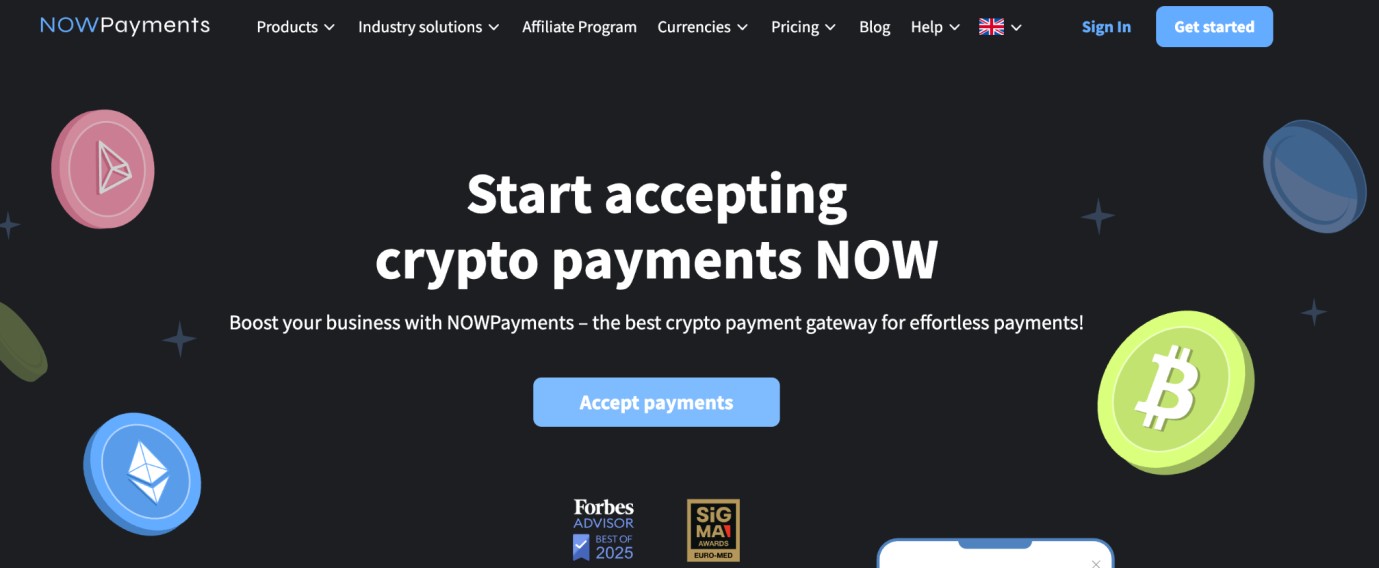
One example of how trading platforms implement scalable crypto infrastructure in practice is NOWPayments, a payment gateway for trading platforms designed to optimize deposits, withdrawals, and operational efficiency. It supports brokerages, exchanges, and fintech services looking to optimize their financial operations.
Key benefits of NOWPayments
Fast transaction processing
NOWPayments helps platforms reduce payment friction with transaction finality averaging under 3 minutes, while TON-based payments can settle in under 1 minute. Faster deposits and withdrawals improve user experience, trading activity, and overall platform retention.
Low fees & Cost optimization
The platform is designed for cost-efficient scaling:
rates starting from 0.3% for enterprises
0% service fees for mass payouts
$0 network + service fees for ecosystem payouts to ChangeNOW Pro wallets with settlement speeds up to 1 second
promotional offer: 0 network fees on USDT TRC20 for new partners during the first 2 months
For high-volume businesses, this can significantly reduce operational payment costs over time.
Instant zero-fee ecosystem payouts
NOWPayments enables instant payouts to ChangeNOW Pro ecosystem wallets via email addresses, with settlement speeds of up to 1 second and zero fees. ChangeNOW Pro wallets are created automatically within the ecosystem, meaning neither users nor partners need to complete additional setup steps or manual wallet configuration.
Scalable infrastructure for high-volume operations
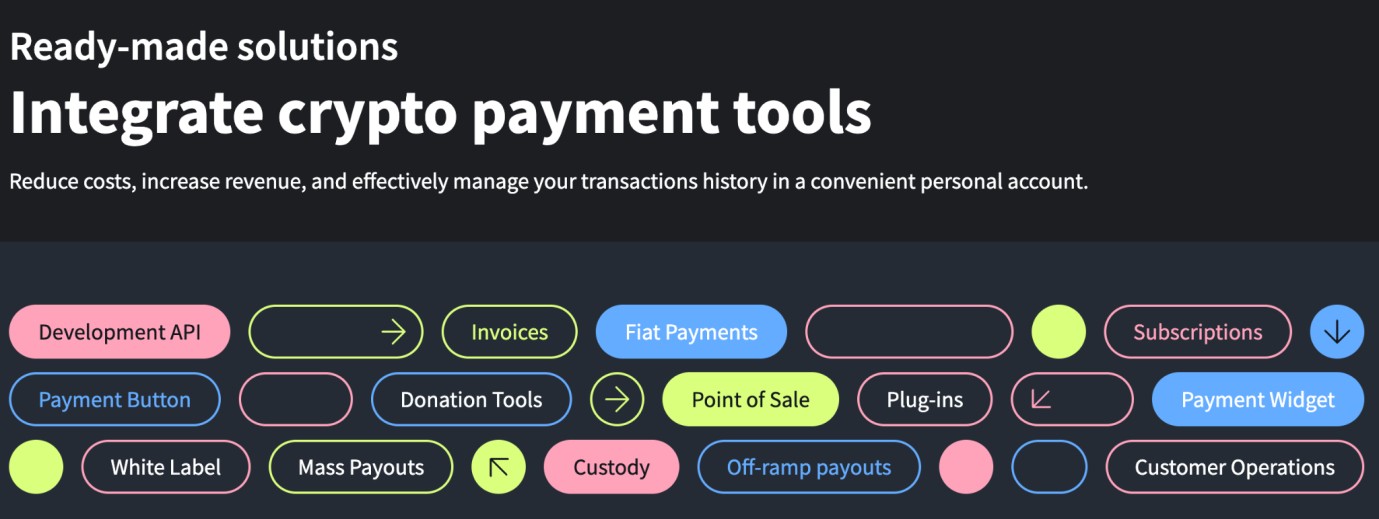
The infrastructure is built to support enterprise-grade transaction volumes without operational bottlenecks or volume limitations. Features such as API payouts, CSV payouts, multiple wallet support, and proprietary processing infrastructure help ensure high uptime and stable performance under load.
Flexible asset support
Businesses can accept 30+ stablecoins and 300+ cryptocurrencies across multiple blockchain networks, including extensive USDT and USDC coverage across 20+ chains. This allows platforms to serve global audiences with different payment preferences and regional requirements.
Automated conversions & Treasury flexibility
NOWPayments supports automatic asset conversion, including payout-side conversion flows and off-chain custodial conversions. This helps businesses simplify treasury management and reduce exposure to market volatility.
Operational convenience
Integration and setup can be completed quickly with full technical support from the NOWPayments team, allowing businesses to launch crypto payment flows without rebuilding internal infrastructure.
Advanced payout & Reconciliation tools
The platform includes reconciliation and reporting tools directly inside the dashboard, helping finance and operations teams simplify accounting and transaction tracking workflows.
Reliable human support
NOWPayments provides 24/7 support with response times measured in minutes rather than days. The team also assists with resolving complex or problematic deposits that many competitors leave unaddressed.
Trusted by large-scale businesses
NOWPayments infrastructure is used by high-volume partners and enterprise-grade platforms, demonstrating reliability for real-world payment operations at scale.
These capabilities demonstrate how modern payment infrastructure can move beyond basic functionality and become a core component of platform strategy.
Payment reliability as a driver of trader loyalty
Trust is one of the most important factors in trading. While market performance and platform features matter, payment reliability often determines whether users stay or leave.
When payment systems work seamlessly:
traders feel confident keeping funds on the platform;
activity levels remain stable or increase;
long-term retention improves.
On the other hand, inconsistent payment performance can quickly erode trust, regardless of how strong other platform features may be.
Crypto infrastructure helps address this by providing:
predictable transaction times;
transparent processing;
reduced dependency on intermediaries.
As a result, platforms that invest in reliable payment systems are better positioned to build lasting relationships with their users.
From feature to strategy: A shift in platform thinking
The growing importance of payment infrastructure reflects a broader shift in how trading platforms compete. Instead of focusing solely on front-end features, successful platforms are increasingly optimizing the entire user journey – from account funding to profit withdrawal.
In this model, payment systems are not just a technical layer but a strategic component that influences:
user acquisition;
engagement;
retention;
overall platform reputation.
Crypto payments, in particular, align well with this shift by offering speed, flexibility, and scalability.
Treat payments as part of core architecture from day one

From my perspective, trading platforms often underestimate how early payment infrastructure decisions shape long-term scalability. My recommendation is to treat payments not as a support function, but as part of core architecture from day one.
In practice, this means designing systems that can handle volume spikes, cross-border flows, and multiple asset types without requiring constant manual adjustments. It’s also important to regularly stress-test withdrawal scenarios – not just deposits – because that’s where trust is actually validated.
I would also advise platforms to think in terms of redundancy: relying on a single payment channel or provider creates hidden vulnerabilities. A flexible infrastructure with multiple rails (including crypto) allows platforms to remain stable even when one channel underperforms.
Finally, the biggest advantage comes when payment data is integrated into broader analytics. Understanding how funding and withdrawal behavior correlates with trading activity can help platforms optimize user journeys, reduce churn, and make more informed product decisions.
Conclusion
Embracing crypto payment infrastructure is rapidly becoming a defining edge for modern trading platforms. By streamlining deposits and ensuring trustworthy withdrawals, businesses not only elevate user experience but also cultivate deep, long-term trader loyalty. For instance, platforms integrating instant crypto payouts see higher client retention and transaction volumes, setting themselves apart in a crowded marketplace. Ultimately, those who invest in robust crypto infrastructure today secure their place as leaders in tomorrow's digital economy.
FAQs
How does crypto infrastructure enhance the speed and reliability of deposits and withdrawals for trading platforms?
What role do flexible asset support and global payment options play in platform competitiveness?
How does integrating payment data with platform analytics benefit trading businesses?
Why is redundancy important in crypto payment infrastructure for trading platforms?
Editors' Top Picks and Insights






Related Articles
Team that worked on the article
Anastasiia has 17 years of experience in finance and content marketing. She believes that the support of information and expert opinion is very important for the success of investors and new traders.
Dan Blystone began his trading career in 1998 as an arbitrage clerk on the floor of the Chicago Mercantile Exchange (CME). He later traded bond and Eurex futures at proprietary firms such as Altea Trading, gaining valuable experience in high-frequency trading and risk management.
Chinmay Soni is a financial analyst with more than 5 years of experience in working with stocks, Forex, derivatives, and other assets. As a founder of a boutique research firm and an active researcher, he covers various industries and fields, providing insights backed by statistical data.
CFD is a contract between an investor/trader and seller that demonstrates that the trader will need to pay the price difference between the current value of the asset and its value at the time of contract to the seller.
An investor is an individual, who invests money in an asset with the expectation that its value would appreciate in the future. The asset can be anything, including a bond, debenture, mutual fund, equity, gold, silver, exchange-traded funds (ETFs), and real-estate property.
Volatility refers to the degree of variation or fluctuation in the price or value of a financial asset, such as stocks, bonds, or cryptocurrencies, over a period of time. Higher volatility indicates that an asset's price is experiencing more significant and rapid price swings, while lower volatility suggests relatively stable and gradual price movements.
Day trading involves buying and selling financial assets within the same trading day, with the goal of profiting from short-term price fluctuations, and positions are typically not held overnight.
Forex leverage is a tool enabling traders to control larger positions with a relatively small amount of capital, amplifying potential profits and losses based on the chosen leverage ratio.

-
 Afghanistan
-
 Albania
-
 Algeria
-
 Angola
-
 Argentina
-
 Armenia
-
 Australia
-
 Austria
-
 Azerbaijan
-
 Bahamas
-
 Bahrain
-
 Bangladesh
-
 Belarus
-
 Belgium
-
 Bolivia
-
 Botswana
-
 Brazil
-
 Brunei
-
 Bulgaria
-
 Cambodia
-
 Cameroon
-
 Canada
-
 Chile
Chile
-
 China
China
-
 Colombia
-
 Congo
Congo
-
 Costa Rica
-
 Cote d'Ivoire
-
 Croatia
-
 Cuba
Cuba
-
 Cyprus
-
 Czechia
-
 DR Congo
-
 Denmark
-
 Dominican Republic
-
 Ecuador
-
 Egypt
Egypt
-
 El Salvador
-
 Estonia
-
 Eswatini
-
 Ethiopia
-
 Finland
-
 France
-
 Georgia
-
 Germany
-
 Ghana
Ghana
-
 Greece
-
 Haiti
Haiti
-
 Hong Kong
-
 Hungary
-
 India
India
-
 Indonesia
-
 Iran, Islamic republic
-
 Iraq
Iraq
-
 Ireland
-
 Israel
-
 Italy
Italy
-
 Jamaica
-
 Japan
Japan
-
 Jordan
-
 Kazakhstan
-
 Kenya
Kenya
-
 Korea
Korea
-
 Kuwait
-
 Kyrgyzstan
-
 Laos
Laos
-
 Latvia
-
 Lebanon
-
 Lesotho
-
 Libya
Libya
-
 Lithuania
-
 Luxembourg
-
 Madagascar
-
 Malaysia
-
 Malta
Malta
-
 Mauritius
-
 Mexico
-
 Moldova
-
 Mongolia
-
 Montenegro
-
 Morocco
-
 Mozambique
-
 Myanmar
-
 Namibia
-
 Nepal
Nepal
-
 Netherlands
-
 New Zealand
-
 Nigeria
-
 North Macedonia
-
 Norway
-
 Oman
Oman
-
 Pakistan
-
 Palestine
-
 Panama
-
 Papua New Guinea
-
 Paraguay
-
 Peru
Peru
-
 Philippines
-
 Poland
-
 Portugal
-
 Puerto Rico
-
 Qatar
Qatar
-
 Reunion
-
 Romania
-
 Rwanda
-
 Saudi Arabia
-
 Serbia
-
 Singapore
-
 Slovakia
-
 Slovenia
-
 Somalia
-
 South Africa
-
 Spain
Spain
-
 Sri Lanka
-
 Sweden
-
 Switzerland
-
 Syria
Syria
-
 Taiwan
-
 Tajikistan
-
 Tanzania
-
 Thailand
-
 Trinidad and Tobago
-
 Tunisia
-
 Turkey
-
 UAE
UAE
-
 Uganda
-
 Ukraine
-
 United Kingdom
-
United States
-
 Uruguay
-
 Uzbekistan
-
 Venezuela
-
 Vietnam
-
 Yemen
Yemen
-
 Zambia
-
 Zimbabwe
- Forex
- Crypto










- Why payments are becoming a competitive factor
- The role of deposits and withdrawals in trader experience
- Operational risks of inefficient payment systems
- How crypto infrastructure improves platform performance
- NOWPayments: A case study in scalable crypto infrastructure
- Payment reliability as a driver of trader loyalty
- From feature to strategy: A shift in platform thinking
- Expert opinion
- Conclusion
- FAQs


