
Tangem Wallet Review (2026)


Editorial Note: While we adhere to strict Editorial Integrity, this post may contain references to products from our partners. Here's an explanation for How We Make Money. None of the data and information on this webpage constitutes investment advice according to our Disclaimer.
Tangem Wallet is a cold storage solution that stores your cryptocurrency securely on a smart card using NFC technology. It works with a companion mobile app and doesn’t rely on cables, screens, or batteries, making it a convenient, portable alternative to traditional hardware wallets.
If you're looking for a hardware wallet that prioritizes simplicity, portability, and strong security, Tangem Wallet could be a practical option worth considering. It uses contactless NFC to interact with your phone, stores private keys offline, and eliminates the need for complex setup processes. In this review, we explore how the Tangem wallet works, its key features, and evaluate its suitability for managing digital assets.
Risk warning: Cryptocurrency markets are highly volatile, with sharp price swings and regulatory uncertainties. Research indicates that 75-90% of traders face losses. Only invest discretionary funds and consult an experienced financial advisor.
Tangem Wallet overview

Tangem Wallet is a cold wallet that stands out for its design and functionality, resembling a credit card in both shape and function. It’s completely screenless and doesn’t require charging, cables, or Bluetooth. Everything operates through a secure chip inside the card, paired with a smartphone app via NFC (near-field communication). This design avoids common technical vulnerabilities found in traditional devices.
Its slim, tamper-resistant card design is well-suited for users who prioritize convenience. You can carry it in your pocket or wallet like a regular bank card. Designed for individuals who want cold storage without the bulk or complexity, it suits both newcomers and experienced users.
| Feature | Details |
|---|---|
| Wallet Type | Cold Wallet (NFC-based) |
| Setup Method | NFC with Tangem App (iOS & Android) |
| Supported Coins | 6,000+ coins and tokens (BTC, ETH, BNB, XRP, ADA, DOGE, etc.) |
| Security Features | EAL6+ chip, no Bluetooth/USB, multi-card backup, biometric app lock |
| Price | One-time purchase; usually sold in 2- or 3-card packs |
| Physical Size & Durability | Credit card size; tamper-proof, water-resistant |
| Best Suited For | Users seeking portable, simple, and secure cold storage |
Key features of Tangem Wallet
NFC-based contactless operation
Tangem Wallet connects with your smartphone using NFC — the same technology behind tap-to-pay systems. You simply place the card near your phone, and the Tangem App opens, giving you access to your wallet. This makes setup easier and avoids the need for cables, Bluetooth, or built-in power.
No screen, no battery, no cable
Tangem Wallet functions without a display or any built-in power. Its chip holds the security features, and it only powers on when placed near a phone. This design removes common issues like outdated firmware, battery malfunctions, or faulty screens.
Multi-card backup system
Every Tangem Wallet set includes two or three cards. You can connect these during setup so they all control the same private key. If one card gets lost or stops working, the others still provide full access to your funds.
App integration with security options
The Tangem App, compatible with iOS and Android, allows you to manage your digital assets, make transactions, and use dApps through WalletConnect. It includes security features like PIN codes and biometric logins such as Face ID.
Pros and cons of Tangem wallet
- Pros
- Cons
NFC-based stealth access. The NFC chip makes your wallet act like a physical keycard — great for low-profile usage where people around you won’t even realize you’re accessing crypto.
Immune to screen-based malware. Unlike app or web wallets, Tangem doesn't rely on screens or apps where malware can mimic interfaces or steal info during QR scanning.
Cold storage with live usability. While technically a cold wallet, Tangem lets you transact quickly using the card, removing the usual tradeoff between speed and security.
Card loss is final. If you lose all your cards and haven’t set up backups or seed recovery, there’s no "forgot password" option — your funds are gone for good.
Limited coin interface. Tangem’s supported coins list is expanding, but its in-app interface lacks advanced features for DeFi or NFT interactions.
Dependence on mobile NFC. If your phone lacks NFC or it malfunctions, your entire access layer is temporarily gone.
Tangem Wallet security review
EAL6+ certified secure element
The wallet is built with a Secure Element chip that holds an EAL6+ certification — among the most respected benchmarks in the consumer tech space. This level of security means the chip is highly resistant to physical tampering and targeted attacks.
NFC-based cold storage
Tangem’s setup ensures private keys always remain offline. The NFC connection doesn’t transmit the keys to your phone — instead, the app communicates with the blockchain through cryptographic signatures safely generated by the card.
No internet, no bluetooth, no USB
Tangem cards operate without any internet access or wireless technologies aside from NFC. This separation greatly lowers exposure to remote threats.
Multi-card backup options
Rather than relying on a recovery phrase, Tangem uses physical backup cards. Once set up, each card holds the same cryptographic key, allowing you to recover your wallet easily if one is lost.
PIN protection and biometric access (via app)
The mobile app includes PIN and biometric settings to lock wallet access. These controls don’t open the Tangem card but do add a layer of security for settings and transactions.
Tamper-proof card design
Tangem Wallet’s card is made to show signs of tampering and is also resistant to water. Any effort to open or damage it will result in the card becoming non-functional.
Supported coins & tokens
Tangem Wallet supports over 6,000 tokens and 30+ blockchains, but the surprising part lies in how it handles native assets across multiple chains. For example, you can hold USDT on Ethereum, Tron, and even Polygon — without needing three different wallets or manual contract inputs.
The wallet reads and categorizes tokens based on their respective networks automatically, which reduces user-side friction massively. Even some lesser-known blockchains like Everscale and Harmony One are supported — not typically prioritized by hardware wallets — making Tangem more altcoin-inclusive than you'd expect.
Another underrated feature is Tangem’s commitment to real-time token validation directly from the blockchain, not relying on centralized servers or static token lists like many competitors. If a token is available on-chain and follows basic standards like ERC-20 or BEP-20, the Tangem app recognizes it instantly.
Tangem Wallet price & fees
When you look closer at the price and fees for Tangem Wallet, it shows a few things most folks miss. Buying the 3-card set for $69.90 is actually a smart way to cut down costs if you're serious about securing your crypto — each card acts as a backup, so you're not just paying for plastic.
And what’s interesting is Tangem doesn’t charge you for sending or receiving crypto. You just pay the usual blockchain fee, which you can tweak in the app depending on how fast you want the transaction to go through. That alone makes it kinda different from other wallets out there.
How to use Tangem Wallet: A step-by-step guide
Setting up the wallet with the app
To begin, install the Tangem App from Google Play or the App Store. Open the app and tap your Tangem card to the back of your phone.

Activating backup cards
After setting up the main card, you’ll be asked to scan your backup card(s). These are linked to the same wallet and act as clones of the original card.

Sending/receiving crypto via NFC tap
To receive crypto, use the Tangem App to generate a receiving address. Share this with the sender.
Recovering with backup cards
If your primary card is lost, open the app and scan one of your backup cards. The app will immediately restore access.
Alternatives to Tangem Wallet
SafePal S1
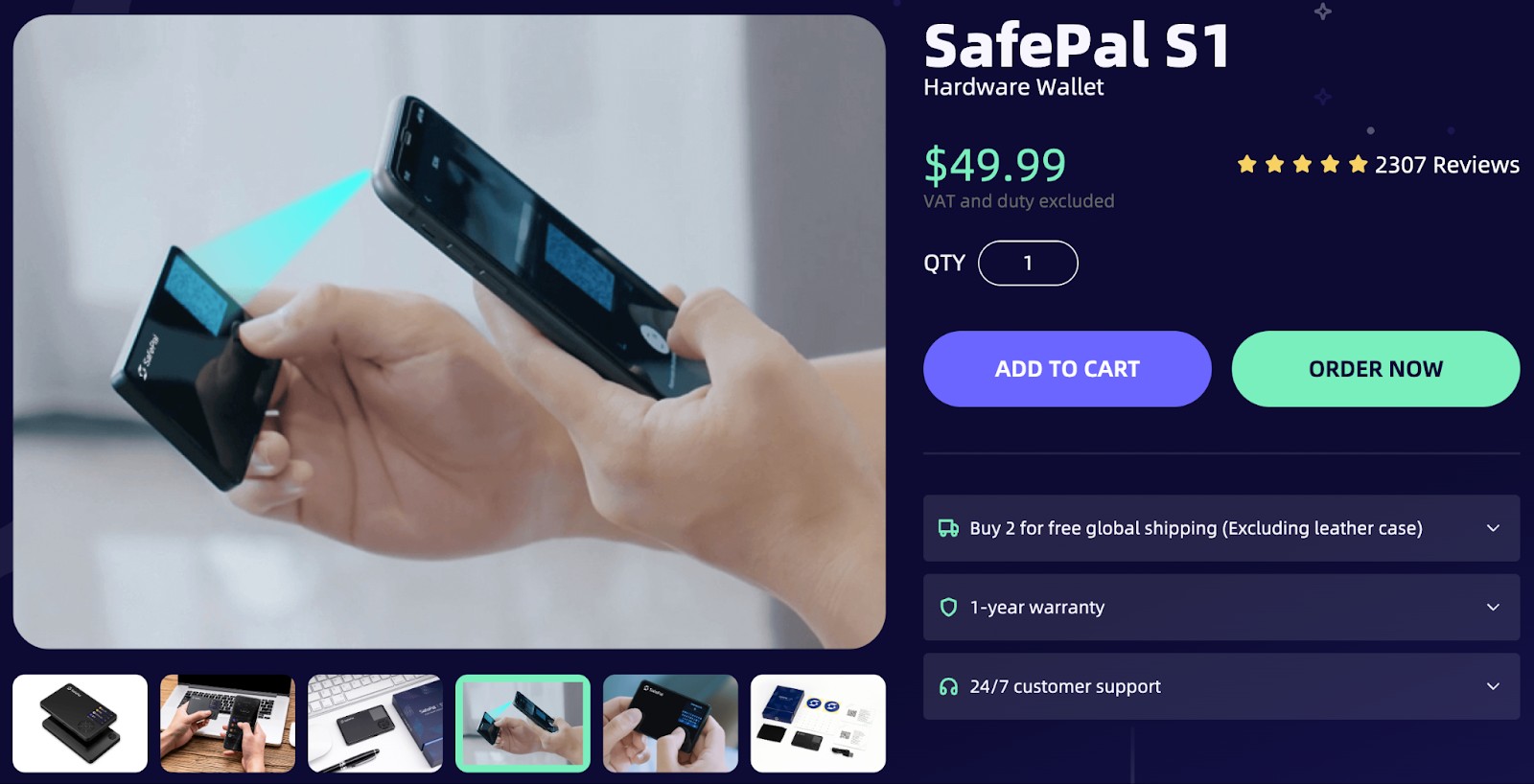
SafePal S1 is a screenless wallet that features QR code scanning for secure use. It handles many different cryptocurrencies and keeps transactions isolated through offline signing.
ELLIPAL Titan

ELLIPAL Titan is a hardware wallet built with a touchscreen, durable metal casing, and camera. It offers strong protection and lets users complete transactions without going online.
Keystone Pro

Keystone Pro comes with a removable battery, fingerprint sensor, and a QR-based interface. It includes features like multi-signature support and recovery at the hardware level.
Storing crypto on exchanges: An alternative to hardware wallets
Many users leave their coins on exchanges like Binance or Coinbase for convenience. While this seems easy, it exposes assets to exchange hacks or sudden freezes. Regulation is one of the key parameters to judge the security of any exchange. In line with the same, the top exchanges known for their reliable security (and strict regulatory oversight) are listed in the table below:
| Crypto | Foundation year | Min. Deposit, $ | Coins Supported | Spot Taker fee, % | Spot Maker Fee, % | Alerts | Copy trading | Tier-1 regulation | TU overall score | Open an account | |
|---|---|---|---|---|---|---|---|---|---|---|---|
| Yes | 2012 | 10 | 400+ | 0.5 | 0.5 | Yes | No | Yes | 8.5 | Go to broker Your capital is at risk. |
|
| Yes | 2011 | 10 | 399 | 0.3 | 0.2 | No | Yes | Yes | 8.08 | Go to broker Your capital is at risk.
|
|
| Yes | 2016 | 1 | 400+ | 0.5 | 0.25 | Yes | No | Yes | 7.76 | Go to broker Your capital is at risk. |
|
| Yes | 2011 | 10 | 400+ | 0.4 | 0.25 | Yes | Yes | Yes | 7.68 | Go to broker Your capital is at risk. |
|
| Yes | 2018 | No | 100 | 0.07 | 0.04 | Yes | No | Yes | 6.57 | Go to broker Your capital is at risk.
|
Why trust us
15+ years of independent market analysis
140+ evaluation criteria, reviewed by 50+ experts
Data-driven reviews of 200+ platforms, updated regularly
20+ industry awards & a wide network of global media partners
Learn more about our methodology and editorial policies.


However, unlike hardware wallets, exchanges hold your private keys — meaning you don’t fully own your crypto. Not your keys, not your coins.
Tangem, like other cold wallets, gives full control back to the user. It’s a safer long-term solution for those serious about self-custody.
Tangem’s 3-card backup replaces seed phrases with safer, simpler recovery

Most people new to crypto are told to just “write down your seed phrase and keep it safe.” But Tangem flips that script. It doesn’t even use a seed phrase. Your private key is generated and locked inside the card’s chip, and it never leaves. You can’t see it, export it, or accidentally leak it — meaning there’s no paper to lose or photo to get hacked. For beginners, this takes a massive burden off your shoulders while still keeping things secure.
What’s really clever is Tangem’s 3-card backup setup. When you create your wallet, you can link two extra cards — each one holds the same key, so you’re not juggling fragments like with multisig. And here’s the kicker: you only need one card to recover your wallet. You can stash the others in different locations, and if one’s ever lost, no panic. It’s a rare mix of simplicity and strong protection, especially for anyone who doesn’t want to deal with complicated backup systems.
Conclusion
Tangem Wallet combines simplicity, portability, and solid security in a credit card-sized device. With its NFC-based operation and backup card system, it's especially attractive to beginners or anyone looking for hassle-free cold storage. It may not have every advanced feature, but for everyday users or mobile-first investors, Tangem offers an elegant, safe, and affordable way to store cryptocurrency offline.
FAQs
Can I use Tangem Wallet on multiple phones?
Yes, you can install the Tangem App on multiple smartphones. As long as you have the physical card and pass device security (like Face ID or PIN), you can manage your wallet from any NFC-enabled phone.
What happens if someone finds my lost Tangem card?
Even if someone finds your card, they can't access your funds without your phone's security and app-level PIN or biometrics. Plus, without knowing which assets are stored, there’s no easy way to misuse it.
Does Tangem support signing smart contracts?
Yes, but only through apps that integrate WalletConnect. You can sign DeFi transactions and NFT interactions, but Tangem doesn’t support on-device contract review — so always double-check details in the app before confirming.
Can I travel internationally with Tangem cards?
Absolutely. The cards are ultra-portable, water-resistant, and don’t attract attention like USB wallets. Just make sure to carry at least one backup separately in case one gets lost or damaged during travel.
Editors' Top Picks and Insights




Related Articles
Team that worked on the article
Alamin Morshed is a contributor at Traders Union. He specializes in writing articles for businesses that want to improve their Google search rankings to compete with their competition.
Chinmay Soni is a financial analyst with more than 5 years of experience in working with stocks, Forex, derivatives, and other assets. As a founder of a boutique research firm and an active researcher, he covers various industries and fields, providing insights backed by statistical data.
Mirjan Hipolito is a journalist and news editor at Traders Union. She is an expert crypto writer with five years of experience in the financial markets.
Copy trading is an investing tactic where traders replicate the trading strategies of more experienced traders, automatically mirroring their trades in their own accounts to potentially achieve similar results.
Bitcoin is a decentralized digital cryptocurrency that was created in 2009 by an anonymous individual or group using the pseudonym Satoshi Nakamoto. It operates on a technology called blockchain, which is a distributed ledger that records all transactions across a network of computers.
Crypto trading involves the buying and selling of cryptocurrencies, such as Bitcoin, Ethereum, or other digital assets, with the aim of making a profit from price fluctuations.
Ethereum is a decentralized blockchain platform and cryptocurrency that was proposed by Vitalik Buterin in late 2013 and development began in early 2014. It was designed as a versatile platform for creating decentralized applications (DApps) and smart contracts.
Cryptocurrency is a type of digital or virtual currency that relies on cryptography for security. Unlike traditional currencies issued by governments (fiat currencies), cryptocurrencies operate on decentralized networks, typically based on blockchain technology.

-
 Afghanistan
-
 Albania
-
 Algeria
-
 Angola
-
 Argentina
-
 Armenia
-
 Australia
-
 Austria
-
 Azerbaijan
-
 Bahamas
-
 Bahrain
-
 Bangladesh
-
 Belarus
-
 Belgium
-
 Bolivia
-
 Botswana
-
 Brazil
-
 Brunei
-
 Bulgaria
-
 Cambodia
-
 Cameroon
-
 Canada
-
 Chile
Chile
-
 China
China
-
 Colombia
-
 Congo
Congo
-
 Costa Rica
-
 Cote d'Ivoire
-
 Croatia
-
 Cuba
Cuba
-
 Cyprus
-
 Czechia
-
 DR Congo
-
 Denmark
-
 Dominican Republic
-
 Ecuador
-
 Egypt
Egypt
-
 El Salvador
-
 Estonia
-
 Eswatini
-
 Ethiopia
-
 Finland
-
 France
-
 Georgia
-
 Germany
-
 Ghana
Ghana
-
 Greece
-
 Haiti
Haiti
-
 Hong Kong
-
 Hungary
-
 India
India
-
 Indonesia
-
 Iran, Islamic republic
-
 Iraq
Iraq
-
 Ireland
-
 Israel
-
 Italy
Italy
-
 Jamaica
-
 Japan
Japan
-
 Jordan
-
 Kazakhstan
-
 Kenya
Kenya
-
 Korea
Korea
-
 Kuwait
-
 Kyrgyzstan
-
 Laos
Laos
-
 Latvia
-
 Lebanon
-
 Lesotho
-
 Libya
Libya
-
 Lithuania
-
 Luxembourg
-
 Madagascar
-
 Malaysia
-
 Malta
Malta
-
 Mauritius
-
 Mexico
-
 Moldova
-
 Mongolia
-
 Montenegro
-
 Morocco
-
 Mozambique
-
 Myanmar
-
 Namibia
-
 Nepal
Nepal
-
 Netherlands
-
 New Zealand
-
 Nigeria
-
 North Macedonia
-
 Norway
-
 Oman
Oman
-
 Pakistan
-
 Palestine
-
 Panama
-
 Papua New Guinea
-
 Paraguay
-
 Peru
Peru
-
 Philippines
-
 Poland
-
 Portugal
-
 Puerto Rico
-
 Qatar
Qatar
-
 Reunion
-
 Romania
-
 Rwanda
-
 Saudi Arabia
-
 Serbia
-
 Singapore
-
 Slovakia
-
 Slovenia
-
 Somalia
-
 South Africa
-
 Spain
Spain
-
 Sri Lanka
-
 Sweden
-
 Switzerland
-
 Syria
Syria
-
 Taiwan
-
 Tajikistan
-
 Tanzania
-
 Thailand
-
 Trinidad and Tobago
-
 Tunisia
-
 Turkey
-
 UAE
UAE
-
 Uganda
-
 Ukraine
-
 United Kingdom
-
United States
-
 Uruguay
-
 Uzbekistan
-
 Venezuela
-
 Vietnam
-
 Yemen
Yemen
-
 Zambia
-
 Zimbabwe
- Forex
- Crypto












