
How Does Mastodon Make Money? Everything You Need to Know



Editorial Note: While we adhere to strict Editorial Integrity, this post may contain references to products from our partners. Here's an explanation for How We Make Money. None of the data and information on this webpage constitutes investment advice according to our Disclaimer.
Mastodon makes money through:
User donations. Support from the community.
Corporate sponsorships. Backing from businesses.
Grants. Financial help from organizations.
Hosting services. Paid instances for users.
Paid features. Extra options for members.
In a world dominated by ad-driven social media platforms, Mastodon stands out as a refreshing alternative. This decentralized and open-source social media platform offers a unique, community-driven approach that emphasizes privacy and user control. But how does Mastodon make money while remaining free for users? Let's dive into the innovative ways Mastodon sustains itself and its mission to reshape social networking.
How does Mastodon make money?
Mastodon is not your typical social media platform. Unlike centralized giants like Facebook and Twitter, Mastodon operates as a decentralized network of independently hosted servers, or “instances,” connected within a larger federation. This structure allows users to join or even create their own communities while adhering to shared protocols.
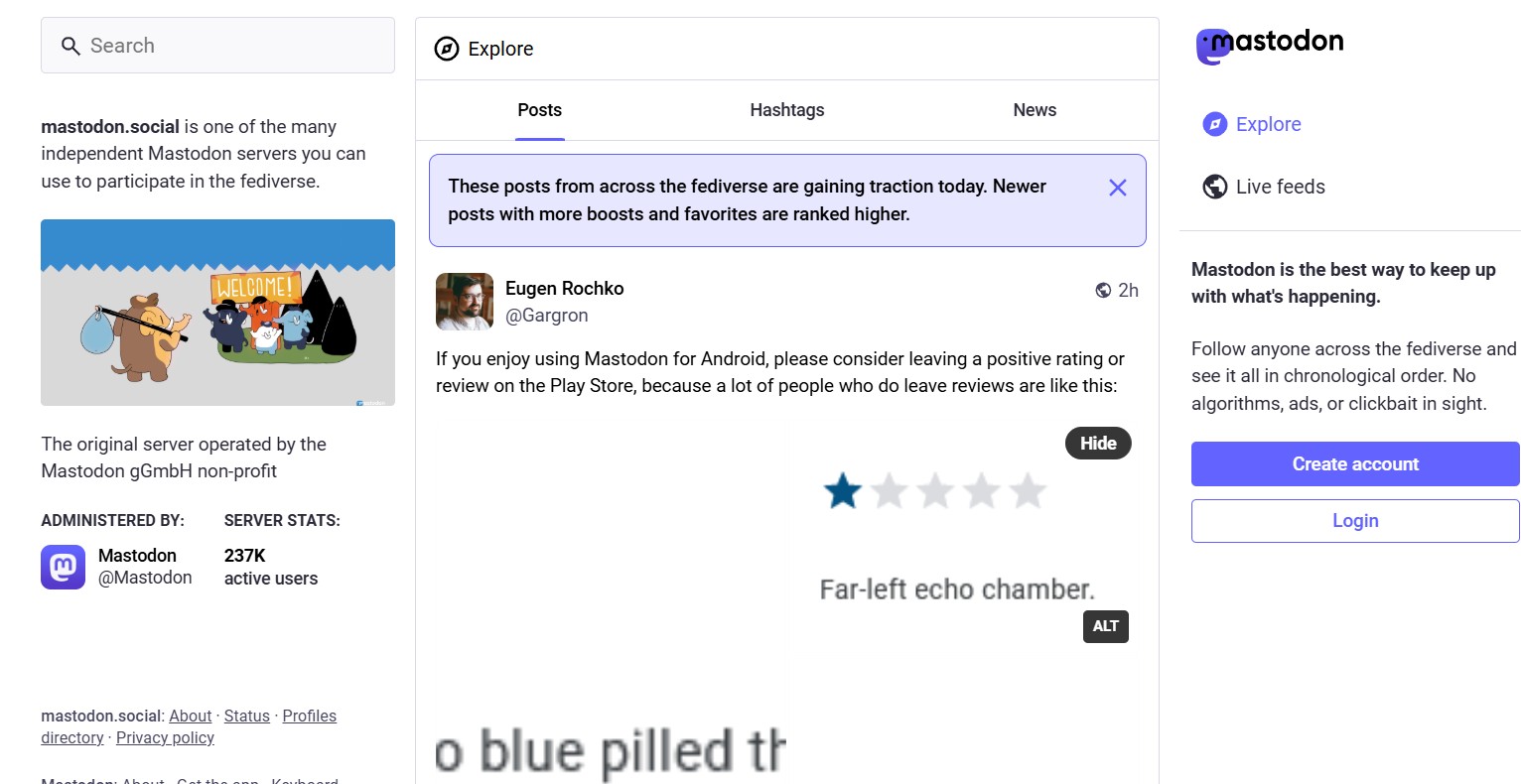
Ownership of Mastodon social media is equally distinctive. The platform is owned and operated by Mastodon gGmbH, a German non-profit organization founded by Eugen Rochko. As its creator and CEO, Rochko envisioned a platform that prioritizes user empowerment and rejects invasive advertising models. This unique setup reinforces Mastodon’s commitment to transparency and independence.
Mastodon’s revenue model is as unconventional as its platform. Unlike traditional social media, Mastodon does not generate revenue through ads or data monetization. Instead, it relies on three primary income streams:
1. User donations
Mastodon depends on its community's support. Through platforms like Patreon, users can directly help keep the platform running. With more than 10,000 monthly supporters as of 2024, these contributions ensure Mastodon can keep developing and maintaining its servers. There are different donation levels available, so everyone can pitch in, whether it’s a small monthly amount or a larger contribution.
2. Sponsorships
Corporate sponsorships are important for Mastodon’s funding, though they’re not the main source. Companies that share Mastodon’s commitment to privacy and decentralization help support its growth. For example, Mastodon works with ethical tech businesses and non-profits, making sure that sponsorships match its values and goals.
3. Grants
As an open-source platform, Mastodon gets support from non-profit organizations and groups focused on digital innovation and online privacy. Some of the main supporters include groups that advocate for open-source software, like the European Commission and various tech communities. These donations help Mastodon enhance its infrastructure and grow its user base.
4. Hosting services (Mastodon server hosting)
Running a Mastodon instance (server) can be technically complex and time-consuming, so Mastodon offers Mastodon Hosting services. Instead of self-hosting, individuals or organizations can pay for a managed Mastodon instance. This is a convenient option for those who want to run their own Mastodon community without dealing with the technical aspects.
5. Paid features and customization
While Mastodon is free to use, there are options for additional services that users or organizations can pay for. These could include:
Premium hosting plans with additional storage, bandwidth, and technical support.
Custom domain setup for Mastodon instances.
Enhanced moderation tools for administrators of larger instances.
Branding and customization services for businesses using Mastodon.
Comparison: Mastodon’s revenue model vs. traditional social media
When comparing Mastodon’s revenue model to traditional social media platforms, it’s important to understand how these models influence user experience and platform sustainability. Here are some unique insights:
Mastodon is funded by donations. While traditional platforms rely heavily on ads, Mastodon keeps its lights on through voluntary donations, making it more focused on user needs.
Grants fuel its development. With grants supporting its growth, Mastodon stays true to its open-source nature, rather than needing to push for constant profit.
Privacy matters more here. Unlike traditional platforms that sell your data for profit, Mastodon ensures your personal information stays private.
No ads, fewer interruptions. Since Mastodon doesn’t rely on ads for revenue, you won’t be bombarded by constant interruptions.
Community-funded. Instead of answering to investors, Mastodon gets its funding directly from the community, creating a more collaborative, user-friendly space.
Each server is independent. Mastodon’s decentralized model allows individual servers to choose how they’re funded, promoting flexibility and autonomy.
Challenges in Mastodon’s revenue model
Mastodon’s revenue model is unique but faces several challenges that can impact its sustainability. Here are some insights:
Reliance on donations. Mastodon depends on donations from users, but this creates an unpredictable income source that makes financial stability a challenge.
No central revenue stream. Unlike platforms that rely on ads or clear revenue models, Mastodon has a harder time generating consistent income.
User hesitation to pay. Many Mastodon users are reluctant to pay for premium features or make donations, limiting potential revenue.
Grants and sponsorships. Mastodon gets a lot of its funding from grants and sponsorships, but these sources can change or disappear unexpectedly.
Scaling issues. As Mastodon grows, managing the costs of keeping the platform running, like server costs, becomes a real challenge.
Competing with giants. Mastodon is up against larger, well-funded platforms that use ads to generate income, making it hard to compete for resources.
Potential revenue streams for Mastodon’s future
To enhance sustainability and ensure long-term growth, Mastodon could explore several innovative revenue opportunities beyond its current funding model. These potential streams align with its decentralized ethos while opening new doors for financial stability.
Value-added services
Mastodon could introduce premium features tailored to users and instance operators. These services might include:
Enhanced security features. Offering advanced privacy tools, such as encrypted messaging or customizable moderation filters, as paid add-ons.
Customization options. Instance operators could pay for unique themes, branding capabilities, or additional storage for their servers.
Priority support. A subscription model offering priority customer support to users and administrators who require quicker resolutions or technical assistance.
Premium user features. Features like expanded character limits, higher media upload capacities, or access to exclusive content could be bundled into a subscription package for individual users.
These services would allow Mastodon to monetize without compromising its commitment to user-centric and ad-free experiences.
Enterprise solutions
As businesses increasingly look for privacy-focused communication tools, Mastodon could position itself as a leader in decentralized networking solutions. Potential opportunities include:
Corporate networking. Offering tailored versions of Mastodon for internal company communication, enabling businesses to set up secure, private networks while benefiting from the decentralized infrastructure.
Custom instance hosting. Providing managed hosting solutions for organizations that want their own Mastodon instances but lack the technical expertise or resources to set them up independently.
White-label solutions. Allowing businesses to integrate Mastodon's platform into their existing operations with customized branding and functionalities.
Partnerships with educational institutions. Collaborating with universities or non-profits to create decentralized communication platforms for students, researchers, or activists who value privacy and independence.
Ethical advertising
While Mastodon currently avoids traditional advertising, it could explore ethical advertising models that respect user privacy. For example:
Sponsored content by Opt-In. Allowing users or instances to opt into non-intrusive, relevant sponsored posts or banners without tracking or data collection.
Instance-level sponsorships. Individual Mastodon instances could attract sponsors who align with their values, providing additional funding at a local level.
Developer tools and API monetization
By creating paid access to advanced developer tools or enhanced APIs, Mastodon could cater to tech-savvy users or organizations looking to integrate its services into their applications. This could include:
Analytics dashboards. Offering administrators insights into user engagement, trends, and activity within their instances.
Custom API access. Providing premium API tiers with faster response times, higher rate limits, or additional features.
Community crowdfunding campaigns for specific features
Mastodon could leverage its engaged community by launching crowdfunding campaigns for significant platform updates or new features. This approach would not only generate funds but also strengthen the bond between Mastodon and its user base.
By implementing these strategies thoughtfully, Mastodon can maintain its user-focused values while building a more sustainable financial future. These new streams would enable the platform to expand its reach and compete more effectively in a rapidly evolving digital landscape.
Advantages of Mastodon’s open-source revenue model
 Advantages of Mastodon’s open-source revenue model
Mastodon's open-source revenue model brings some clear benefits that make it a standout platform:
Support directly from users. Users can pitch in, helping guide the platform’s development in a way that matters to them.
Funding from all sides. With no big corporate backers, Mastodon can stay neutral and true to its mission.
Transparency builds trust. When users see where the money goes, they feel more connected to the platform.
Minimal ads. Fewer ads mean a better experience, where the focus stays on the user, not on pushing products.
Growth without compromise. Revenue from hosting lets Mastodon expand without losing its heart or mission.
Sustainability. The focus on community funding ensures Mastodon sticks around, without relying on big investors pushing for quick profits.
How to withdraw earnings
Withdrawing donations (e.g., from Patreon or PayPal)
If you’re an instance operator or contributor receiving donations via platforms like Patreon or PayPal:
Patreon - Log in to your Patreon account.
- Go to Payout Preferences in your settings.
- Choose your preferred payout method (PayPal, bank transfer, or Payoneer).
- Follow the instructions to withdraw your funds.
PayPal - Log in to your PayPal account.
- Click on Transfer Money under your balance.
- Select Withdraw to Bank Account and follow the prompts to complete the transaction.
Sponsorship withdrawals
If you’ve arranged sponsorships directly, the withdrawal process depends on the terms agreed upon with the sponsor. Payments are usually transferred to your bank or PayPal account based on the contract. Ensure that:
You’ve provided accurate payment details to the sponsor.
Invoices are sent and acknowledged as per the agreement.
Grant withdrawals
Grants are typically disbursed to the bank account associated with your organization or instance. To access these funds:
Follow the instructions provided by the grant-awarding body.
Submit any required financial documentation or reports, as grants often have accountability requirements.
Once approved, funds are transferred to your specified account.
Cryptocurrency donations
Some Mastodon instances accept cryptocurrency donations. If you need to withdraw these funds:
Log in to the cryptocurrency wallet associated with your instance.
Transfer the cryptocurrency to an exchange. If you don’t already have a crypto exchange account, you can consider the following options which we believe are some of the best out there:
| Demo | Min. Deposit, $ | Coins Supported | Spot Taker fee, % | Spot Maker Fee, % | Government-regulated | Foundation year | Open an account | |
|---|---|---|---|---|---|---|---|---|
| No | 10 | 278 | 0.4 | 0.25 | Yes | 2011 | Go to broker Your capital is at risk. |
|
| No | 10 | 249 | 0.5 | 0.5 | Yes | 2012 | Go to broker Your capital is at risk. |
|
| Yes | 10 | 329 | 0.1 | 0.08 | Yes | 2017 | Go to broker Your capital is at risk. |
|
| No | 5 | 30 | Not available | Not available | Yes | 2014 | Go to broker Your capital is at risk.
|
|
| No | 1 | 250 | 0.5 | 0.25 | Yes | 2016 | Go to broker Your capital is at risk. |
Convert the cryptocurrency into fiat currency.
Withdraw the fiat currency to your bank account.
Key aspect of Mastodon’s financial ecosystem is its decentralized structure

Mastodon’s revenue model is refreshingly unique compared to the traditional social media landscape. While most platforms rely on ad-driven revenue or data selling, Mastodon focuses on voluntary support from its users through donations and grants. This approach not only keeps Mastodon’s operations aligned with its community values, but also allows for a more sustainable business model. One key aspect of Mastodon’s financial ecosystem is its decentralized structure, which empowers individual instances (servers) to fund their operations independently, reducing dependency on centralized financial systems. Users can donate directly to their favorite servers, fostering a more community-driven funding model.
What sets Mastodon apart even further is its use of sponsorships and grants, which are often overlooked by social media platforms. These revenue streams come from organizations that support Mastodon’s mission to maintain privacy and user control. By seeking funds from like-minded organizations that align with its open-source ethos, Mastodon avoids the need to sell out to big corporations. This creates a transparent and user-centered financial model that’s highly sustainable and scalable. For beginners, understanding this model is crucial: Mastodon’s revenue is directly tied to community support, making it a prime example of how alternative platforms can thrive without relying on the same profit-driven tactics that dominate mainstream platforms.
Conclusion
Mastodon has redefined what it means to be a social media platform. Through user donations, ethical sponsorships, and grants, it has built a community-driven ecosystem that prioritizes privacy and transparency. While challenges remain, Mastodon’s innovative approach demonstrates that social media can thrive without sacrificing user trust. By staying true to its values and exploring new revenue opportunities, Mastodon is paving the way for a more ethical and decentralized digital future.
FAQs
How can I find and follow friends on Mastodon?
To find friends, use the search bar to look up their usernames or explore hashtags related to your interests. You can also browse the local and federated timelines to discover new users. Once you find someone you'd like to follow, visit their profile and click the "Follow" button.
Can I migrate my account to a different Mastodon instance without losing followers?
Yes, Mastodon allows account migration. You can export your follow list from your current account and import it into a new account on a different instance.
What are the character limits for posts on Mastodon?
The default character limit for posts, known as "toots," is 500 characters. However, individual instances can adjust this limit, so it may vary depending on the server you're using.
How does Mastodon handle content moderation and prevent harassment?
Mastodon employs community-based moderation, where each instance sets its own rules and guidelines. Instance administrators and moderators can manage content, and users have tools to block or report others. This decentralized approach allows for tailored moderation that reflects the community's values.
Editors' Top Picks and Insights

The world's first trillionaire: How Musk built his fortune on electric cars, space and AI

How precious-metals mining revival is reshaping portfolios in 2026

Bitcoin price prediction after CPI rise: Is BTC headed for deeper losses?

Five years with Bitcoin: How El Salvador changed after legalizing BTC

Crypto on the court: How NBA Finals became a showcase for Ledger

How to build wealth from scratch in 3 practical steps
Related Articles
Team that worked on the article
Mikhail Vnuchkov joined Traders Union as an author in 2020. He began his professional career as a journalist-observer at a small online financial publication, where he covered global economic events and discussed their impact on the segment of financial investment, including investor income.
Chinmay Soni is a financial analyst with more than 5 years of experience in working with stocks, Forex, derivatives, and other assets. As a founder of a boutique research firm and an active researcher, he covers various industries and fields, providing insights backed by statistical data.
Mirjan Hipolito is a journalist and news editor at Traders Union. She is an expert crypto writer with five years of experience in the financial markets.
CFD is a contract between an investor/trader and seller that demonstrates that the trader will need to pay the price difference between the current value of the asset and its value at the time of contract to the seller.
An investor is an individual, who invests money in an asset with the expectation that its value would appreciate in the future. The asset can be anything, including a bond, debenture, mutual fund, equity, gold, silver, exchange-traded funds (ETFs), and real-estate property.
Cryptocurrency is a type of digital or virtual currency that relies on cryptography for security. Unlike traditional currencies issued by governments (fiat currencies), cryptocurrencies operate on decentralized networks, typically based on blockchain technology.
Forex leverage is a tool enabling traders to control larger positions with a relatively small amount of capital, amplifying potential profits and losses based on the chosen leverage ratio.
Xetra is a German Stock Exchange trading system that the Frankfurt Stock Exchange operates. Deutsche Börse is the parent company of the Frankfurt Stock Exchange.

-
 Afghanistan
-
 Albania
-
 Algeria
-
 Angola
-
 Argentina
-
 Armenia
-
 Australia
-
 Austria
-
 Azerbaijan
-
 Bahamas
-
 Bahrain
-
 Bangladesh
-
 Belarus
-
 Belgium
-
 Bolivia
-
 Botswana
-
 Brazil
-
 Brunei
-
 Bulgaria
-
 Cambodia
-
 Cameroon
-
 Canada
-
 Chile
Chile
-
 China
China
-
 Colombia
-
 Congo
Congo
-
 Costa Rica
-
 Cote d'Ivoire
-
 Croatia
-
 Cuba
Cuba
-
 Cyprus
-
 Czechia
-
 DR Congo
-
 Denmark
-
 Dominican Republic
-
 Ecuador
-
 Egypt
Egypt
-
 El Salvador
-
 Estonia
-
 Eswatini
-
 Ethiopia
-
 Finland
-
 France
-
 Georgia
-
 Germany
-
 Ghana
Ghana
-
 Greece
-
 Haiti
Haiti
-
 Hong Kong
-
 Hungary
-
 India
India
-
 Indonesia
-
 Iran, Islamic republic
-
 Iraq
Iraq
-
 Ireland
-
 Israel
-
 Italy
Italy
-
 Jamaica
-
 Japan
Japan
-
 Jordan
-
 Kazakhstan
-
 Kenya
Kenya
-
 Korea
Korea
-
 Kuwait
-
 Kyrgyzstan
-
 Laos
Laos
-
 Latvia
-
 Lebanon
-
 Lesotho
-
 Libya
Libya
-
 Lithuania
-
 Luxembourg
-
 Madagascar
-
 Malaysia
-
 Malta
Malta
-
 Mauritius
-
 Mexico
-
 Moldova
-
 Mongolia
-
 Montenegro
-
 Morocco
-
 Mozambique
-
 Myanmar
-
 Namibia
-
 Nepal
Nepal
-
 Netherlands
-
 New Zealand
-
 Nigeria
-
 North Macedonia
-
 Norway
-
 Oman
Oman
-
 Pakistan
-
 Palestine
-
 Panama
-
 Papua New Guinea
-
 Paraguay
-
 Peru
Peru
-
 Philippines
-
 Poland
-
 Portugal
-
 Puerto Rico
-
 Qatar
Qatar
-
 Reunion
-
 Romania
-
 Rwanda
-
 Saudi Arabia
-
 Serbia
-
 Singapore
-
 Slovakia
-
 Slovenia
-
 Somalia
-
 South Africa
-
 Spain
Spain
-
 Sri Lanka
-
 Sweden
-
 Switzerland
-
 Syria
Syria
-
 Taiwan
-
 Tajikistan
-
 Tanzania
-
 Thailand
-
 Trinidad and Tobago
-
 Tunisia
-
 Turkey
-
 UAE
UAE
-
 Uganda
-
 Ukraine
-
 United Kingdom
-
United States
-
 Uruguay
-
 Uzbekistan
-
 Venezuela
-
 Vietnam
-
 Yemen
Yemen
-
 Zambia
-
 Zimbabwe
- Forex
- Crypto












