
What Currency Does El Salvador Use? 2026 Guide



Editorial Note: While we adhere to strict Editorial Integrity, this post may contain references to products from our partners. Here's an explanation for How We Make Money. None of the data and information on this webpage constitutes investment advice according to our Disclaimer.
El Salvador's currency system has gone through major shifts over the past century, shaped by political choices, international influences, and more recently, the digital revolution. At one time, the country used the El Salvador Colon (SVC), its former national currency. Over time, this gave way to the U.S. Dollar, and later, an ambitious but short-lived experiment with Bitcoin.
Many wonder what the currency of El Salvador is, especially after the global headlines surrounding its adoption of digital assets. This guide offers a look at how the nation’s monetary landscape evolved, from traditional coinage to modern digital ambitions, and where it stands now.
Historical currency: the Salvadoran Colón (SVC)
For more than a century, El Salvador’s economy revolved around the El Salvador currency name: the colón. Introduced in 1892 to replace the peso, the colón was named after explorer Christopher Columbus (Cristóbal Colón). It was subdivided into 100 centavos and originally pegged to the U.S. dollar at two colones per dollar. After leaving the gold standard in 1931, the colón floated freely, subjecting Salvadorans to bouts of inflation and exchange‑rate volatility.
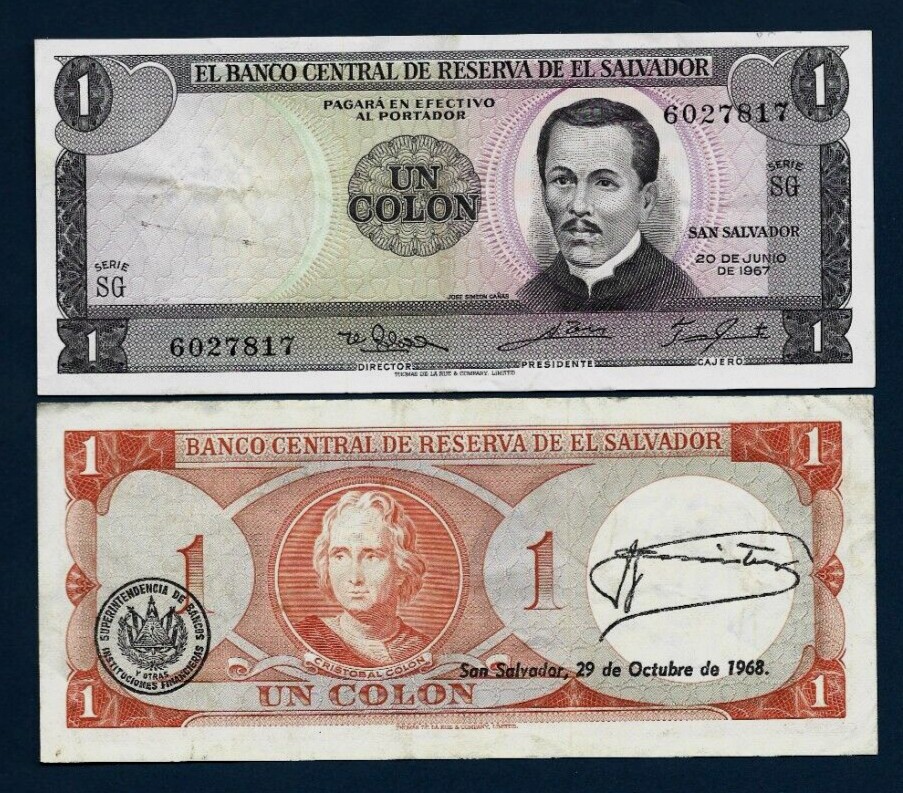
Key facts about the colón
Birth of the colón. Established in 1892, the colón replaced the peso and remained the official currency for 109 years.
Managed by the central bank. The Banco Central de Reserva de El Salvador, created in 1934, oversaw monetary policy and issuance.
Fixed to floating. Initially pegged to the U.S. dollar, the currency floated after 1931, exposing the economy to external shocks and speculation.
Remittances and inflation. By the 1990s, high inflation and the prevalence of remittances, personal transfers amounted to about 24% of GDP in 2023, among the highest in the world, motivated policymakers to consider dollarization.
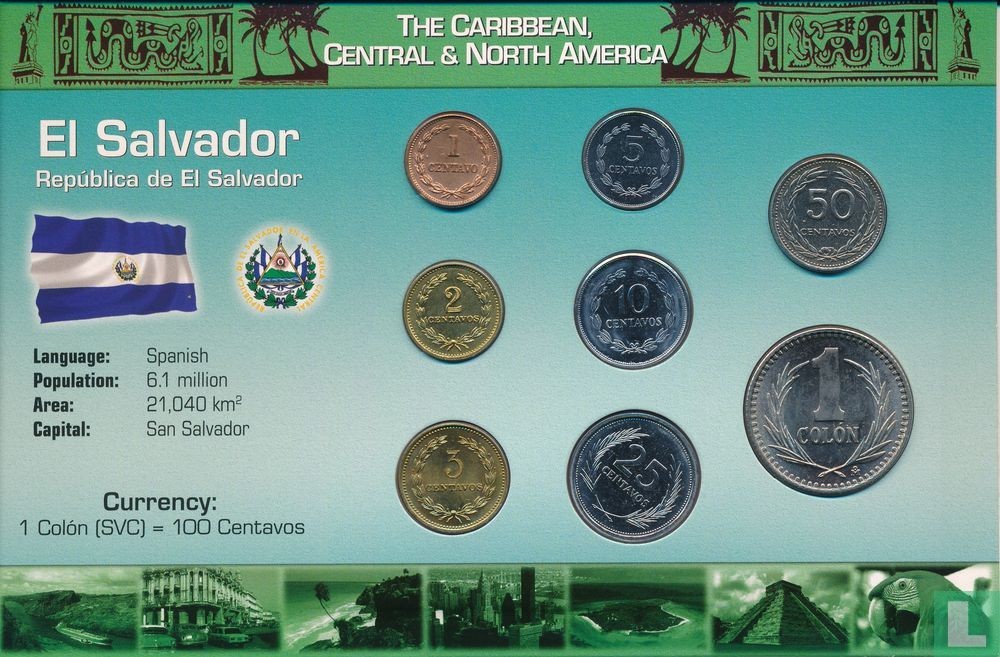
The colón is technically still legal tender, but since January 2001 it has ceased circulating. Collectors and museums hold the remaining coins and banknotes.
Dollarization: why El Salvador switched to the U.S. dollar
Facing chronic inflation and currency instability, El Salvador’s government enacted the Monetary Integration Law in 2001, adopting the U.S. dollar as legal tender. This decision fixed the exchange rate at 8.75 colones per dollar and allowed both currencies to circulate. The rationale behind the switch was to anchor the economy to a stable currency, lower interest rates, and attract foreign investment. Over 70% of Salvadorans lived abroad or relied on remittances denominated in dollars, making dollarization a logical step.
Benefits of dollarization
Inflation control. Linking to the U.S. Federal Reserve’s monetary policy reduced the risk of runaway inflation and brought price stability.
Lower borrowing costs. Dollar‑denominated interest rates decreased, improving access to credit for businesses and consumers.
Remittance efficiency. Since remittances represent nearly one‑quarter of GDP, using dollars avoided conversion fees and enhanced purchasing power for recipients.
Investment confidence. Multinational companies preferred a predictable currency, boosting foreign direct investment and trade integration.
Challenges of dollarization
Loss of monetary policy. El Salvador surrendered control over interest rates and money supply. The Central Reserve Bank can no longer print currency to respond to crises.
Price rounding. When colones were exchanged at 8.75 per dollar, merchants rounded up prices, leading to public discontent.
Economic adjustment. Competing with countries with flexible currencies became more difficult, as exporters couldn’t devalue a national currency to regain competitiveness.
Despite these drawbacks, the U.S. dollar remains firmly entrenched as El Salvador’s currency in 2026. It’s accepted everywhere, from supermarkets to street vendors. ATMs dispense dollars, and U.S. coins circulate widely. The colón remains a nostalgic relic rather than a practical medium of exchange.
The Bitcoin experiment: legal tender (2021–2024)
In September 2021, President Nayib Bukele stunned the world by introducing Bitcoin as legal tender alongside the U.S. dollar. The law, marketed as a tool for financial inclusion and remittance savings, mandated that merchants accept Bitcoin for goods and services. A government wallet, Chivo, offered each citizen $30 worth of Bitcoin to encourage adoption. However, the experiment quickly ran into problems.
Adoption challenges and public skepticism
Government surveys and academic studies showed a steep decline in Bitcoin usage. According to data from the University of Central America’s Iudop, the percentage of Salvadorans using Bitcoin for transactions fell from 25.7% in 2021 to 8.1% in 2024. A January 2025 survey found that 92% of citizens had not used Bitcoin in the previous year. Only 8% used it, averaging just 14 transactions annually. Remittances via digital wallets like Chivo totaled $7.22 million in December 2024. less than 1% of total remittances.
Reasons for low adoption
Price volatility. Bitcoin’s value plunged more than 60% in 2022 and remained unpredictable, deterring everyday purchases.
Limited internet penetration. Roughly half of Salvadorans lack reliable internet access, restricting their ability to use digital wallets.
Mistrust and complexity. Many merchants struggled with technology and preferred dollars, while consumers feared losing money due to volatility.
IMF pressure and legal reform
In December 2024, as part of a $1.4 billion loan agreement with the International Monetary Fund, El Salvador agreed to scale back its Bitcoin experiment. On January 29, 2025, lawmakers passed an amendment to the Bitcoin law, removing the word “currency” from the legislation and making acceptance voluntary. The reform took effect May 1, 2025, and eliminated the requirement for merchants to accept Bitcoin or for citizens to pay taxes in it. Economist Rafael Lemus noted that Bitcoin “no longer has the strength of legal tender”. While the government still holds Bitcoin reserves, 688 coins worth roughly $574 million as of early 2025, the currency now functions more like a speculative asset than a national medium of exchange.
Current currency status as of 2026
As of 2026, El Salvador operates under a dual currency model, though only the dollar circulates widely. Here’s a breakdown of the currencies and their roles:
| Currency | Status (2026) | Practical use |
|---|---|---|
| U.S. Dollar (USD) | Active legal tender since 2001 | Universal acceptance nationwide; used for all public and private transactions; ATMs dispense USD; U.S. coins in circulation |
| El Salvador Colón (SVC) | Officially legal tender but obsolete | Historical currency (1892–2001); no longer issued or used; now of numismatic interest |
| Bitcoin (BTC) | Optional digital asset after May 1, 2025 | Acceptance voluntary; cannot be used to pay taxes; present mainly in niche tourism areas or by enthusiasts |
So when someone asks what the currency of El Salvador is called, the answer is unequivocally the U.S. dollar. Bitcoin’s role is marginal, and the colón is long gone from wallets.
Since El Salvador runs on the U.S. dollar (USD), most traders focus on Forex pairs that include the dollar, such as EUR/USD, USD/JPY, and GBP/USD. If you’re planning to trade these pairs, the broker you choose makes a big difference in spreads, leverage, and account safety. To make the process easier, the table below highlights the best Forex brokers for trading USD pairs.
| zForex | Plus500 | Trading.com USA | OANDA | FOREX.com | |
|---|---|---|---|---|---|
|
Demo |
Yes | Yes | Yes | Yes | Yes |
|
Min. deposit, $ |
10 | 100 | 50 | No | 100 |
|
Max. leverage |
1:1000 | 1:300 | 1:50 | 1:200 | 1:50 |
|
Deposit fee, % |
No | No | No | No | No |
|
Withdrawal fee, % |
No | No | No | No | No |
|
Regulation |
No | CySEC, FCA, ASIC, FMA, FSCA, FSA Seychelles, EFSA, MAS, DFSA, SCB | CFTC, NFA | FSC (BVI), ASIC, IIROC, FCA, CFTC, NFA | CIMA, FCA, FSA (Japan), NFA, IIROC, ASIC, CFTC |
|
TU overall score |
7.89 | 7.52 | 6.81 | 6.8 | 6.74 |
|
Open an account |
Go to broker Your capital is at risk.
|
Go to broker 80% of retail CFD accounts lose money. |
Go to broker Your capital is at risk. |
Go to broker Your capital is at risk. |
Study review |
Key takeaways
Bring U.S. dollars. For visitors, there’s no need to exchange currency if you’re coming from the United States. Cash is still king in rural areas, though credit cards are accepted in cities and tourist destinations.
Watch remittance policies. Families abroad send billions of dollars home; in 2023, remittances represented 23.94% of GDP. Use formal channels to avoid high fees.
Understand Bitcoin’s limits. While Bitcoin ATMs and Chivo wallets still exist, they are optional. Merchants may accept BTC for novelty or marketing, but dollars remain dominant.
Stay aware of policy shifts. El Salvador’s monetary landscape has evolved rapidly. Keep an eye on future legislation that might reintroduce digital currency initiatives or adjust financial regulations.
El Salvador runs on us dollars with remittances and bitcoin infrastructure shaping daily money flows

When talking about El Salvador’s currency, most focus only on the change from the colón to the US dollar. What’s less obvious is how this shift changed daily financial life. Since the country can no longer manage its own money supply, remittances have become a lifeline that keeps the economy liquid. Families receiving dollars from abroad act as a stabilizing force, filling the gap left by the absence of local monetary policy. For beginners, this is the key to understanding why the dollar system works in practice.
Bitcoin’s chapter as legal tender is often described as a failure, but it left behind something valuable. The wallets, ATMs, and digital systems built for Bitcoin are now supporting dollar transactions. Even though most people in El Salvador prefer physical cash, the infrastructure is quietly nudging the economy toward digital payments. The real picture is not just about which currency is used but how cash, remittances, and technology combine to shape how Salvadorans move money today.
Conclusion
In 2026, El Salvador continues to stand out on the global stage by maintaining both the U.S. Dollar and Bitcoin as legal tender, while the Salvadoran Colón remains a historic currency. This bold approach underscores El Salvador’s commitment to financial innovation and economic integration with international markets. For instance, everyday transactions still commonly use U.S. Dollars, while Bitcoin offers an alternative for tech-savvy citizens and attracts digital entrepreneurs. Ultimately, El Salvador’s currency landscape serves as a dynamic example of how embracing new technologies can reshape national economies and redefine financial sovereignty.
FAQs
Can visitors use foreign currencies other than the U.S. dollar in El Salvador?
What is the current legal status of the Salvadoran colón in 2026?
How do rural and urban areas in El Salvador differ in payment methods?
Is Bitcoin accepted for tax payments or required to be accepted by merchants in El Salvador as of 2026?
Editors' Top Picks and Insights

Hunting crypto owners: Why criminals have gone offline

BitMEX is shutting down: Why Trump could not save the exchange

Do governments need crypto workers?

Brent nears $100: Why oil prices are rising

Gram Wallet launch: Can Telegram bring crypto to the masses?

AI without limits: How dangerous are neural networks?
Related Articles
Team that worked on the article
Ciaran Ryan is a veteran financial journalist based in South Africa, where he covers cryptocurrency, mining, stock markets, and governance for Moneyweb. He also hosts the weekly Moneyweb Crypto Podcast.
Dan Blystone began his trading career in 1998 as an arbitrage clerk on the floor of the Chicago Mercantile Exchange (CME). He later traded bond and Eurex futures at proprietary firms such as Altea Trading, gaining valuable experience in high-frequency trading and risk management.
Chinmay Soni is a financial analyst with more than 5 years of experience in working with stocks, Forex, derivatives, and other assets. As a founder of a boutique research firm and an active researcher, he covers various industries and fields, providing insights backed by statistical data.

-
 Afghanistan
-
 Albania
-
 Algeria
-
 Angola
-
 Argentina
-
 Armenia
-
 Australia
-
 Austria
-
 Azerbaijan
-
 Bahamas
-
 Bahrain
-
 Bangladesh
-
 Belarus
-
 Belgium
-
 Bolivia
-
 Botswana
-
 Brazil
-
 Brunei
-
 Bulgaria
-
 Cambodia
-
 Cameroon
-
 Canada
-
 Chile
Chile
-
 China
China
-
 Colombia
-
 Congo
Congo
-
 Costa Rica
-
 Cote d'Ivoire
-
 Croatia
-
 Cuba
Cuba
-
 Cyprus
-
 Czechia
-
 DR Congo
-
 Denmark
-
 Dominican Republic
-
 Ecuador
-
 Egypt
Egypt
-
 El Salvador
-
 Estonia
-
 Eswatini
-
 Ethiopia
-
 Finland
-
 France
-
 Georgia
-
 Germany
-
 Ghana
Ghana
-
 Greece
-
 Haiti
Haiti
-
 Hong Kong
-
 Hungary
-
 India
India
-
 Indonesia
-
 Iran, Islamic republic
-
 Iraq
Iraq
-
 Ireland
-
 Israel
-
 Italy
Italy
-
 Jamaica
-
 Japan
Japan
-
 Jordan
-
 Kazakhstan
-
 Kenya
Kenya
-
 Korea
Korea
-
 Kuwait
-
 Kyrgyzstan
-
 Laos
Laos
-
 Latvia
-
 Lebanon
-
 Lesotho
-
 Libya
Libya
-
 Lithuania
-
 Luxembourg
-
 Madagascar
-
 Malaysia
-
 Malta
Malta
-
 Mauritius
-
 Mexico
-
 Moldova
-
 Mongolia
-
 Montenegro
-
 Morocco
-
 Mozambique
-
 Myanmar
-
 Namibia
-
 Nepal
Nepal
-
 Netherlands
-
 New Zealand
-
 Nigeria
-
 North Macedonia
-
 Norway
-
 Oman
Oman
-
 Pakistan
-
 Palestine
-
 Panama
-
 Papua New Guinea
-
 Paraguay
-
 Peru
Peru
-
 Philippines
-
 Poland
-
 Portugal
-
 Puerto Rico
-
 Qatar
Qatar
-
 Reunion
-
 Romania
-
 Rwanda
-
 Saudi Arabia
-
 Serbia
-
 Singapore
-
 Slovakia
-
 Slovenia
-
 Somalia
-
 South Africa
-
 Spain
Spain
-
 Sri Lanka
-
 Sweden
-
 Switzerland
-
 Syria
Syria
-
 Taiwan
-
 Tajikistan
-
 Tanzania
-
 Thailand
-
 Trinidad and Tobago
-
 Tunisia
-
 Turkey
-
 UAE
UAE
-
 Uganda
-
 Ukraine
-
 United Kingdom
-
United States
-
 Uruguay
-
 Uzbekistan
-
 Venezuela
-
 Vietnam
-
 Yemen
Yemen
-
 Zambia
-
 Zimbabwe
- Forex
- Crypto












