
Bitcoin Reserves: The Future of National And Institutional Holdings



Editorial Note: While we adhere to strict Editorial Integrity, this post may contain references to products from our partners. Here's an explanation for How We Make Money. None of the data and information on this webpage constitutes investment advice according to our Disclaimer.
Bitcoin reserves are the Bitcoin holdings of individuals, companies, or governments for savings or trading. The U.S. government has decided to include Bitcoin in its reserves, marking a bold move toward adopting digital assets. This reflects the increasing interest in Bitcoin’s role as a store of value in global finance. As of 2025, the U.S. government holds over 200,000 BTC (~$21B), mostly from confiscations.
The concept of Bitcoin reserves is rapidly evolving from a speculative theory to a serious consideration among governments and institutions worldwide. Traditionally, nations have held reserves in gold, foreign currencies, and other tangible assets to ensure economic stability. But with Bitcoin’s increasing adoption and its potential to hedge against inflation, discussions about integrating Bitcoin into official reserves are gaining momentum.
One of the most significant recent developments is the conversation within former President Donald Trump’s circle regarding a U.S. Bitcoin reserve. This proposal, along with Bitcoin's adoption as a treasury asset by major corporations, raises critical questions about its feasibility, benefits, and risks. In this article, we analyze Bitcoin reserves, expert opinions, and real-world data to determine whether Bitcoin can become a legitimate reserve asset.
Understanding Bitcoin reserves
In January 2025, former President Donald Trump signed an executive order to establish a working group exploring a U.S. Bitcoin reserve. The U.S. government already holds over 200,000 BTC (~$21 billion) from confiscations, but this initiative aims to formally integrate Bitcoin into national reserves. The working group, led by economic advisors, is set to present findings within 180 days, assessing feasibility, risks, and potential economic impact.
The working group, consisting of economic advisors and policymakers, has been given 180 days to present its findings, outlining the benefits, risks, and potential impact of integrating Bitcoin into national reserves. Despite this initiative, skepticism remains high, with projections on the Polymarket forecasting platform estimating only a 20% probability of a formal Bitcoin reserve being established in the near future. This suggests that while the conversation is advancing, significant legal, economic, and regulatory hurdles still stand in the way of full implementation.
This decision marks a remarkable turnaround in the U.S. financial strategy, positioning Bitcoin alongside traditional reserves like gold. Notably, it contrasts with former President Trump's 2019 tweet where he criticized Bitcoin, calling it a "highly volatile and thin air-based asset." Now, this move aims to strengthen economic resilience, hedge against inflation, and establish the U.S. as a global leader in digital asset adoption, signaling a shift in perspective from skepticism to strategic acceptance.

And now, his stance is quoted below:
"Never sell your bitcoin," Trump said. "If I am elected, it will be the policy of my administration, the United States of America, to keep 100% of all the bitcoin the U.S. government currently holds or acquires into the future," he said.

Definition and types of Bitcoin reserves
Bitcoin reserves refer to the intentional accumulation of Bitcoin as a strategic asset by governments, institutions, or individuals. These reserves can be categorized into three main types:
Institutional Bitcoin treasuries. Corporations like Strategy and Tesla holding Bitcoin on their balance sheets as a hedge against inflation.
National Bitcoin reserves. Governments officially hold Bitcoin as part of their foreign reserves.
Individual Bitcoin reserves. Private investors use Bitcoin as a long-term store of value.
Importance of Bitcoin reserves
Bitcoin is often compared to gold due to its fixed supply of 21 million coins and its decentralized nature. Some key reasons why governments and institutions are considering Bitcoin reserves include:
Hedge against inflation. Bitcoin’s scarcity makes it a potential hedge against fiat currency devaluation.
Financial sovereignty. Bitcoin is not controlled by any government, making it an independent reserve asset.
Global adoption and institutional interest. Increasing corporate and institutional adoption adds credibility to Bitcoin’s role as a reserve asset.

Large-scale entities who maintain a Bitcoin reserve manage them by following a path similar to one outlined below:
Securing storage. Organizations can either store reserves themselves using hardware wallets or rely on trusted institutions for custody.
Spreading out storage. Using multiple wallets, including multi-signature options, helps reduce risks and adds extra layers of protection.
Focusing on long-term goals. Most reserves are held without frequent trading to avoid unnecessary risks from price swings.
Regular reviews. Reserve levels are checked periodically and adjusted based on market conditions and organizational needs.
Following the rules. Staying updated on tax rules and legal guidelines ensures reserves are managed properly and without issues.
The concept of official Bitcoin reserves
With Trump’s announcement, the concept of official Bitcoin reserves has gained significant attention, and several governments already hold substantial amounts of Bitcoin. These holdings are primarily acquired through seizures, purchases, or donations.
United States. The U.S. government is the largest known holder of Bitcoin, possessing approximately 212,847 BTC, valued at around $21 billion. These assets have been accumulated mainly through seizures related to criminal activities.


United Kingdom. The UK government holds about 61,245 BTC, estimated to be worth $5.9 billion. Similar to the U.S., these holdings result from law enforcement actions and subsequent asset seizures.
Germany. Germany has accumulated approximately 49,859 BTC, valued at around $4.8 billion, through various seizures and enforcement actions. While Bitcoin made up the majority of Germany's cryptocurrency portfolios, we know little about whether they had other digital currencies such as Ethereum or stablecoins. The focus has largely been on Bitcoin because of its high value and the size of the funds confiscated.
El Salvador. In a pioneering move, El Salvador became the first country to adopt Bitcoin as legal tender in 2021. The nation currently holds about 5,804 BTC, valued at approximately $580 million, as part of its national reserves.
Global Holdings. Collectively, governments worldwide hold around 471,380 BTC, accounting for approximately 2.2% of Bitcoin's total supply. The combined value of these holdings is estimated to be $32.7 billion.
These figures underscore the growing recognition of Bitcoin as a potential reserve asset among nations. However, the volatility of Bitcoin's value and regulatory considerations continue to influence the extent and manner of its adoption in official reserves. Also in our article, discover how Africa Bitcoin Corp, following Michael Saylor’s strategy, seeks to raise $210 million to establish Africa’s first Bitcoin treasury reserve and invites investors to be part of its vision and the continent’s crypto growth.
The U.S. Bitcoin strategic reserve: feasibility and expert opinions
Political developments
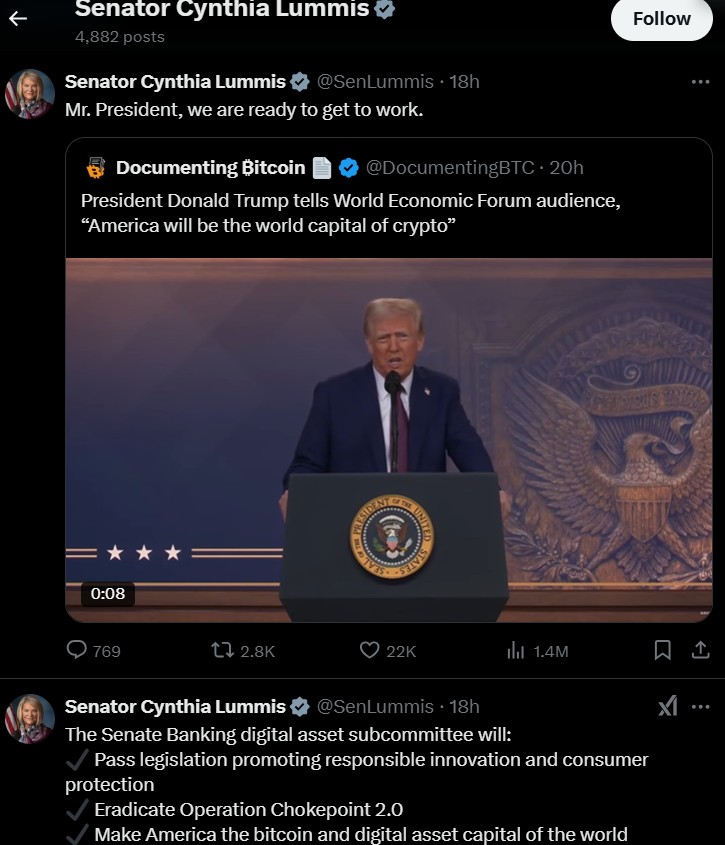
A working group under Trump’s administration is exploring a national Bitcoin reserve strategy.
Senator Cynthia Lummis proposed a bill for the U.S. Treasury to accumulate 1 million BTC over five years.
The proposal to establish a U.S. Bitcoin reserve has elicited a range of expert opinions, reflecting both support and criticism.
Supporters' perspective
Economic hedge
Proponents argue that Bitcoin can serve as a safeguard against currency devaluation and fiscal instability, suggesting that such a reserve could protect against inflation and strengthen the U.S. dollar.
Store of value
Advocates highlight Bitcoin's potential for significant long-term returns. Anthony Pompliano, founder of Professional Capital Management, has proposed that the U.S. government allocate $250 billion to purchase Bitcoin, arguing that this move could position the country as the largest Bitcoin holder and bolster national financial security.
Strategic advantage
Supporters believe that establishing a Bitcoin reserve could enhance the U.S.'s position in the global Bitcoin economy. BlackRock CEO Larry Fink has been lobbying for the tokenization of bonds and stocks, suggesting that such moves could democratize investing and potentially enhance Bitcoin's value.

Critics' perspective
Volatility concerns
Critics caution against Bitcoin's price fluctuations, which pose risks for financial stability. They argue that tying national reserves to a volatile asset could introduce economic instability.
Regulatory uncertainty
Skeptics highlight the challenges governments may face with regulatory frameworks. The complexity of integrating Bitcoin into existing financial systems and the lack of comprehensive regulations are significant concerns.
Security risks
Holding Bitcoin at a national level requires robust security measures. Critics point to potential vulnerabilities to cyberattacks and the challenges of securing digital assets against theft or loss.
Comparative analysis: Bitcoin vs. Gold as reserve assets
Bitcoin and gold have long been compared as store-of-value assets, with each serving different roles in financial markets. Over the past five years, Bitcoin has demonstrated explosive growth, while gold has maintained its historical stability.
As of 2025, Bitcoin has surged by 1,300%, increasing from $7,000 in 2020 to $102,378, whereas gold has appreciated by only 22%, rising from $1,550 to $1,900 per ounce. However, Bitcoin has experienced extreme drawdowns, with historical declines reaching-85%, while gold has shown relatively low volatility. This analysis highlights the advantages, risks, and investment potential of both assets in national reserves.
| Year | Bitcoin Price (BTC) | Gold Price (per ounce) |
|---|---|---|
| 2020 | $7,000 | $1,550 |
| 2025 | $102,378 | $1,900 |
However, it is important to take into account that Bitcoin is a highly volatile asset.

Hypothetical scenario: If a country had invested in Bitcoin and Gold Equally
If a country had allocated $500 million each to Bitcoin and gold in 2020, the outcome by 2025 would be starkly different:
Bitcoin investment. With Bitcoin surging from $7,000 to $102,378, the investment would now be valued at approximately $7.15 billion, reflecting a 1,330% increase.
Gold investment. With gold rising from $1,550 to $1,900 per ounce, the investment would have grown modestly to $610 million, marking a 22% increase.
In fact, this dream run of Bitcoin would have also benefited any investor who would’ve invested in Bitcoin during the period. If you are considering an investment now, you would need an account with a crypto exchange that supports Bitcoin trading. We have researched the market and shortlisted the top options in the table below:
| BTC | Coins Supported | Min. Deposit, $ | Spot Taker fee, % | Spot Maker Fee, % | Foundation year | Open an account | |
|---|---|---|---|---|---|---|---|
| Yes | 249 | 10 | 0.5 | 0.5 | 2012 | Go to broker Your capital is at risk. |
|
| Yes | 329 | 10 | 0.1 | 0.08 | 2017 | Go to broker Your capital is at risk. |
|
| Yes | 250 | 1 | 0.5 | 0.25 | 2016 | Go to broker Your capital is at risk. |
|
| Yes | 278 | 10 | 0.4 | 0.25 | 2011 | Go to broker Your capital is at risk. |
|
| Yes | 1000 | No | 0 | 0 | 2018 | Go to broker Your capital is at risk. |
Pros and Cons of holding Bitcoin reserves for large-scale entities
- Pros
- Cons
High growth potential. Bitcoin’s long-term appreciation is historically strong.
Decentralized store of value. Bitcoin is independent of government control.
Hedge against fiat devaluation. Countries with weak currencies can benefit.
Extreme price volatility. Drawdowns can be significant.
Regulatory uncertainty. National policies regarding Bitcoin are evolving.
Security risks. Requires advanced custody solutions.
Risks and warnings
Regulatory risks. Government policies significantly influence Bitcoin's status as a reserve asset. Changes in regulations can affect its legality, taxation, and integration into financial systems. For instance, the U.S. government's approach to cryptocurrency regulation has evolved, with recent executive orders aiming to study and potentially establish a Bitcoin reserve. However, the regulatory environment remains fluid, and future policy shifts could impact Bitcoin's viability as a reserve asset.
Market volatility. Bitcoin is known for its significant price fluctuations. While it has experienced substantial appreciation, it has also undergone sharp declines. This volatility can lead to large unrealized losses for entities holding Bitcoin as a reserve asset. For example, Bitcoin's price surged past $109,000 ahead of anticipated pro-cryptocurrency policies but has also seen rapid decreases in value during other periods.
Security concerns. Holding Bitcoin reserves necessitates robust cybersecurity measures. The digital nature of Bitcoin makes it susceptible to cyberattacks, hacking, and theft. Ensuring the security of Bitcoin holdings is crucial, as breaches can result in significant financial losses. The U.S. government, for instance, holds approximately 200,000 bitcoins, primarily from seizures, underscoring the importance of secure storage solutions.
Crypto will see higher investor trust following Trump’s announcement

The United States' move to adopt Bitcoin reserves marks a significant shift in global financial strategies. While many view this as a hedge against inflation, it also highlights Bitcoin’s potential to give nations more control over their wealth. Unlike gold, which requires physical storage and transportation, Bitcoin allows countries to hold value in a way that’s easier to access and harder to restrict. This could change how nations manage their resources during crises, as Bitcoin can be used immediately without relying on traditional logistics. By embracing this model, the U.S. may encourage its allies to follow suit, creating a shared approach to mitigating currency risks.
Institutions will likely reshape how Bitcoin reserves are managed, blending corporate and national interests into a new financial framework. Businesses may work with governments to include Bitcoin in trade policies or as part of environmental initiatives like carbon offset programs. Instead of seeing Bitcoin’s price swings as a downside, these fluctuations could fund long-term investments or cover unexpected expenses during its high points. This cooperation between public and private sectors may push Bitcoin from being just an asset to becoming a key driver of how global economies function together.
Conclusion
While Bitcoin's potential to serve as a national reserve asset akin to gold is gaining attention, the US government remains cautious due to concerns over volatility, regulatory uncertainty, and market maturity. Experts point to the adaptability and digital scarcity of Bitcoin as factors that could bolster its reserve appeal in the future, particularly as countries like El Salvador experiment with crypto reserves. However, risks such as price swings and security challenges mean mainstream adoption as a national reserve is not imminent. Ultimately, Bitcoin's journey toward reserve status will depend on regulatory clarity and proven stability, but its disruptive potential is now impossible to ignore.
FAQs
How does Bitcoin's fixed supply impact its suitability as a national reserve asset?
What security measures are essential for safeguarding national Bitcoin reserves?
What regulatory factors influence the integration of Bitcoin into official reserves?
How do Bitcoin reserves affect a country's financial flexibility during crises?
Editors' Top Picks and Insights

Allbridge co-founder: Many people do not even realize they are using crypto bridges

Bitcoin mining is getting greener, but the debate isn't over

Asia's largest IPO: How CXMT became China's most valuable company

Global fintech in 2026: Three trends that matter

From Jesus Christ to aliens: Polymarket's most absurd prediction markets

Hunting crypto owners: Why criminals have gone offline
Related Articles
Team that worked on the article
Parshwa is a content expert and finance professional possessing deep knowledge of stock and options trading, technical and fundamental analysis, and equity research. As a Chartered Accountant Finalist, Parshwa also has expertise in Forex, crypto trading, and personal taxation.
Chinmay Soni is a financial analyst with more than 5 years of experience in working with stocks, Forex, derivatives, and other assets. As a founder of a boutique research firm and an active researcher, he covers various industries and fields, providing insights backed by statistical data.
Mirjan Hipolito is a journalist and news editor at Traders Union. She is an expert crypto writer with five years of experience in the financial markets.
Cryptocurrency is a type of digital or virtual currency that relies on cryptography for security. Unlike traditional currencies issued by governments (fiat currencies), cryptocurrencies operate on decentralized networks, typically based on blockchain technology.
An investor is an individual, who invests money in an asset with the expectation that its value would appreciate in the future. The asset can be anything, including a bond, debenture, mutual fund, equity, gold, silver, exchange-traded funds (ETFs), and real-estate property.
Crypto trading involves the buying and selling of cryptocurrencies, such as Bitcoin, Ethereum, or other digital assets, with the aim of making a profit from price fluctuations.
Ethereum is a decentralized blockchain platform and cryptocurrency that was proposed by Vitalik Buterin in late 2013 and development began in early 2014. It was designed as a versatile platform for creating decentralized applications (DApps) and smart contracts.
Bitcoin is a decentralized digital cryptocurrency that was created in 2009 by an anonymous individual or group using the pseudonym Satoshi Nakamoto. It operates on a technology called blockchain, which is a distributed ledger that records all transactions across a network of computers.

-
 Afghanistan
-
 Albania
-
 Algeria
-
 Angola
-
 Argentina
-
 Armenia
-
 Australia
-
 Austria
-
 Azerbaijan
-
 Bahamas
-
 Bahrain
-
 Bangladesh
-
 Belarus
-
 Belgium
-
 Bolivia
-
 Botswana
-
 Brazil
-
 Brunei
-
 Bulgaria
-
 Cambodia
-
 Cameroon
-
 Canada
-
 Chile
Chile
-
 China
China
-
 Colombia
-
 Congo
Congo
-
 Costa Rica
-
 Cote d'Ivoire
-
 Croatia
-
 Cuba
Cuba
-
 Cyprus
-
 Czechia
-
 DR Congo
-
 Denmark
-
 Dominican Republic
-
 Ecuador
-
 Egypt
Egypt
-
 El Salvador
-
 Estonia
-
 Eswatini
-
 Ethiopia
-
 Finland
-
 France
-
 Georgia
-
 Germany
-
 Ghana
Ghana
-
 Greece
-
 Haiti
Haiti
-
 Hong Kong
-
 Hungary
-
 India
India
-
 Indonesia
-
 Iran, Islamic republic
-
 Iraq
Iraq
-
 Ireland
-
 Israel
-
 Italy
Italy
-
 Jamaica
-
 Japan
Japan
-
 Jordan
-
 Kazakhstan
-
 Kenya
Kenya
-
 Korea
Korea
-
 Kuwait
-
 Kyrgyzstan
-
 Laos
Laos
-
 Latvia
-
 Lebanon
-
 Lesotho
-
 Libya
Libya
-
 Lithuania
-
 Luxembourg
-
 Madagascar
-
 Malaysia
-
 Malta
Malta
-
 Mauritius
-
 Mexico
-
 Moldova
-
 Mongolia
-
 Montenegro
-
 Morocco
-
 Mozambique
-
 Myanmar
-
 Namibia
-
 Nepal
Nepal
-
 Netherlands
-
 New Zealand
-
 Nigeria
-
 North Macedonia
-
 Norway
-
 Oman
Oman
-
 Pakistan
-
 Palestine
-
 Panama
-
 Papua New Guinea
-
 Paraguay
-
 Peru
Peru
-
 Philippines
-
 Poland
-
 Portugal
-
 Puerto Rico
-
 Qatar
Qatar
-
 Reunion
-
 Romania
-
 Rwanda
-
 Saudi Arabia
-
 Serbia
-
 Singapore
-
 Slovakia
-
 Slovenia
-
 Somalia
-
 South Africa
-
 Spain
Spain
-
 Sri Lanka
-
 Sweden
-
 Switzerland
-
 Syria
Syria
-
 Taiwan
-
 Tajikistan
-
 Tanzania
-
 Thailand
-
 Trinidad and Tobago
-
 Tunisia
-
 Turkey
-
 UAE
UAE
-
 Uganda
-
 Ukraine
-
 United Kingdom
-
United States
-
 Uruguay
-
 Uzbekistan
-
 Venezuela
-
 Vietnam
-
 Yemen
Yemen
-
 Zambia
-
 Zimbabwe
- Forex
- Crypto












