
Is Bitcoin A Fiat Currency? Research & Trader Insights



Editorial Note: While we adhere to strict Editorial Integrity, this post may contain references to products from our partners. Here's an explanation for How We Make Money. None of the data and information on this webpage constitutes investment advice according to our Disclaimer.
Bitcoin isn’t considered part of the traditional fiat money system. Unlike currencies issued and regulated by central banks, it operates independently through blockchain, a decentralized system that ensures transparency and scarcity. With a capped supply of 21 million coins and no direct backing from any government or authority, Bitcoin stands apart from national currencies. Though it functions as both a store of value and a medium of exchange, it doesn’t carry legal tender status in most countries and works outside conventional financial systems. In essence, Bitcoin is a digital currency with its own set of rules.
Many traders and analysts continue to explore an important question: is Bitcoin a fiat currency? This debate often surfaces during discussions on monetary policy, inflation hedging, and the evolution of payment systems. In this guide, we break down the topic with current data, institutional research, and detailed insights, helping you understand where Bitcoin fits in today’s shifting economic landscape. This isn’t just another article; it’s one you’ll want to return to, reference, and share.
Understanding the foundations of money
Money does more than facilitate trade, it’s the backbone of how economies function. Here’s how it works, why it matters, and why being savvy about its rules, especially the regulatory landscape, crypto market analysis, and risk management, is your edge.
What makes something “money”?
Money must serve as a medium of exchange (so you don’t have to barter), a unit of account (so prices make sense), and a store of value (so your savings last). The more stable and trusted these things are, the more reliable the currency is. Whether it’s gold, silver, paper, or digital code, that's the test it must meet.
From ancient coins to digital code
Back in ancient times, metal coins, like Lydia’s first minted currency, were valued for their substance and trade utility. Paper money and state-backed currency came later, paving the way for today’s fiat money, legal tender that relies on trust rather than tangible assets.
Modern vs historical currency
Commodity money, like gold or silver, held intrinsic value.
Fiat money, like today’s dollars or euros, has value because governments decree it so and people trust it.
Why this matters for crypto investors
To build a smart crypto portfolio, you need more than instinct, you need perspective:
Study how trust and regulation shape money, this sharpens crypto market analysis.
Build strong risk management by recognizing what makes currencies, or crypto, reliable.
Understand the regulatory landscape so you don’t get caught off guard by sudden rules or tax changes.
The evolution of government-backed currencies
Government-backed money has gone through massive transformations, shaped by economic pressures, political decisions, and technology. Understanding this shift helps you see why debates around decentralized finance, the role of crypto assets, and the future of central bank currency are heating up.
From gold-backed to fiat
The U.S. dollar’s break from the gold standard in 1971 marked a turning point. Before then, each dollar was backed by physical gold. Removing that link gave governments flexibility to manage money supply, but it also opened the door to inflation risks and greater reliance on trust in state systems.
The role of central banks
Central banks today control monetary policy, interest rates, and liquidity. They issue central bank currency, the official legal tender of a nation, and ensure economic stability through regulation. This trust-driven model works as long as citizens believe in the system’s credibility and legal backing.
Modern challenges to fiat
Inflation hedge concerns are pushing investors toward gold, real estate, and crypto assets.
Decentralized finance offers an alternative, allowing transactions without intermediaries, appealing to those skeptical of central authority.
Why this history matters for the future
Understanding the shift from commodity-backed money to fiat reveals how fragile trust can be.
Learning how legal frameworks keep fiat stable helps in evaluating the risk and reward of newer forms like crypto assets.
Comparing traditional systems to decentralized finance shows why innovation and policy are on a collision course.
Bitcoin’s economic role: Technology or currency?
Bitcoin sits at the intersection of finance and technology, challenging traditional ideas about money. Understanding its place means looking beyond the “digital gold” label and examining how blockchain verification, scarcity, and monetary policy all work together to give it unique economic properties.
The backbone is blockchain verification
Every Bitcoin transaction is validated through blockchain verification, a decentralized process that removes the need for a central authority. This isn’t just a tech feature, it’s the trust mechanism that secures the network, making tampering nearly impossible without enormous computing power.
Not a typical fiat-backed currency
Unlike a fiat-backed currency, Bitcoin doesn’t rely on government trust or reserves. Its value comes from market demand, its fixed supply of 21 million coins, and its ability to operate independently of central banks. This makes it immune to direct inflationary policies but also more exposed to market-driven volatility.
Tokenomics defines its supply and demand
Bitcoin’s tokenomics, halving events, mining difficulty adjustments, and capped supply, creates a built-in scarcity. This forces investors and traders to think in long-term cycles rather than short-term printing or policy changes.
A different kind of monetary policy
Traditional monetary policy adjusts interest rates and money supply to manage the economy. Bitcoin’s “policy” is locked into code, predictable issuance, no central control, and no political influence. This makes it resistant to manipulation but limits flexibility in responding to sudden economic shocks.
Comparing core characteristics: Bitcoin vs. traditional currencies
To understand how Bitcoin stands apart, or aligns, with fiat, we need to examine their properties side by side.
Here’s a data-driven table showing how Bitcoin compares to traditional fiat currencies like the U.S. dollar:
| Feature | Bitcoin | Fiat currency (e.g., USD) |
|---|---|---|
| Issuer | Decentralized miners | Central banks |
| Backing | Algorithmic scarcity | Government decree |
| Supply | Fixed (21M max) | Unlimited, inflation-prone |
| Volatility | High | Relatively stable |
| Regulatory status | Varies by country | Legal tender |
| Inflation resistance | High | Low (subject to monetary policy) |
| Transfer Speed | Moderate | Fast via banking networks |
| Trust model | Code and consensus | Institutional and legal |
Legal status and global regulatory views
How Bitcoin is classified legally plays a big role in shaping how it's used in the real world, especially when compared to fiat currencies. In some countries, it’s treated like property, in others like a commodity, and occasionally as something else entirely.
In the United States, for example, the IRS views Bitcoin as property, whereas the SEC treats it differently from traditional securities. These contrasting interpretations highlight the ongoing debate around crypto regulation, with different agencies assigning their own labels to the asset. El Salvador stands out as an exception; it made headlines in 2021 by giving Bitcoin full legal tender status, meaning it can officially be used alongside the national currency. Meanwhile, the European Union doesn’t recognize Bitcoin as currency at all, categorizing it instead as a digital asset with no sovereign backing.
Because there’s no global agreement on how to define it, Bitcoin ends up behaving like a mix of assets, it might resemble a commodity in one country and a security in another. But it rarely gets treated the way traditional fiat does. As a result, the conversation often shifts from classification to control, with many advocates defending Bitcoin not just as an investment, but as a tool for financial sovereignty in an increasingly regulated financial world.
Volatility and stability: A trader’s perspective
For traders, the gap between an asset’s promise and its price behavior is where both risk and opportunity live. In crypto, this is magnified by Bitcoin volatility, which can turn a calm portfolio into a roller coaster overnight. Understanding how these swings shape decision-making is key to balancing profit potential with long-term security.
Bitcoin’s price swings in context
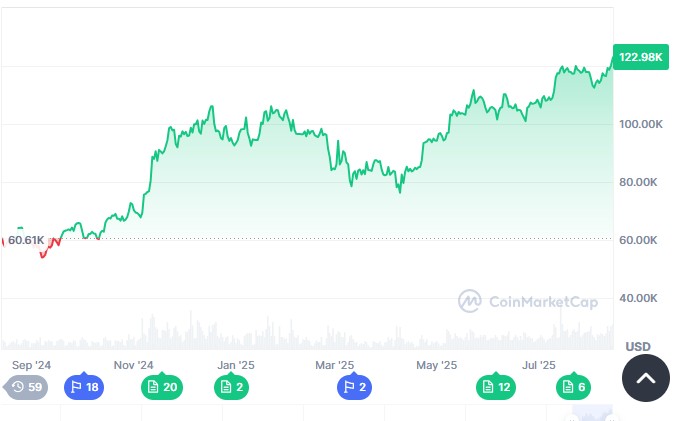
Unlike USD or EUR, whose exchange rates typically move within narrow daily ranges, Bitcoin can experience double-digit percentage changes in a matter of hours. While this attracts short-term traders, it challenges its role as a store of value. Traders should assess historical volatility indices to set realistic stop-loss and take-profit levels, ensuring they don’t overexpose capital in highly reactive markets.
Impact on currency-like use
Extreme price movement makes Bitcoin less practical for everyday payments. A coffee purchased in BTC today could effectively cost more, or less, by the next morning. This unpredictability limits mainstream adoption but can be managed in trading through partial hedges, stablecoin pairs, or short exposure to offset sudden downside moves.
Regulatory clarity and trading implications
The SEC’s crypto classification plays a direct role in volatility. Assets flagged as securities may face restricted exchange listings, lower liquidity, and sharper price reactions to legal developments. Traders who monitor regulatory news alongside market data can anticipate liquidity crunches or speculative rallies tied to policy changes.
Digital gold or future money? Diverging opinions
There’s no consensus even among experts: is Bitcoin the new gold, or a future global currency?
Some, like Fidelity Digital Assets, promote the “store of value” thesis, arguing that Bitcoin functions like digital gold. Others, including Lightning Network advocates, aim to realize Bitcoin’s peer-to-peer cash vision.
Still, many economists warn against over-optimism. Critics point to Bitcoin’s volatility and lack of regulatory clarity as fundamental weaknesses in calling it “money.”
Practical implications for U.S.-based traders
Trading in the U.S. isn’t just about market timing, it’s about understanding the rulebook and using it to your advantage. Whether you’re using BTC for margin trades, hedging, or quick speculative plays, knowing the tax and regulatory angles can save you money and protect your profits.

Know how the IRS sees your trades
The IRS treats cryptocurrency as property, which means every trade, whether it’s BTC to USD or BTC to ETH, is a taxable event. Short-term capital gains (assets held under a year) are taxed at your regular income rate, while long-term gains get a lower rate. Keeping clear records of cost basis, holding periods, and transaction details is critical for accurate filings.
Factor in SEC oversight
The SEC is increasingly active in defining how certain tokens are classified. If an asset is deemed a security, trading it could fall under stricter compliance requirements. Stay informed through official updates to avoid trading in assets that could trigger unexpected legal or reporting obligations.
Plan trades with tax efficiency in mind
Offset gains with losses using tax-loss harvesting.
Time trades to benefit from lower long-term capital gains rates.
Consider how frequent trading increases short-term taxable events.
Use BTC strategically in different market conditions
For margin. Monitor liquidation risks and ensure collateral is sufficient even during high volatility.
For hedging. Pair BTC with assets that historically move in opposite directions during market swings.
For speculation. Limit position sizes to protect capital, especially when chasing high-reward setups.
| BTC | Foundation year | Min. Deposit, $ | Coins Supported | Spot Taker fee, % | Spot Maker Fee, % | Alerts | Copy trading | Tier-1 regulation | TU overall score | Open an account | |
|---|---|---|---|---|---|---|---|---|---|---|---|
| Yes | 2011 | 10 | 278 | 0.4 | 0.25 | Yes | Yes | Yes | 9.2 | Go to broker Your capital is at risk. |
|
| Yes | 2017 | 10 | 329 | 0.1 | 0.08 | Yes | Yes | No | 8.9 | Go to broker Your capital is at risk. |
|
| Yes | 2011 | 10 | 399 | 0.3 | 0.2 | No | Yes | Yes | 7.84 | Go to broker Your capital is at risk.
|
|
| Yes | 2012 | 10 | 249 | 0.5 | 0.5 | Yes | No | Yes | 7.68 | Go to broker Your capital is at risk. |
|
| Yes | 2014 | 5 | 30 | Not available | Not available | No | No | Yes | 7.6 | Go to broker Your capital is at risk.
|
Original reports & fresh research: 2026 market realities
Strategic Bitcoin reserve initiatives. The Bitcoin Act of 2024 (FIT21) proposes the U.S. Treasury purchase 1 million BTC over five years to serve as a long-term strategic reserve, intended to hedge against inflation and economic uncertainty. Similarly, the March 2025 Executive Order established a Strategic Bitcoin Reserve and Digital Asset Stockpile, backed by forfeited digital assets and managed by the Treasury in coordination with a working group.
Institutional integration and market impact. The Q1 2025 Signals Report from Fidelity Digital Assets shows that on-chain fundamentals remain resilient despite volatility, with strategic tailwinds including the U.S. reserve push and growing institutional Bitcoin accumulation. An academic study, Institutional Adoption and Correlation Dynamics, tracks Bitcoin’s shifting correlation with U.S. equities, peaking at 0.87 in 2024, indicating its evolution into a more integrated asset for diversification and risk modeling.
Governance clarity and regulatory frameworks. A forward-looking outlook by Sygnum outlines how U.S. regulatory clarity emerging in 2026 could enable crypto to become a recognized asset class. This includes streamlined statutory treatment for tokens, broader banking access, and licensing, paving the way for institutional adoption.
Geo-financial signals: reserves and real-world trends. Researchers at Chainalysis report that several U.S. states, such as New Hampshire and Arizona, and even cities are exploring strategic Bitcoin reserves, signaling grassroots shifts in how public entities perceive digital assets as hedges. Market analysis in 2026 shows gold still outperforming Bitcoin as a safe-haven asset, though Bitcoin’s institutional integration, including ETF inflows and price recovery, continues to strengthen.
Bitcoin behaves like fiat in disguise: how sentiment and central banks shape BTC value

Most people think Bitcoin isn’t fiat just because no government backs it. But its value still comes from belief, the difference is, that belief is enforced by code, not law. It’s not anti-fiat, it’s just peer-to-peer fiat. The trick? Track how people’s trust shifts. When the mood changes, Bitcoin moves. Learn to spot that shift, and you’ll stop trading BTC like a stock and start trading it like a belief system.
Many new traders think Bitcoin floats on its own. But its biggest moves often come after central banks talk about inflation or rate hikes. Watch how BTC jumps right after Fed meetings or CPI data. It may not be printed by a central bank, but it sure reacts like it is. If you learn to read policy signs early, you’ll stay ahead of the herd chasing candles after the news breaks.
Conclusion
So, does Bitcoin qualify as fiat? The answer depends on your definition, but most signs point to divergence.
Bitcoin doesn’t meet the core criteria of fiat currency: it’s not issued by a government, lacks legal tender status (in most countries), and isn’t governed by traditional monetary policy.
Yet, it functions as an alternative asset class, fulfilling some monetary roles and offering something fiat cannot: decentralized financial sovereignty.
FAQs
Is Bitcoin a fiat currency?
No. Bitcoin is not issued or backed by any government and lacks legal tender status in most countries. It is a decentralized digital asset with a fixed supply.
Can Bitcoin replace fiat money in the future?
While Bitcoin may complement fiat systems as a store of value or hedge, full replacement is unlikely without broad regulatory, technological, and adoption changes.
Why is Bitcoin often compared to gold rather than fiat?
Because Bitcoin has a limited supply, cannot be printed at will, and is often used as a long-term store of value, much like gold. Fiat currencies are inflationary and government-controlled.
How is Bitcoin taxed in the U.S.?
The IRS treats Bitcoin as property. This means that selling or trading Bitcoin can trigger capital gains taxes. Always track your transactions and consult a tax advisor.
Editors' Top Picks and Insights

Crypto test drive: How automakers are exploring digital assets

Lindsey Graham death: U.S. senator’s crypto legacy

Tether under pressure: USDT in Europe, audit questions, and the fight for trust

Lean Ethereum: Why Buterin wants to rebuild the network

SK Hynix debuts on Nasdaq: Largest U.S. offering by foreign company

SpaceX falls out of orbit: Does anyone still want Musk’s stock?
Related Articles
Team that worked on the article
Oleg Tkachenko is an economic analyst and risk manager having more than 14 years of experience in working with systemically important banks, investment companies, and analytical platforms. He has been a Traders Union analyst since 2018.
Dan Blystone began his trading career in 1998 as an arbitrage clerk on the floor of the Chicago Mercantile Exchange (CME). He later traded bond and Eurex futures at proprietary firms such as Altea Trading, gaining valuable experience in high-frequency trading and risk management.
Chinmay Soni is a financial analyst with more than 5 years of experience in working with stocks, Forex, derivatives, and other assets. As a founder of a boutique research firm and an active researcher, he covers various industries and fields, providing insights backed by statistical data.
Cryptocurrency is a type of digital or virtual currency that relies on cryptography for security. Unlike traditional currencies issued by governments (fiat currencies), cryptocurrencies operate on decentralized networks, typically based on blockchain technology.
Bitcoin is a decentralized digital cryptocurrency that was created in 2009 by an anonymous individual or group using the pseudonym Satoshi Nakamoto. It operates on a technology called blockchain, which is a distributed ledger that records all transactions across a network of computers.
Diversification is an investment strategy that involves spreading investments across different asset classes, industries, and geographic regions to reduce overall risk.
Ethereum is a decentralized blockchain platform and cryptocurrency that was proposed by Vitalik Buterin in late 2013 and development began in early 2014. It was designed as a versatile platform for creating decentralized applications (DApps) and smart contracts.
Take-Profit order is a type of trading order that instructs a broker to close a position once the market reaches a specified profit level.

-
 Afghanistan
-
 Albania
-
 Algeria
-
 Angola
-
 Argentina
-
 Armenia
-
 Australia
-
 Austria
-
 Azerbaijan
-
 Bahamas
-
 Bahrain
-
 Bangladesh
-
 Belarus
-
 Belgium
-
 Bolivia
-
 Botswana
-
 Brazil
-
 Brunei
-
 Bulgaria
-
 Cambodia
-
 Cameroon
-
 Canada
-
 Chile
Chile
-
 China
China
-
 Colombia
-
 Congo
Congo
-
 Costa Rica
-
 Cote d'Ivoire
-
 Croatia
-
 Cuba
Cuba
-
 Cyprus
-
 Czechia
-
 DR Congo
-
 Denmark
-
 Dominican Republic
-
 Ecuador
-
 Egypt
Egypt
-
 El Salvador
-
 Estonia
-
 Eswatini
-
 Ethiopia
-
 Finland
-
 France
-
 Georgia
-
 Germany
-
 Ghana
Ghana
-
 Greece
-
 Haiti
Haiti
-
 Hong Kong
-
 Hungary
-
 India
India
-
 Indonesia
-
 Iran, Islamic republic
-
 Iraq
Iraq
-
 Ireland
-
 Israel
-
 Italy
Italy
-
 Jamaica
-
 Japan
Japan
-
 Jordan
-
 Kazakhstan
-
 Kenya
Kenya
-
 Korea
Korea
-
 Kuwait
-
 Kyrgyzstan
-
 Laos
Laos
-
 Latvia
-
 Lebanon
-
 Lesotho
-
 Libya
Libya
-
 Lithuania
-
 Luxembourg
-
 Madagascar
-
 Malaysia
-
 Malta
Malta
-
 Mauritius
-
 Mexico
-
 Moldova
-
 Mongolia
-
 Montenegro
-
 Morocco
-
 Mozambique
-
 Myanmar
-
 Namibia
-
 Nepal
Nepal
-
 Netherlands
-
 New Zealand
-
 Nigeria
-
 North Macedonia
-
 Norway
-
 Oman
Oman
-
 Pakistan
-
 Palestine
-
 Panama
-
 Papua New Guinea
-
 Paraguay
-
 Peru
Peru
-
 Philippines
-
 Poland
-
 Portugal
-
 Puerto Rico
-
 Qatar
Qatar
-
 Reunion
-
 Romania
-
 Rwanda
-
 Saudi Arabia
-
 Serbia
-
 Singapore
-
 Slovakia
-
 Slovenia
-
 Somalia
-
 South Africa
-
 Spain
Spain
-
 Sri Lanka
-
 Sweden
-
 Switzerland
-
 Syria
Syria
-
 Taiwan
-
 Tajikistan
-
 Tanzania
-
 Thailand
-
 Trinidad and Tobago
-
 Tunisia
-
 Turkey
-
 UAE
UAE
-
 Uganda
-
 Ukraine
-
 United Kingdom
-
United States
-
 Uruguay
-
 Uzbekistan
-
 Venezuela
-
 Vietnam
-
 Yemen
Yemen
-
 Zambia
-
 Zimbabwe
- Forex
- Crypto










- Understanding the foundations of money
- The evolution of government-backed currencies
- Bitcoin’s economic role
- Bitcoin vs. traditional currencies
- Legal status and global regulatory views
- Volatility and stability: A trader’s perspective
- Digital gold or future money?
- Practical implications for U.S.-based traders
- Original reports & fresh research
- Expert opinion
- Conclusion
- FAQs


