
Decoding The Cryptocurrency Correlation With Stocks


Editorial Note: While we adhere to strict Editorial Integrity, this post may contain references to products from our partners. Here's an explanation for How We Make Money. None of the data and information on this webpage constitutes investment advice according to our Disclaimer.
The correlation between cryptocurrency and stocks changes based on investor sentiment, not just market trends. During times of global uncertainty or high-impact news, assets like Bitcoin often move in the same direction as major stock indices. However, in stable conditions, crypto tends to behave independently. To truly decode the crypto-stock relationship, focus on market psychology and risk appetite – not just price movements.
How crypto and stocks really move together is not as straightforward as it seems. It is not just about whether prices rise or fall at the same time. It is about what causes those patterns to show up or disappear. Some days Bitcoin trades like a risky tech stock. Other days it acts more like gold. When big global news shakes markets both crypto and stocks often react the same way. But when things are calm crypto can do its own thing. If you want to understand the link you need to look at how people react, not just at price charts.
Risk warning: Cryptocurrency markets are highly volatile, with sharp price swings and regulatory uncertainties. Research indicates that 75-90% of traders face losses. Only invest discretionary funds and consult an experienced financial advisor.
Understanding the basics
To grasp how cryptocurrencies behave in financial markets, it is helpful to begin with the concept of correlation. This becomes particularly important when comparing digital assets like Bitcoin or Ethereum to traditional investments such as stocks. Understanding how these assets move in relation to each other can lead to more informed financial decisions. Whether you are an active trader or a long-term investor, this relationship influences risk, potential returns, and the way you construct a well-balanced portfolio.
What is asset correlation
Asset correlation is a way to measure how closely two investments move in the same direction. It is usually shown as a number between minus one and one.
How it works
A correlation of one means the two assets move exactly together. When one goes up, the other does too.
A correlation of zero means there is no link in their movements.
A correlation of minus one means they move in opposite directions.
Stocks within the same industry usually move with high correlation, while crypto can behave differently during certain events, giving investors additional ways to manage risk. In its early years, Bitcoin often moved independently, showing little connection to the stock market. More recently, especially since 2020, cryptocurrencies have shown stronger correlation with tech stocks and overall market sentiment.
Why correlation matters for investors
Correlation helps you understand whether adding crypto to your portfolio makes it safer, more volatile, or simply riskier. It answers an essential question: does crypto help diversify your investments, or does it increase overall exposure?
When crypto and stocks move in the same direction, the benefit of diversification in a portfolio becomes limited. However, when they move independently, crypto can actually play a role in reducing overall risk within a well-balanced investment strategy. It is important to remember that correlation is not fixed; it can shift quickly in response to market news, inflation data, interest rate changes, or new regulations.
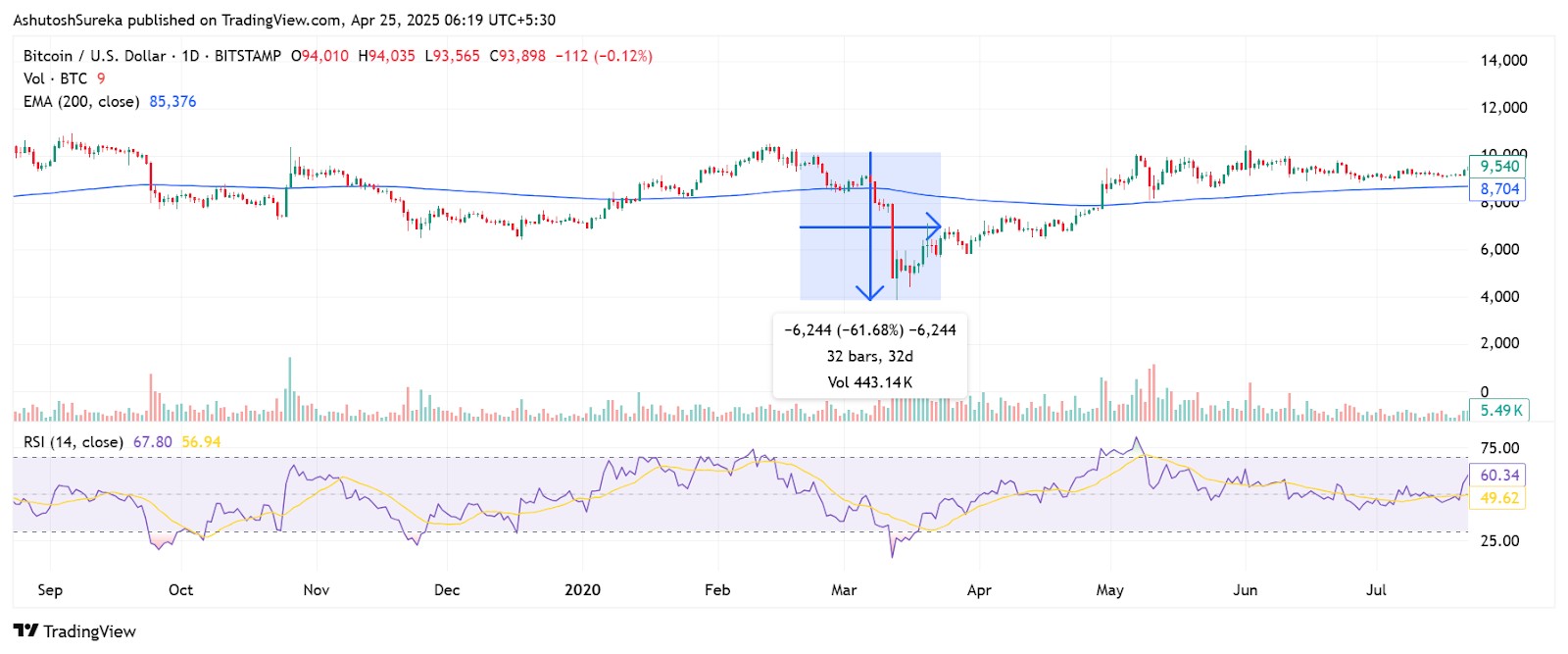
For example, during the 2020 market crash, Bitcoin fell alongside stocks, showing a period of strong correlation. By late 2022 and into early 2023, however, crypto began to move differently from traditional assets, acting more like an independent class.
For investors, the key takeaway is that paying attention to correlation trends helps align portfolios with individual risk tolerance. This discussion is not about labeling crypto as good or bad, but rather about understanding how it fits into broader financial goals. Staying aware of these patterns makes it easier to adapt as markets continue to evolve.
Bitcoin's evolving relationship with the stock market
Bitcoin has gone from being a financial outsider to a key asset that sometimes moves in sync with global markets. This evolving relationship with stocks has become especially noticeable in recent years, changing how investors view Bitcoin in their portfolios. For anyone watching crypto trends or managing investment risk, tracking this shift is essential to understanding where Bitcoin fits in the larger financial world.
From independence to interdependence
In its early years, Bitcoin moved on its own terms. It reacted more to internal events, developer news, or crypto-specific adoption than global markets. But that has changed as more institutions and retail investors entered the space.
Before 2017, Bitcoin had low correlation with stocks. Its price often moved for reasons that had nothing to do with the S&P 500 or Nasdaq. From 2020 onward, Bitcoin began behaving more like a tech stock, responding to interest rate news, inflation reports, and central bank decisions. Increased exposure through ETFs, trading platforms, and institutional buying has linked Bitcoin more closely to traditional markets.
What this means
Bitcoin now often reacts to the same events that move stocks;
it may no longer offer the same diversification benefits during market stress;
for some investors, this makes Bitcoin more predictable – others see it as less unique.
Key events influencing correlation shifts
Bitcoin's connection to stocks has not stayed the same. Specific moments and broader market trends have pulled it closer or pushed it away from equities.
Major events to watch
COVID-19 crash (March 2020). Bitcoin fell sharply along with the stock market, showing high short-term correlation.

Federal Reserve policy tightening (2022). As interest rates rose, investors moved away from risk assets. Both crypto and tech stocks experienced significant losses.
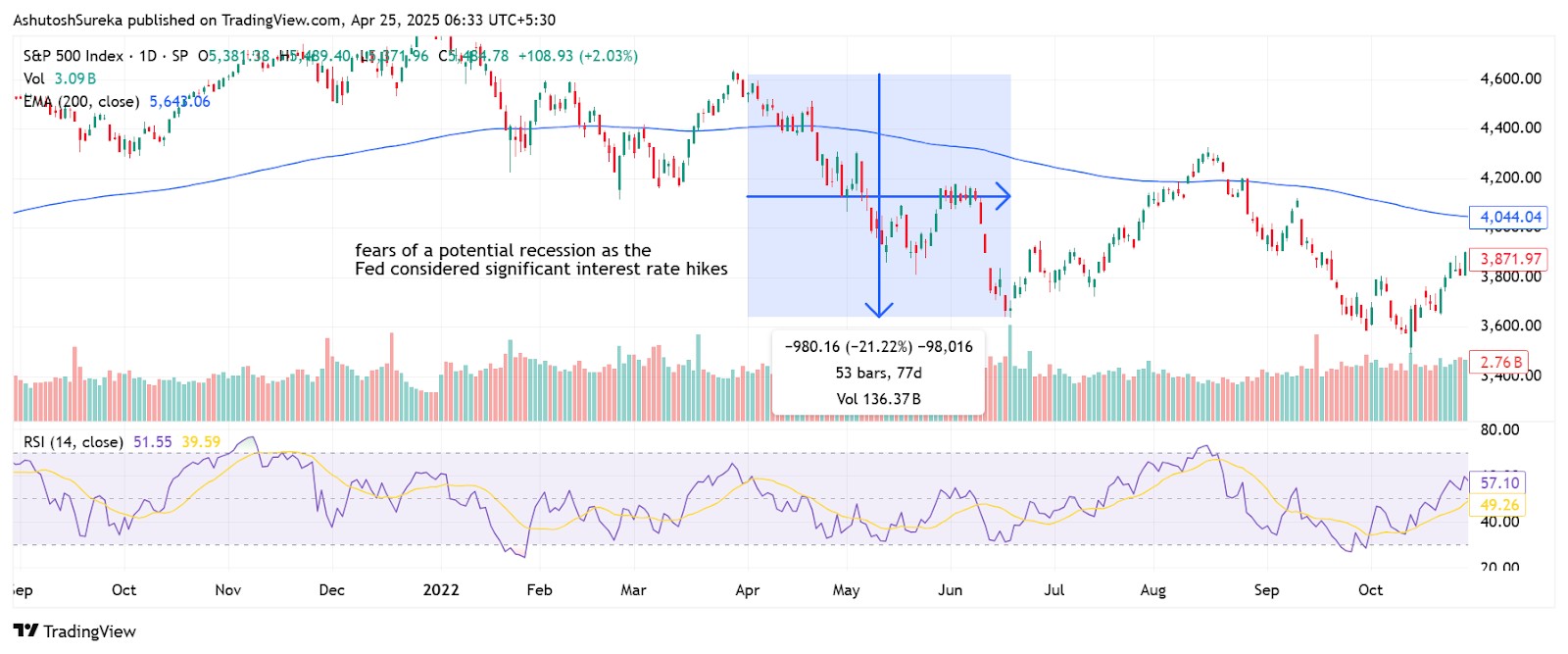
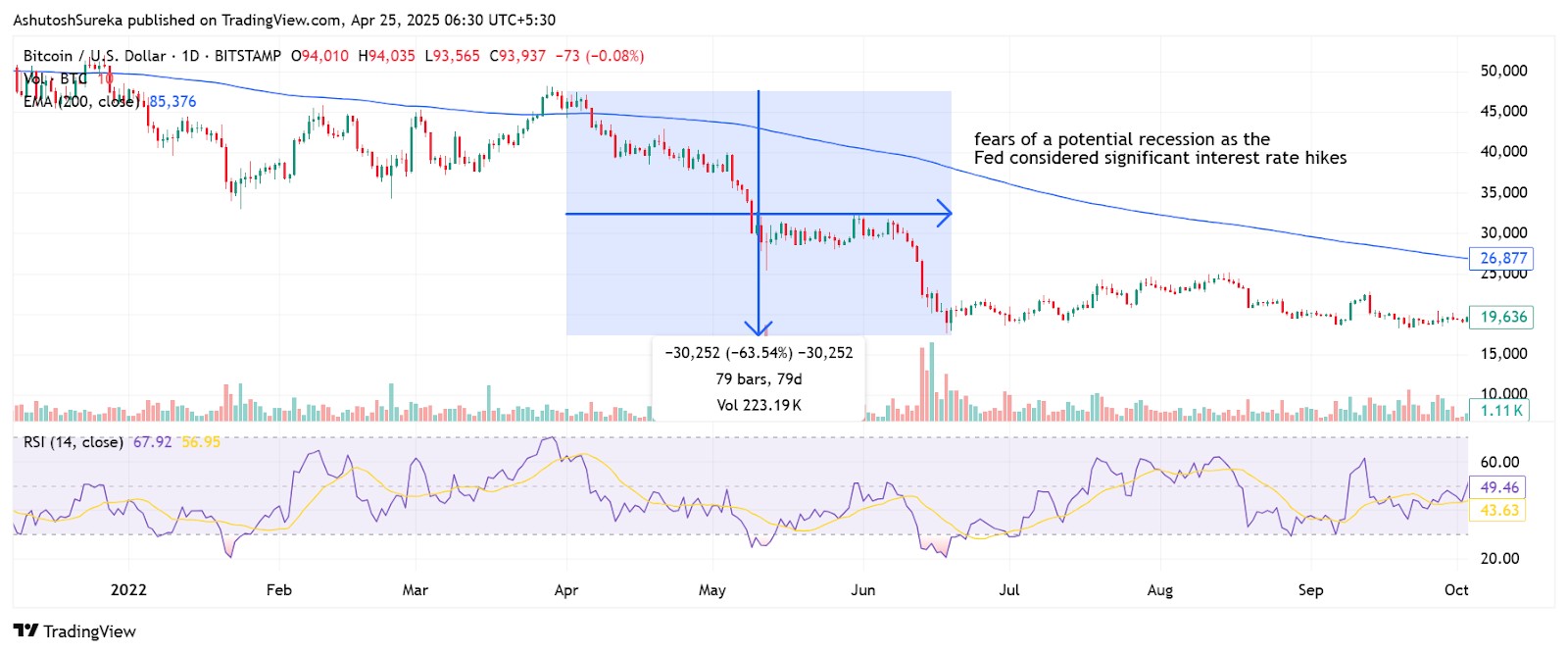
Major market events often challenge Bitcoin’s identity. Is it a hedge, a tech asset, or something entirely different? As crypto becomes more integrated into the global financial system, it may continue reacting to the same headlines that move traditional markets. Understanding correlation patterns helps investors shape strategies that account for both opportunities and risks across asset classes.
Current correlation trends
Bitcoin's relationship with traditional stock markets has evolved significantly. While it was once considered an independent asset, recent data indicates that Bitcoin often moves in tandem with major equity indices. Understanding these correlations is crucial for investors aiming to diversify their portfolios effectively.
Bitcoin and the S&P 500
In late 2024, Bitcoin's correlation with the S&P 500 reached a high of 0.88, indicating a strong alignment between the two assets. However, by early 2025, this correlation decreased to 0.77, suggesting a slight decoupling.
Key observations
Bitcoin's performance often amplifies the movements of the S&P 500, acting as a high-beta asset.
During market upswings, Bitcoin tends to outperform the S&P 500, while in downturns, it may experience more significant losses.
High correlation suggests that Bitcoin may not always serve as a hedge against stock market volatility. Investors should monitor macroeconomic indicators that influence both Bitcoin and traditional equities.
Bitcoin and Nasdaq 100
Bitcoin's correlation with the Nasdaq 100 has also been notable. As of January 2025, the 30-day correlation coefficient between Bitcoin and the Nasdaq 100 stood at approximately 0.70, reflecting a strong relationship.
Key observations
Bitcoin's price movements are increasingly influenced by factors affecting tech stocks, such as interest rate changes and earnings reports.
Institutional adoption of Bitcoin has contributed to its alignment with technology-focused indices.
Investors should consider the tech sector's performance when evaluating Bitcoin's potential movements. Diversification strategies may need to account for the overlapping risks between Bitcoin and tech stocks.
Bitcoin and small-cap tech stocks
Recent analyses indicate that Bitcoin exhibits a strong correlation with small-cap tech stocks, particularly those in the Russell 2000 index.
Key observations
Both Bitcoin and small-cap tech stocks are influenced by venture capital funding and innovation cycles.
Market sentiment and technological advancements play significant roles in driving the prices of these assets.
Monitoring trends in the small-cap tech sector can provide insights into Bitcoin's potential price movements. Investors should be aware of the shared volatility between these asset classes when constructing their portfolios.
Factors driving correlation
Bitcoin and stocks did not always move in tandem, but today they often do. Understanding the reasons behind this connection can help you better navigate the market and make more informed investment decisions.
Institutional adoption and market maturity
As big players like investment firms and companies start buying Bitcoin, it begins to act more like a regular part of the financial system.
What’s changed
hedge funds, public companies, and large investors are now holding Bitcoin;
new tools like ETFs and crypto custody make it easier for them to join in;
when these investors react to market trends, Bitcoin moves with the rest of their portfolio.
Bitcoin now gets bought and sold for the same reasons as stocks. This means when markets go up or down, Bitcoin often follows.
Macroeconomic indicators and monetary policy
Bitcoin is no longer in its own bubble. It reacts to the same news that moves stocks – things like inflation, interest rates, and central bank decisions.
What connects them
when interest rates go up, risky assets like Bitcoin often drop;
if inflation spikes, Bitcoin might rise as a hedge – or fall if panic hits;
money flowing in or out of the system affects both stocks and crypto at the same time.
Bitcoin is now part of the bigger economic picture. Watching economic reports gives you insight into how Bitcoin might move.
Regulatory developments and investor sentiment
Crypto rules – or even talk of new rules – can change how people feel about Bitcoin and markets overall.
What drives reactions
news about bans, approvals, or taxes can shake up both crypto and stocks;
when governments show support or clarity, confidence goes up;
if there’s talk of crackdowns, fear takes over and prices fall across the board.
What lawmakers say can push Bitcoin to move in sync with stocks. Keeping an eye on regulation helps you prepare for sudden shifts in both markets.
Implications for portfolio management
Bitcoin is no longer just a wild card in your portfolio. As it moves more like the stock market, especially tech stocks, you need to rethink how it fits into your plan. Whether you are investing for yourself or managing money for others, it is important to look at how crypto changes your risk and return balance.
Diversification benefits and limitations
Bitcoin used to stand out because it moved differently from other assets. That has changed:
Bitcoin now often moves with stocks, so it might not protect your portfolio during a crash.
It still has the potential to deliver big gains in bull markets.
Its value in a portfolio depends more on when you hold it than just what it is.
Keep Bitcoin in the mix, but think of it more like a high-growth stock. Review its role in your portfolio regularly, especially if markets shift.
Risk assessment in correlated markets
When crypto and stocks fall together, the ride can get rough. If both drop at once, your portfolio takes a bigger hit. Bitcoin's price swings can add stress during already tough market moments. News and events can shake both crypto and stock markets at the same time.
How to handle it
don’t put too much into assets that move together;
set limits, use stop losses, and rebalance often;
stay alert to headlines that could affect more than one type of investment.
Strategic asset allocation considerations
Now that crypto is acting more like a mainstream investment, you need to treat it like one:
limit your exposure to 1 to 5 percent is enough for most balanced portfolios;
change your mix over time, especially if Bitcoin becomes more or less tied to stocks;
pair it with things that do not move the same way, like bonds or gold.
A small crypto position can still make a big impact. Treating it as part of a thoughtful plan, not just a high-stakes bet, leads to better results over time. If you’re interested in trading crypto based on fundamentals and want to get into the market as a beginner, you may open an account with any of the crypto exchanges listed below. All of them are known for being a decent launchpad for beginners.
| Crypto | Foundation year | Min. Deposit, $ | Coins Supported | Spot Taker fee, % | Spot Maker Fee, % | Alerts | Copy trading | Tier-1 regulation | TU overall score | Open an account | |
|---|---|---|---|---|---|---|---|---|---|---|---|
| Yes | 2017 | 10 | 600+ | 0.1 | 0.08 | Yes | Yes | No | 8.48 | Go to broker Your capital is at risk. |
|
| Yes | 2012 | 10 | 400+ | 0.5 | 0.5 | Yes | No | Yes | 7.84 | Go to broker Your capital is at risk. |
|
| Yes | 2016 | 1 | 400+ | 0.5 | 0.25 | Yes | No | Yes | 7.8 | Go to broker Your capital is at risk. |
|
| Yes | 2018 | No | 1000 | 0 | 0 | Yes | Yes | No | 7.76 | Go to broker Your capital is at risk. |
|
| Yes | 2011 | 10 | 399 | 0.3 | 0.2 | No | Yes | Yes | 7.6 | Go to broker Your capital is at risk.
|
What volatility teaches us about crypto and stock market rhythm

If you are new to the space and looking at crypto and stocks side by side pay close attention to what happens when fear hits. During crashes or wild selloffs both markets often drop at the same time. But that is not a real connection. That is just people in both markets pulling back all at once. The mistake beginners make is thinking these moves mean crypto and stocks are tied together. A true link shows up when they move together during calm periods too, not just in panic.
Here is something most people miss. Sometimes crypto picks up on news or mood shifts before the stock market does. Bitcoin might fall before tech stocks react or shoot up before anything else moves. That does not mean crypto can predict the future. It just means crypto runs nonstop and often catches news faster. If you are watching closely these early moves can give you a heads up. But to spot them you have to look beyond daily price snapshots and watch how things move hour by hour. In a world that reacts instantly, crypto often gives clues before Wall Street wakes up.
Conclusion
How crypto and stocks link up is not constant. It changes with the mood. When fear hits they might fall at the same time. When things are stable they often drift apart. If you really want to understand the connection, stop relying on charts to explain it. Watch how people react. That is where the real hint is. Some are looking for comfort. Others are chasing gains. The truth hides in how money moves from one space to another. That is where the real pattern lives.
FAQs
Can Bitcoin still be considered a hedge against traditional markets?
Bitcoin's role as a hedge is debated – while it was once seen as digital gold, its recent correlation with tech stocks suggests it behaves more like a risk asset during market stress.
How should investors adjust their strategies in light of these correlations?
Investors should diversify across asset classes and treat crypto as part of a broader portfolio, adjusting exposure based on macro trends, liquidity conditions, and market sentiment.
Will crypto fall if the stock market crashes?
Yes, crypto often falls alongside stocks during sharp market downturns, as investors move out of risk assets to preserve capital and increase liquidity.
Does crypto winter align with major cyclical stocks?
Crypto winters often align with broader risk-off cycles, where high-growth or speculative assets, including cyclical tech stocks, also see steep corrections due to tightening financial conditions.
Editors' Top Picks and Insights






Related Articles
Team that worked on the article
Viktoras Karapetjanc is a seasoned financial trader, market analyst, and content creator with over 20 years of expertise in Forex, cryptocurrency, and stock markets. As a contributor to the Traders Union website, he provides in-depth analysis, data-driven strategies, and educational content to empower traders of all levels.
Dan Blystone began his trading career in 1998 as an arbitrage clerk on the floor of the Chicago Mercantile Exchange (CME). He later traded bond and Eurex futures at proprietary firms such as Altea Trading, gaining valuable experience in high-frequency trading and risk management.
Chinmay Soni is a financial analyst with more than 5 years of experience in working with stocks, Forex, derivatives, and other assets. As a founder of a boutique research firm and an active researcher, he covers various industries and fields, providing insights backed by statistical data.
Economic indicators — a tool of fundamental analysis that allows to assess the state of an economic entity or the economy as a whole, as well as to make a forecast. These include: GDP, discount rates, inflation data, unemployment statistics, industrial production data, consumer price indices, etc.
An investor is an individual, who invests money in an asset with the expectation that its value would appreciate in the future. The asset can be anything, including a bond, debenture, mutual fund, equity, gold, silver, exchange-traded funds (ETFs), and real-estate property.
Bitcoin is a decentralized digital cryptocurrency that was created in 2009 by an anonymous individual or group using the pseudonym Satoshi Nakamoto. It operates on a technology called blockchain, which is a distributed ledger that records all transactions across a network of computers.
Volatility refers to the degree of variation or fluctuation in the price or value of a financial asset, such as stocks, bonds, or cryptocurrencies, over a period of time. Higher volatility indicates that an asset's price is experiencing more significant and rapid price swings, while lower volatility suggests relatively stable and gradual price movements.
Copy trading is an investing tactic where traders replicate the trading strategies of more experienced traders, automatically mirroring their trades in their own accounts to potentially achieve similar results.

-
 Afghanistan
-
 Albania
-
 Algeria
-
 Angola
-
 Argentina
-
 Armenia
-
 Australia
-
 Austria
-
 Azerbaijan
-
 Bahamas
-
 Bahrain
-
 Bangladesh
-
 Belarus
-
 Belgium
-
 Bolivia
-
 Botswana
-
 Brazil
-
 Brunei
-
 Bulgaria
-
 Cambodia
-
 Cameroon
-
 Canada
-
 Chile
Chile
-
 China
China
-
 Colombia
-
 Congo
Congo
-
 Costa Rica
-
 Cote d'Ivoire
-
 Croatia
-
 Cuba
Cuba
-
 Cyprus
-
 Czechia
-
 DR Congo
-
 Denmark
-
 Dominican Republic
-
 Ecuador
-
 Egypt
Egypt
-
 El Salvador
-
 Estonia
-
 Eswatini
-
 Ethiopia
-
 Finland
-
 France
-
 Georgia
-
 Germany
-
 Ghana
Ghana
-
 Greece
-
 Haiti
Haiti
-
 Hong Kong
-
 Hungary
-
 India
India
-
 Indonesia
-
 Iran, Islamic republic
-
 Iraq
Iraq
-
 Ireland
-
 Israel
-
 Italy
Italy
-
 Jamaica
-
 Japan
Japan
-
 Jordan
-
 Kazakhstan
-
 Kenya
Kenya
-
 Korea
Korea
-
 Kuwait
-
 Kyrgyzstan
-
 Laos
Laos
-
 Latvia
-
 Lebanon
-
 Lesotho
-
 Libya
Libya
-
 Lithuania
-
 Luxembourg
-
 Madagascar
-
 Malaysia
-
 Malta
Malta
-
 Mauritius
-
 Mexico
-
 Moldova
-
 Mongolia
-
 Montenegro
-
 Morocco
-
 Mozambique
-
 Myanmar
-
 Namibia
-
 Nepal
Nepal
-
 Netherlands
-
 New Zealand
-
 Nigeria
-
 North Macedonia
-
 Norway
-
 Oman
Oman
-
 Pakistan
-
 Palestine
-
 Panama
-
 Papua New Guinea
-
 Paraguay
-
 Peru
Peru
-
 Philippines
-
 Poland
-
 Portugal
-
 Puerto Rico
-
 Qatar
Qatar
-
 Reunion
-
 Romania
-
 Rwanda
-
 Saudi Arabia
-
 Serbia
-
 Singapore
-
 Slovakia
-
 Slovenia
-
 Somalia
-
 South Africa
-
 Spain
Spain
-
 Sri Lanka
-
 Sweden
-
 Switzerland
-
 Syria
Syria
-
 Taiwan
-
 Tajikistan
-
 Tanzania
-
 Thailand
-
 Trinidad and Tobago
-
 Tunisia
-
 Turkey
-
 UAE
UAE
-
 Uganda
-
 Ukraine
-
 United Kingdom
-
United States
-
 Uruguay
-
 Uzbekistan
-
 Venezuela
-
 Vietnam
-
 Yemen
Yemen
-
 Zambia
-
 Zimbabwe
- Forex
- Crypto












