How Deglobalization Is Rewiring The Global Economy


Editorial Note: While we adhere to strict Editorial Integrity, this post may contain references to products from our partners. Here's an explanation for How We Make Money. None of the data and information on this webpage constitutes investment advice according to our Disclaimer.
Globalization is evolving into a new phase where resilience and control matter more than low costs and speed. This shift, often called deglobalization, is not about isolation but about rebuilding supply chains, reducing risk, and rebalancing economic power toward more local and regional structures.
The tug-of-war between globalization and deglobalization is not a shift in ideology. It is a hard reset in how economies measure risk value and control. For decades efficiency ruled the game. Cheaper labor and faster supply chains defined progress. But recent shocks have forced countries and companies to rethink everything from sourcing parts to storing grain. Now the question is not whether globalization is good or bad. It is whether the old version can survive a world where resilience matters more than reach. This is not a trend. It is a rewiring of the global system in real time.
Risk warning: All investments carry risk, including potential capital loss. Economic fluctuations and market changes affect returns, and 40-50% of investors underperform benchmarks. Diversification helps but does not eliminate risks. Invest wisely and consult professional financial advisors.
Understanding globalization and deglobalization

Globalization and deglobalization are two powerful forces shaping today's world economy. While one reflects increasing interconnectedness, the other reveals a retreat from that very idea. Understanding both is crucial for grasping how trade, policy, and capital flow evolve over time. These terms often appear in headlines, but they are deeply rooted in complex historical shifts. Let's break them down clearly.
Defining globalization
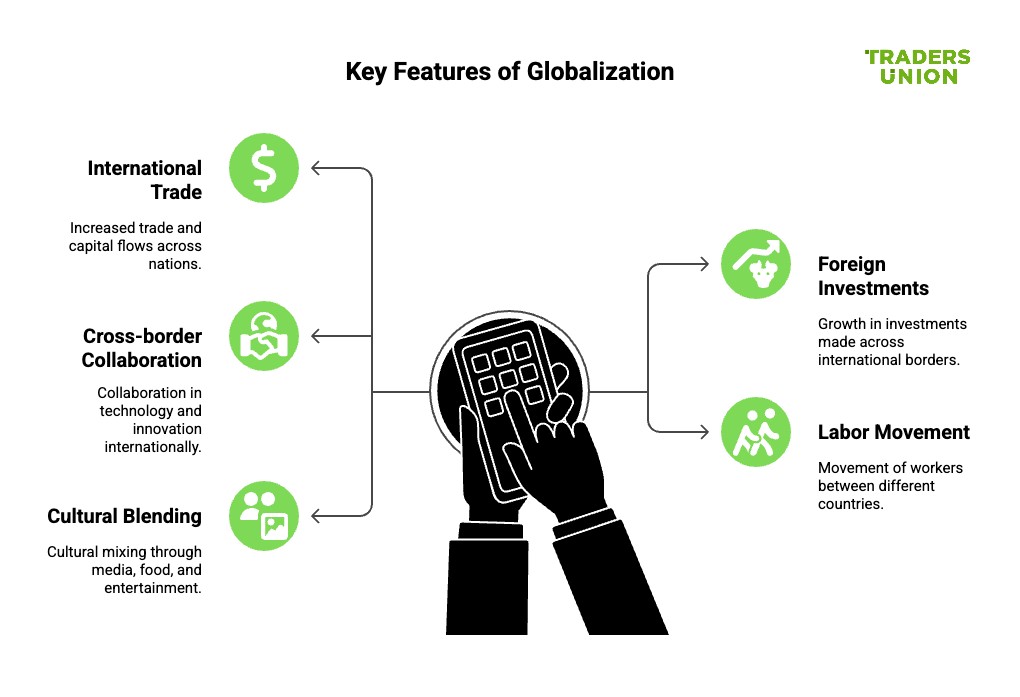
Globalization is the process by which businesses, ideas, and cultures spread across borders and become more integrated.
Key features of globalization
Increased international trade and capital flows.
Growth in foreign direct investments.
Cross-border collaboration in technology and innovation.
Labor movement across countries.
Cultural blending through media, food, and entertainment.
What drives globalization
Improvements in transportation and logistics.
Rise of the internet and digital infrastructure.
Trade agreements like WTO and regional blocs.
Cost optimization by outsourcing and offshoring.
Why it matters today
Consumers get cheaper goods and more choices.
Businesses tap into global markets and scale faster.
Economies become more interdependent, increasing both opportunity and vulnerability.
Defining deglobalization
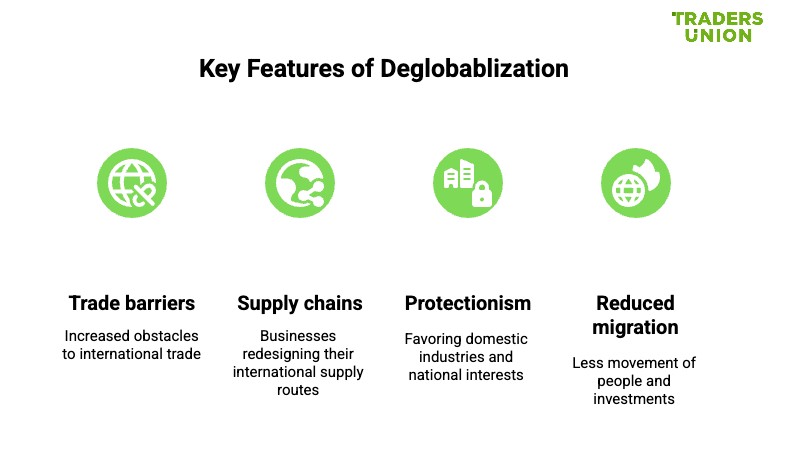
Deglobalization refers to the trend where countries reduce international integration and focus more on domestic or regional priorities.
Key signs of deglobalization
Rising trade barriers and tariffs.
Companies rethinking global supply chains.
More protectionist policies and industrial nationalism.
Reduction in migration and cross-border investments.
Why deglobalization is gaining traction
Supply chain shocks from pandemics or wars.
National security concerns over foreign dependence.
Political pushback against job losses and inequality.
Focus on climate goals and local resilience.
Impacts of deglobalization
Slower trade growth and more regional hubs.
Increased costs for multinational production.
Shifting power dynamics among global economies.
Historical context and evolution
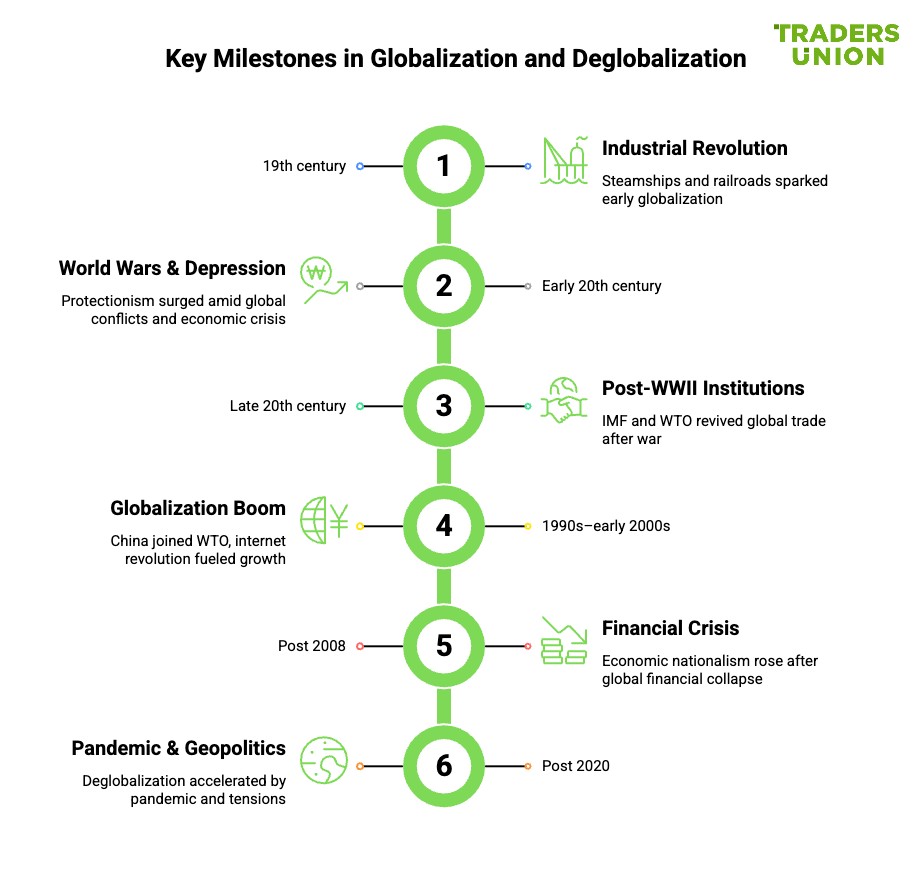
The path between globalization and deglobalization has never been linear. These shifts are tied to major events that redefine global priorities.
Timeline highlights
19th century. Industrial revolution sparked early globalization through steamships and railroads.
Early 20th century. Two world wars and the Great Depression led to protectionism.
Late 20th century. Post-WWII institutions like the IMF and WTO revived global trade.
1990s to early 2000s. Explosive growth of globalization with China joining WTO and the internet revolution.
Post 2008. Financial crisis triggered economic nationalism.
Post 2020. Pandemic and geopolitical tensions accelerated a pivot toward deglobalization.
Drivers of globalization
Globalization took off because of a mix of technology, policy changes, and how companies started working across borders. These forces worked together to shrink the world, making it easier for people and products to move and interact in ways that were once impossible.
Technological advancements
Technology has reshaped how people connect, work, and trade. From smartphones to shipping containers, innovation has allowed businesses and individuals to cross borders without ever leaving home. Whether it's buying something online, sending money abroad, or collaborating with teammates across time zones, tech has made global interaction seamless. Even a solo entrepreneur can now reach customers around the world with just a phone and an internet connection.
Trade liberalization policies
Governments have played a huge role in expanding global trade by loosening restrictions and making it easier to buy and sell across borders. Reducing import taxes, cutting down on paperwork, and joining international trade groups like the WTO have opened doors for small and large businesses alike. These policies have made everyday items more affordable and helped countries focus on what they do best while finding new customers overseas.
Multinational corporations and global supply chains
Big companies have taken globalization even further by building networks that stretch across continents. They source parts where it's cheaper, assemble products where it's most efficient, and sell them anywhere there's demand. A single laptop might include parts from five countries before reaching your doorstep. This interconnected setup has created jobs and opportunities but also comes with risks if any link in the chain breaks.
Emergence of deglobalization trends
The world is shifting away from the open trade system it once pushed so strongly. Instead of expanding global ties, many countries are focusing on protecting their own interests. This new direction is shaped by growing tension among nations and a stronger push for self-sufficiency.
Geopolitical tensions and trade wars
Growing disagreements between powerful countries have made trade more difficult. These rivalries are not just about economics but also about influence, values, and long-term control.
What is driving this change
The US and China are competing over technology, military strength, and global influence.
Trade tools like tariffs and sanctions are being used to send political messages.
Some countries are choosing new partners while distancing from former allies.
How trade is affected
Higher duties on goods make international trade more expensive.
Tech firms are caught in legal battles over which countries they can serve.
Countries are forming exclusive trade groups that serve their own agendas.
Real-world shifts
US actions have limited Chinese companies’ access to American technology.
European countries are checking if foreign deals align with their values.
India blocked many Chinese apps, calling it a matter of digital security.
Why this matters for readers
Prices can rise if importing becomes harder.
Countries that rely heavily on exports may face growth issues.
Investors need to watch political developments as they impact global stocks and funds.
National security and self-reliance initiatives
More governments are starting to believe that relying too much on other nations is risky. They are trying to make sure that essential goods are available without having to depend on foreign suppliers.
What pushed this shift
The COVID-19 pandemic made supply chains collapse overnight.
Countries worry about being cut off from key technologies or resources.
Governments want to control their own future in areas like defense and energy.
What countries are doing
India wants to grow its local industry in defense, mobile phones, and solar panels.
The US is putting billions into building computer chip factories at home.
European nations are developing battery and energy storage technology locally.
Areas where this is happening
Chips used in electronics and cars.
Equipment used in hospitals and pharmacies.
Power systems, solar panels, and electric batteries.
What this leads to
Governments investing in local industries and training.
Companies moving factories closer to home.
Some goods may become more expensive, but countries will be better prepared for future shocks.
Sector-specific impacts
Different industries feel the effects of globalization and deglobalization in different ways. While some sectors grow from international collaboration, others struggle with rising barriers or shifting supply chains. Knowing how key sectors are being reshaped helps readers better understand where future growth or problems may show up.
Manufacturing and industrial sectors
Factories and industrial firms have long used global networks to cut costs and grow faster. But now many of them are rethinking where and how they operate.
How things worked under globalization
Businesses built parts in one country and assembled them in another.
Most factories followed just-in-time models to avoid holding extra stock.
Demand from multiple regions helped factories grow without relying on a single market.
What is changing now
Many companies want to build products closer to where they sell them.
Factories are now keeping more inventory in case of supply issues.
Firms are focusing on regional networks rather than worldwide ones.
What this means for the industry
Higher costs. Making goods locally often costs more upfront.
New investments. Money is going into countries that offer skilled labor and policy support.
More automation. Companies are using smart machines to keep efficiency high while managing higher wages.
How countries are responding
The US is funding new plants for chips and defense tools.
India and Vietnam are becoming strong choices for global companies moving out of China.
Europe is building tighter production links within its own region.
Technology and innovation ecosystems
Tech firms have always relied on a global network of talent, tools, and ideas. But this openness is now facing new limits.
What helped tech grow worldwide
Teams from different countries worked together on AI, apps, and electronics.
Companies hired top engineers and scientists from anywhere.
Products like smartphones were built using parts from many countries.
What is making it harder now
Governments are placing controls on who can share or access certain technologies.
Global tension is forcing tech firms to pick sides when expanding.
Movement of skilled people is becoming more limited.
What is happening in tech today
Split tech systems. Some regions are building their own chips and software to avoid relying on rivals.
Focus on local talent. More countries are training people and building labs at home.
Startups facing funding gaps. Some startups are struggling to raise money from abroad because of political issues.
What this looks like in real life
The US and China are both building their own high-end chip industries.
Europe wants to use its own cloud platforms instead of depending on foreign ones.
Indian tech companies are watching funding rules closely when working with global investors.
Regional responses and strategies
Different regions are responding to the slowdown in globalization in ways that reflect their priorities and strengths. While North America is focusing on bringing key industries back home, Europe wants more control without giving up global ties. Asia is trying to stay open to the world while building stronger links within its own neighborhood.
North America's approach to reshoring
The US and Canada are focused on rebuilding industries that were once moved abroad. This effort is especially strong in sectors that affect national security or where global shortages have been felt.
The US is funding local chip factories through the CHIPS Act to cut reliance on Asia.
New laws like the Inflation Reduction Act are boosting electric vehicle and battery manufacturing.
More government support is going to defense tools and medical supplies made at home.
Canada is increasing investments in clean energy and mining essential materials.
This strategy is about making sure the region can handle future disruptions and create more local jobs.
Europe's focus on strategic autonomy
European countries are working to avoid being too dependent on any single partner. Instead of pulling back from global trade, they are focusing on controlling the most important parts of their supply chains.
Europe is funding projects to make its own chips and support green energy systems.
Governments are encouraging local sourcing of critical raw materials.
Countries like France and Germany are teaming up to build more within the EU.
New programs are helping local tech startups grow in areas like AI and cybersecurity.
Europe wants to stay part of global trade while being better prepared for sudden supply shocks or political changes.
Asia's balancing act between globalization and regionalization
Asian countries are staying connected to the global economy but also building stronger trade and production links within the region.
China is focusing more on nearby trade partners and building its own tech capabilities.
India is pushing for more local manufacturing but still joining global trade pacts.
Southeast Asian countries are gaining from companies moving production out of China.
Japan and South Korea are investing in tech independence while staying strong exporters.
This approach helps Asian economies stay competitive while reducing risks from overdependence on any single country or region.
As an observer, the best way to take part in the constant tug of war between globalization and deglobalization is through currency trading. But for that, you will need an account with a broker that offers a high number of currency pairs to trade. In the table below, we have highlighted the top few of such brokers. You can compare them and choose the best one for yourself:
| Currency pairs | Min. deposit, $ | Max. leverage | Deposit fee, % | Withdrawal fee, $ | Regulation | TU overall score | Open an account | |
|---|---|---|---|---|---|---|---|---|
| 69 | 50 | 1:50 | No | No | CFTC, NFA | 6.88 | Go to broker Your capital is at risk. |
|
| 60 | 100 | 1:300 | No | No | CySEC, FCA, ASIC, FMA, FSCA, FSA Seychelles, EFSA, MAS, DFSA, SCB | 6.67 | Go to broker 81% of retail CFD accounts lose money. |
|
| 68 | No | 1:200 | No | 0-15 | FSC (BVI), ASIC, IIROC, FCA, CFTC, NFA | 6.63 | Go to broker Your capital is at risk. |
|
| 80 | 100 | 1:50 | No | No | CIMA, FCA, FSA (Japan), NFA, IIROC, ASIC, CFTC | 6.47 | Study review | |
| 80 | 1 | 1:200 | No | No | FCA, BaFin, ASIC, MAS, CySec, FINMA, BMA, CFTC, NFA | 6.38 | Study review |
Why global trade is no longer about borders but buffers

A major misconception beginners have is thinking deglobalization means shutting borders or reversing trade entirely. That is not what is really happening. What we are seeing is a shift from just-in-time to just-in-case. Countries and companies are no longer optimizing for the lowest cost. They are building flexibility and fallback options into everything from chip production to food imports.
If you want to understand the direction of trade today do not follow tariffs. Follow where new warehouses are being built and where energy deals are quietly being signed. Trade is still alive. It is just being rewired for a riskier world.
Another mistake is assuming globalization was ever a smooth or equal game. It was always messy and power-driven. The real insight is that deglobalization is exposing just how uneven the old system was. Some countries were overexposed to foreign buyers. Others were too dependent on foreign tech.
What matters now is not how global a country is but how much control it has over critical systems. If you are analyzing this shift do not count the number of trade partners. Count how many of them are optional. That is where economic strength will come from.
Conclusion
Globalization versus deglobalization is not a debate about openness. It is a real-world shift in how countries protect their economies in an age of frequent shocks. What once looked like efficiency now feels like risk. What once felt global now demands local control. The smartest players are not choosing one side. They are blending both. Rethinking how much to share and how much to shield. The future of trade will not be built on ideology. It will be built on adaptability.
FAQs
What are the environmental implications of deglobalization?
Deglobalization can reduce carbon emissions by shortening supply chains and encouraging local production, but it may also slow clean technology transfer and lead to less efficient resource use if countries act in isolation.
How does deglobalization influence labor markets globally?
Deglobalization can shift jobs back to developed markets through reshoring but may also reduce employment in export-driven economies. It often leads to sectoral disruptions as labor demand realigns across regions and industries.
What is the significance of regional trade agreements in a deglobalizing world?
Regional trade agreements help maintain economic cooperation and market access when global trade slows. They foster supply chain resilience and allow countries to align standards and policies more efficiently within smaller blocs.
How do currency fluctuations relate to globalization trends?
Increased globalization tends to stabilize currencies through stronger trade linkages and capital flows. Deglobalization, in contrast, can heighten currency volatility as cross-border flows decline and countries rely more on domestic demand.
Editors' Top Picks and Insights





Related Articles
Team that worked on the article
Anton Kharitonov is an active trader and analyst. He employs both short- and long-term trading strategies, primarily based on fundamental factors, supported by technical indicators and intermarket analysis.
Chinmay Soni is a financial analyst with more than 5 years of experience in working with stocks, Forex, derivatives, and other assets. As a founder of a boutique research firm and an active researcher, he covers various industries and fields, providing insights backed by statistical data.
Mirjan Hipolito is a journalist and news editor at Traders Union. She is an expert crypto writer with five years of experience in the financial markets.
Forex leverage is a tool enabling traders to control larger positions with a relatively small amount of capital, amplifying potential profits and losses based on the chosen leverage ratio.
Bitcoin is a decentralized digital cryptocurrency that was created in 2009 by an anonymous individual or group using the pseudonym Satoshi Nakamoto. It operates on a technology called blockchain, which is a distributed ledger that records all transactions across a network of computers.
CFD is a contract between an investor/trader and seller that demonstrates that the trader will need to pay the price difference between the current value of the asset and its value at the time of contract to the seller.
Index in trading is the measure of the performance of a group of stocks, which can include the assets and securities in it.
Cryptocurrency is a type of digital or virtual currency that relies on cryptography for security. Unlike traditional currencies issued by governments (fiat currencies), cryptocurrencies operate on decentralized networks, typically based on blockchain technology.

-
 Afghanistan
-
 Albania
-
 Algeria
-
 Angola
-
 Argentina
-
 Armenia
-
 Australia
-
 Austria
-
 Azerbaijan
-
 Bahamas
-
 Bahrain
-
 Bangladesh
-
 Belarus
-
 Belgium
-
 Bolivia
-
 Botswana
-
 Brazil
-
 Brunei
-
 Bulgaria
-
 Cambodia
-
 Cameroon
-
 Canada
-
 Chile
Chile
-
 China
China
-
 Colombia
-
 Congo
Congo
-
 Costa Rica
-
 Cote d'Ivoire
-
 Croatia
-
 Cuba
Cuba
-
 Cyprus
-
 Czechia
-
 DR Congo
-
 Denmark
-
 Dominican Republic
-
 Ecuador
-
 Egypt
Egypt
-
 El Salvador
-
 Estonia
-
 Eswatini
-
 Ethiopia
-
 Finland
-
 France
-
 Georgia
-
 Germany
-
 Ghana
Ghana
-
 Greece
-
 Haiti
Haiti
-
 Hong Kong
-
 Hungary
-
 India
India
-
 Indonesia
-
 Iran, Islamic republic
-
 Iraq
Iraq
-
 Ireland
-
 Israel
-
 Italy
Italy
-
 Jamaica
-
 Japan
Japan
-
 Jordan
-
 Kazakhstan
-
 Kenya
Kenya
-
 Korea
Korea
-
 Kuwait
-
 Kyrgyzstan
-
 Laos
Laos
-
 Latvia
-
 Lebanon
-
 Lesotho
-
 Libya
Libya
-
 Lithuania
-
 Luxembourg
-
 Madagascar
-
 Malaysia
-
 Malta
Malta
-
 Mauritius
-
 Mexico
-
 Moldova
-
 Mongolia
-
 Montenegro
-
 Morocco
-
 Mozambique
-
 Myanmar
-
 Namibia
-
 Nepal
Nepal
-
 Netherlands
-
 New Zealand
-
 Nigeria
-
 North Macedonia
-
 Norway
-
 Oman
Oman
-
 Pakistan
-
 Palestine
-
 Panama
-
 Papua New Guinea
-
 Paraguay
-
 Peru
Peru
-
 Philippines
-
 Poland
-
 Portugal
-
 Puerto Rico
-
 Qatar
Qatar
-
 Reunion
-
 Romania
-
 Rwanda
-
 Saudi Arabia
-
 Serbia
-
 Singapore
-
 Slovakia
-
 Slovenia
-
 Somalia
-
 South Africa
-
 Spain
Spain
-
 Sri Lanka
-
 Sweden
-
 Switzerland
-
 Syria
Syria
-
 Taiwan
-
 Tajikistan
-
 Tanzania
-
 Thailand
-
 Trinidad and Tobago
-
 Tunisia
-
 Turkey
-
 UAE
UAE
-
 Uganda
-
 Ukraine
-
 United Kingdom
-
United States
-
 Uruguay
-
 Uzbekistan
-
 Venezuela
-
 Vietnam
-
 Yemen
Yemen
-
 Zambia
-
 Zimbabwe
- Forex
- Crypto