
How To Start A Business With No Money: A Detailed Playbook


Editorial Note: While we adhere to strict Editorial Integrity, this post may contain references to products from our partners. Here's an explanation for How We Make Money. None of the data and information on this webpage constitutes investment advice according to our Disclaimer.
To start a business with no money you need:
Choose a service-based model with a low barrier to entry that relies on expertise rather than capital.
Clarify the result by turning your idea into a specific, measurable outcome clients will pay for.
Secure payment before building by validating the offer through direct outreach and early sales.
Deliver manually and improve to gather feedback and refine the service.
Reinforce after traction by adding tools, structure, and small investments once revenue becomes consistent.
Starting a business with no money requires you to define risk, test small, confirm demand with real payments, and scale only after results. Revenue becomes your working capital. This guide clarifies whether you can truly start a business with no money in 2026 and what conditions must be in place to make it sustainable. It also explains how to start a business with no money using discipline, how to start an online business with no money and without paid ads, and how to start a business from home with no money while continuing to trade.
Risk warning: All investments carry risk, including potential capital loss. Economic fluctuations and market changes affect returns, and 40-50% of investors underperform benchmarks. Diversification helps but does not eliminate risks. Invest wisely and consult professional financial advisors.
How to start a business with zero investment
To start your own business with no money, the process must be practical and controlled. The goal is not to build a brand first. The goal is to generate revenue first.
Step 1: Choose a service-based model
When you start a small business with no money, services offer the lowest barrier. They require expertise, not capital.
For traders, this could include structured trade reviews, risk calibration sessions, or backtesting assistance. These services can be delivered manually, which allows you to operate without software expenses or advertising costs.
Step 2: Clarify the result
If you have a business idea but no money, refine it into a specific outcome. Clients do not pay for general advice. They pay for measurable improvements.
Clear positioning is what makes it possible to start a business with no money or credit. Confidence and clarity replace financial leverage.
Step 3: Secure payment before building
Validation must include payment. A written offer and direct outreach are enough at this stage.
There is no need for a website, branding, or automation. Early simplicity keeps risk low and execution focused.
Step 4: Deliver manually and improve
Anyone learning how to start a business with no money or experience benefits from manual delivery. It exposes weaknesses quickly and generates real feedback.
Each completed engagement increases proof and reduces uncertainty.
Step 5: Reinforce after traction
Only after consistent revenue appears should you think about structure and tools. This is where the transition from zero capital to low investment begins.
That sequence protects time, preserves focus, and keeps downside limited while building predictable cash flow.

Is it possible to start a business with no money in 2026
Many founders still question whether it is possible to start a business with no money in 2026, especially in markets shaped by automation, strong competition, and platform fees.
The short answer is yes. But only under strict conditions.
You can truly start a business with no money when three elements are present:
a skill that already solves a clear problem;
direct access to potential customers;
a model that generates revenue before expenses.
Without these, starting a business with no money becomes theoretical rather than practical.
In earlier years, founders could experiment longer before needing revenue. Today, starting a business from home with no money requires immediate validation. Delayed monetization increases risk and consumes time, which functions as your primary capital.
The key distinction is this:
asset-heavy businesses require funding;
skill-based service businesses can operate with zero upfront investment.
That is why starting a small business with no money often begins with services, not products. Services allow you to deliver manually, collect payment first, and reinvest profit into tools later.
What “no money” really means for traders
For traders, starting a business with no money does not mean operating without cost. It means operating without external funding, debt, or upfront investment.
When you start a business with no money, you are replacing financial capital with three other forms of capital:
skill capital;
time capital;
trust capital.
Skill capital comes from processes you already use in trading. This is critical for anyone exploring how to start a business with no money or experience in entrepreneurship. You may lack business experience, but you already have market experience. That becomes the foundation.
Time capital becomes the main risk variable. If you want to start a business from home with no money, you must define how many hours per week you can allocate without affecting trading performance. Uncontrolled time allocation leads to hidden losses.
Trust capital determines how quickly revenue appears. To start an online business with no money, you need credibility. That can come from documented results, structured case reviews, or clear explanations of your process. You do not need a large audience, but you do need proof of competence.
This also clarifies a common misunderstanding. Many people think they need formal registration before they open a business with no money. In reality, early validation can happen before full structuring. Legal setup becomes important once consistent revenue appears, not before the first client.
Understanding this distinction prevents overbuilding. It allows you to focus on generating the first transaction rather than designing a perfect system.
When defined correctly, starting a business with no money becomes a controlled experiment, not a gamble.
Trader-aligned zero investment business models
When you start a business with no money as a trader, the model must align with skills you already use in trading. The closer the business is to your daily routine, the lower the execution risk.
Below are trader-specific models that allow you to start a business without investment and generate early revenue.
Trade review sessions. Analyze a trader’s past performance and provide structured feedback on execution errors and risk control.
Risk management audits. Evaluate position sizing, drawdown tolerance, and consistency rules.
Backtesting assistance. Help traders structure historical testing and interpret results.
Journal system setup. Build personalized tracking templates and review frameworks.
Evaluation program coaching. Guide traders attempting funded account challenges.
Process consulting. Improve discipline, routine design, and decision review systems.
These models work because they require no inventory, no paid traffic, and no upfront infrastructure. They allow you to create a business with no investment using expertise instead of capital.
| Model type | Time to first revenue | Primary trader skill | Cash flow risk |
|---|---|---|---|
| Trade review services | 1 to 3 weeks | Performance analysis | Low |
| Risk management audits | 2 to 4 weeks | Position sizing discipline | Low |
| Journal setup and templates | 3 to 5 weeks | System structuring | Low |
| Evaluation program coaching | 3 to 6 weeks | Process consistency | Medium |
This approach is especially effective for those exploring how to start a business with no money or experience in entrepreneurship. You may lack formal business knowledge, but you already understand probability, risk limits, and structured review. Those skills translate directly into value.
How to start an online business without investment
To start an online business without investment, you must remove anything that delays revenue. No paid ads. No complex website. No automation in the beginning. Online does not mean scalable on day one. It means location-independent and digitally delivered.
The simplest way to start an online business with no money is to sell expertise through direct interaction. For traders, this can include:
one-to-one strategy reviews over video calls;
risk management diagnostics with written feedback;
journal audits with structured improvement plans;
short-term execution coaching programs.
These formats allow you to start a business from home with no money using tools you already have, such as email and video conferencing platforms.
If you want to start a business online with no money, focus on three metrics:
conversations started;
calls booked;
payments received.
Once predictable revenue appears, you can gradually introduce light structure. This is how you transition from starting a business with no money to operating with modest, controlled expenses.
How to start a business without investment and manage risk
When you start a business without investment, risk does not disappear. It shifts from financial loss to time loss. Time becomes your working capital.
Define a revenue deadline
If you do manage to start a business with zero investment, set a fixed window for validation. For example, 30 to 60 days to secure the first paying client.
Without a deadline, starting a business with no money can quietly turn into unpaid labor. A defined time limit forces focus and prevents drift.
Limit operational complexity
If your objective is to start a business without investment, avoid multiple offers, audiences, or channels at once.
one offer;
one target client;
one acquisition method.
This keeps execution aligned with the discipline required to trade consistently.
Protect trading performance
Many traders underestimate the cognitive load. Business building consumes decision-making capacity.
Separate trading hours from business hours. Mixing both reduces performance in each domain.
Avoid early financial commitments
Subscriptions, paid tools, and debt introduce leverage. When you kickstart a business with zero money, fixed expenses increase pressure before revenue stabilizes.
Operate lean until cash flow becomes predictable.
Reinvest gradually
After proof of demand, the focus shifts toward how to start a business with low investment instead of zero investment.
At this stage, modest spending on scheduling tools, simple landing pages, or payment systems can improve efficiency. The key is that spending follows revenue, not hope.
Managing risk this way keeps the transition from idea to income structured and sustainable.
10 ways to grow your business with no money
After you start a business with no money, growth must come from optimization, not spending. Expansion at this stage depends on leverage created through relationships, positioning, and delivery quality.
Below are practical ways to scale while keeping financial risk at zero.
Referrals. Ask satisfied clients to introduce you to other traders who face similar problems.
Testimonials. Turn successful outcomes into short case summaries that build credibility.
Upsells. Expand a single session into structured follow-up packages.
Specialization. Narrow your positioning to a specific trader segment to increase pricing power.
Partnerships. Collaborate with trading educators or community moderators who serve the same audience.
Public breakdowns. Share anonymized case reviews to demonstrate structured thinking.
Email follow-ups. Stay in contact with prospects who showed interest but did not commit.
Process documentation. Convert repeated manual steps into simple templates.
Client retention. Improve ongoing support instead of constantly chasing new leads.
Reputation building. Focus on consistent delivery so word-of-mouth compounds over time.

These methods are central to starting a business from home with no money because they rely on trust and outcomes rather than advertising budgets. Growth without spending is slower, but it is also more stable.
Common mistakes when starting a business with no money
When starting a business with no money, most failures come from execution errors, not lack of capital. The structure is simple. Discipline is harder.
Below are the most frequent mistakes traders make.
Building before selling. Creating websites, logos, or tools before securing payment delays validation.
Overpricing or underpricing. Prices set without testing either scare prospects away or create burnout.
Too many offers. Launching multiple services at once reduces clarity and weakens positioning.
Avoiding outreach. Waiting for inbound interest instead of initiating conversations slows momentum.
No revenue timeline. Operating without a deadline turns effort into open-ended experimentation.
Mixing trading and business hours. Splitting attention reduces performance in both areas.
Premature spending. Subscriptions and software costs add pressure before income stabilizes.
Many people underestimate how much clarity is required. Clarity replaces capital. When positioning is precise and outreach is consistent, it becomes realistic to start a business with zero investment and move toward stable income step by step.
If you plan to continue trading while building your business, it is useful to evaluate brokers with a wide range of assets so your market access is not restricted to a single instrument. Diversified exposure across Forex, indices, commodities, and cryptocurrencies can support more stable trading activity while your new venture gains traction. The comparison below outlines established brokers available in your region to help you align trading flexibility with business growth.
| zForex | Plus500 | Trading.com USA | OANDA | FOREX.com | |
|---|---|---|---|---|---|
|
Currency pairs |
50 | 60 | 69 | 68 | 80 |
|
Crypto |
Yes | Yes | No | Yes | Yes |
|
Stocks |
Yes | Yes | No | Yes | Yes |
|
Min. deposit, $ |
10 | 100 | 50 | No | 100 |
|
Max. leverage |
1:1000 | 1:300 | 1:50 | 1:200 | 1:50 |
|
Regulation |
No | CySEC, FCA, ASIC, FMA, FSCA, FSA Seychelles, EFSA, MAS, DFSA, SCB | CFTC, NFA | FSC (BVI), ASIC, IIROC, FCA, CFTC, NFA | CIMA, FCA, FSA (Japan), NFA, IIROC, ASIC, CFTC |
|
TU overall score |
7.89 | 7.52 | 6.81 | 6.8 | 6.74 |
|
Open an account |
Go to broker Your capital is at risk.
|
Go to broker 80% of retail CFD accounts lose money. |
Go to broker Your capital is at risk. |
Go to broker Your capital is at risk. |
Study review |
Start small. Validate fast. Scale with discipline
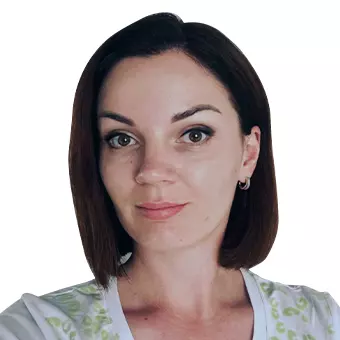
I have seen many traders overcomplicate the idea of building something outside the market. In my experience, the traders who succeed when they start a business with no money are not the most creative. They are the most structured. They take one repeatable process they already trust in their trading and turn it into a clear, paid outcome for someone else.
The biggest shift happens when validation becomes more important than perfection. Delivering manually to the first few clients reveals more than months of planning ever could. Once revenue appears, confidence increases, decisions become sharper, and growth feels controlled rather than risky. If you treat the business the same way you treat a trading strategy, with defined limits and regular review, you can truly start a business with no money and build it sustainably.
Conclusion
Starting a business with no money in 2026 is not only possible but increasingly practical, thanks to innovative models and accessible digital frameworks. The article emphasizes leveraging service-based offerings, like consulting or freelancing, and tapping into no-cost digital tools to build traction and validate ideas quickly. For example, entrepreneurs are using free social platforms to attract their first clients or utilizing print-on-demand services to launch products without inventory risk. The key lesson is clear: success hinges on creative resourcefulness and the willingness to take action with what you have. Ultimately, in the evolving landscape of 2026, the most valuable asset an entrepreneur has is their ability to execute ideas relentlessly, regardless of initial capital.
FAQs
What types of skills are essential when starting a business with no money in 2026?
How does starting a service-based business compare to product-based ventures when you have zero capital?
When should legal registration and formal business setup occur if you start a business with no money?
What metrics should you track to measure success when launching a business without investment?
Editors' Top Picks and Insights

Hunting crypto owners: Why criminals have gone offline

BitMEX is shutting down: Why Trump could not save the exchange

Do governments need crypto workers?

Brent nears $100: Why oil prices are rising

Gram Wallet launch: Can Telegram bring crypto to the masses?

AI without limits: How dangerous are neural networks?
Related Articles
Team that worked on the article
Andrey Mastykin is an experienced author, editor, and content strategist who has been with Traders Union since 2020. As an editor, he is meticulous about fact-checking and ensuring the accuracy of all information published on the Traders Union platform.
Dan Blystone began his trading career in 1998 as an arbitrage clerk on the floor of the Chicago Mercantile Exchange (CME). He later traded bond and Eurex futures at proprietary firms such as Altea Trading, gaining valuable experience in high-frequency trading and risk management.
Chinmay Soni is a financial analyst with more than 5 years of experience in working with stocks, Forex, derivatives, and other assets. As a founder of a boutique research firm and an active researcher, he covers various industries and fields, providing insights backed by statistical data.
Forex leverage is a tool enabling traders to control larger positions with a relatively small amount of capital, amplifying potential profits and losses based on the chosen leverage ratio.
CFD is a contract between an investor/trader and seller that demonstrates that the trader will need to pay the price difference between the current value of the asset and its value at the time of contract to the seller.
Backtesting is the process of testing a trading strategy on historical data. It allows you to evaluate the strategy's performance in the past and identify its potential risks and benefits.
Index in trading is the measure of the performance of a group of stocks, which can include the assets and securities in it.
Risk management is a risk management model that involves controlling potential losses while maximizing profits. The main risk management tools are stop loss, take profit, calculation of position volume taking into account leverage and pip value.

-
 Afghanistan
-
 Albania
-
 Algeria
-
 Angola
-
 Argentina
-
 Armenia
-
 Australia
-
 Austria
-
 Azerbaijan
-
 Bahamas
-
 Bahrain
-
 Bangladesh
-
 Belarus
-
 Belgium
-
 Bolivia
-
 Botswana
-
 Brazil
-
 Brunei
-
 Bulgaria
-
 Cambodia
-
 Cameroon
-
 Canada
-
 Chile
Chile
-
 China
China
-
 Colombia
-
 Congo
Congo
-
 Costa Rica
-
 Cote d'Ivoire
-
 Croatia
-
 Cuba
Cuba
-
 Cyprus
-
 Czechia
-
 DR Congo
-
 Denmark
-
 Dominican Republic
-
 Ecuador
-
 Egypt
Egypt
-
 El Salvador
-
 Estonia
-
 Eswatini
-
 Ethiopia
-
 Finland
-
 France
-
 Georgia
-
 Germany
-
 Ghana
Ghana
-
 Greece
-
 Haiti
Haiti
-
 Hong Kong
-
 Hungary
-
 India
India
-
 Indonesia
-
 Iran, Islamic republic
-
 Iraq
Iraq
-
 Ireland
-
 Israel
-
 Italy
Italy
-
 Jamaica
-
 Japan
Japan
-
 Jordan
-
 Kazakhstan
-
 Kenya
Kenya
-
 Korea
Korea
-
 Kuwait
-
 Kyrgyzstan
-
 Laos
Laos
-
 Latvia
-
 Lebanon
-
 Lesotho
-
 Libya
Libya
-
 Lithuania
-
 Luxembourg
-
 Madagascar
-
 Malaysia
-
 Malta
Malta
-
 Mauritius
-
 Mexico
-
 Moldova
-
 Mongolia
-
 Montenegro
-
 Morocco
-
 Mozambique
-
 Myanmar
-
 Namibia
-
 Nepal
Nepal
-
 Netherlands
-
 New Zealand
-
 Nigeria
-
 North Macedonia
-
 Norway
-
 Oman
Oman
-
 Pakistan
-
 Palestine
-
 Panama
-
 Papua New Guinea
-
 Paraguay
-
 Peru
Peru
-
 Philippines
-
 Poland
-
 Portugal
-
 Puerto Rico
-
 Qatar
Qatar
-
 Reunion
-
 Romania
-
 Rwanda
-
 Saudi Arabia
-
 Serbia
-
 Singapore
-
 Slovakia
-
 Slovenia
-
 Somalia
-
 South Africa
-
 Spain
Spain
-
 Sri Lanka
-
 Sweden
-
 Switzerland
-
 Syria
Syria
-
 Taiwan
-
 Tajikistan
-
 Tanzania
-
 Thailand
-
 Trinidad and Tobago
-
 Tunisia
-
 Turkey
-
 UAE
UAE
-
 Uganda
-
 Ukraine
-
 United Kingdom
-
United States
-
 Uruguay
-
 Uzbekistan
-
 Venezuela
-
 Vietnam
-
 Yemen
Yemen
-
 Zambia
-
 Zimbabwe
- Forex
- Crypto










- How to start a business with zero investment
- Is it possible to start a business with no money
- What “no money” really means for traders
- Trader-aligned zero investment business models
- How to start an online business without investment
- How to start a business without investment and manage risk
- 10 ways to grow your business with no money
- Common mistakes when starting a business with no money
- Expert opinion
- Conclusion
- FAQs


