

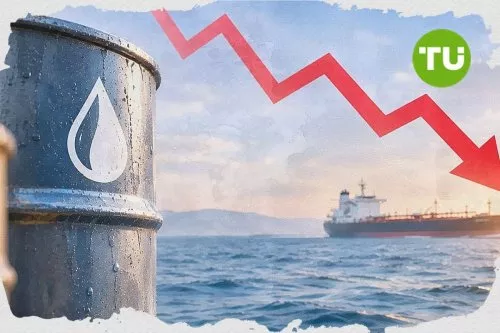
Brent oil trades near $93 a barrel as global benchmark declines from previous month

Oil prices remain well above year-ago levels even after a sharp daily and monthly pullback, shaping fuel costs and broader household expenses. Brent crude trades at $92.98 a barrel as of 7:15 a.m. Eastern Time on Nov. 10, 2026, down from both the prior day and a month earlier.
Highlights
- Brent crude trades at $92.98 per barrel, down 13.32% from a month ago but up 44.51% from $64.34 one year earlier.
- Brent's decline from $107.28 to $92.98 in one month reflects ongoing uncertainty as oil prices react to shifting supply and demand risks.
- Crude oil, representing over half of per-gallon gasoline costs, drives pump prices, while U.S. Strategic Petroleum Reserve mitigates energy supply shocks.
Price moves and benchmark context
As reported by Fortune, Brent crude stands at $92.98 per barrel at 7:15 a.m. Eastern Time, $4.67 below the previous morning's level of $97.65. The benchmark is also down from $107.28 a month ago, a decline of 13.32%, but remains about $29 above the $64.34 level recorded a year earlier, an increase of 44.51%.Oil market direction remains uncertain because prices continue to respond to shifts in supply and demand. The text says risks such as a potential recession or war can quickly change the market's trajectory.
How oil prices affect consumers and energy security
Crude oil remains the largest component in the price motorists pay at the pump, although refining, wholesale distribution, taxes, and retail markups also add to the final bill. Because crude often accounts for more than half of the per-gallon cost, gasoline prices usually rise alongside oil, while declines in oil can take longer to reach consumers, a pattern often described as rockets and feathers.The U.S. also maintains the Strategic Petroleum Reserve as an emergency supply of crude oil to support energy security during crises including sanctions, severe storm damage, or war. The reserve can help soften supply shocks that send prices sharply higher.
For market tracking, the two main oil benchmarks are Brent crude and West Texas Intermediate, or WTI. Brent is presented as the main global benchmark and a broader indicator of worldwide oil performance, while WTI serves as the principal North American benchmark.
As noted in our earlier article, soaring tanker rates have become a major factor lifting global fuel and consumer costs.










-
 Afghanistan
-
 Albania
-
 Algeria
-
 Angola
-
 Argentina
-
 Armenia
-
 Australia
-
 Austria
-
 Azerbaijan
-
 Bahamas
-
 Bahrain
-
 Bangladesh
-
 Belarus
-
 Belgium
-
 Bolivia
-
 Botswana
-
 Brazil
-
 Brunei
-
 Bulgaria
-
 Cambodia
-
 Cameroon
-
 Canada
-
 Chile
-
 China
-
 Colombia
-
 Congo
-
 Costa Rica
-
 Cote d'Ivoire
-
 Croatia
-
 Cuba
-
 Cyprus
-
 Czechia
-
 DR Congo
-
 Denmark
-
 Dominican Republic
-
 Ecuador
-
 Egypt
-
 El Salvador
-
 Estonia
-
 Eswatini
-
 Ethiopia
-
 Finland
-
 France
-
 Georgia
-
 Germany
-
 Ghana
-
 Greece
-
 Haiti
-
 Hong Kong
-
 Hungary
-
 India
-
 Indonesia
-
 Iran, Islamic republic
-
 Iraq
-
 Ireland
-
 Israel
-
 Italy
-
 Jamaica
-
 Japan
-
 Jordan
-
 Kazakhstan
-
 Kenya
-
 Korea
-
 Kuwait
-
 Kyrgyzstan
-
 Laos
-
 Latvia
-
 Lebanon
-
 Lesotho
-
 Libya
-
 Lithuania
-
 Luxembourg
-
 Madagascar
-
 Malaysia
-
 Malta
-
 Mauritius
-
 Mexico
-
 Moldova
-
 Mongolia
-
 Montenegro
-
 Morocco
-
 Mozambique
-
 Myanmar
-
 Namibia
-
 Nepal
-
 Netherlands
-
 New Zealand
-
 Nigeria
-
 North Macedonia
-
 Norway
-
 Oman
-
 Pakistan
-
 Palestine
-
 Panama
-
 Papua New Guinea
-
 Paraguay
-
 Peru
-
 Philippines
-
 Poland
-
 Portugal
-
 Puerto Rico
-
 Qatar
-
 Reunion
-
 Romania
-
 Rwanda
-
 Saudi Arabia
-
 Serbia
-
 Singapore
-
 Slovakia
-
 Slovenia
-
 Somalia
-
 South Africa
-
 Spain
-
 Sri Lanka
-
 Sweden
-
 Switzerland
-
 Syria
-
 Taiwan
-
 Tajikistan
-
 Tanzania
-
 Thailand
-
 Trinidad and Tobago
-
 Tunisia
-
 Turkey
-
 UAE
-
 Uganda
-
 Ukraine
-
 United Kingdom
-
United States
-
 Uruguay
-
 Uzbekistan
-
 Venezuela
-
 Vietnam
-
 Yemen
-
 Zambia
-
 Zimbabwe
- Forex
- Crypto












