

Oil market remains in limbo as U.S.-Iran stalemate keeps Brent near $90

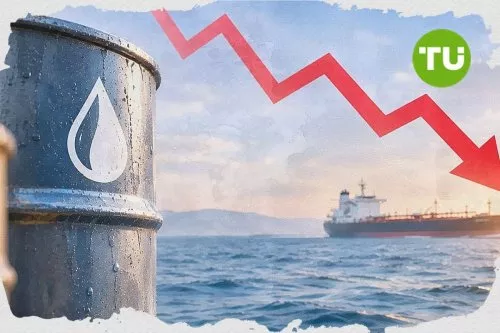
After a 10-day slide of nearly 25% in Brent crude, the oil market is settling into a stalemate rather than pricing in a lasting peace between the U.S. and Iran. Traders are no longer attaching an immediate premium for a new round of fighting, but prices still remain elevated because a durable deal that would materially expand supply is not yet in view.
Highlights
- Brent stays near $90 as Middle East crude exports recover to over 90% of pre-war levels and global production remains robust, easing immediate supply fears.
- Diesel and jet fuel prices remain elevated with Gulf supplies at just 60% of pre-war levels, while Canadian crude trades below $60 a barrel amid ongoing export constraints.
- Any U.S.-Iran deal could unleash over 2.2 million barrels a day of Iranian crude and products, possibly lowering $1.4 million/day supertanker rates and reshaping freight markets.
Supply recovery offsets immediate conflict risk
As reported by Bloomberg, citing BusinessWorld Online, traders are not treating the recent drop in Brent as a signal that hostilities between the U.S. and Iran have ended, but rather as evidence that the market sees no immediate risk of another escalation.That view comes as the underlying supply-and-demand balance improves. Crude exports from the Middle East, excluding Iran, have risen to more than 90% of pre-war levels through both the Strait of Hormuz and alternative routes, while production in other regions also remains strong.
The shift is also visible in physical markets, where several crude grades trade at steep discounts to Brent and West Texas Intermediate futures. Canadian crude, for example, trades below $60 a barrel, and the stronger flow of supply is allowing some countries, including India and South Korea, to begin rebuilding depleted stockpiles instead of drawing inventories down each week.
Refined products remain tighter than crude. Diesel and jet fuel prices stay elevated because flows from the Persian Gulf are still limited, although supplies are recovering toward roughly 60% of pre-war levels as most refineries outside Saudi Arabia return to operation and tanker availability remains the main export constraint.
Potential deal could reshape prices and freight
Any deal between Washington and Tehran could add significantly more oil to the market by allowing Iranian exports to resume more openly. Before the war, Iran exported more than 2.5 million barrels a day of crude and refined products, compared with about 300,000 barrels a day now, mostly through smuggling routes into Iraq and Pakistan and smaller shipments via the Caspian Sea.Shipping costs also reflect the market's strain. The charter rate for a supertanker carrying crude from the region to China recently rises to $1.4 million a day from less than $100,000 before the war, although freight pressures in the Americas and Europe are starting to ease and would likely fall further if the U.S. and Iran reach an agreement.
Nine months of war in the Middle East have drained commercial and strategic inventories by an estimated 1 billion barrels, but restocking demand is unlikely to accelerate while Brent remains near current levels. China is expected to resume stockpiling only if prices fall much further, and additional bypass capacity planned by the United Arab Emirates by April could further reduce the market's reliance on the Strait of Hormuz and help stabilize regional exports.
We have previously detailed the WTO warning that Middle East geopolitics could drive lasting trade shifts and supply-chain rerouting.









-
 Afghanistan
-
 Albania
-
 Algeria
-
 Angola
-
 Argentina
-
 Armenia
-
 Australia
-
 Austria
-
 Azerbaijan
-
 Bahamas
-
 Bahrain
-
 Bangladesh
-
 Belarus
-
 Belgium
-
 Bolivia
-
 Botswana
-
 Brazil
-
 Brunei
-
 Bulgaria
-
 Cambodia
-
 Cameroon
-
 Canada
-
 Chile
-
 China
-
 Colombia
-
 Congo
-
 Costa Rica
-
 Cote d'Ivoire
-
 Croatia
-
 Cuba
-
 Cyprus
-
 Czechia
-
 DR Congo
-
 Denmark
-
 Dominican Republic
-
 Ecuador
-
 Egypt
-
 El Salvador
-
 Estonia
-
 Eswatini
-
 Ethiopia
-
 Finland
-
 France
-
 Georgia
-
 Germany
-
 Ghana
-
 Greece
-
 Haiti
-
 Hong Kong
-
 Hungary
-
 India
-
 Indonesia
-
 Iran, Islamic republic
-
 Iraq
-
 Ireland
-
 Israel
-
 Italy
-
 Jamaica
-
 Japan
-
 Jordan
-
 Kazakhstan
-
 Kenya
-
 Korea
-
 Kuwait
-
 Kyrgyzstan
-
 Laos
-
 Latvia
-
 Lebanon
-
 Lesotho
-
 Libya
-
 Lithuania
-
 Luxembourg
-
 Madagascar
-
 Malaysia
-
 Malta
-
 Mauritius
-
 Mexico
-
 Moldova
-
 Mongolia
-
 Montenegro
-
 Morocco
-
 Mozambique
-
 Myanmar
-
 Namibia
-
 Nepal
-
 Netherlands
-
 New Zealand
-
 Nigeria
-
 North Macedonia
-
 Norway
-
 Oman
-
 Pakistan
-
 Palestine
-
 Panama
-
 Papua New Guinea
-
 Paraguay
-
 Peru
-
 Philippines
-
 Poland
-
 Portugal
-
 Puerto Rico
-
 Qatar
-
 Reunion
-
 Romania
-
 Rwanda
-
 Saudi Arabia
-
 Serbia
-
 Singapore
-
 Slovakia
-
 Slovenia
-
 Somalia
-
 South Africa
-
 Spain
-
 Sri Lanka
-
 Sweden
-
 Switzerland
-
 Syria
-
 Taiwan
-
 Tajikistan
-
 Tanzania
-
 Thailand
-
 Trinidad and Tobago
-
 Tunisia
-
 Turkey
-
 UAE
-
 Uganda
-
 Ukraine
-
 United Kingdom
-
United States
-
 Uruguay
-
 Uzbekistan
-
 Venezuela
-
 Vietnam
-
 Yemen
-
 Zambia
-
 Zimbabwe
- Forex
- Crypto












