

Meralco reports higher 2026 nine-month earnings as battery storage push gains focus in Philippines power market

Philippine power market shifts toward storage as rising solar capacity reshapes pricing and grid requirements across Luzon and the Visayas. Against that backdrop, Manila Electric Co. reports stronger nine-month 2026 earnings while debate intensifies over National Grid Corp. of the Philippines' battery storage initiative to address supply gaps.
Highlights
- Meralco's consolidated core net income rises to P45 billion for the first nine months of 2026 from P30 billion in 2023, driven by generation business expansion.
- Meralco's generation sales nearly double to 21,419 gigawatt-hours in 2026 from 11,556 gigawatt-hours in 2024, shifting group profit mix towards generation at 41% versus distribution at 45%.
- NGCP moves forward with Project Airbag, advancing 850 MW of BESS and targeting 10,000 MW in five years, amid regulatory scrutiny over grid and generation role separation.
Meralco earnings mix shifts with generation growth
As reported by BusinessWorld Online, Meralco says consolidated core net income reaches P45 billion in the first nine months of 2026, up from P30 billion in the same period of 2023, while the contribution from its generation business expands within the group earnings mix.The utility's distribution business remains broadly flat in energy sales from 2024 to 2026 at about 41,000 gigawatt-hours, according to the figures presented at the company's Oct. 28 briefing. Over the same period, generation sales nearly double to 21,419 gigawatt-hours in 2026 from 11,556 gigawatt-hours in 2024.
The report also indicates a changing profit structure for the group. In 2024, the parent distribution utility accounts for 58% of consolidated core net income and generation contributes 25%, but by 2026 the distribution share declines to 45% while generation rises to 41%, reflecting faster expansion in gas and renewable energy operations.
Battery storage plan highlights grid and regulatory pressures
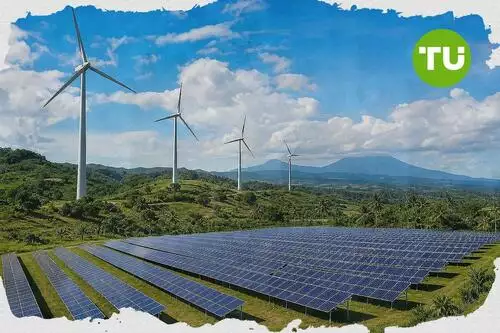
Growing solar capacity is also changing wholesale power dynamics, with daytime prices at the Wholesale Electricity Spot Market becoming cheaper than nighttime prices, especially in the Luzon grid. The article points to limited battery energy storage systems, or BESS, as a constraint in balancing supply, particularly in areas such as Negros where solar output is strong during the day but supply conditions tighten at night.Energy Regulatory Commission data cited in the article show that as of June 30, 2026, net-metering consumers have a combined capacity of 232 MW peak, while 181 distributed energy resource participants account for 226 MW peak. The article argues that additional storage capacity is needed to smooth solar supply beyond daytime hours.
Against that backdrop, NGCP is advancing Project Airbag, described as a transmission-side initiative to deploy BESS for faster system response and greater operating flexibility. The project includes 850 MW of ongoing BESS developments in six areas nationwide, including 400 MW in Calatrava, Negros Occidental, plus 1,000 MW under assessment across 12 sites, among them 100 MW in Cadiz City.
The medium-term target is to scale up to 10,000 MW in five years, with the systems planned near existing transmission facilities. The article says NGCP has 4,478 MW of available transmission infrastructure, but it also raises a regulatory question over whether storage assets that discharge electricity could place the grid operator in a gray area under the Electric Power Industry Reform Act, which separates transmission from generation activities.
Our earlier article on planned Philippine government bond reforms explained how a new pricing convention for peso-denominated bonds and expected index inclusion could widen the investor base and improve liquidity. It also stressed that financial-market upgrades alone won’t guarantee stronger productivity or business investment unless they are paired with credible fiscal policy and real-economy reforms—particularly competitive electricity costs, reliable infrastructure, and predictable regulation.






Latest Philippines News



-
 Afghanistan
-
 Albania
-
 Algeria
-
 Angola
-
 Argentina
-
 Armenia
-
 Australia
-
 Austria
-
 Azerbaijan
-
 Bahamas
-
 Bahrain
-
 Bangladesh
-
 Belarus
-
 Belgium
-
 Bolivia
-
 Botswana
-
 Brazil
-
 Brunei
-
 Bulgaria
-
 Cambodia
-
 Cameroon
-
 Canada
-
 Chile
-
 China
-
 Colombia
-
 Congo
-
 Costa Rica
-
 Cote d'Ivoire
-
 Croatia
-
 Cuba
-
 Cyprus
-
 Czechia
-
 DR Congo
-
 Denmark
-
 Dominican Republic
-
 Ecuador
-
 Egypt
-
 El Salvador
-
 Estonia
-
 Eswatini
-
 Ethiopia
-
 Finland
-
 France
-
 Georgia
-
 Germany
-
 Ghana
-
 Greece
-
 Haiti
-
 Hong Kong
-
 Hungary
-
 India
-
 Indonesia
-
 Iran, Islamic republic
-
 Iraq
-
 Ireland
-
 Israel
-
 Italy
-
 Jamaica
-
 Japan
-
 Jordan
-
 Kazakhstan
-
 Kenya
-
 Korea
-
 Kuwait
-
 Kyrgyzstan
-
 Laos
-
 Latvia
-
 Lebanon
-
 Lesotho
-
 Libya
-
 Lithuania
-
 Luxembourg
-
 Madagascar
-
 Malaysia
-
 Malta
-
 Mauritius
-
 Mexico
-
 Moldova
-
 Mongolia
-
 Montenegro
-
 Morocco
-
 Mozambique
-
 Myanmar
-
 Namibia
-
 Nepal
-
 Netherlands
-
 New Zealand
-
 Nigeria
-
 North Macedonia
-
 Norway
-
 Oman
-
 Pakistan
-
 Palestine
-
 Panama
-
 Papua New Guinea
-
 Paraguay
-
 Peru
-
 Philippines
-
 Poland
-
 Portugal
-
 Puerto Rico
-
 Qatar
-
 Reunion
-
 Romania
-
 Rwanda
-
 Saudi Arabia
-
 Serbia
-
 Singapore
-
 Slovakia
-
 Slovenia
-
 Somalia
-
 South Africa
-
 Spain
-
 Sri Lanka
-
 Sweden
-
 Switzerland
-
 Syria
-
 Taiwan
-
 Tajikistan
-
 Tanzania
-
 Thailand
-
 Trinidad and Tobago
-
 Tunisia
-
 Turkey
-
 UAE
-
 Uganda
-
 Ukraine
-
 United Kingdom
-
United States
-
 Uruguay
-
 Uzbekistan
-
 Venezuela
-
 Vietnam
-
 Yemen
-
 Zambia
-
 Zimbabwe
- Forex
- Crypto












