


Samsung is pushing to extend its role in the AI boom from memory chips into broader data centre infrastructure across its group businesses. The South Korean conglomerate is seeking growth in construction, IT services and energy storage, even as analysts question whether it can coordinate those units effectively and compete beyond its high-margin semiconductor strengths.
Highlights
- Samsung invested $1bn in Helix Digital Infrastructure, acquired a European cooling systems maker, and partnered with OpenAI to expand integrated AI infrastructure offerings.
- Analysts expect Samsung SDS annual data centre revenue to reach Won6.6tn ($4.9bn) by 2031, about six times its current level, amid surging demand for AI-driven capacity.
- Lack of a central decision-making body since 2017 poses internal coordination risks for complex projects, potentially limiting Samsung's ability to fully integrate its business segments.
Data centre push across Samsung units
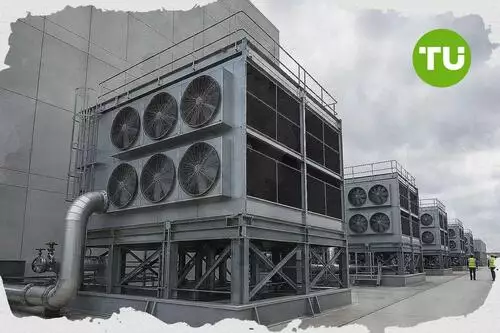
As reported by Financial Times, Samsung has spent the past year trying to position itself as a one-stop provider of AI infrastructure through investments, acquisitions and partnerships across its portfolio.The group invested $1bn in Helix Digital Infrastructure in September, bought a European cooling systems maker and signed a partnership with OpenAI to develop AI infrastructure. Its stated aim is to combine capabilities across subsidiaries, using Samsung C&T to build data centres, Samsung SDS to operate them and its battery business to provide energy storage systems, alongside memory chip supply.
Samsung SDS, which began as an internal IT services provider, is also in early-stage talks with Anthropic and OpenAI about potentially becoming tenants in its data centres. Analysts expect Samsung SDS to generate annual data centre revenue of Won6.6tn, or about $4.9bn, by 2031, roughly six times current levels.
Samsung has already expanded its ties with OpenAI. Last year, it signed a partnership to supply advanced memory chips for OpenAI's Stargate data centre initiative, while Samsung SDS agreed to collaborate on the design, development and operation of data centres. Samsung C&T and Samsung Heavy Industries also said they would work with the U.S. technology company on floating data centres.
Execution risks and market opportunity
Morgan Stanley says Samsung SDS is well positioned to benefit from rising data centre construction, supported by rules in multiple countries that require information to be stored domestically. McKinsey estimates global data centre capacity demand could almost triple by 2030, with AI workloads accounting for about 70 per cent of the total, and says meeting AI computing needs alone could require $5.2tn in capital expenditure.Supporters of Samsung's strategy argue the group can offer an integrated hardware-led solution at a time when major U.S. technology companies still depend on outside suppliers for key infrastructure components. Joungho Kim, a professor of electrical engineering at the Korea Advanced Institute of Science and Technology, says Samsung has an opportunity to provide a total solution because U.S. Big Tech companies are strong in AI and software but rely heavily on external hardware partners.
Still, analysts say Samsung faces internal coordination challenges as it tries to connect disparate businesses. The conglomerate has lacked a central decision-making body since its Future Strategy Office was dismantled in 2017 after a political corruption scandal, leaving lighter coordination structures split by business line.
That could complicate larger AI infrastructure projects that require close cooperation across affiliates. Citi analyst Peter Lee says Samsung has a broad range of capabilities but has been relatively weak at bringing them together into an integrated offering, while CLSA's Sanjeev Rana says the more immediate opportunity may lie in designing systems inside data centres rather than owning or operating the facilities themselves.
Rana adds that Samsung already supplies core AI infrastructure components, including high-bandwidth memory chips, advanced semiconductor packaging substrates and backup battery units for servers. In his view, improving and extending those component advantages may serve the group better because they remain high-margin businesses, even if demand for AI infrastructure sees periodic ups and downs.
We recently wrote about Quantum DC opposition to its proposed Adelaide Hills AI data centre in South Australia.






Latest Samsung Electronics News



-
 Afghanistan
-
 Albania
-
 Algeria
-
 Angola
-
 Argentina
-
 Armenia
-
 Australia
-
 Austria
-
 Azerbaijan
-
 Bahamas
-
 Bahrain
-
 Bangladesh
-
 Belarus
-
 Belgium
-
 Bolivia
-
 Botswana
-
 Brazil
-
 Brunei
-
 Bulgaria
-
 Cambodia
-
 Cameroon
-
 Canada
-
 Chile
-
 China
-
 Colombia
-
 Congo
-
 Costa Rica
-
 Cote d'Ivoire
-
 Croatia
-
 Cuba
-
 Cyprus
-
 Czechia
-
 DR Congo
-
 Denmark
-
 Dominican Republic
-
 Ecuador
-
 Egypt
-
 El Salvador
-
 Estonia
-
 Eswatini
-
 Ethiopia
-
 Finland
-
 France
-
 Georgia
-
 Germany
-
 Ghana
-
 Greece
-
 Haiti
-
 Hong Kong
-
 Hungary
-
 India
-
 Indonesia
-
 Iran, Islamic republic
-
 Iraq
-
 Ireland
-
 Israel
-
 Italy
-
 Jamaica
-
 Japan
-
 Jordan
-
 Kazakhstan
-
 Kenya
-
 Korea
-
 Kuwait
-
 Kyrgyzstan
-
 Laos
-
 Latvia
-
 Lebanon
-
 Lesotho
-
 Libya
-
 Lithuania
-
 Luxembourg
-
 Madagascar
-
 Malaysia
-
 Malta
-
 Mauritius
-
 Mexico
-
 Moldova
-
 Mongolia
-
 Montenegro
-
 Morocco
-
 Mozambique
-
 Myanmar
-
 Namibia
-
 Nepal
-
 Netherlands
-
 New Zealand
-
 Nigeria
-
 North Macedonia
-
 Norway
-
 Oman
-
 Pakistan
-
 Palestine
-
 Panama
-
 Papua New Guinea
-
 Paraguay
-
 Peru
-
 Philippines
-
 Poland
-
 Portugal
-
 Puerto Rico
-
 Qatar
-
 Reunion
-
 Romania
-
 Rwanda
-
 Saudi Arabia
-
 Serbia
-
 Singapore
-
 Slovakia
-
 Slovenia
-
 Somalia
-
 South Africa
-
 Spain
-
 Sri Lanka
-
 Sweden
-
 Switzerland
-
 Syria
-
 Taiwan
-
 Tajikistan
-
 Tanzania
-
 Thailand
-
 Trinidad and Tobago
-
 Tunisia
-
 Turkey
-
 UAE
-
 Uganda
-
 Ukraine
-
 United Kingdom
-
United States
-
 Uruguay
-
 Uzbekistan
-
 Venezuela
-
 Vietnam
-
 Yemen
-
 Zambia
-
 Zimbabwe
- Forex
- Crypto












