

Core Scientific sets year-end 2026 exit from Bitcoin mining as AI colocation revenue grows

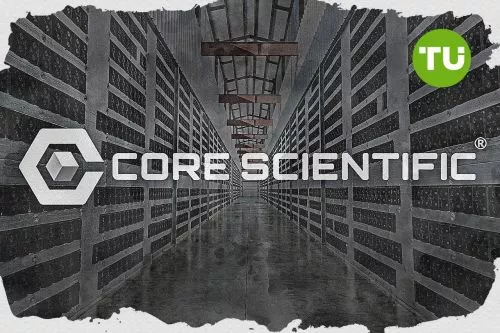
Core Scientific is accelerating its shift away from cryptocurrency mining as artificial intelligence and high-performance computing become the main drivers of its business. The company says it expects to complete the wind-down of Bitcoin mining in the fourth quarter of 2026 and start 2027 as a pure-play high-density colocation provider.
Highlights
- Core Scientific plans to fully exit Bitcoin mining by year-end 2026, shifting focus as mining revenue dropped to $17.5 million or 7.5% of Q3 revenue.
- Colocation services generated $215.4 million of $232.9 million Q3 revenue, while self-mining and hosted mining both saw significant year-over-year declines.
- Mining-related asset impairments totaled $266.5 million in Q1 2026 amid falling Bitcoin prices and equipment values, leading to a $41.9 million Q2 loss after terminating equipment agreements.
Transition timeline and revenue shift
According to Cointelegraph, during a third-quarter earnings call, Core Scientific chief financial officer Jim Nygaard said the company expects to finish winding down Bitcoin mining by the end of 2026. The target sharpens an earlier July quarterly filing that said hosted mining would end by Dec. 31 while the company continued reducing its self-mining operations.The latest quarterly results underline how much the business mix has already changed. Third-quarter self-mining revenue fell to $12.3 million from $57.4 million a year earlier, while revenue from hosting other miners declined to $5.2 million from $8.7 million.
Bitcoin mining accounts for $17.5 million, or 7.5%, of Core Scientific's $232.9 million in third-quarter revenue, compared with $215.4 million from colocation services. Nygaard also said the company had nearly 50% fewer miners online at the end of September than at the end of 2025.
AI strategy and industry pressure
Core Scientific's move into AI hosting begins to take shape in 2024 after it signs an initial hosting agreement with CoreWeave in March of that year, followed by a larger deal announced in June. At that stage, the company presents AI hosting as an expansion alongside mining and says it intends to preserve Bitcoin mining capacity.Pressure on mining economics intensifies in 2026. Core Scientific records $266.5 million in mining-related asset impairments in the first quarter, citing weaker Bitcoin prices, historically low hashprice and declining values for mining equipment in the secondary market, then records a $41.9 million loss in the second quarter after terminating its mining equipment agreement with Block and Proto.
The planned exit also comes as expansion of AI infrastructure faces greater political scrutiny in the U.S. after midterm election results. Reuters reported on Wednesday that opponents of data-center development are among the winners of the Democrats' sweeping midterm gains, with criticism focusing in part on electricity bills and the strain large facilities place on local resources.
In our earlier article on rising constraints for U.S. AI data-center projects, we explained that many planned facilities are being delayed or canceled as developers face higher financing costs, construction overruns, and tighter power availability. We also noted that growing local opposition and grid pressure are adding to investor skepticism, raising doubts about how quickly AI computing capacity can realistically scale.






Latest Core Scientific News



-
 Afghanistan
-
 Albania
-
 Algeria
-
 Angola
-
 Argentina
-
 Armenia
-
 Australia
-
 Austria
-
 Azerbaijan
-
 Bahamas
-
 Bahrain
-
 Bangladesh
-
 Belarus
-
 Belgium
-
 Bolivia
-
 Botswana
-
 Brazil
-
 Brunei
-
 Bulgaria
-
 Cambodia
-
 Cameroon
-
 Canada
-
 Chile
-
 China
-
 Colombia
-
 Congo
-
 Costa Rica
-
 Cote d'Ivoire
-
 Croatia
-
 Cuba
-
 Cyprus
-
 Czechia
-
 DR Congo
-
 Denmark
-
 Dominican Republic
-
 Ecuador
-
 Egypt
-
 El Salvador
-
 Estonia
-
 Eswatini
-
 Ethiopia
-
 Finland
-
 France
-
 Georgia
-
 Germany
-
 Ghana
-
 Greece
-
 Haiti
-
 Hong Kong
-
 Hungary
-
 India
-
 Indonesia
-
 Iran, Islamic republic
-
 Iraq
-
 Ireland
-
 Israel
-
 Italy
-
 Jamaica
-
 Japan
-
 Jordan
-
 Kazakhstan
-
 Kenya
-
 Korea
-
 Kuwait
-
 Kyrgyzstan
-
 Laos
-
 Latvia
-
 Lebanon
-
 Lesotho
-
 Libya
-
 Lithuania
-
 Luxembourg
-
 Madagascar
-
 Malaysia
-
 Malta
-
 Mauritius
-
 Mexico
-
 Moldova
-
 Mongolia
-
 Montenegro
-
 Morocco
-
 Mozambique
-
 Myanmar
-
 Namibia
-
 Nepal
-
 Netherlands
-
 New Zealand
-
 Nigeria
-
 North Macedonia
-
 Norway
-
 Oman
-
 Pakistan
-
 Palestine
-
 Panama
-
 Papua New Guinea
-
 Paraguay
-
 Peru
-
 Philippines
-
 Poland
-
 Portugal
-
 Puerto Rico
-
 Qatar
-
 Reunion
-
 Romania
-
 Rwanda
-
 Saudi Arabia
-
 Serbia
-
 Singapore
-
 Slovakia
-
 Slovenia
-
 Somalia
-
 South Africa
-
 Spain
-
 Sri Lanka
-
 Sweden
-
 Switzerland
-
 Syria
-
 Taiwan
-
 Tajikistan
-
 Tanzania
-
 Thailand
-
 Trinidad and Tobago
-
 Tunisia
-
 Turkey
-
 UAE
-
 Uganda
-
 Ukraine
-
 United Kingdom
-
United States
-
 Uruguay
-
 Uzbekistan
-
 Venezuela
-
 Vietnam
-
 Yemen
-
 Zambia
-
 Zimbabwe
- Forex
- Crypto












