

Ethereum weakens as elevated US inflation sees policymakers push institutional outflows from ETFs

Ethereum (ETH) is currently priced at $2,046 and has moved lower, pressured by macroeconomic factors linked to US inflation and institutional outflows.
 1936.49
2246.00
Highlights
- Ethereum dropped toward $2,000 after elevated US inflation increased expectations of Federal Reserve rate hikes and ETF outflows.
- US spot Ethereum ETFs recorded $184.5 million in net outflows on November 9, the highest daily withdrawal in over a month.
- ETH trades below key moving averages with continued negative momentum, and resistance at $2,126 must be cleared for signs of recovery.
US inflation surprise and ETF outflows trigger risk-off in ETH
According to FXStreet, on November 10, 2026, Ethereum fell toward $2,000 after the US reported higher-than-expected inflation on that day, coinciding with significant withdrawals from US spot Ethereum ETFs.
Elevated US inflation has led to increased expectations of Federal Reserve interest rate hikes and tightening monetary policy, which in turn drove notable outflows from institutional investment vehicles such as Ethereum ETFs. These exits reduced institutional demand for ETH, contributing directly to selling pressure.
Data from November 9, 2026, showed $184.5 million in net outflows from US spot Ethereum ETFs, marking the largest daily withdrawal in over a month and underscoring the impact of macro policy changes on digital asset flows. FXStreet
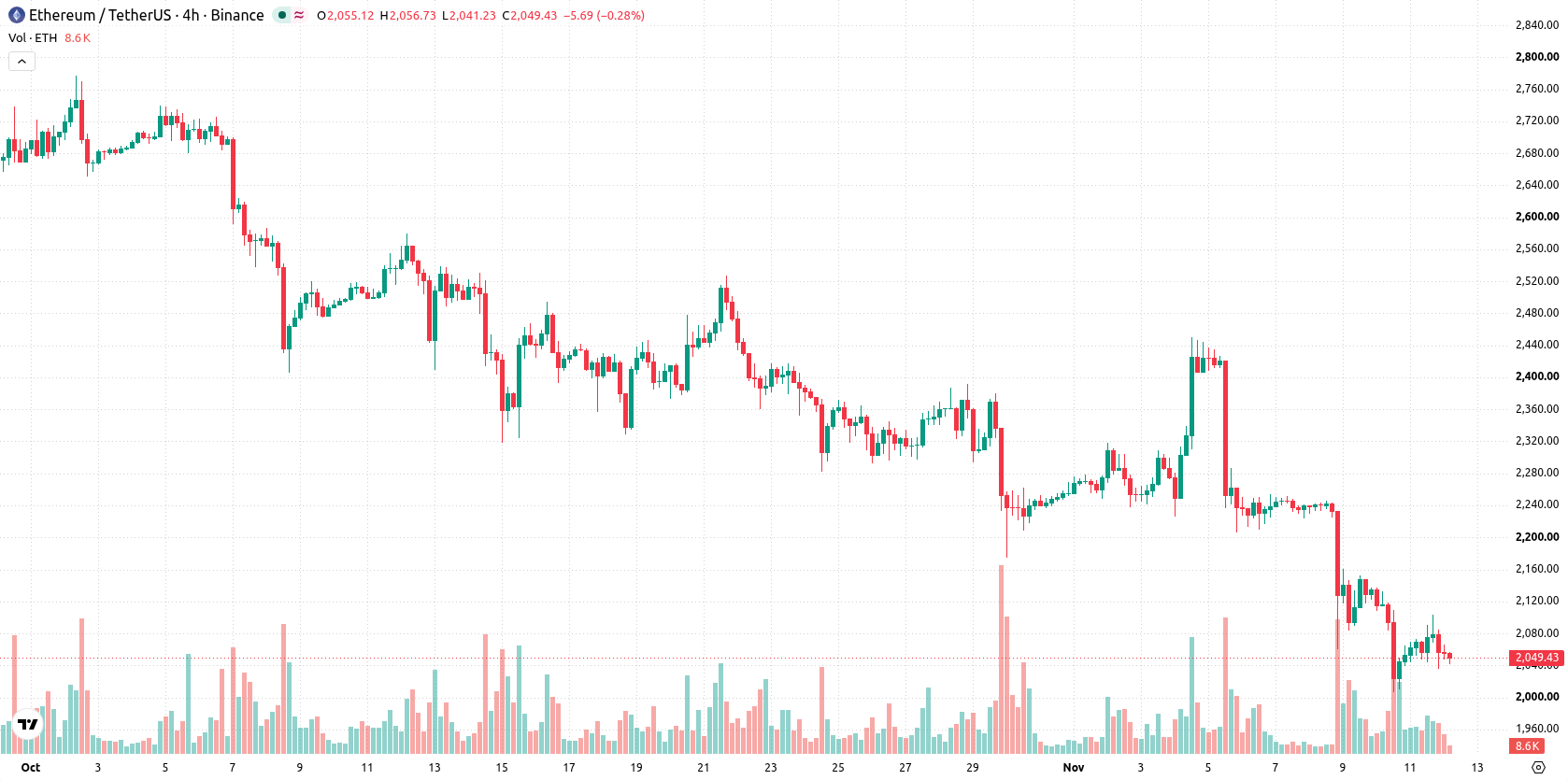
4H chart confirms institutional selling pressure and weak trend
Against this backdrop, on the 4-hour chart ETH remains positioned below its 50-period SMA at $2,205 and its 200-period SMA at $2,341, indicating ongoing weakness.
The H4 Kijun sits at $2,126 and serves as a resistance level, while negative momentum is indicated by the MACD and ADX, both signaling a continued sell setup.
US inflation and ETF outflows pressure ETH
If US inflation readings stay elevated or ETF outflows continue to grow, ETH may remain under pressure. A break above the $2,126 resistance could be the first sign of recovery. For stabilization, watch for a change in macro policy direction or a reversal in institutional flows.
Earlier, analysts noted that Ethereum was facing persistent selling pressure amid adverse macroeconomic factors and substantial institutional outflows. The current article further strengthens this view, highlighting how ongoing inflation concerns and ETF withdrawals remain the primary drivers to watch for Ethereum’s next move.






Latest Ethereum News




-
 Afghanistan
-
 Albania
-
 Algeria
-
 Angola
-
 Argentina
-
 Armenia
-
 Australia
-
 Austria
-
 Azerbaijan
-
 Bahamas
-
 Bahrain
-
 Bangladesh
-
 Belarus
-
 Belgium
-
 Bolivia
-
 Botswana
-
 Brazil
-
 Brunei
-
 Bulgaria
-
 Cambodia
-
 Cameroon
-
 Canada
-
 Chile
-
 China
-
 Colombia
-
 Congo
-
 Costa Rica
-
 Cote d'Ivoire
-
 Croatia
-
 Cuba
-
 Cyprus
-
 Czechia
-
 DR Congo
-
 Denmark
-
 Dominican Republic
-
 Ecuador
-
 Egypt
-
 El Salvador
-
 Estonia
-
 Eswatini
-
 Ethiopia
-
 Finland
-
 France
-
 Georgia
-
 Germany
-
 Ghana
-
 Greece
-
 Haiti
-
 Hong Kong
-
 Hungary
-
 India
-
 Indonesia
-
 Iran, Islamic republic
-
 Iraq
-
 Ireland
-
 Israel
-
 Italy
-
 Jamaica
-
 Japan
-
 Jordan
-
 Kazakhstan
-
 Kenya
-
 Korea
-
 Kuwait
-
 Kyrgyzstan
-
 Laos
-
 Latvia
-
 Lebanon
-
 Lesotho
-
 Libya
-
 Lithuania
-
 Luxembourg
-
 Madagascar
-
 Malaysia
-
 Malta
-
 Mauritius
-
 Mexico
-
 Moldova
-
 Mongolia
-
 Montenegro
-
 Morocco
-
 Mozambique
-
 Myanmar
-
 Namibia
-
 Nepal
-
 Netherlands
-
 New Zealand
-
 Nigeria
-
 North Macedonia
-
 Norway
-
 Oman
-
 Pakistan
-
 Palestine
-
 Panama
-
 Papua New Guinea
-
 Paraguay
-
 Peru
-
 Philippines
-
 Poland
-
 Portugal
-
 Puerto Rico
-
 Qatar
-
 Reunion
-
 Romania
-
 Rwanda
-
 Saudi Arabia
-
 Serbia
-
 Singapore
-
 Slovakia
-
 Slovenia
-
 Somalia
-
 South Africa
-
 Spain
-
 Sri Lanka
-
 Sweden
-
 Switzerland
-
 Syria
-
 Taiwan
-
 Tajikistan
-
 Tanzania
-
 Thailand
-
 Trinidad and Tobago
-
 Tunisia
-
 Turkey
-
 UAE
-
 Uganda
-
 Ukraine
-
 United Kingdom
-
United States
-
 Uruguay
-
 Uzbekistan
-
 Venezuela
-
 Vietnam
-
 Yemen
-
 Zambia
-
 Zimbabwe
- Forex
- Crypto












