

Tron falls after jump in Treasury yields draws investors away from risk assets

Tron (TRX) is trading lower, with recent macroeconomic developments weighing on sentiment. A jump in U.S. Treasury yields after a surprisingly high inflation report has increased the appeal of fixed-income assets over cryptocurrencies. Traders are monitoring upcoming inflation data and Federal Reserve signals that could impact risk appetite.
 0.314
0.3210
Highlights
- A higher-than-expected U.S. inflation report on November 10, 2026 triggered a sell-off in government bonds and sent 10-year Treasury yields briefly above 5%.
- Rising Treasury yields have increased the appeal of fixed-income assets relative to cryptocurrencies such as TRX, driving capital outflows from the digital assets market.
- TRX remains below key moving averages and momentum indicators point to persistent selling pressure, with $0.32 identified as critical resistance for any recovery.
Surging Treasury yields following U.S. inflation surprise
According to Yahoo Finance, on November 10, 2026, a higher-than-expected U.S. inflation report led to a sell-off in government bonds, driving Treasury yields higher. The yield on the 10-year Treasury briefly moved above 5%, putting pressure on a wide range of risk assets, including cryptocurrencies such as TRX.
This macroeconomic shift increases competition from fixed-income investments, making them more attractive relative to cryptocurrencies. As yields climb, investors tend to reduce exposure to risk assets, which can result in capital outflows from the digital assets market.
Linkage to TRX and similar digital assets remains conditional—the risk context is driven by macro policy signals rather than company-specific fundamentals.
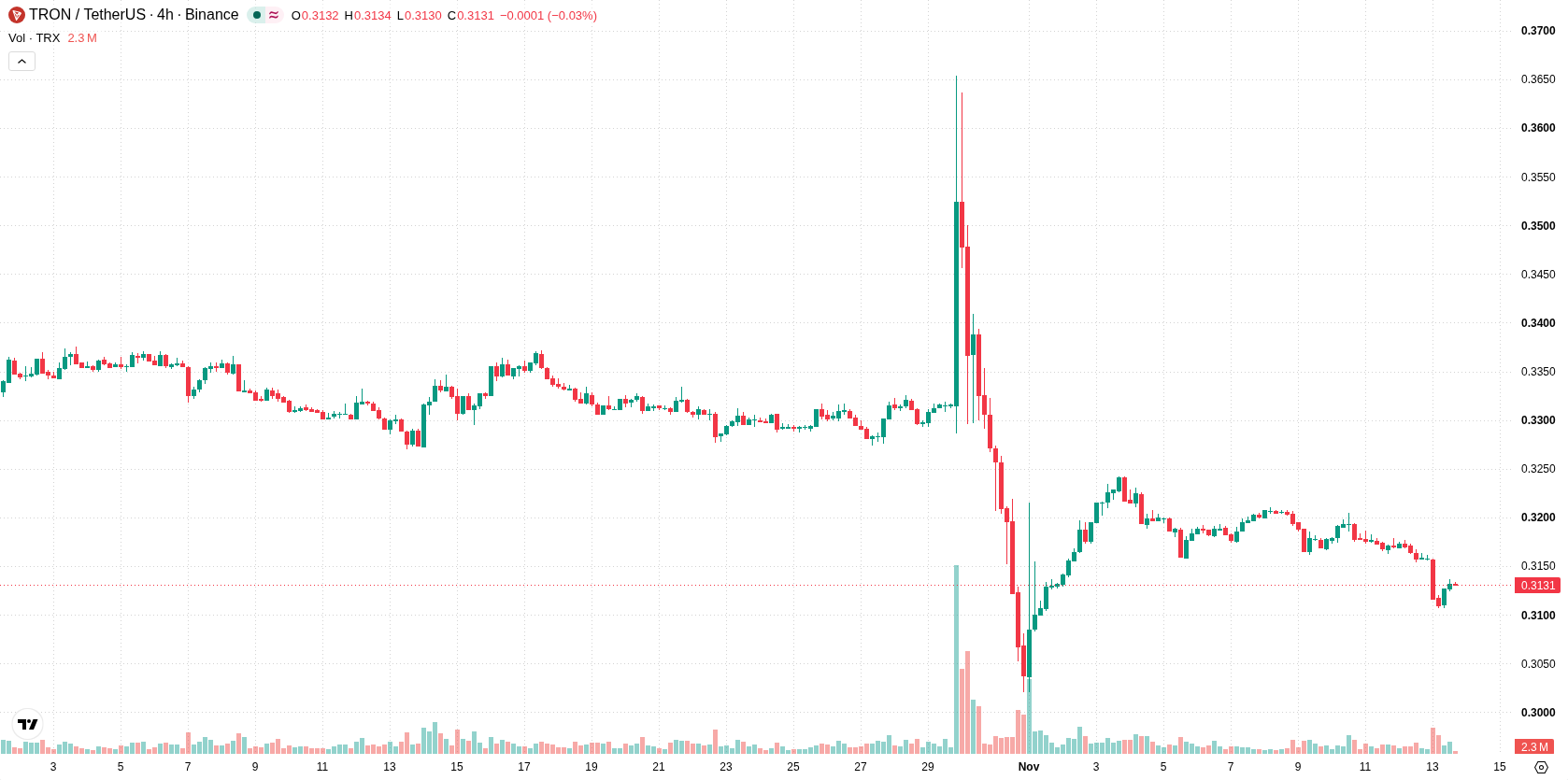
Bearish momentum persists on 4H chart under macro pressure
On the 4H chart, TRX remains below its 50- and 200-period SMAs, indicating bearish positioning in line with broader risk aversion. The H4 Kijun level has acted as resistance, further capping any attempted recovery.
Momentum indicators present a negative picture, with both MACD and ADX signaling continued sell pressure. Technical signals currently provide little evidence of stabilization.
Macro uncertainty and resistance around $0.32 define next move
Macro risks remain prominent as traders await further U.S. inflation releases and Federal Reserve guidance. Key resistance stands around the $0.32 mark; a sustained move above this level would be needed to relieve downside pressure. Stabilization in Treasury yields and risk appetite would also help to reduce headwinds. Until then, TRX is likely to remain vulnerable to broader macro developments.
Previously it was reported that Backpack Wallet expanded support for TRON-based assets, broadening user access to TRON's ecosystem through multichain wallet and trading capabilities. While this development increased visibility for TRON, current market direction remains predominantly tied to shifts in U.S. Treasury yields and upcoming macroeconomic signals, which traders should closely monitor for the next decisive move.











-
 Afghanistan
-
 Albania
-
 Algeria
-
 Angola
-
 Argentina
-
 Armenia
-
 Australia
-
 Austria
-
 Azerbaijan
-
 Bahamas
-
 Bahrain
-
 Bangladesh
-
 Belarus
-
 Belgium
-
 Bolivia
-
 Botswana
-
 Brazil
-
 Brunei
-
 Bulgaria
-
 Cambodia
-
 Cameroon
-
 Canada
-
 Chile
-
 China
-
 Colombia
-
 Congo
-
 Costa Rica
-
 Cote d'Ivoire
-
 Croatia
-
 Cuba
-
 Cyprus
-
 Czechia
-
 DR Congo
-
 Denmark
-
 Dominican Republic
-
 Ecuador
-
 Egypt
-
 El Salvador
-
 Estonia
-
 Eswatini
-
 Ethiopia
-
 Finland
-
 France
-
 Georgia
-
 Germany
-
 Ghana
-
 Greece
-
 Haiti
-
 Hong Kong
-
 Hungary
-
 India
-
 Indonesia
-
 Iran, Islamic republic
-
 Iraq
-
 Ireland
-
 Israel
-
 Italy
-
 Jamaica
-
 Japan
-
 Jordan
-
 Kazakhstan
-
 Kenya
-
 Korea
-
 Kuwait
-
 Kyrgyzstan
-
 Laos
-
 Latvia
-
 Lebanon
-
 Lesotho
-
 Libya
-
 Lithuania
-
 Luxembourg
-
 Madagascar
-
 Malaysia
-
 Malta
-
 Mauritius
-
 Mexico
-
 Moldova
-
 Mongolia
-
 Montenegro
-
 Morocco
-
 Mozambique
-
 Myanmar
-
 Namibia
-
 Nepal
-
 Netherlands
-
 New Zealand
-
 Nigeria
-
 North Macedonia
-
 Norway
-
 Oman
-
 Pakistan
-
 Palestine
-
 Panama
-
 Papua New Guinea
-
 Paraguay
-
 Peru
-
 Philippines
-
 Poland
-
 Portugal
-
 Puerto Rico
-
 Qatar
-
 Reunion
-
 Romania
-
 Rwanda
-
 Saudi Arabia
-
 Serbia
-
 Singapore
-
 Slovakia
-
 Slovenia
-
 Somalia
-
 South Africa
-
 Spain
-
 Sri Lanka
-
 Sweden
-
 Switzerland
-
 Syria
-
 Taiwan
-
 Tajikistan
-
 Tanzania
-
 Thailand
-
 Trinidad and Tobago
-
 Tunisia
-
 Turkey
-
 UAE
-
 Uganda
-
 Ukraine
-
 United Kingdom
-
United States
-
 Uruguay
-
 Uzbekistan
-
 Venezuela
-
 Vietnam
-
 Yemen
-
 Zambia
-
 Zimbabwe
- Forex
- Crypto












