

U.S. inflation concerns intensify risk-off mood for Bitcoin, deepening outflows from ETFs

Bitcoin (BTC) is trading lower, with risk appetite diminished amid persistent U.S. inflation and renewed expectations of an interest-rate hike by the Federal Reserve. A stronger U.S. dollar and rising bond yields have contributed to outflows from Bitcoin ETFs, pressuring demand. Traders are watching upcoming U.S. inflation data and Fed decisions for further direction.
 68446.21
76200.00
Highlights
- Persistent U.S. inflation and rising expectations of a Federal Reserve rate hike triggered capital outflows from Bitcoin ETFs, erasing recent gains.
- Over $1.6 billion in crypto positions were liquidated as Bitcoin dropped to a 12-week low, with investors preferring traditional assets during macroeconomic uncertainty.
- Bitcoin trades below key moving averages with technical signals confirming dominant selling and pressure likely to persist unless resistance above 70,673 is reclaimed.
U.S. inflation and Fed rate expectations drive risk-off flows
According to Decrypt, as of November 13, 2026, ongoing U.S. inflation and heightened expectations for another Federal Reserve interest-rate hike drove investors to pull capital from Bitcoin ETFs, pushing BTC back to levels last seen in August and erasing most of its late-summer gains.
This environment has led to a firmer U.S. dollar and increased U.S. bond yields, making non-interest-bearing assets like BTC less attractive as traders shifted to safer options. The resulting diminished risk appetite has caused substantial capital to leave the crypto sector.
Reinforcing this trend, CoinDesk reported that on November 13, 2026, Bitcoin reached a 12-week low as more than $1.6 billion in crypto positions were liquidated during the decline, coinciding with higher yields and a preference for traditional assets. These developments have further pressured BTC amid broader macroeconomic uncertainty.
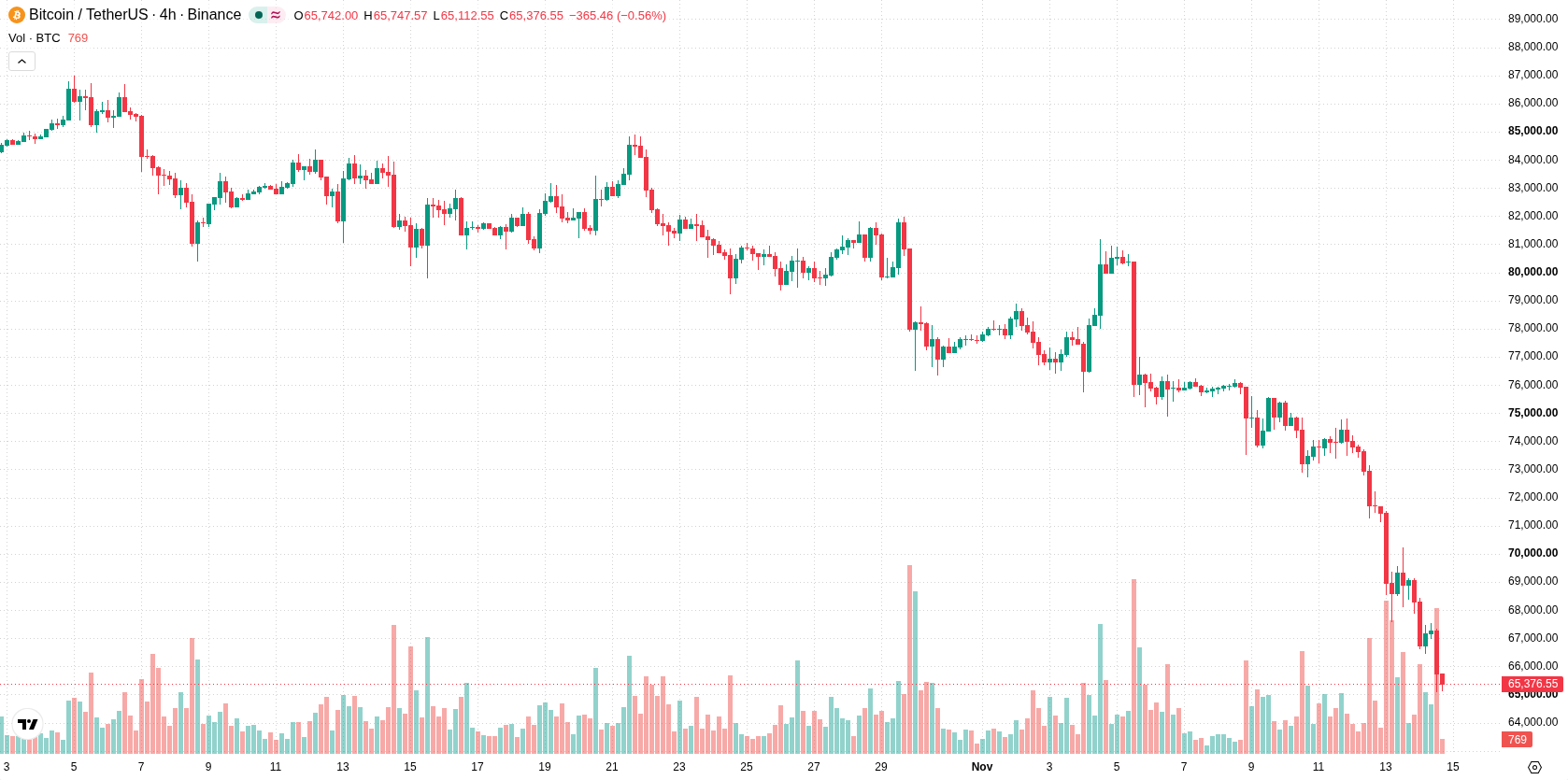
Downtrend persists on 4H chart as macro pressures intensify
From a technical standpoint, BTC remains below its 4H SMA50 and SMA200, signaling persistent downside in the medium term given the current policy backdrop. The H4 Kijun level sits well above the asset price, offering a clear marker of prevailing resistance.
Short-term momentum is particularly weak as RSI is in oversold territory and both MACD and ADX point to dominant selling conditions. The alignment reflects the impact of tightening financial conditions combined with sustained ETF outflows.
BTC vulnerable to renewed Fed tightening and ETF outflows
BTC's outlook remains sensitive to upcoming U.S. inflation figures and Federal Reserve policy updates, as any signals of further tightening could extend outflows and keep pressure on the price. A move above the H4 Kijun resistance area around $70,673 would be needed to indicate stabilization. Otherwise, the external environment is likely to continue as a headwind for BTC.
Previously it was reported that sharp declines in Bitcoin were accompanied by heavy liquidations and significant outflows from spot Bitcoin ETFs, highlighting weakening institutional demand. The current analysis builds on this by noting that persistent U.S. inflation and expectations of further Federal Reserve tightening continue to be the main factors shaping Bitcoin’s outlook, with upcoming inflation data and policy decisions remaining pivotal for any shift in price direction.






Latest Bitcoin News





-
 Afghanistan
-
 Albania
-
 Algeria
-
 Angola
-
 Argentina
-
 Armenia
-
 Australia
-
 Austria
-
 Azerbaijan
-
 Bahamas
-
 Bahrain
-
 Bangladesh
-
 Belarus
-
 Belgium
-
 Bolivia
-
 Botswana
-
 Brazil
-
 Brunei
-
 Bulgaria
-
 Cambodia
-
 Cameroon
-
 Canada
-
 Chile
-
 China
-
 Colombia
-
 Congo
-
 Costa Rica
-
 Cote d'Ivoire
-
 Croatia
-
 Cuba
-
 Cyprus
-
 Czechia
-
 DR Congo
-
 Denmark
-
 Dominican Republic
-
 Ecuador
-
 Egypt
-
 El Salvador
-
 Estonia
-
 Eswatini
-
 Ethiopia
-
 Finland
-
 France
-
 Georgia
-
 Germany
-
 Ghana
-
 Greece
-
 Haiti
-
 Hong Kong
-
 Hungary
-
 India
-
 Indonesia
-
 Iran, Islamic republic
-
 Iraq
-
 Ireland
-
 Israel
-
 Italy
-
 Jamaica
-
 Japan
-
 Jordan
-
 Kazakhstan
-
 Kenya
-
 Korea
-
 Kuwait
-
 Kyrgyzstan
-
 Laos
-
 Latvia
-
 Lebanon
-
 Lesotho
-
 Libya
-
 Lithuania
-
 Luxembourg
-
 Madagascar
-
 Malaysia
-
 Malta
-
 Mauritius
-
 Mexico
-
 Moldova
-
 Mongolia
-
 Montenegro
-
 Morocco
-
 Mozambique
-
 Myanmar
-
 Namibia
-
 Nepal
-
 Netherlands
-
 New Zealand
-
 Nigeria
-
 North Macedonia
-
 Norway
-
 Oman
-
 Pakistan
-
 Palestine
-
 Panama
-
 Papua New Guinea
-
 Paraguay
-
 Peru
-
 Philippines
-
 Poland
-
 Portugal
-
 Puerto Rico
-
 Qatar
-
 Reunion
-
 Romania
-
 Rwanda
-
 Saudi Arabia
-
 Serbia
-
 Singapore
-
 Slovakia
-
 Slovenia
-
 Somalia
-
 South Africa
-
 Spain
-
 Sri Lanka
-
 Sweden
-
 Switzerland
-
 Syria
-
 Taiwan
-
 Tajikistan
-
 Tanzania
-
 Thailand
-
 Trinidad and Tobago
-
 Tunisia
-
 Turkey
-
 UAE
-
 Uganda
-
 Ukraine
-
 United Kingdom
-
United States
-
 Uruguay
-
 Uzbekistan
-
 Venezuela
-
 Vietnam
-
 Yemen
-
 Zambia
-
 Zimbabwe
- Forex
- Crypto












