

NEAR declines with US inflation surprise and Fed warning reducing crypto demand

NEAR (NEAR) is trading lower at $2.92, down 16.17% over the last day. Increased concerns about US monetary policy have contributed to selling pressure, as investors anticipate potential impacts on global financial conditions. Traders will be watching upcoming Federal Reserve policy updates and inflation releases for further direction.
 3.478
3.8150
Highlights
- US consumer prices exceeded expectations for November 2026, causing short-term Treasury yields to jump and increasing the risk of further Federal Reserve rate hikes.
- Reduced liquidity and higher funding costs are leading investors to scale back exposure to crypto assets, increasing external risk for NEAR.
- NEAR trades below key moving averages with sustained bearish momentum, and a move above $3.45 is needed to signal early stabilization.
US inflation surprise and Fed rate hike risk affects NEAR
According to Bloomberg, US inflation exceeded expectations based on the consumer price report released on November 10, 2026. The data prompted a marked jump in short-term Treasury yields and signaled a heightened risk of aggressive rate increases by the Federal Reserve.
The prospect of higher US rates has been associated with reduced liquidity and declining demand for crypto assets. For NEAR, this macro environment creates additional headwinds as investors shift away from risk assets when funding costs rise and global monetary conditions tighten.
This reinforces ongoing caution for digital assets amid external policy uncertainty, though the full impact on NEAR will likely hinge on further Federal Reserve signals and subsequent inflation outcomes.
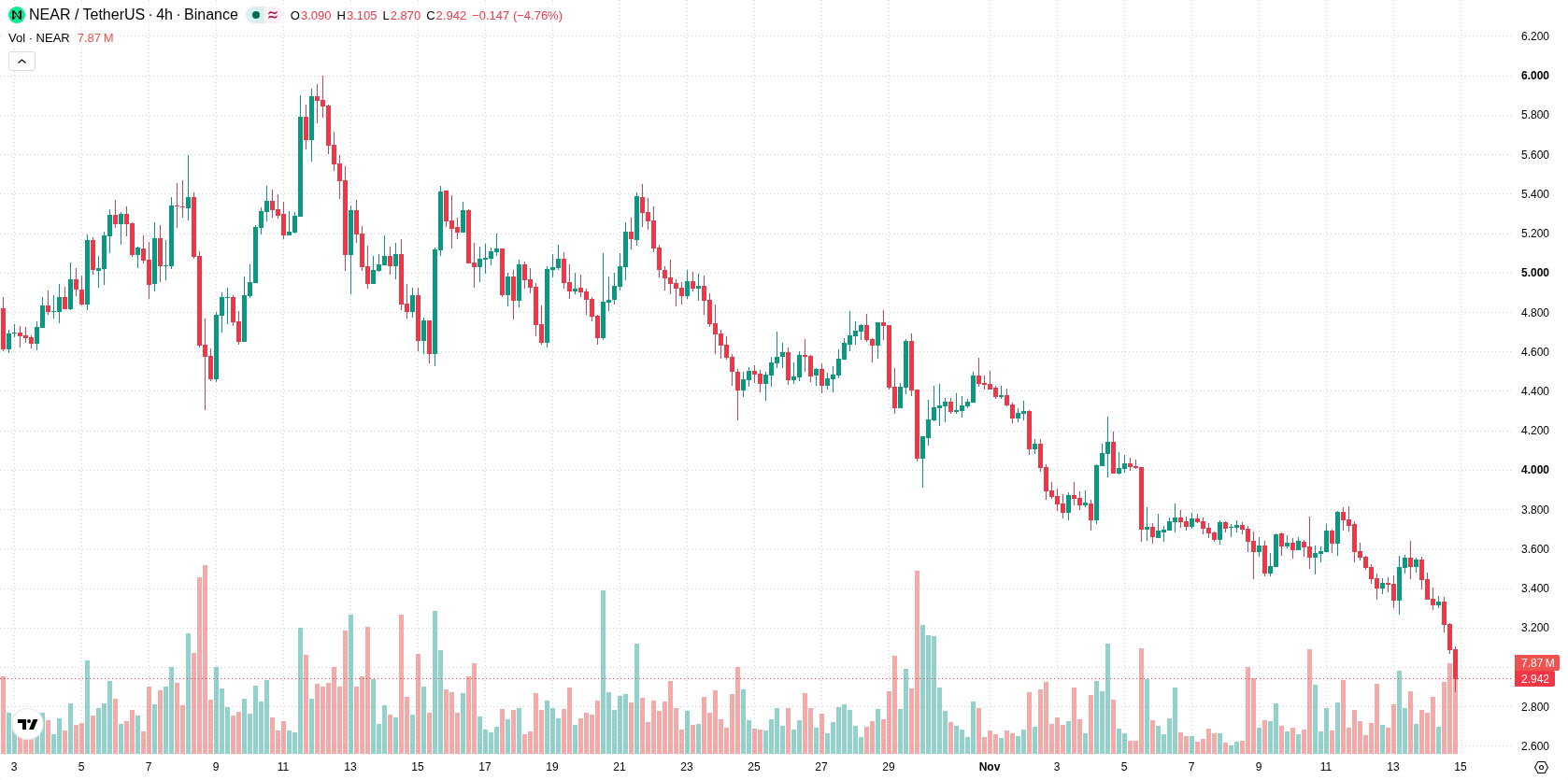
Macro-driven selling reflected in 4H trend and momentum signals
On the 4H chart, NEAR remains positioned below its 50- and 200-period simple moving averages, pointing to a prevailing bearish trend. The $3.45 Kijun level serves as a resistance zone for any potential short-term recovery attempts.
RSI is in oversold territory and MACD is signaling continued downward momentum, with ADX also confirming the selling bias. While the daily (D1) moving average alignment is still bullish, shorter timeframes point to persistent weakness until a clear reversal marker emerges.
US policy signals as catalyst for possible price stabilization
The near-term outlook for NEAR remains sensitive to external risk, especially additional signals from the Federal Reserve or further US inflation surprises. A sustained move above the $3.45 resistance could indicate early stabilization, while continued pressure below this level may expose NEAR to additional downside if liquidity remains tight. Close monitoring of US policy announcements remains essential for anticipating the next trend shift.
Earlier, analysts noted that NEAR was under sustained bearish pressure, with downside risks dominating its technical outlook despite a broader bullish structure. The latest move lower aligns with that perspective, and as macroeconomic uncertainty around US Federal Reserve policy persists, NEAR’s next direction will depend on key signals from upcoming inflation and rate decisions.










-
 Afghanistan
-
 Albania
-
 Algeria
-
 Angola
-
 Argentina
-
 Armenia
-
 Australia
-
 Austria
-
 Azerbaijan
-
 Bahamas
-
 Bahrain
-
 Bangladesh
-
 Belarus
-
 Belgium
-
 Bolivia
-
 Botswana
-
 Brazil
-
 Brunei
-
 Bulgaria
-
 Cambodia
-
 Cameroon
-
 Canada
-
 Chile
-
 China
-
 Colombia
-
 Congo
-
 Costa Rica
-
 Cote d'Ivoire
-
 Croatia
-
 Cuba
-
 Cyprus
-
 Czechia
-
 DR Congo
-
 Denmark
-
 Dominican Republic
-
 Ecuador
-
 Egypt
-
 El Salvador
-
 Estonia
-
 Eswatini
-
 Ethiopia
-
 Finland
-
 France
-
 Georgia
-
 Germany
-
 Ghana
-
 Greece
-
 Haiti
-
 Hong Kong
-
 Hungary
-
 India
-
 Indonesia
-
 Iran, Islamic republic
-
 Iraq
-
 Ireland
-
 Israel
-
 Italy
-
 Jamaica
-
 Japan
-
 Jordan
-
 Kazakhstan
-
 Kenya
-
 Korea
-
 Kuwait
-
 Kyrgyzstan
-
 Laos
-
 Latvia
-
 Lebanon
-
 Lesotho
-
 Libya
-
 Lithuania
-
 Luxembourg
-
 Madagascar
-
 Malaysia
-
 Malta
-
 Mauritius
-
 Mexico
-
 Moldova
-
 Mongolia
-
 Montenegro
-
 Morocco
-
 Mozambique
-
 Myanmar
-
 Namibia
-
 Nepal
-
 Netherlands
-
 New Zealand
-
 Nigeria
-
 North Macedonia
-
 Norway
-
 Oman
-
 Pakistan
-
 Palestine
-
 Panama
-
 Papua New Guinea
-
 Paraguay
-
 Peru
-
 Philippines
-
 Poland
-
 Portugal
-
 Puerto Rico
-
 Qatar
-
 Reunion
-
 Romania
-
 Rwanda
-
 Saudi Arabia
-
 Serbia
-
 Singapore
-
 Slovakia
-
 Slovenia
-
 Somalia
-
 South Africa
-
 Spain
-
 Sri Lanka
-
 Sweden
-
 Switzerland
-
 Syria
-
 Taiwan
-
 Tajikistan
-
 Tanzania
-
 Thailand
-
 Trinidad and Tobago
-
 Tunisia
-
 Turkey
-
 UAE
-
 Uganda
-
 Ukraine
-
 United Kingdom
-
United States
-
 Uruguay
-
 Uzbekistan
-
 Venezuela
-
 Vietnam
-
 Yemen
-
 Zambia
-
 Zimbabwe
- Forex
- Crypto












