

Ongoing ETF outflows keep Bitcoin under pressure, dampening institutional demand

Bitcoin (BTC) is trading lower at $62,548 as of November 18, 2026, with institutional outflows from U.S. spot Bitcoin ETFs influencing the market. This reduction in ETF flows has pressured sentiment and liquidity. Traders are watching for changes in these capital flows to gauge the next directional move.
 65002
74217.49
Highlights
- Bitcoin traded near $65,000 as spot Bitcoin ETFs posted sustained net outflows and reduced market liquidity.
- Institutional demand remained weak, with persistent ETF outflows indicating ongoing hesitance and downside risk for BTC.
- BTC stayed below all major moving averages on key charts, with negative momentum suggesting further downside unless ETF flows reverse.
Bitcoin pressured by U.S. spot ETF outflows and weak demand
According to FXStreet, on November 18, 2026, Bitcoin hovered near $65,000 as U.S. spot Bitcoin ETFs continued to experience net outflows, reflecting a sustained decrease in institutional demand.
This ongoing withdrawal of institutional capital from Bitcoin ETFs has reduced overall market liquidity and contributed to a less constructive sentiment for BTC. Lower ETF demand provides fewer inflows to absorb selling or spark fresh buying, adding to prevailing downside risks.
In this context, the persistent net outflows serve as a primary signal of institutional hesitance. There were no significant contradicting developments to offset the impression of fragile demand during this period.
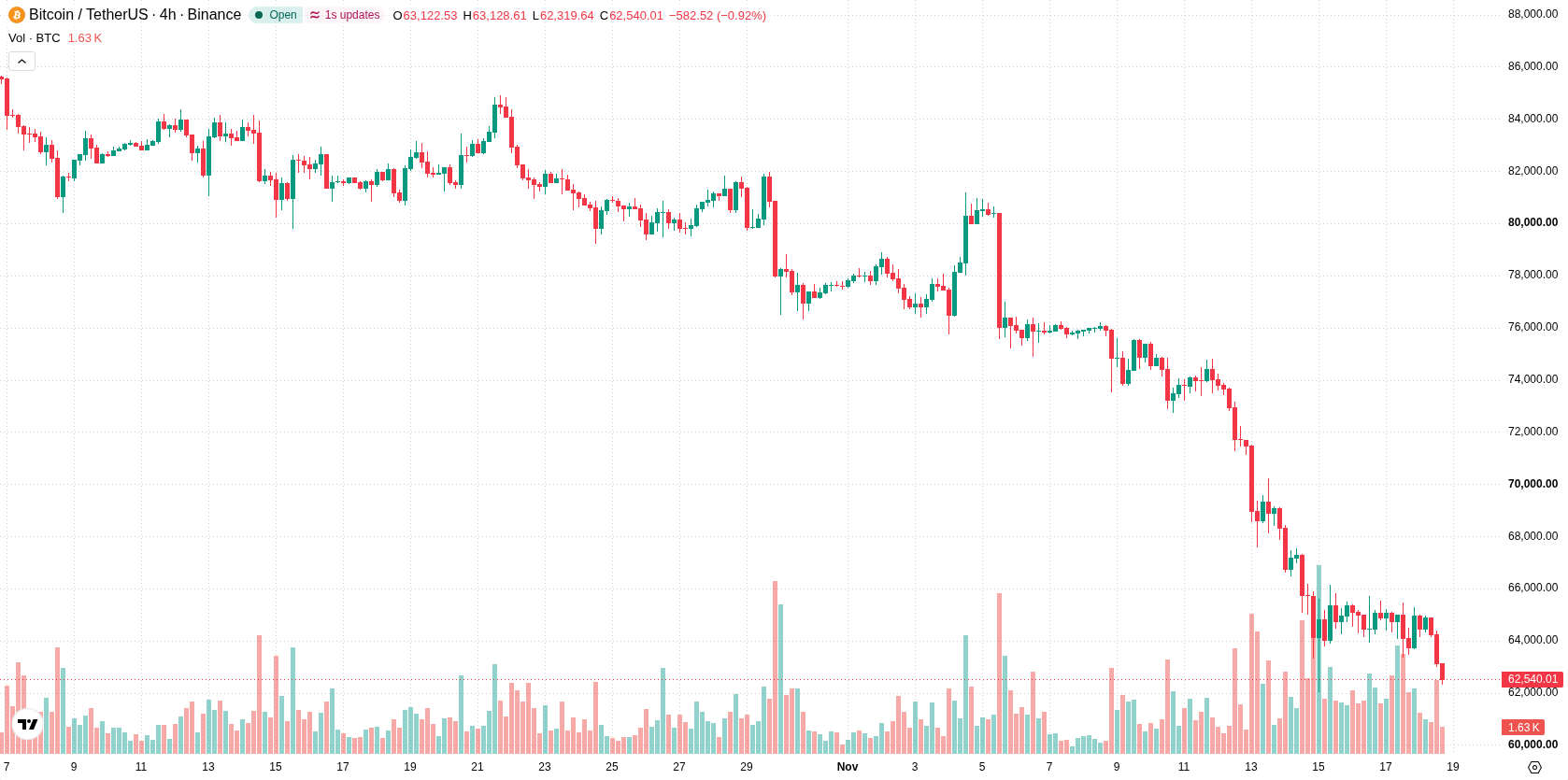
BTC below key averages and resistance amid bearish momentum
Current technicals show BTC is trading below the 4H SMA-50 at $68,157 and the 4H SMA-200 at $76,585, confirming a bearish setup consistent with the broader capital outflows. Additional resistance is established by the 4H Kijun level near $64,764, which has limited recovery attempts.
Momentum indicators are also negative, with the MACD providing a strong sell signal and the ADX reading at 48.65 pointing to continued trend strength on the downside. The price action remains confined beneath all major moving averages on both the 4H and daily charts, supporting a bearish technical outlook.
Institutional flows may dictate next key move for BTC
Ongoing ETF outflows and weak institutional participation remain key risks for further downside unless capital returns to the product. A sustained move above resistance around $64,765 would be needed to reduce immediate pressure, while continued outflows could mean deeper declines. Traders should monitor ETF flow data closely as a signal for potential shifts in direction.
Earlier, analysts noted that Bitcoin’s market vulnerability stems from limited yield and credit products, though projects like Stacks are developing tools to address this gap. The present article adds that, despite such long-term initiatives, near-term market direction will remain primarily shaped by shifts in institutional capital flows into U.S. spot Bitcoin ETFs.











-
 Afghanistan
-
 Albania
-
 Algeria
-
 Angola
-
 Argentina
-
 Armenia
-
 Australia
-
 Austria
-
 Azerbaijan
-
 Bahamas
-
 Bahrain
-
 Bangladesh
-
 Belarus
-
 Belgium
-
 Bolivia
-
 Botswana
-
 Brazil
-
 Brunei
-
 Bulgaria
-
 Cambodia
-
 Cameroon
-
 Canada
-
 Chile
-
 China
-
 Colombia
-
 Congo
-
 Costa Rica
-
 Cote d'Ivoire
-
 Croatia
-
 Cuba
-
 Cyprus
-
 Czechia
-
 DR Congo
-
 Denmark
-
 Dominican Republic
-
 Ecuador
-
 Egypt
-
 El Salvador
-
 Estonia
-
 Eswatini
-
 Ethiopia
-
 Finland
-
 France
-
 Georgia
-
 Germany
-
 Ghana
-
 Greece
-
 Haiti
-
 Hong Kong
-
 Hungary
-
 India
-
 Indonesia
-
 Iran, Islamic republic
-
 Iraq
-
 Ireland
-
 Israel
-
 Italy
-
 Jamaica
-
 Japan
-
 Jordan
-
 Kazakhstan
-
 Kenya
-
 Korea
-
 Kuwait
-
 Kyrgyzstan
-
 Laos
-
 Latvia
-
 Lebanon
-
 Lesotho
-
 Libya
-
 Lithuania
-
 Luxembourg
-
 Madagascar
-
 Malaysia
-
 Malta
-
 Mauritius
-
 Mexico
-
 Moldova
-
 Mongolia
-
 Montenegro
-
 Morocco
-
 Mozambique
-
 Myanmar
-
 Namibia
-
 Nepal
-
 Netherlands
-
 New Zealand
-
 Nigeria
-
 North Macedonia
-
 Norway
-
 Oman
-
 Pakistan
-
 Palestine
-
 Panama
-
 Papua New Guinea
-
 Paraguay
-
 Peru
-
 Philippines
-
 Poland
-
 Portugal
-
 Puerto Rico
-
 Qatar
-
 Reunion
-
 Romania
-
 Rwanda
-
 Saudi Arabia
-
 Serbia
-
 Singapore
-
 Slovakia
-
 Slovenia
-
 Somalia
-
 South Africa
-
 Spain
-
 Sri Lanka
-
 Sweden
-
 Switzerland
-
 Syria
-
 Taiwan
-
 Tajikistan
-
 Tanzania
-
 Thailand
-
 Trinidad and Tobago
-
 Tunisia
-
 Turkey
-
 UAE
-
 Uganda
-
 Ukraine
-
 United Kingdom
-
United States
-
 Uruguay
-
 Uzbekistan
-
 Venezuela
-
 Vietnam
-
 Yemen
-
 Zambia
-
 Zimbabwe
- Forex
- Crypto












