The tweet was deleted by the author.
But we saved everything 🙂.


Ethereum (ETH) closed today sharply lower, falling $77.77 or 4.49% from the previous close, and is trading near its intraday low of $1,647.61 following a volatile session. Since the open, the price decline has accelerated, and selling pressure has been persistent throughout the day, confirmed by strong bearish momentum. The drop is being driven by technical breakdowns below key moving averages and heavy outflows from Ethereum spot ETFs, while recent commentary from Vitalik Buterin on potential risks of EIP-8037 provides a cautionary backdrop but has not shifted the prevailing negative sentiment.
 1672.8
1845.07
Vitalik Buterin highlighted concerns about EIP-8037 and cautioned against making centralization a security norm in Ethereum upgrades, reinforcing the importance of smart contract stability and decentralization for long-term network credibility. This tweet matters as it can influence developer and market sentiment regarding upcoming protocol changes and their perceived security, which ultimately shapes adoption and ecosystem trust. However, despite these thoughtful warnings, the market has reacted more strongly to technical weaknesses and sustained outflows from major Ethereum ETFs, signaling investor caution about near-term demand. Meanwhile, developers have scheduled the Glamsterdam network upgrade for testing, outflows continue from spot Ethereum ETFs, and the Ethereum Foundation is pushing for post-quantum security improvements.
View post on X Loading...
ETH remains decisively below the MA-20 at $1,829.17, MA-50 at $2,153.81, and MA-200 at $2,107.95, signaling continued weakness across all timeframes. The closest resistance is at the Ichimoku Kijun of $1,994.00, with notable price support only emerging near $1,630. The MACD is strongly bearish and the RSI is deeply oversold, suggesting a dominant downtrend with limited potential for a swift recovery. Over the next five days, expect ETH to trade mainly between $1,630 and $1,680, with further downside favored — and note that Buterin’s warning has not been confirmed by price action, adding caution to the forecast.
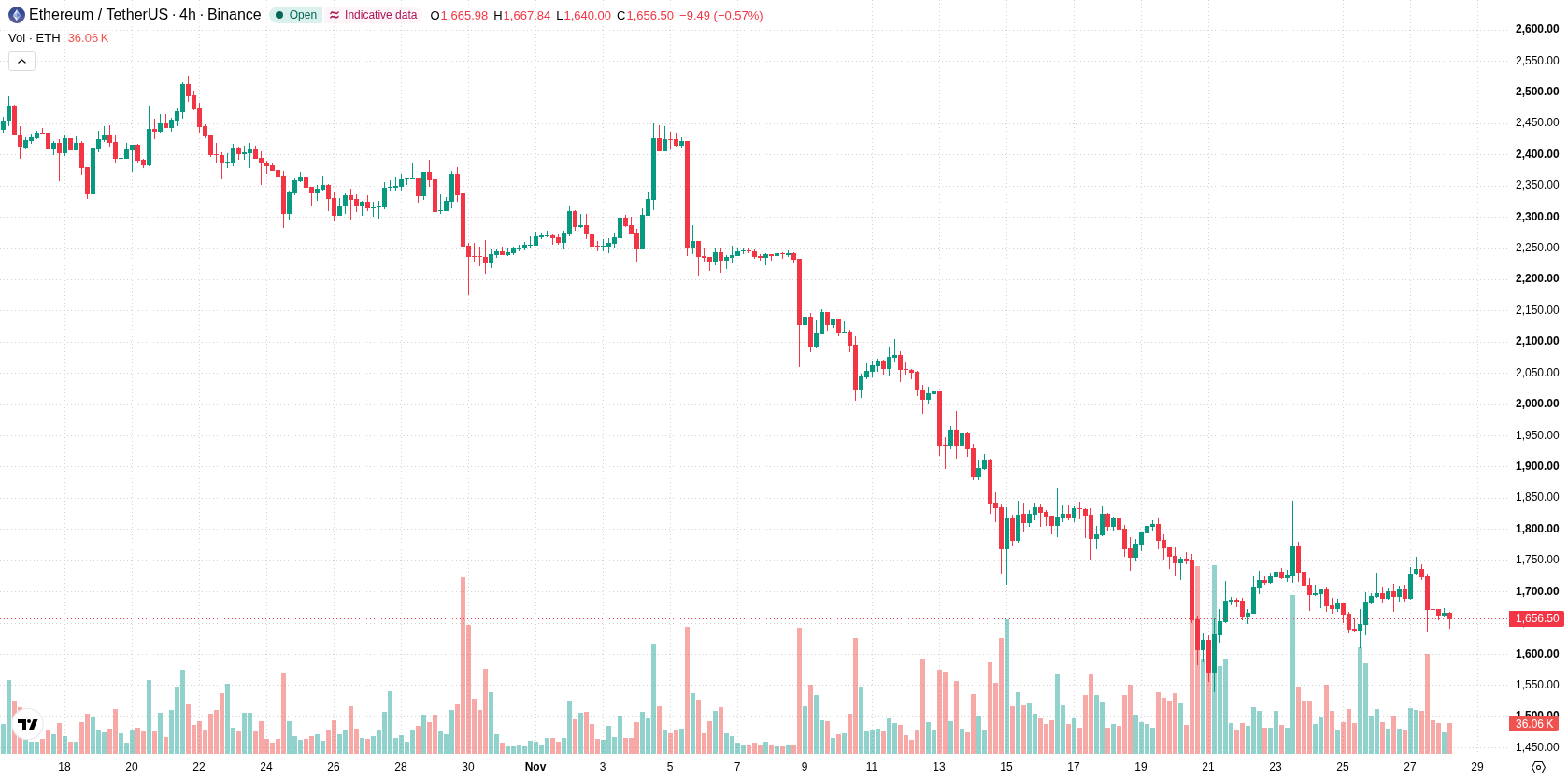
Previously it was reported that Ethereum exhibited persistent downside momentum, with technical signals and selling pressure outweighing positive ecosystem developments. This article builds on that analysis by examining whether recent price action suggests a stabilization or continuation of weakness, highlighting the importance of monitoring support levels for signs of a potential turnaround.



 Afghanistan
 Albania
 Algeria
 Angola
 Argentina
 Armenia
 Australia
 Austria
 Azerbaijan
 Bahamas
 Bahrain
 Bangladesh
 Belarus
 Belgium
 Bolivia
 Botswana
 Brazil
 Brunei
 Bulgaria
 Cambodia
 Cameroon
 Canada
 Chile
 China
 Colombia
 Congo
 Costa Rica
 Cote d'Ivoire
 Croatia
 Cuba
 Cyprus
 Czechia
 DR Congo
 Denmark
 Dominican Republic
 Ecuador
 Egypt
 El Salvador
 Estonia
 Eswatini
 Ethiopia
 Finland
 France
 Georgia
 Germany
 Ghana
 Greece
 Haiti
 Hong Kong
 Hungary
 India
 Indonesia
 Iran, Islamic republic
 Iraq
 Ireland
 Israel
 Italy
 Jamaica
 Japan
 Jordan
 Kazakhstan
 Kenya
 Korea
 Kuwait
 Kyrgyzstan
 Laos
 Latvia
 Lebanon
 Lesotho
 Libya
 Lithuania
 Luxembourg
 Madagascar
 Malaysia
 Malta
 Mauritius
 Mexico
 Moldova
 Mongolia
 Montenegro
 Morocco
 Mozambique
 Myanmar
 Namibia
 Nepal
 Netherlands
 New Zealand
 Nigeria
 North Macedonia
 Norway
 Oman
 Pakistan
 Palestine
 Panama
 Papua New Guinea
 Paraguay
 Peru
 Philippines
 Poland
 Portugal
 Puerto Rico
 Qatar
 Reunion
 Romania
 Rwanda
 Saudi Arabia
 Serbia
 Singapore
 Slovakia
 Slovenia
 Somalia
 South Africa
 Spain
 Sri Lanka
 Sweden
 Switzerland
 Syria
 Taiwan
 Tajikistan
 Tanzania
 Thailand
 Trinidad and Tobago
 Tunisia
 Turkey
 UAE
 Uganda
 Ukraine
 United Kingdom
United States
 Uruguay
 Uzbekistan
 Venezuela
 Vietnam
 Yemen
 Zambia
 Zimbabwe