

Can Bitcoin stabilize with U.S. inflation and tariff risks shaping risk appetite?

Bitcoin (BTC) is trading lower as of November 28, 2026, with the price last quoted at $59,453. A mix of higher U.S. inflation readings and renewed tariff risks has unsettled risk appetite across cryptocurrencies, keeping traders watchful for new macro signals.
 60266.01
64603.12
Highlights
- Bitcoin fell toward $57,000 as U.S. inflation exceeded expectations and new U.S. tariff concerns grew.
- Expectations for tighter U.S. monetary policy and potential trade barriers have diminished liquidity in crypto markets.
- Bitcoin trades below key trend levels with sell pressure showing, and traders look for stabilization above $59,775 for a rebound signal.
U.S. inflation and tariff concerns weigh on crypto risk appetite
According to Kucoin, on November 25, 2026, Bitcoin declined toward $57,000 after U.S. inflation data came in above expectations and concerns mounted about potential new U.S. tariffs targeting global trade.
These developments have sharpened expectations for tighter U.S. monetary policy and possible trade headwinds, which can reduce liquidity in financial markets and dampen risk-taking in assets like BTC.
Although no specific regulatory action against cryptocurrencies was reported, the uncertain macroeconomic backdrop continues to drive cautious behavior among digital asset traders.
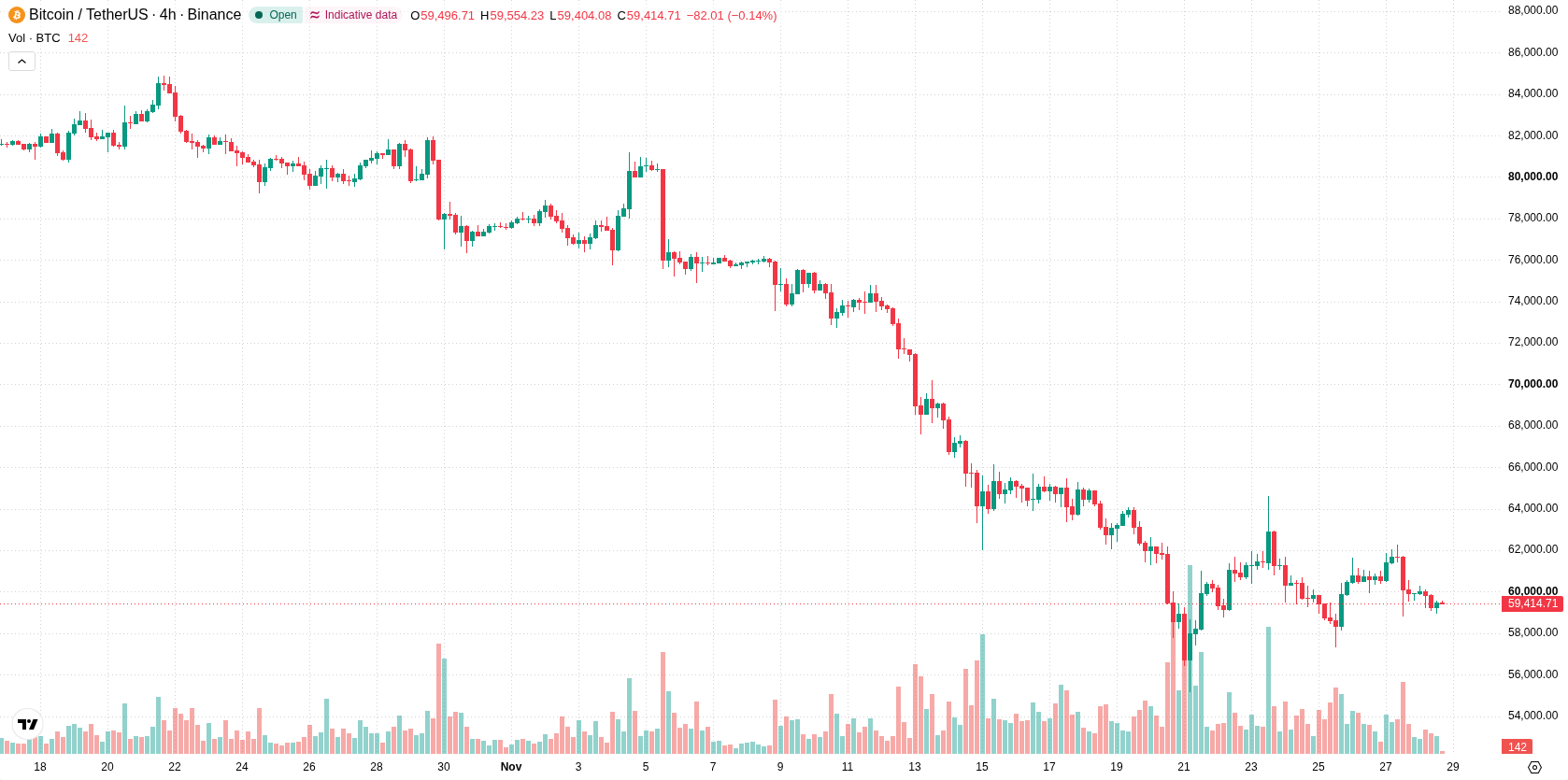
BTC below H4 SMAs and key resistance amid unclear momentum
In the 4H chart, BTC remains below key trend indicators, including the H4 SMA-50 at $60,144 and the SMA-200 at $70,241. The H4 Kijun at $59,775 is acting as immediate resistance, limiting attempts at a near-term recovery.
Momentum signals show mixed conditions; MACD points to sell pressure while ADX reflects a weak trend. This suggests that downward momentum may not be strongly established despite recent losses.
Macro-driven caution until confirmation above resistance or fresh policy signals
Macro risks from high U.S. inflation and trade uncertainties are likely to keep risk markets unsettled. Traders are watching for stabilization above the H4 Kijun around $59,775 to signal a potential rebound. A decisive break below recent support would reinforce a cautious stance until macro headwinds ease. Monitoring key U.S. economic releases and tariff announcements remains critical for the next directional cue in BTC.
Earlier, analysts noted that bitcoin’s investment narrative was being tested as it continued to move in tandem with other risk assets during macroeconomic stress. That assessment remains relevant, as recent price action underlines how heightened U.S. inflation and trade uncertainty are now the primary factors to watch for Bitcoin’s next directional move.











-
 Afghanistan
-
 Albania
-
 Algeria
-
 Angola
-
 Argentina
-
 Armenia
-
 Australia
-
 Austria
-
 Azerbaijan
-
 Bahamas
-
 Bahrain
-
 Bangladesh
-
 Belarus
-
 Belgium
-
 Bolivia
-
 Botswana
-
 Brazil
-
 Brunei
-
 Bulgaria
-
 Cambodia
-
 Cameroon
-
 Canada
-
 Chile
-
 China
-
 Colombia
-
 Congo
-
 Costa Rica
-
 Cote d'Ivoire
-
 Croatia
-
 Cuba
-
 Cyprus
-
 Czechia
-
 DR Congo
-
 Denmark
-
 Dominican Republic
-
 Ecuador
-
 Egypt
-
 El Salvador
-
 Estonia
-
 Eswatini
-
 Ethiopia
-
 Finland
-
 France
-
 Georgia
-
 Germany
-
 Ghana
-
 Greece
-
 Haiti
-
 Hong Kong
-
 Hungary
-
 India
-
 Indonesia
-
 Iran, Islamic republic
-
 Iraq
-
 Ireland
-
 Israel
-
 Italy
-
 Jamaica
-
 Japan
-
 Jordan
-
 Kazakhstan
-
 Kenya
-
 Korea
-
 Kuwait
-
 Kyrgyzstan
-
 Laos
-
 Latvia
-
 Lebanon
-
 Lesotho
-
 Libya
-
 Lithuania
-
 Luxembourg
-
 Madagascar
-
 Malaysia
-
 Malta
-
 Mauritius
-
 Mexico
-
 Moldova
-
 Mongolia
-
 Montenegro
-
 Morocco
-
 Mozambique
-
 Myanmar
-
 Namibia
-
 Nepal
-
 Netherlands
-
 New Zealand
-
 Nigeria
-
 North Macedonia
-
 Norway
-
 Oman
-
 Pakistan
-
 Palestine
-
 Panama
-
 Papua New Guinea
-
 Paraguay
-
 Peru
-
 Philippines
-
 Poland
-
 Portugal
-
 Puerto Rico
-
 Qatar
-
 Reunion
-
 Romania
-
 Rwanda
-
 Saudi Arabia
-
 Serbia
-
 Singapore
-
 Slovakia
-
 Slovenia
-
 Somalia
-
 South Africa
-
 Spain
-
 Sri Lanka
-
 Sweden
-
 Switzerland
-
 Syria
-
 Taiwan
-
 Tajikistan
-
 Tanzania
-
 Thailand
-
 Trinidad and Tobago
-
 Tunisia
-
 Turkey
-
 UAE
-
 Uganda
-
 Ukraine
-
 United Kingdom
-
United States
-
 Uruguay
-
 Uzbekistan
-
 Venezuela
-
 Vietnam
-
 Yemen
-
 Zambia
-
 Zimbabwe
- Forex
- Crypto












