

U.S. housing permit growth stalls as state building gaps weigh on affordability

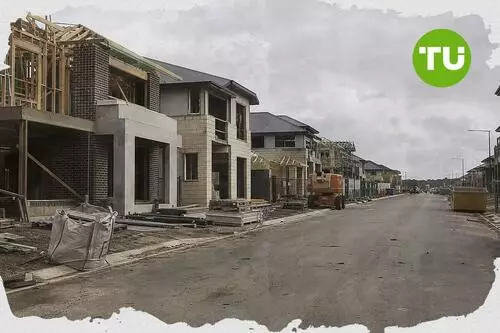
A weak housing construction pipeline across the U.S. is keeping pressure on affordability as new supply struggles to keep pace with household formation. Permit activity from January to August 2026 is essentially flat from 2025 and below 2023 levels, pointing to uneven building momentum across states.
Highlights
- U.S. housing permits issued from January to August 2026 total 968,187, up just 0.05% from 2025 but down 4.1% from 2023.
- South Carolina, Idaho, and North Carolina post per-capita permit rates more than double the national average, while Alaska, Connecticut, and Illinois have the lowest.
- Median homeowner income in 31 states falls short of that required to afford a median-priced home, with California showing a gap of $84,900.
Permit trends highlight uneven state construction
As reported by Business Insider, citing the Lied Center for Real Estate at the University of Nevada, Las Vegas, 968,187 housing permits are issued nationwide from January to August 2026, equal to about 2.83 permitted units per 1,000 residents. The center's October research report says permit volumes are essentially flat from 2025, up 0.05%, but down 4.1% from 2023.Nicholas Irwin, coauthor of the report and research director at the Lied Center for Real Estate, says the country is doing a poor job of building housing overall, even as some states outperform others. Single-family homes account for 64% of permits and multifamily units make up 32%, according to the report.
South Carolina, Idaho, and North Carolina post the highest permit rates per 1,000 residents, at least double the national average. At the other end of the scale, Alaska, Connecticut, and Illinois record the lowest per-capita permit rates among the states.
Affordability pressures persist across markets
Irwin says insufficient housing supply risks becoming a serious drag on affordability and future economic growth if new homes are not available as households form. He adds that states with stronger building activity could see slower price growth over time, which may help affordability if wages continue to rise.The report also compares the income needed to afford each state's median-priced home with the median income of homeowner households. California shows the largest gap, with median homeowner income at $138,800, or $84,900 below the level needed to afford the state's median-priced home.
In contrast, Iowa's typical homeowner earns $22,300 more than the income required to afford a median-priced home. Across 31 states, median homeowner income remains below the threshold needed to buy a median-priced home, underscoring the broad affordability challenge.
Irwin says states should keep building all types of housing and use local policy incentives suited to their own markets. He says different approaches to zoning and local government involvement in approving projects are shaping how much housing gets built across the country.
Pakistan’s push to expand housing and priority-sector lending outlined how the government is pressing banks to increase financing for housing, agriculture, and SMEs in exchange for access to incentives. Our earlier coverage noted targets for hundreds of billions of rupees in housing finance, faster processing timelines, and planned regulatory and risk-sharing reforms aimed at widening credit access and supporting growth.






Latest Housing Market News




-
 Afghanistan
-
 Albania
-
 Algeria
-
 Angola
-
 Argentina
-
 Armenia
-
 Australia
-
 Austria
-
 Azerbaijan
-
 Bahamas
-
 Bahrain
-
 Bangladesh
-
 Belarus
-
 Belgium
-
 Bolivia
-
 Botswana
-
 Brazil
-
 Brunei
-
 Bulgaria
-
 Cambodia
-
 Cameroon
-
 Canada
-
 Chile
-
 China
-
 Colombia
-
 Congo
-
 Costa Rica
-
 Cote d'Ivoire
-
 Croatia
-
 Cuba
-
 Cyprus
-
 Czechia
-
 DR Congo
-
 Denmark
-
 Dominican Republic
-
 Ecuador
-
 Egypt
-
 El Salvador
-
 Estonia
-
 Eswatini
-
 Ethiopia
-
 Finland
-
 France
-
 Georgia
-
 Germany
-
 Ghana
-
 Greece
-
 Haiti
-
 Hong Kong
-
 Hungary
-
 India
-
 Indonesia
-
 Iran, Islamic republic
-
 Iraq
-
 Ireland
-
 Israel
-
 Italy
-
 Jamaica
-
 Japan
-
 Jordan
-
 Kazakhstan
-
 Kenya
-
 Korea
-
 Kuwait
-
 Kyrgyzstan
-
 Laos
-
 Latvia
-
 Lebanon
-
 Lesotho
-
 Libya
-
 Lithuania
-
 Luxembourg
-
 Madagascar
-
 Malaysia
-
 Malta
-
 Mauritius
-
 Mexico
-
 Moldova
-
 Mongolia
-
 Montenegro
-
 Morocco
-
 Mozambique
-
 Myanmar
-
 Namibia
-
 Nepal
-
 Netherlands
-
 New Zealand
-
 Nigeria
-
 North Macedonia
-
 Norway
-
 Oman
-
 Pakistan
-
 Palestine
-
 Panama
-
 Papua New Guinea
-
 Paraguay
-
 Peru
-
 Philippines
-
 Poland
-
 Portugal
-
 Puerto Rico
-
 Qatar
-
 Reunion
-
 Romania
-
 Rwanda
-
 Saudi Arabia
-
 Serbia
-
 Singapore
-
 Slovakia
-
 Slovenia
-
 Somalia
-
 South Africa
-
 Spain
-
 Sri Lanka
-
 Sweden
-
 Switzerland
-
 Syria
-
 Taiwan
-
 Tajikistan
-
 Tanzania
-
 Thailand
-
 Trinidad and Tobago
-
 Tunisia
-
 Turkey
-
 UAE
-
 Uganda
-
 Ukraine
-
 United Kingdom
-
United States
-
 Uruguay
-
 Uzbekistan
-
 Venezuela
-
 Vietnam
-
 Yemen
-
 Zambia
-
 Zimbabwe
- Forex
- Crypto












