
Faucets, testnets and airdrops: Does free cryptocurrency really exist?
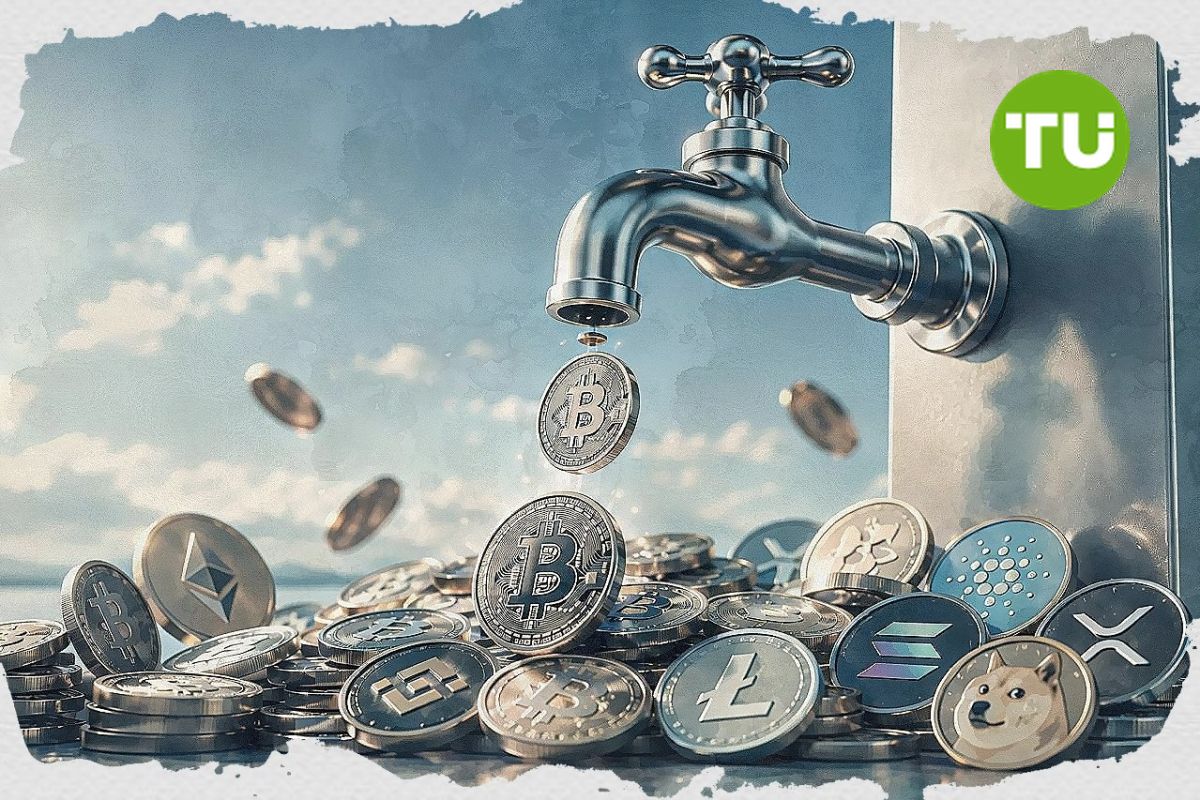
Looking for easy money in the crypto space has become a thankless task. The modern market has finally lost the romance of quick profits, while developers have learned to instantly filter out hunters of free tokens. Still, with the right approach, hunting for digital assets can still bring profit.
Crypto faucets as a school of patience for beginners
Getting cryptocurrency for simple clicks or watching ads is still quite possible. Modern crypto faucets pay micro-rewards in different assets — from satoshis and USDT to DOGE and other coins.
Each platform offers its own mechanics. Cointiply focuses on tasks and surveys, Fire Faucet attracts users with automated actions and multi-currency support, while CoinPayU emphasizes advertising. It is also worth mentioning the Bitcoin faucet in Tether Wallet, where users can receive a small amount of BTC via the Lightning Network.
The main advantage of faucets is that they require no starting capital. However, the payouts are tiny, and the time spent almost never pays off. Phishing clones, malicious links, and requests to pay a fee to unlock coins remain additional risks. To protect assets, users should create a separate wallet, never enter a seed phrase, and avoid leaving personal data on websites.
Educational campaigns and Web3 quests
Free crypto assets can be earned not only through faucets, but also through learning or simple tasks. Major platforms launch educational campaigns with short lessons, quizzes, and small token rewards.
A separate format is Web3 quests. Here, the user already interacts with the product: testing a wallet, performing on-chain actions, collecting points, badges, or NFTs. Such campaigns may take place within a specific wallet, protocol, or dedicated quest platform. The reward is usually small, but sometimes this activity can become a plus for a future drop.
The downside of this segment is geographic restrictions, KYC on exchanges, a lot of noise, and the risk of phishing campaigns in open Web3 quests. That is why official educational programs should be completed only on the exchanges’ own websites, while quests should be accessed only through verified project links. It is better not to sign unclear transactions.
Testnets and rewards for activity
Testnets attract users with the chance to earn from a project before its official launch. A user connects a wallet, receives free test tokens, and begins actively imitating the behavior of a real client. They make transactions, run swaps, test bridges, or mint test NFTs, hoping to convert their time into real tokens after the final release.
The main advantage of this method is that there is no need to spend personal savings. However, in 2026, developers have learned to clearly detect artificial activity and bot behavior. Projects now reward users not for the number of meaningless clicks, but for high-quality, regular interaction with the product over many weeks.
The chance of receiving a generous drop after the mainnet launch remains high, but it requires consistency. Besides, there are no guarantees of success. The development team can change distribution criteria at any moment, postpone the release, or abandon the final token distribution altogether.
Airdrops have become a game of endurance
Simple giveaways for following social media accounts have almost lost their value. Modern airdrops have turned into long campaigns with points, seasons, and hidden criteria. Projects push users not just to click a few buttons, but to use the product regularly, hold assets, provide liquidity, or perform on-chain actions.
L2 networks, modular blockchains, DeFi protocols, wallets, and infrastructure services attract the most interest. The market is also watching AI crypto projects, but there is more noise there, and it is harder to distinguish a strong product from pure marketing. The potential exists, but it does not cancel the basic rule: not everyone who arrives early receives an airdrop.
Blind farming is working worse and worse in 2026. It consumes time, fees, and attention, while the result may fail to cover the costs. That is why airdrop hunters no longer chase everything at once. They choose several strong ecosystems and work with them systematically.
A sober view of free market opportunities
Receiving digital assets without direct purchase is still possible, but in 2026, this is no longer a story about easy money. Faucets provide minimal amounts and mostly introduce users to the basic mechanics of wallets. Educational campaigns, testnets, and airdrops can bring more, but they require time, attention, and regular activity. Treating such cryptocurrency as literally free is the main mistake, because the user still pays with time, data, fees, and risk.
Trying to chase every giveaway quickly turns into chaos, so it is much more effective to choose several strong ecosystems and work with them systematically. At the same time, security matters no less than the reward itself. For quests and testnets, users should have a separate empty wallet, regularly revoke smart contract permissions, and never enter their seed phrase anywhere. Any offer to send a fee in order to receive a prize almost always turns out to be ordinary fraud.
In the end, the winner is not the one who clicks everything in sight, but the one who calculates the real costs. If time, network fees, and risks exceed the potential profit, such activity loses any meaning. The main task in this market is not simply to collect bonuses, but to avoid losing more than you expect to receive.







-
 Afghanistan
-
 Albania
-
 Algeria
-
 Angola
-
 Argentina
-
 Armenia
-
 Australia
-
 Austria
-
 Azerbaijan
-
 Bahamas
-
 Bahrain
-
 Bangladesh
-
 Belarus
-
 Belgium
-
 Bolivia
-
 Botswana
-
 Brazil
-
 Brunei
-
 Bulgaria
-
 Cambodia
-
 Cameroon
-
 Canada
-
 Chile
Chile
-
 China
China
-
 Colombia
-
 Congo
Congo
-
 Costa Rica
-
 Cote d'Ivoire
-
 Croatia
-
 Cuba
Cuba
-
 Cyprus
-
 Czechia
-
 DR Congo
-
 Denmark
-
 Dominican Republic
-
 Ecuador
-
 Egypt
Egypt
-
 El Salvador
-
 Estonia
-
 Eswatini
-
 Ethiopia
-
 Finland
-
 France
-
 Georgia
-
 Germany
-
 Ghana
Ghana
-
 Greece
-
 Haiti
Haiti
-
 Hong Kong
-
 Hungary
-
 India
India
-
 Indonesia
-
 Iran, Islamic republic
-
 Iraq
Iraq
-
 Ireland
-
 Israel
-
 Italy
Italy
-
 Jamaica
-
 Japan
Japan
-
 Jordan
-
 Kazakhstan
-
 Kenya
Kenya
-
 Korea
Korea
-
 Kuwait
-
 Kyrgyzstan
-
 Laos
Laos
-
 Latvia
-
 Lebanon
-
 Lesotho
-
 Libya
Libya
-
 Lithuania
-
 Luxembourg
-
 Madagascar
-
 Malaysia
-
 Malta
Malta
-
 Mauritius
-
 Mexico
-
 Moldova
-
 Mongolia
-
 Montenegro
-
 Morocco
-
 Mozambique
-
 Myanmar
-
 Namibia
-
 Nepal
Nepal
-
 Netherlands
-
 New Zealand
-
 Nigeria
-
 North Macedonia
-
 Norway
-
 Oman
Oman
-
 Pakistan
-
 Palestine
-
 Panama
-
 Papua New Guinea
-
 Paraguay
-
 Peru
Peru
-
 Philippines
-
 Poland
-
 Portugal
-
 Puerto Rico
-
 Qatar
Qatar
-
 Reunion
-
 Romania
-
 Rwanda
-
 Saudi Arabia
-
 Serbia
-
 Singapore
-
 Slovakia
-
 Slovenia
-
 Somalia
-
 South Africa
-
 Spain
Spain
-
 Sri Lanka
-
 Sweden
-
 Switzerland
-
 Syria
Syria
-
 Taiwan
-
 Tajikistan
-
 Tanzania
-
 Thailand
-
 Trinidad and Tobago
-
 Tunisia
-
 Turkey
-
 UAE
UAE
-
 Uganda
-
 Ukraine
-
 United Kingdom
-
United States
-
 Uruguay
-
 Uzbekistan
-
 Venezuela
-
 Vietnam
-
 Yemen
Yemen
-
 Zambia
-
 Zimbabwe
- Forex
- Crypto











