The tweet was deleted by the author.
But we saved everything 🙂.


Alibaba shares have lost nearly a third of their value since the start of the year, while the company's profits have plunged. The Chinese tech giant plans to take AI chipmaker T-Head public. But its attempt to profit from the artificial intelligence boom could come at a steep price.
On November 10, Alibaba announced plans to list its subsidiary T-Head on the Hong Kong Stock Exchange. The chipmaker had already filed a confidential IPO application in September. Alibaba has received permission to proceed with the spin-off process, although the listing itself still requires final approval from the exchange and Chinese regulators.
View post on X Loading...
T-Head shares are expected to be offered to retail and institutional investors. The IPO date, offering size, and company valuation have not yet been disclosed. Alibaba currently owns 100% of T-Head and expects to retain control of the subsidiary after the listing.
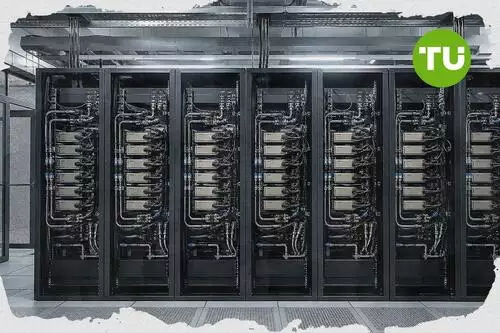
Alibaba established T-Head in 2018 to develop its own processors for data centers and artificial intelligence systems. In September, the subsidiary unveiled the Zhenwu V900 accelerator for AI model training and inference. According to Alibaba, the chip delivers three times the performance of its predecessor, the Zhenwu M890. Mass production of the new processor is scheduled for the first quarter of 2027. Meanwhile, Zhenwu-series chips are already used by more than 650 customers across the automotive, financial, energy, and other industries.
Alibaba's plans have yet to generate much enthusiasm in the stock market. During trading on November 11, the company's Hong Kong-listed shares fell about 1%, extending the previous day's decline. In contrast, when Bloomberg first reported preparations for T-Head's IPO in January, Alibaba's American depositary receipts jumped as much as 7.4%.
By taking T-Head public, Alibaba hopes to attract investors interested specifically in AI chip manufacturing rather than e-commerce. According to the company's official statement, a separate IPO would allow the market to value T-Head independently of Alibaba's other businesses. The chipmaker would also be able to raise funds on its own through share offerings, bond issuance, and bank loans.
View post on X Loading...
The reasons behind this strategy are evident in Alibaba's financial results. In the second quarter of 2026, the company's net income plunged 75% to $1.54 billion, even as revenue continued to grow. One reason was rising technology-related expenses.
Artificial intelligence development has become particularly expensive. Alibaba has announced plans to invest more than $53 billion in AI and cloud infrastructure over three years. In April–June alone, the company spent nearly $10 billion on equipment and infrastructure development.
At the same time, Alibaba's cloud business is growing rapidly and is already profitable. However, its AI models and applications business remains unprofitable. The division that includes the Qwen AI model recorded approximately $2 billion in losses during the quarter.
To recoup its enormous investments in artificial intelligence, Alibaba needs not only to develop its own AI services but also to sell technology to other companies. This is where T-Head has an opportunity to generate revenue. U.S. export restrictions have made it increasingly difficult for Chinese companies to purchase advanced Nvidia processors, prompting them to seek domestic alternatives. For example, China Unicom, China's second-largest mobile operator, has already signed a contract to use T-Head chips in a new data center.
However, Alibaba is far from the only company targeting this market. Huawei, Cambricon, and Baidu are also developing their own AI processors. Meanwhile, Nvidia remains the industry's technology leader. Although Alibaba claims its chips deliver high performance, there is still insufficient independent testing to directly compare them with Nvidia's most advanced products.
The situation in China's stock market creates another challenge. Regulators are tightening their scrutiny of technology IPOs amid concerns that the AI boom has pushed company valuations too high. For example, memory chipmaker YMTC has suspended preparations for a $4.9 billion listing. Baidu may also postpone the IPO of its AI chip subsidiary Kunlunxin until 2027.
An IPO would allow T-Head to raise funds independently for processor development while giving investors an opportunity to assess the market value of Alibaba's chip business separately. However, the listing itself will not halt rising AI spending or guarantee a recovery in profits. To achieve that, T-Head will need to increase sales and demonstrate that AI chip manufacturing can generate profits rather than simply require further investment.
Alibaba has an opportunity to benefit from growing demand for Chinese alternatives to Nvidia, but competition in this market is intensifying rapidly. If T-Head establishes itself among the leading chipmakers, it could support Alibaba's share price and reduce the company's dependence on e-commerce. Otherwise, its bet on artificial intelligence risks becoming another costly investment with uncertain returns.



 Afghanistan
 Albania
 Algeria
 Angola
 Argentina
 Armenia
 Australia
 Austria
 Azerbaijan
 Bahamas
 Bahrain
 Bangladesh
 Belarus
 Belgium
 Bolivia
 Botswana
 Brazil
 Brunei
 Bulgaria
 Cambodia
 Cameroon
 Canada
 Chile
 China
 Colombia
 Congo
 Costa Rica
 Cote d'Ivoire
 Croatia
 Cuba
 Cyprus
 Czechia
 DR Congo
 Denmark
 Dominican Republic
 Ecuador
 Egypt
 El Salvador
 Estonia
 Eswatini
 Ethiopia
 Finland
 France
 Georgia
 Germany
 Ghana
 Greece
 Haiti
 Hong Kong
 Hungary
 India
 Indonesia
 Iran, Islamic republic
 Iraq
 Ireland
 Israel
 Italy
 Jamaica
 Japan
 Jordan
 Kazakhstan
 Kenya
 Korea
 Kuwait
 Kyrgyzstan
 Laos
 Latvia
 Lebanon
 Lesotho
 Libya
 Lithuania
 Luxembourg
 Madagascar
 Malaysia
 Malta
 Mauritius
 Mexico
 Moldova
 Mongolia
 Montenegro
 Morocco
 Mozambique
 Myanmar
 Namibia
 Nepal
 Netherlands
 New Zealand
 Nigeria
 North Macedonia
 Norway
 Oman
 Pakistan
 Palestine
 Panama
 Papua New Guinea
 Paraguay
 Peru
 Philippines
 Poland
 Portugal
 Puerto Rico
 Qatar
 Reunion
 Romania
 Rwanda
 Saudi Arabia
 Serbia
 Singapore
 Slovakia
 Slovenia
 Somalia
 South Africa
 Spain
 Sri Lanka
 Sweden
 Switzerland
 Syria
 Taiwan
 Tajikistan
 Tanzania
 Thailand
 Trinidad and Tobago
 Tunisia
 Turkey
 UAE
 Uganda
 Ukraine
 United Kingdom
United States
 Uruguay
 Uzbekistan
 Venezuela
 Vietnam
 Yemen
 Zambia
 Zimbabwe