The tweet was deleted by the author.
But we saved everything 🙂.
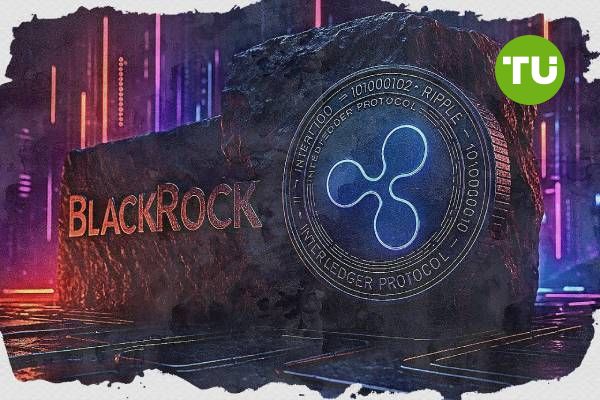
In recent months, one particular hypothesis has been actively circulating in cryptocurrency circles: Ripple and BlackRock, two companies with entirely different profiles, are allegedly working in secret on a joint mega-project — the creation of a tokenized infrastructure for global financial markets and digital identity.These rumors did not appear out of thin air — they are fueled by a series of coincidences and analytical commentary from several well-known crypto market researchers. Although there is no official confirmation, the puzzle looks suspiciously complete.
It all began with the XDNA token, developed by the DNA Protocol project on the XRP Ledger. Its goal is to create the Genomechain platform for storing and managing genomic and medical data using blockchain technology.
Such a project is innovative in itself, but the main intrigue lies elsewhere: the XDNA ticker is identical to that of BlackRock’s iShares Genomics and Healthcare ETF (XDNA). The thematic overlap is also striking — both the ETF and the blockchain project deal with genetics and bioinformatics.Crypto commentator Pumpius called it “a mirror”: a corporate exchange-traded fund and its “decentralized twin” on the blockchain. Whether this is a coincidence or a signal of hidden coordination remains an open question.
According to Pumpius, XDNA may be only the first step — a test asset for evaluating technologies and mechanisms. If the tokenization of genomic data proves successful, the same model could be scaled to other areas: bonds, equities, real estate, government registries, and even citizen identification systems.
And this is where Ripple enters the picture with its technological backbone — the XRP Ledger (XRPL). This blockchain offers low fees, instant transaction settlement, compatibility with banking systems, and built-in tools for decentralized identity and data storage.
Researcher Cosmo points to another piece of the puzzle — Ripple’s partnership with Ondo Finance. Under this collaboration, tokenized U.S. Treasury bonds have been issued on XRPL under the ticker OUSG. These tokens act as “wrappers” for investments in funds, including the BlackRock USD Treasury Fund.The mechanics are simple: Ripple provides the blockchain rails through which tokenized assets are issued and tracked, while BlackRock effectively supplies the liquidity and the traditional finance component. As a result, tokenized Treasuries become integrated into the XRPL ecosystem.Division of spheres of influence
Cosmo claims that Ripple and BlackRock are moving along parallel yet surprisingly well-aligned paths. Ripple, he says, is building its presence in the public sector, working on central bank digital currencies, property registries, government debt systems, and carbon credit tracking.
BlackRock, meanwhile, is focusing on corporate assets — from stocks and bonds to real estate markets and digital identity platforms. And while their areas of activity are formally different, the two directions seem to merge into a single picture. From a broader perspective, these two branches of development could become components of a unified global infrastructure, where tokenized assets and digital identities circulate within interconnected blockchain systems.
Another potential point of convergence is Aladdin, BlackRock’s AI platform that manages over $20 trillion in assets. According to unverified reports, Aladdin has been testing RippleNet and XRPL capabilities for cross-border settlements and real-time asset tracking.
An important nuance is that both Ripple and BlackRock already operate under the ISO 20022 standard, which is used by SWIFT, FedWire, and other key global financial networks. This means that technical integration between their systems, if needed, would not require radical changes.
Even more suspicion is fueled by details highlighted by researcher Chain Mind. He noted that the launch of XDNA took place on the same day Donald Trump signed an important legislative bill. Whether coincidence or signal is unclear, but that very same day, several “dormant” Bitcoin wallets that had not been active since 2011 suddenly came to life.
And when you add the human factor, the picture becomes even more intriguing: among the key figures at Ripple, BlackRock, and Ondo Finance are many individuals with shared pasts at Goldman Sachs. This list even includes former SEC Chair Gary Gensler, who once led a high-profile court case against Ripple. For some, these are just coincidences; for others, they are pieces of one large, orchestrated scenario.
Despite the entire set of coincidences — from matching tickers and shared partners to technical standards and event timing — neither company has confirmed the existence of a partnership. Everything remains at the level of analytical speculation and mysterious sources.
However, for many in the crypto community, the picture is already starting to take shape: if Ripple and BlackRock are indeed working together, this is not just another fintech project, but a fundamental shift in the architecture of global finance — one in which tokenization encompasses everything from money to personal data.

 Afghanistan
 Albania
 Algeria
 Angola
 Argentina
 Armenia
 Australia
 Austria
 Azerbaijan
 Bahamas
 Bahrain
 Bangladesh
 Belarus
 Belgium
 Bolivia
 Botswana
 Brazil
 Brunei
 Bulgaria
 Cambodia
 Cameroon
 Canada
 Chile
Chile
 China
China
 Colombia
 Congo
Congo
 Costa Rica
 Cote d'Ivoire
 Croatia
 Cuba
Cuba
 Cyprus
 Czechia
 DR Congo
 Denmark
 Dominican Republic
 Ecuador
 Egypt
Egypt
 El Salvador
 Estonia
 Eswatini
 Ethiopia
 Finland
 France
 Georgia
 Germany
 Ghana
Ghana
 Greece
 Haiti
Haiti
 Hong Kong
 Hungary
 India
India
 Indonesia
 Iran, Islamic republic
 Iraq
Iraq
 Ireland
 Israel
 Italy
Italy
 Jamaica
 Japan
Japan
 Jordan
 Kazakhstan
 Kenya
Kenya
 Korea
Korea
 Kuwait
 Kyrgyzstan
 Laos
Laos
 Latvia
 Lebanon
 Lesotho
 Libya
Libya
 Lithuania
 Luxembourg
 Madagascar
 Malaysia
 Malta
Malta
 Mauritius
 Mexico
 Moldova
 Mongolia
 Montenegro
 Morocco
 Mozambique
 Myanmar
 Namibia
 Nepal
Nepal
 Netherlands
 New Zealand
 Nigeria
 North Macedonia
 Norway
 Oman
Oman
 Pakistan
 Palestine
 Panama
 Papua New Guinea
 Paraguay
 Peru
Peru
 Philippines
 Poland
 Portugal
 Puerto Rico
 Qatar
Qatar
 Reunion
 Romania
 Rwanda
 Saudi Arabia
 Serbia
 Singapore
 Slovakia
 Slovenia
 Somalia
 South Africa
 Spain
Spain
 Sri Lanka
 Sweden
 Switzerland
 Syria
Syria
 Taiwan
 Tajikistan
 Tanzania
 Thailand
 Trinidad and Tobago
 Tunisia
 Turkey
 UAE
UAE
 Uganda
 Ukraine
 United Kingdom
United States
United Kingdom
United States
 Uruguay
 Uzbekistan
 Venezuela
 Vietnam
 Yemen
Yemen
 Zambia
 Zimbabwe