
Oil rises toward $97 as Strait of Hormuz remains restricted
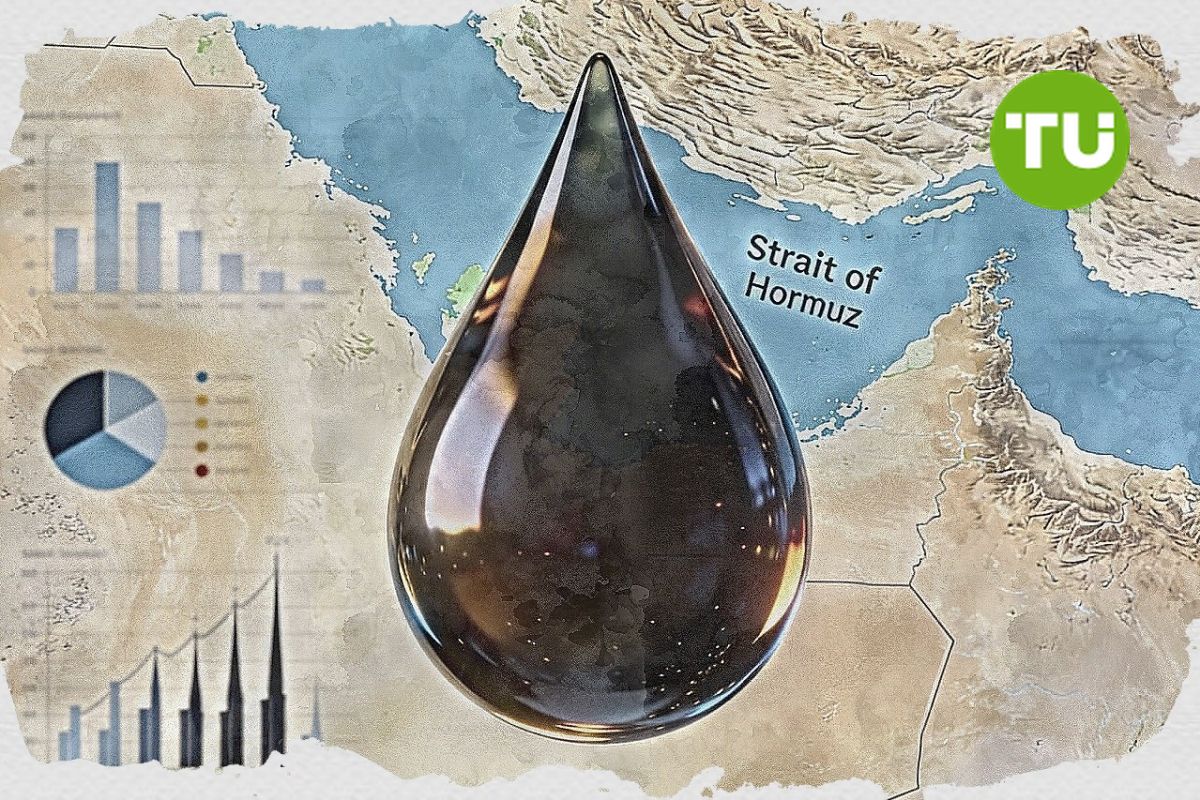
Oil prices rose on Thursday after the biggest one-day drop since April 2020, with the market quickly recovering part of the selloff once it became clear that the declared ceasefire in the Middle East did not mean supply flows were returning to normal. The Strait of Hormuz, through which about 20% of global oil and gas trade passes, remains effectively restricted, while Israeli strikes on Lebanon have again cast doubt on the durability of the fragile deal.
Highlights
- Brent and WTI rebounded quickly after the selloff, but are still trading near $97 because the market does not believe supply flows will normalize soon.
- The Strait of Hormuz is still operating far below normal levels: four tracked vessels in a day versus roughly 140 before the war.
- Even if the strait partially reopens, logistics and energy infrastructure will take weeks or longer to recover, meaning price volatility is likely to persist.
Oil recovers part of the slump
According to Bloomberg, Brent rose to $96.77 a barrel, while US benchmark WTI climbed to $97.23, after Brent had fallen 13.29% to $94.75 a day earlier. The rebound reflected not only Iran ceasefire falters, but also the rapid return of a geopolitical risk premium to prices, as investors concluded that traffic through Hormuz remained severely limited and that the parties were offering conflicting accounts of both the strait’s status and the scope of the agreement.
Iranian news agency Fars reported that tanker traffic had been suspended following Israeli strikes on Lebanon. Washington did not confirm that account: the White House said President Donald Trump expected the strait to reopen immediately and without restrictions, while Vice President JD Vance was set to lead the U.S. delegation to talks in Islamabad on Saturday. Against that backdrop, two fully loaded Chinese tankers approached Hormuz, becoming an early test of whether the ceasefire could function in practice.
Open in theory, not yet for the market
Despite statements about safe maritime passage, traffic through Hormuz remains minimal. Reports regarding Iran's cryptocurrency fees—$1 per barrel in cryptocurrency—have now been confirmed. According to AP, only four vessels with active AIS tracking passed through the strait on Wednesday, compared with an average of about 140 a day before the war. Roughly 2,000 ships and 20,000 seafarers remain stranded in the Persian Gulf, and shipowners are not rushing back to normal schedules without clear security guarantees.
The market is reacting not only to weak shipping flows, but also to renewed signs of risk. Iranian semi-official media published a map suggesting that parts of the route may have been mined. At the same time, Israel continued strikes on Lebanon, while Tehran said it considered those actions a violation of the ceasefire terms. As a result, the oil market is no longer trading a de-escalation scenario, but the possibility of another disruption.
What this means for the energy market
Even if transit through the Strait of Hormuz begins to recover, the market will not return to normal quickly. WIRED reported that traffic through the strait fell by roughly 95% during the conflict, and that recovery could take months because of the backlog of vessels, damaged infrastructure, reduced output, and disruptions at refineries and ports.
For the market, the message is clear: the post-ceasefire price drop was too sharp, while physical supplies remain constrained. With Brent and WTI again hovering near $97, the risk of further price spikes remains high, and the consequences for inflation, trade, and fuel costs extend well beyond the region.
Earlier, we reported that Bitcoin holds near $71,000 as Iran ceasefire falters.


Latest Iran war News






-
 Afghanistan
-
 Albania
-
 Algeria
-
 Angola
-
 Argentina
-
 Armenia
-
 Australia
-
 Austria
-
 Azerbaijan
-
 Bahamas
-
 Bahrain
-
 Bangladesh
-
 Belarus
-
 Belgium
-
 Bolivia
-
 Botswana
-
 Brazil
-
 Brunei
-
 Bulgaria
-
 Cambodia
-
 Cameroon
-
 Canada
-
 Chile
Chile
-
 China
China
-
 Colombia
-
 Congo
Congo
-
 Costa Rica
-
 Cote d'Ivoire
-
 Croatia
-
 Cuba
Cuba
-
 Cyprus
-
 Czechia
-
 DR Congo
-
 Denmark
-
 Dominican Republic
-
 Ecuador
-
 Egypt
Egypt
-
 El Salvador
-
 Estonia
-
 Eswatini
-
 Ethiopia
-
 Finland
-
 France
-
 Georgia
-
 Germany
-
 Ghana
Ghana
-
 Greece
-
 Haiti
Haiti
-
 Hong Kong
-
 Hungary
-
 India
India
-
 Indonesia
-
 Iran, Islamic republic
-
 Iraq
Iraq
-
 Ireland
-
 Israel
-
 Italy
Italy
-
 Jamaica
-
 Japan
Japan
-
 Jordan
-
 Kazakhstan
-
 Kenya
Kenya
-
 Korea
Korea
-
 Kuwait
-
 Kyrgyzstan
-
 Laos
Laos
-
 Latvia
-
 Lebanon
-
 Lesotho
-
 Libya
Libya
-
 Lithuania
-
 Luxembourg
-
 Madagascar
-
 Malaysia
-
 Malta
Malta
-
 Mauritius
-
 Mexico
-
 Moldova
-
 Mongolia
-
 Montenegro
-
 Morocco
-
 Mozambique
-
 Myanmar
-
 Namibia
-
 Nepal
Nepal
-
 Netherlands
-
 New Zealand
-
 Nigeria
-
 North Macedonia
-
 Norway
-
 Oman
Oman
-
 Pakistan
-
 Palestine
-
 Panama
-
 Papua New Guinea
-
 Paraguay
-
 Peru
Peru
-
 Philippines
-
 Poland
-
 Portugal
-
 Puerto Rico
-
 Qatar
Qatar
-
 Reunion
-
 Romania
-
 Rwanda
-
 Saudi Arabia
-
 Serbia
-
 Singapore
-
 Slovakia
-
 Slovenia
-
 Somalia
-
 South Africa
-
 Spain
Spain
-
 Sri Lanka
-
 Sweden
-
 Switzerland
-
 Syria
Syria
-
 Taiwan
-
 Tajikistan
-
 Tanzania
-
 Thailand
-
 Trinidad and Tobago
-
 Tunisia
-
 Turkey
-
 UAE
UAE
-
 Uganda
-
 Ukraine
-
 United Kingdom
-
United States
-
 Uruguay
-
 Uzbekistan
-
 Venezuela
-
 Vietnam
-
 Yemen
Yemen
-
 Zambia
-
 Zimbabwe
- Forex
- Crypto











