

IMF warns Middle East conflict poses biggest risk to regional growth outlook

Mounting geopolitical strain is weighing on economic prospects across the Middle East and Central Asia as policymakers confront the risk of renewed disruptions to energy and trade flows. The IMF says the shock is hitting countries unevenly, with a regional contraction expected in 2026 before a strong but uneven rebound in 2027.
Highlights
- IMF forecasts a 1.3% contraction in Middle East, North Africa and Pakistan region in 2026 after 3.3% growth in 2025, with a rebound to 6.6% in 2027.
- Prolonged Middle East war and fresh energy or trade disruptions could further intensify economic shocks and volatility across affected oil-exporting countries.
- IMF warns regional buffer capacity is low, urging policymakers to prioritize price stability and fiscal resilience to withstand future shocks.
Conflict risks and growth forecasts
As reported by BusinessWorld Online, citing Reuters, the International Monetary Fund said prolonged war in the Middle East and any further disruption to energy production, shipping routes or critical infrastructure pose the biggest threat to economies across the Middle East and Central Asia.Jihad Azour, the IMF’s director for the Middle East and Central Asia, said at a news conference during the IMF and World Bank annual meetings in Bangkok that the war is creating a highly uneven economic shock across the wider region, with countries directly affected facing severe pressure. He said the outlook depends heavily on how quickly energy production and trade normalize and on governments’ ability to preserve macroeconomic stability.
The IMF is forecasting a 1.3% contraction in the Middle East, North Africa and Pakistan region in 2026, after growth of 3.3% in 2025. It then expects a strong but uneven rebound in 2027, with growth reaching 6.6%, although Azour said performance will differ substantially across countries.
Oil-exporting economies directly affected by the war are expected to post a significant contraction in 2026 and then a sharp recovery in 2027 as energy production normalizes. Even so, the IMF expects output to remain below pre-war medium-term projections.
Regional resilience and policy priorities
Azour said pre-war surpluses, alternative trade routes, demand adjustments and substantial inventory drawdowns have helped contain the impact of the energy shock caused by the U.S.-Israeli-led attacks on Iran and Tehran’s subsequent closure of the Strait of Hormuz.He warned that those buffers are limited, with inventories lower and spare capacity tighter, meaning any renewed disruption could trigger much larger price moves. Oil-importing countries in the region have remained resilient and are expected to continue doing so, he said.
In the Caucasus and Central Asia, the IMF said economies have weathered the shock relatively well and inflation is expected to keep declining from elevated levels. The fund projects growth in that region to slow to 5.2% in 2026 and 5% in 2027, from 6.2% in 2025.
Azour said policymakers should prioritize price stability, rebuild fiscal buffers and strengthen their capacity to withstand future shocks.
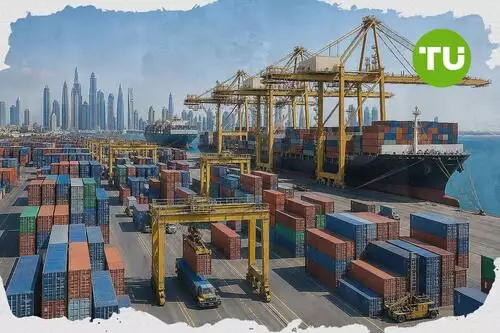
In our earlier report on trade shifts and supply-chain rerouting amid the Middle East war, we noted that repeated disruptions are pushing companies to build more resilient — but often costlier — logistics and contingency routes that could persist even after the fighting eases. The piece also highlighted expectations for a sharp hit to the region’s exports and imports, while pointing out that global trade growth could still be supported by demand for AI-related products despite heightened geopolitical risks.






Latest IMF News



-
 Afghanistan
-
 Albania
-
 Algeria
-
 Angola
-
 Argentina
-
 Armenia
-
 Australia
-
 Austria
-
 Azerbaijan
-
 Bahamas
-
 Bahrain
-
 Bangladesh
-
 Belarus
-
 Belgium
-
 Bolivia
-
 Botswana
-
 Brazil
-
 Brunei
-
 Bulgaria
-
 Cambodia
-
 Cameroon
-
 Canada
-
 Chile
-
 China
-
 Colombia
-
 Congo
-
 Costa Rica
-
 Cote d'Ivoire
-
 Croatia
-
 Cuba
-
 Cyprus
-
 Czechia
-
 DR Congo
-
 Denmark
-
 Dominican Republic
-
 Ecuador
-
 Egypt
-
 El Salvador
-
 Estonia
-
 Eswatini
-
 Ethiopia
-
 Finland
-
 France
-
 Georgia
-
 Germany
-
 Ghana
-
 Greece
-
 Haiti
-
 Hong Kong
-
 Hungary
-
 India
-
 Indonesia
-
 Iran, Islamic republic
-
 Iraq
-
 Ireland
-
 Israel
-
 Italy
-
 Jamaica
-
 Japan
-
 Jordan
-
 Kazakhstan
-
 Kenya
-
 Korea
-
 Kuwait
-
 Kyrgyzstan
-
 Laos
-
 Latvia
-
 Lebanon
-
 Lesotho
-
 Libya
-
 Lithuania
-
 Luxembourg
-
 Madagascar
-
 Malaysia
-
 Malta
-
 Mauritius
-
 Mexico
-
 Moldova
-
 Mongolia
-
 Montenegro
-
 Morocco
-
 Mozambique
-
 Myanmar
-
 Namibia
-
 Nepal
-
 Netherlands
-
 New Zealand
-
 Nigeria
-
 North Macedonia
-
 Norway
-
 Oman
-
 Pakistan
-
 Palestine
-
 Panama
-
 Papua New Guinea
-
 Paraguay
-
 Peru
-
 Philippines
-
 Poland
-
 Portugal
-
 Puerto Rico
-
 Qatar
-
 Reunion
-
 Romania
-
 Rwanda
-
 Saudi Arabia
-
 Serbia
-
 Singapore
-
 Slovakia
-
 Slovenia
-
 Somalia
-
 South Africa
-
 Spain
-
 Sri Lanka
-
 Sweden
-
 Switzerland
-
 Syria
-
 Taiwan
-
 Tajikistan
-
 Tanzania
-
 Thailand
-
 Trinidad and Tobago
-
 Tunisia
-
 Turkey
-
 UAE
-
 Uganda
-
 Ukraine
-
 United Kingdom
-
United States
-
 Uruguay
-
 Uzbekistan
-
 Venezuela
-
 Vietnam
-
 Yemen
-
 Zambia
-
 Zimbabwe
- Forex
- Crypto












