

EBRD, STEG sign financing for Tunisia battery-backed solar project

Tunisia is advancing plans to expand renewable power capacity as it seeks to diversify its energy mix and cut reliance on imported fossil fuels. A new financing package supports the country’s first utility-scale battery storage system, integrated with a solar plant in Beni Mhira in the southern governorate of Tataouine.
Highlights
- EBRD and STEG signed a €50 million financing package for a 50 MWac solar plant with a 10 MW/20 MWh battery system in Beni Mhira, Tunisia.
- The package includes a €30 million EBRD sovereign-guaranteed loan and a €20 million concessional loan from the Climate Investment Funds’ Clean Technology Fund.
- This project marks Tunisia’s first utility-scale battery energy storage system and supports STEG’s plan to expand to 380 MWac solar and 100 MWh storage capacity.
Financing package and project scope
As reported by the European Bank for Reconstruction and Development, it has signed a €50 million financing package with Société Tunisienne de l'Electricité et du Gaz, or STEG, for a new solar power plant integrated with Tunisia’s first utility-scale battery energy storage system.The package includes a €30 million sovereign-guaranteed EBRD loan to STEG and a €20 million concessional loan from the Climate Investment Funds’ Clean Technology Fund. The concessional financing is provided under the Global Energy Storage Program and is intended to make the investment more affordable while supporting battery storage deployment in Tunisia.
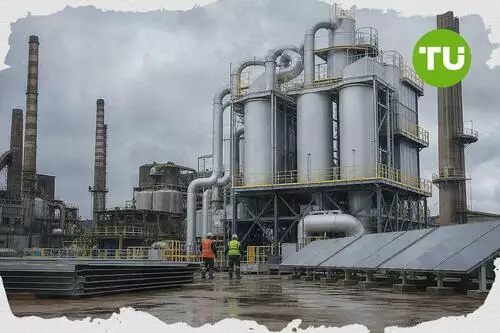
The project in Beni Mhira will comprise a 50 MWac solar photovoltaic plant integrated with a 10 MW/20 MWh battery energy storage system. It also includes a 1.2 km high-voltage transmission line linking the facility to the national grid.
Grid flexibility and wider energy transition
Combining solar generation with battery storage is expected to improve the flexibility of Tunisia’s power system as more renewable capacity comes online. The investment, backed by EBRD technical cooperation, is also designed to help STEG build the technical and operational capabilities needed to integrate storage into the national grid.EBRD Sustainable Infrastructure Director for the Middle East and Africa Aida Sitdikova says the project is an important milestone for Tunisia’s energy security and energy transition, adding that it can help create experience and frameworks for further storage projects, including private-sector investment. STEG Chief Executive Officer Faycel Tarifa says the project marks a new chapter for the utility and the country’s power system as storage and dispatch become increasingly important for secure and reliable supply.
The project forms part of STEG’s broader programme to develop 380 MWac of solar generation capacity and 100 MWh of battery storage. It also builds on EBRD’s previous support for Tunisia’s power sector, including grid reinforcement, early large-scale private renewable energy projects and the ELMED electricity interconnector between Tunisia and Italy. Since starting operations in Tunisia in 2012, the bank has invested more than €3.3 billion across more than 100 projects.
The latest update follows our earlier article on sovereign borrowing risks as geopolitical shocks and fiscal spending strain emerging-market finances.






Latest EBRD News



-
 Afghanistan
-
 Albania
-
 Algeria
-
 Angola
-
 Argentina
-
 Armenia
-
 Australia
-
 Austria
-
 Azerbaijan
-
 Bahamas
-
 Bahrain
-
 Bangladesh
-
 Belarus
-
 Belgium
-
 Bolivia
-
 Botswana
-
 Brazil
-
 Brunei
-
 Bulgaria
-
 Cambodia
-
 Cameroon
-
 Canada
-
 Chile
-
 China
-
 Colombia
-
 Congo
-
 Costa Rica
-
 Cote d'Ivoire
-
 Croatia
-
 Cuba
-
 Cyprus
-
 Czechia
-
 DR Congo
-
 Denmark
-
 Dominican Republic
-
 Ecuador
-
 Egypt
-
 El Salvador
-
 Estonia
-
 Eswatini
-
 Ethiopia
-
 Finland
-
 France
-
 Georgia
-
 Germany
-
 Ghana
-
 Greece
-
 Haiti
-
 Hong Kong
-
 Hungary
-
 India
-
 Indonesia
-
 Iran, Islamic republic
-
 Iraq
-
 Ireland
-
 Israel
-
 Italy
-
 Jamaica
-
 Japan
-
 Jordan
-
 Kazakhstan
-
 Kenya
-
 Korea
-
 Kuwait
-
 Kyrgyzstan
-
 Laos
-
 Latvia
-
 Lebanon
-
 Lesotho
-
 Libya
-
 Lithuania
-
 Luxembourg
-
 Madagascar
-
 Malaysia
-
 Malta
-
 Mauritius
-
 Mexico
-
 Moldova
-
 Mongolia
-
 Montenegro
-
 Morocco
-
 Mozambique
-
 Myanmar
-
 Namibia
-
 Nepal
-
 Netherlands
-
 New Zealand
-
 Nigeria
-
 North Macedonia
-
 Norway
-
 Oman
-
 Pakistan
-
 Palestine
-
 Panama
-
 Papua New Guinea
-
 Paraguay
-
 Peru
-
 Philippines
-
 Poland
-
 Portugal
-
 Puerto Rico
-
 Qatar
-
 Reunion
-
 Romania
-
 Rwanda
-
 Saudi Arabia
-
 Serbia
-
 Singapore
-
 Slovakia
-
 Slovenia
-
 Somalia
-
 South Africa
-
 Spain
-
 Sri Lanka
-
 Sweden
-
 Switzerland
-
 Syria
-
 Taiwan
-
 Tajikistan
-
 Tanzania
-
 Thailand
-
 Trinidad and Tobago
-
 Tunisia
-
 Turkey
-
 UAE
-
 Uganda
-
 Ukraine
-
 United Kingdom
-
United States
-
 Uruguay
-
 Uzbekistan
-
 Venezuela
-
 Vietnam
-
 Yemen
-
 Zambia
-
 Zimbabwe
- Forex
- Crypto












