

SEALSQ stock falls over 6% as technical selling pressure persists

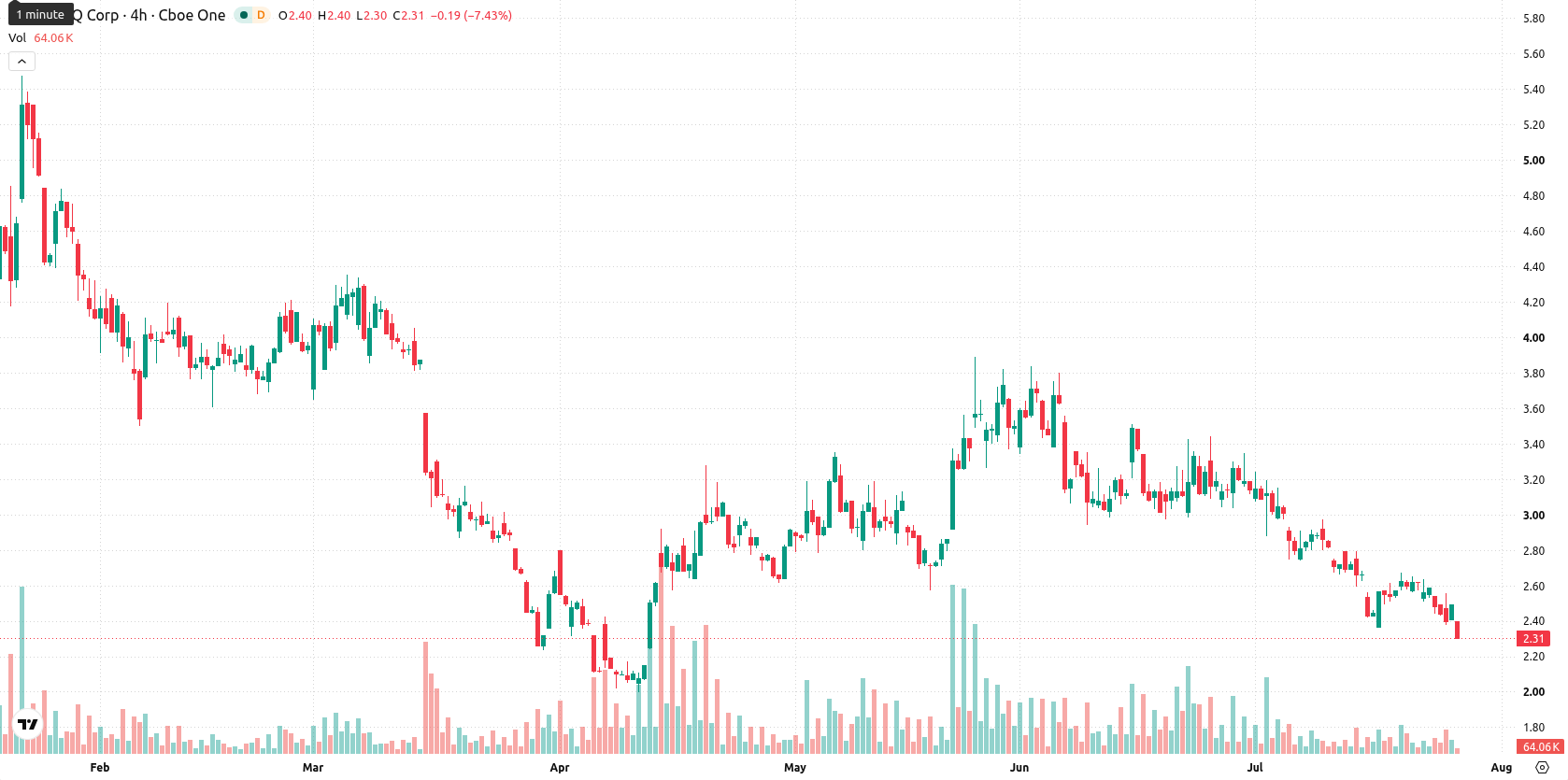
Technical selling pressure drove SEALSQ Corp (LAES) down 6.22% today, as persistent negative momentum kept sellers in control. The move is supported by the stock trading below all major moving averages, reinforcing a bearish tone across all timeframes.
 1.24
1.36
Highlights
- SEALSQ trades below major moving averages, reflecting sustained bearish momentum across short, medium, and long timeframes.
- Bearish momentum dominates as most indicators point to selling pressure, with mild oversold signals providing limited relief.
- Short-term price is expected to remain between $2.2 support and $2.55 resistance, with an 80%+ probability of downside movement.
Bearish long-term signals as averages and momentum remain negative
SEALSQ trades below all major moving averages, with the current price of $2.33 under the 20-day ($2.75), 50-day ($3.04), and 200-day ($3.88) levels, which signals ongoing pressure from sellers across short, medium, and long timeframes. Near-term, resistance is established at $2.39 with support at $2.2, and the alignment of the 50-day versus the 200-day averages confirms a bearish longer-term trend. Momentum readings are mostly negative. The MACD and Average Directional Index (ADX) both indicate weak and bearish momentum, while the Relative Strength Index (RSI) is at 36.14 and the Commodity Channel Index (CCI) at -95.1, pointing to mildly oversold conditions. Sellers dominate intraday flows as shown by Bull/Bear Power (BBP) at -0.08, and the Stochastic RSI gives a single bullish signal in an otherwise bearish setup. The stock opened with a downside gap of approximately $0.02 or -0.81%, then continued to trade down by $0.1542 or 6.22%, with current pricing near the session low and intraday volatility at 6.69%. The overall tone reflects persistent pressure after the open, matching the momentum indicators, though there is divergence from the Stochastic RSI's isolated buy signal.
Earlier, analysts noted that SEALSQ exhibited persistent bearish momentum and a heightened risk of further declines. The latest technical developments not only reinforce this negative outlook but also suggest that traders should closely monitor for a potential breakdown below $2.20, which could signal additional downside risk in the near term.










-
 Afghanistan
-
 Albania
-
 Algeria
-
 Angola
-
 Argentina
-
 Armenia
-
 Australia
-
 Austria
-
 Azerbaijan
-
 Bahamas
-
 Bahrain
-
 Bangladesh
-
 Belarus
-
 Belgium
-
 Bolivia
-
 Botswana
-
 Brazil
-
 Brunei
-
 Bulgaria
-
 Cambodia
-
 Cameroon
-
 Canada
-
 Chile
-
 China
-
 Colombia
-
 Congo
-
 Costa Rica
-
 Cote d'Ivoire
-
 Croatia
-
 Cuba
-
 Cyprus
-
 Czechia
-
 DR Congo
-
 Denmark
-
 Dominican Republic
-
 Ecuador
-
 Egypt
-
 El Salvador
-
 Estonia
-
 Eswatini
-
 Ethiopia
-
 Finland
-
 France
-
 Georgia
-
 Germany
-
 Ghana
-
 Greece
-
 Haiti
-
 Hong Kong
-
 Hungary
-
 India
-
 Indonesia
-
 Iran, Islamic republic
-
 Iraq
-
 Ireland
-
 Israel
-
 Italy
-
 Jamaica
-
 Japan
-
 Jordan
-
 Kazakhstan
-
 Kenya
-
 Korea
-
 Kuwait
-
 Kyrgyzstan
-
 Laos
-
 Latvia
-
 Lebanon
-
 Lesotho
-
 Libya
-
 Lithuania
-
 Luxembourg
-
 Madagascar
-
 Malaysia
-
 Malta
-
 Mauritius
-
 Mexico
-
 Moldova
-
 Mongolia
-
 Montenegro
-
 Morocco
-
 Mozambique
-
 Myanmar
-
 Namibia
-
 Nepal
-
 Netherlands
-
 New Zealand
-
 Nigeria
-
 North Macedonia
-
 Norway
-
 Oman
-
 Pakistan
-
 Palestine
-
 Panama
-
 Papua New Guinea
-
 Paraguay
-
 Peru
-
 Philippines
-
 Poland
-
 Portugal
-
 Puerto Rico
-
 Qatar
-
 Reunion
-
 Romania
-
 Rwanda
-
 Saudi Arabia
-
 Serbia
-
 Singapore
-
 Slovakia
-
 Slovenia
-
 Somalia
-
 South Africa
-
 Spain
-
 Sri Lanka
-
 Sweden
-
 Switzerland
-
 Syria
-
 Taiwan
-
 Tajikistan
-
 Tanzania
-
 Thailand
-
 Trinidad and Tobago
-
 Tunisia
-
 Turkey
-
 UAE
-
 Uganda
-
 Ukraine
-
 United Kingdom
-
United States
-
 Uruguay
-
 Uzbekistan
-
 Venezuela
-
 Vietnam
-
 Yemen
-
 Zambia
-
 Zimbabwe
- Forex
- Crypto












