


SEALSQ Corp (LAES) declined 3.00% as selling pressure intensified, with momentum and technical signals pointing to a sustained bearish environment. The move is supported by Sealsq trading below all major moving averages, confirming downward pressure across all time frames.
 1.24
1.36
Highlights
- Sealsq faces persistent selling, trading below major moving averages and confirming a bearish trend across time frames.
- Technical momentum remains weak with oversold readings, sustained downside moves, and sellers dominating recent intraday sessions.
- Expected five-day trading range is $2.08 to $2.46, with over 80% probability for continued downside barring a break above $2.34.
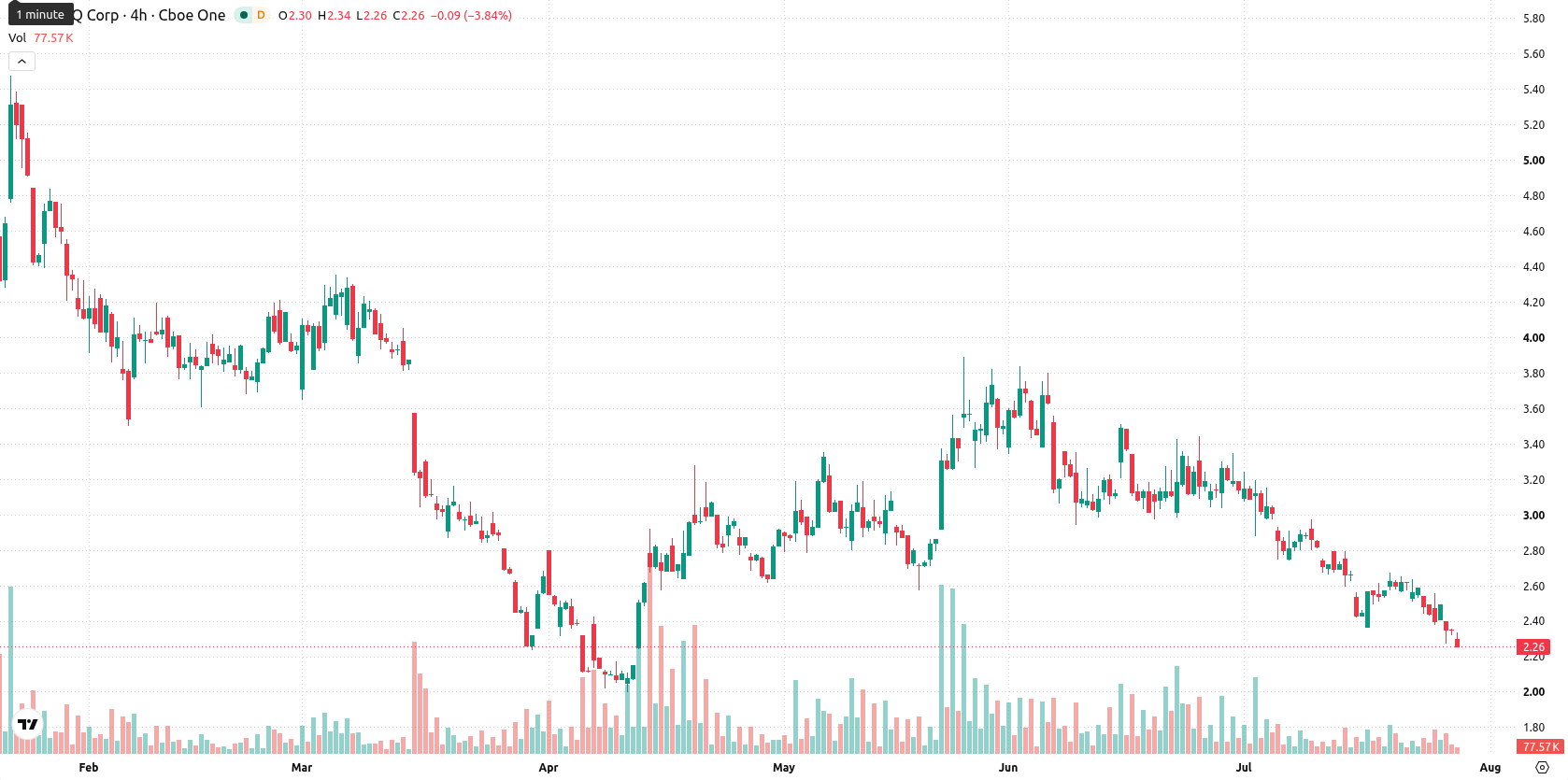
Technical weakness and weak momentum as moving average resistance holds
Sealsq is currently trading below the 20-day ($2.71), 50-day ($3.03), and 200-day ($3.87) moving averages, signaling entrenched pressure from sellers across all time frames. The nearest resistance is at $2.34, while support is observed at $2.08, with a bearish medium- and long-term trend confirmed by the negative alignment of the 50-day and 200-day moving averages. Momentum signals remain weak. The Relative Strength Index (RSI) shows a reading of 32.07, indicating the stock is nearing oversold territory, supported by oversold signals from the Stochastic RSI (9.03) and Commodity Channel Index (CCI) at -130.86. MACD is negative at -0.22, pointing to downside momentum, and the Average Directional Index (ADX) at 14.96 suggests a lack of trend strength. Bull/Bear Power (BBP) is negative at -0.2, showing sellers are dominating intraday momentum. The daily session opened with a downside gap of about 1.28% and a decline of 3%, putting the current price near the day’s low. Intraday volatility stands at 3.08%. This confirms a bearish tone with persistent selling pressure after the open, matching the weak momentum backdrop.
Earlier, analysts noted that SEALSQ had remained under persistent bearish momentum with sellers exerting continued pressure. The current technical environment not only confirms this negative outlook but also underscores the importance of monitoring the $2.08 support level, as a decisive break below it could trigger accelerated downside risk.










-
 Afghanistan
-
 Albania
-
 Algeria
-
 Angola
-
 Argentina
-
 Armenia
-
 Australia
-
 Austria
-
 Azerbaijan
-
 Bahamas
-
 Bahrain
-
 Bangladesh
-
 Belarus
-
 Belgium
-
 Bolivia
-
 Botswana
-
 Brazil
-
 Brunei
-
 Bulgaria
-
 Cambodia
-
 Cameroon
-
 Canada
-
 Chile
-
 China
-
 Colombia
-
 Congo
-
 Costa Rica
-
 Cote d'Ivoire
-
 Croatia
-
 Cuba
-
 Cyprus
-
 Czechia
-
 DR Congo
-
 Denmark
-
 Dominican Republic
-
 Ecuador
-
 Egypt
-
 El Salvador
-
 Estonia
-
 Eswatini
-
 Ethiopia
-
 Finland
-
 France
-
 Georgia
-
 Germany
-
 Ghana
-
 Greece
-
 Haiti
-
 Hong Kong
-
 Hungary
-
 India
-
 Indonesia
-
 Iran, Islamic republic
-
 Iraq
-
 Ireland
-
 Israel
-
 Italy
-
 Jamaica
-
 Japan
-
 Jordan
-
 Kazakhstan
-
 Kenya
-
 Korea
-
 Kuwait
-
 Kyrgyzstan
-
 Laos
-
 Latvia
-
 Lebanon
-
 Lesotho
-
 Libya
-
 Lithuania
-
 Luxembourg
-
 Madagascar
-
 Malaysia
-
 Malta
-
 Mauritius
-
 Mexico
-
 Moldova
-
 Mongolia
-
 Montenegro
-
 Morocco
-
 Mozambique
-
 Myanmar
-
 Namibia
-
 Nepal
-
 Netherlands
-
 New Zealand
-
 Nigeria
-
 North Macedonia
-
 Norway
-
 Oman
-
 Pakistan
-
 Palestine
-
 Panama
-
 Papua New Guinea
-
 Paraguay
-
 Peru
-
 Philippines
-
 Poland
-
 Portugal
-
 Puerto Rico
-
 Qatar
-
 Reunion
-
 Romania
-
 Rwanda
-
 Saudi Arabia
-
 Serbia
-
 Singapore
-
 Slovakia
-
 Slovenia
-
 Somalia
-
 South Africa
-
 Spain
-
 Sri Lanka
-
 Sweden
-
 Switzerland
-
 Syria
-
 Taiwan
-
 Tajikistan
-
 Tanzania
-
 Thailand
-
 Trinidad and Tobago
-
 Tunisia
-
 Turkey
-
 UAE
-
 Uganda
-
 Ukraine
-
 United Kingdom
-
United States
-
 Uruguay
-
 Uzbekistan
-
 Venezuela
-
 Vietnam
-
 Yemen
-
 Zambia
-
 Zimbabwe
- Forex
- Crypto












