

AgEagle stock faces support pressure: Technical outlook

AgEagle Aerial Systems (UAVS) stock is trading at $0.7246, down 1.55% on the day. The price currently sits below its key moving averages.
 0.3006
0.3039
Highlights
- UAVS stock faces persistent bearish pressure, trading below key moving averages and recently falling 1.55% to $0.72.
- Momentum indicators provide mixed signals, with oversold readings offset by continued intraday seller dominance and high volatility.
- Expected price range over the next few sessions is $0.68 to $0.76, with a 58% probability of further downside.
Volatility rises amid mixed signals and contested technical zones
On the hourly chart, UAVS is trading below the MA-20 at $0.73 but remains above the MA-50 at $0.71, while positioned well beneath the longer-term MA-200 at $1.11. The Ichimoku Kijun at $0.72 is acting as immediate support. RSI shows a Sell indication, while the MACD provides a strong buy signal and the ADX remains neutral. Stoch RSI is oversold, CCI is neutral, Bull/Bear Power indicates seller dominance intraday, and the Awesome Oscillator is neutral. Taken together, these readings point to heightened volatility and conflicting technical signals despite recent price weakness.
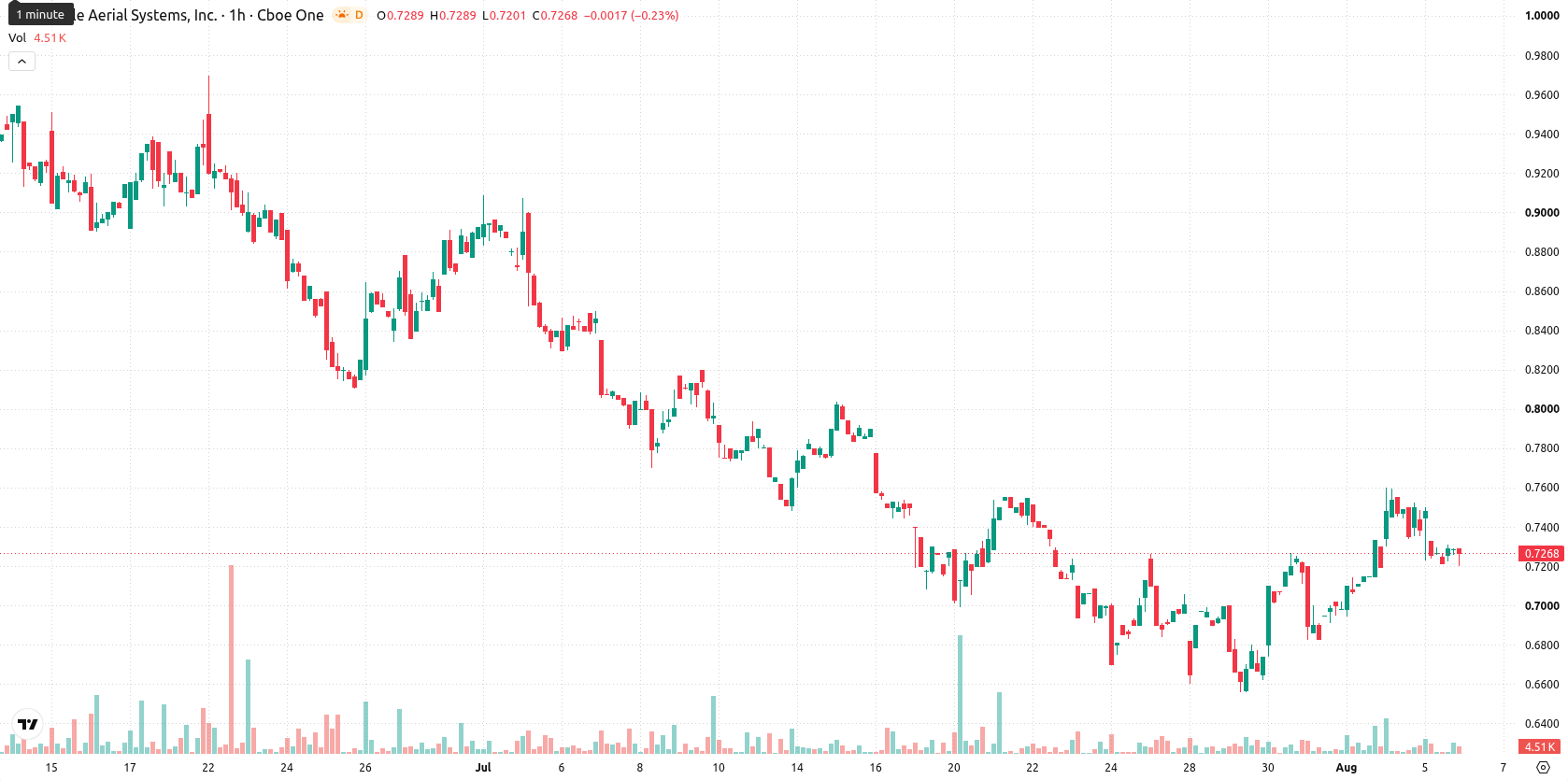
Downside risk prevails with consolidation likely near key support
In the near term, UAVS is expected to trade in a range between $0.68 and $0.76, with a 58% probability favoring a downward move and only a 42% chance of recovery. The baseline scenario points toward consolidation between immediate support at the Ichimoku Kijun and nearby resistance. A bullish breakout would require the price to surpass short-term resistance, while a bearish scenario could unfold if support at the Kijun or range low fails, potentially accelerating losses.
Earlier, analysts noted that AgEagle Aerial Systems showed short-term momentum but faced uncertainty due to mixed technical signals. The latest market action reinforces this indecision, with volatility elevated and the key level to watch now being the $0.72 support, as a breakdown here could trigger further downside risk.








-
 Afghanistan
-
 Albania
-
 Algeria
-
 Angola
-
 Argentina
-
 Armenia
-
 Australia
-
 Austria
-
 Azerbaijan
-
 Bahamas
-
 Bahrain
-
 Bangladesh
-
 Belarus
-
 Belgium
-
 Bolivia
-
 Botswana
-
 Brazil
-
 Brunei
-
 Bulgaria
-
 Cambodia
-
 Cameroon
-
 Canada
-
 Chile
-
 China
-
 Colombia
-
 Congo
-
 Costa Rica
-
 Cote d'Ivoire
-
 Croatia
-
 Cuba
-
 Cyprus
-
 Czechia
-
 DR Congo
-
 Denmark
-
 Dominican Republic
-
 Ecuador
-
 Egypt
-
 El Salvador
-
 Estonia
-
 Eswatini
-
 Ethiopia
-
 Finland
-
 France
-
 Georgia
-
 Germany
-
 Ghana
-
 Greece
-
 Haiti
-
 Hong Kong
-
 Hungary
-
 India
-
 Indonesia
-
 Iran, Islamic republic
-
 Iraq
-
 Ireland
-
 Israel
-
 Italy
-
 Jamaica
-
 Japan
-
 Jordan
-
 Kazakhstan
-
 Kenya
-
 Korea
-
 Kuwait
-
 Kyrgyzstan
-
 Laos
-
 Latvia
-
 Lebanon
-
 Lesotho
-
 Libya
-
 Lithuania
-
 Luxembourg
-
 Madagascar
-
 Malaysia
-
 Malta
-
 Mauritius
-
 Mexico
-
 Moldova
-
 Mongolia
-
 Montenegro
-
 Morocco
-
 Mozambique
-
 Myanmar
-
 Namibia
-
 Nepal
-
 Netherlands
-
 New Zealand
-
 Nigeria
-
 North Macedonia
-
 Norway
-
 Oman
-
 Pakistan
-
 Palestine
-
 Panama
-
 Papua New Guinea
-
 Paraguay
-
 Peru
-
 Philippines
-
 Poland
-
 Portugal
-
 Puerto Rico
-
 Qatar
-
 Reunion
-
 Romania
-
 Rwanda
-
 Saudi Arabia
-
 Serbia
-
 Singapore
-
 Slovakia
-
 Slovenia
-
 Somalia
-
 South Africa
-
 Spain
-
 Sri Lanka
-
 Sweden
-
 Switzerland
-
 Syria
-
 Taiwan
-
 Tajikistan
-
 Tanzania
-
 Thailand
-
 Trinidad and Tobago
-
 Tunisia
-
 Turkey
-
 UAE
-
 Uganda
-
 Ukraine
-
 United Kingdom
-
United States
-
 Uruguay
-
 Uzbekistan
-
 Venezuela
-
 Vietnam
-
 Yemen
-
 Zambia
-
 Zimbabwe
- Forex
- Crypto












